The First Swan 88 DreamCatcher: Nautor Swan's Hybrid-Electric Sailing Superyacht
The history and engineering of the 28.27m first hybrid-electric Swan 88 DreamCatcher, with its distinct Nautor hull identity and official 2024 source.
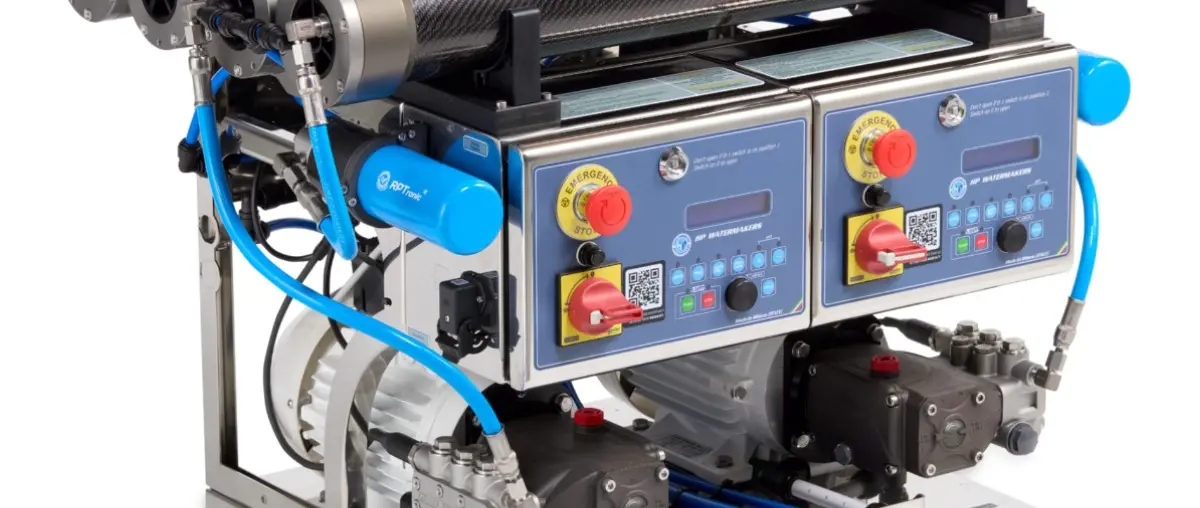
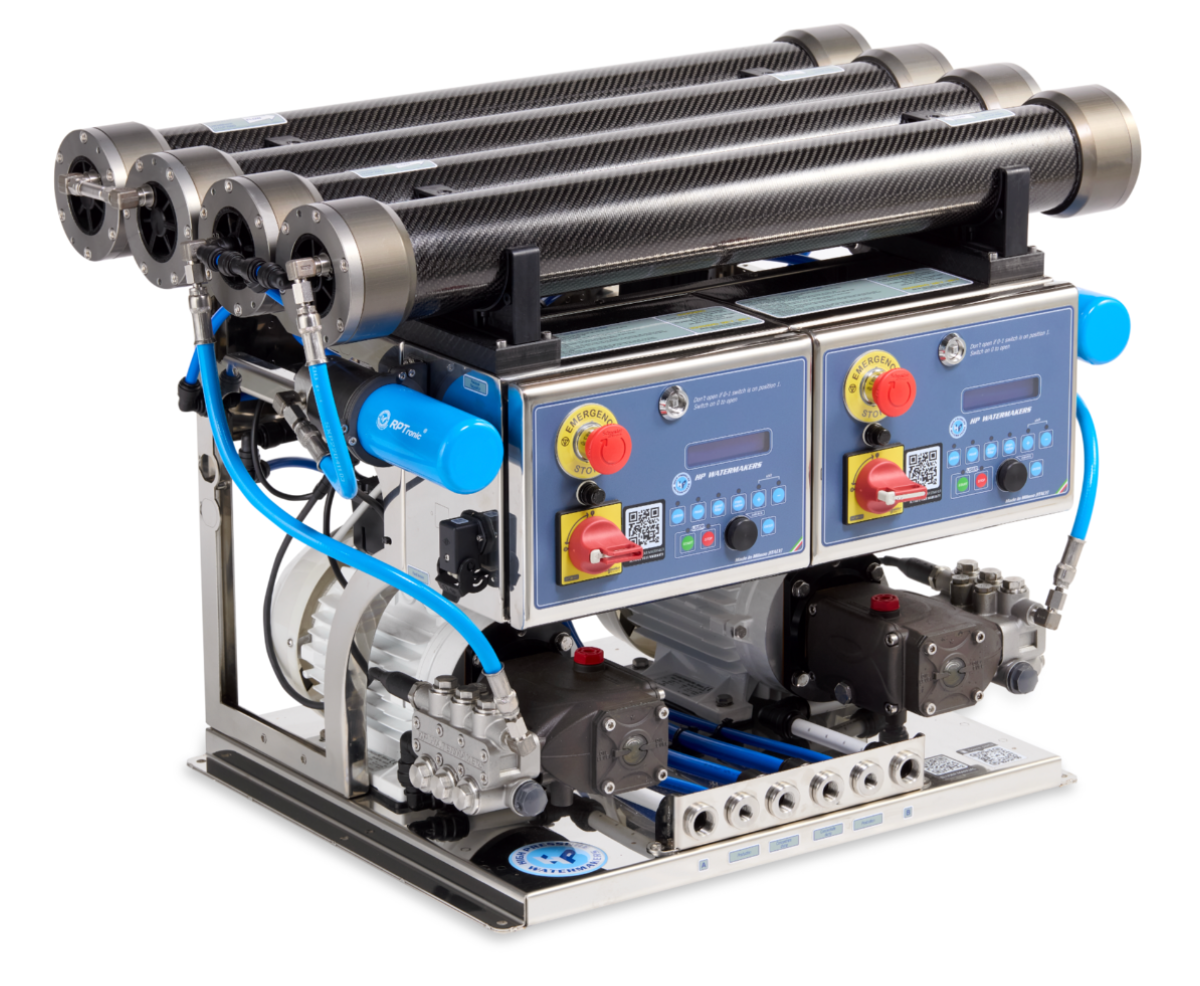
HP Watermakers official 2026 integrated water cycle manufacturer press graphic
HP Watermakers outlines an integrated freshwater system at METSTRADE 2026, combining water production, purification and distribution for large yachts.
Water provision on a large yacht is often described as a simple matter of installing a desalination machine and specifying sufficient tank capacity. HP Watermakers used METSTRADE 2026 in Amsterdam to argue for a different engineering approach: freshwater should be considered across its whole journey, from the marina connection or seawater intake to final delivery at a tap or shower. Its Water Package concept brings production, treatment, storage and distribution into a single planning framework. The announcement is relevant to superyacht builders, chief engineers and captains because freshwater reliability affects guest comfort, technical autonomy, machinery capacity and the practical range of an itinerary. The company discussed the system during the 17–19 November trade exhibition, with its comments published in a manufacturer interview on 18 November.
A reverse-osmosis watermaker is only one stage of an onboard supply arrangement. Seawater needs to be drawn through the correct intake, pretreated and sent through membranes before its output can enter potable or technical freshwater tanks. Alternatively, water can be taken from a shoreside connection in a marina. After that, storage quality, pumping, piping, filtration, temperature, sterilisation and point-of-use equipment all influence what actually reaches guests and crew. HP Watermakers says its Water Package is intended to address these interconnected stages rather than leave them as isolated product purchases. For naval architects and systems integrators, the important distinction is between buying equipment and designing a coherent water network. A technically capable watermaker does not by itself guarantee suitable water at every outlet, particularly during long periods in warm ports or when distribution sections are little used. An integrated architecture can at least make responsibilities, connection points and maintenance expectations more visible.
In HP Watermakers' interview, Gianni Zucco suggests that boats from about 50 feet upward may use around 200 litres of water per person per day when showers, cooking, laundry, bathrooms and drinking water are taken together. This is a manufacturer's indicative planning estimate, not a measured universal consumption standard. Its usefulness is as a reminder of scale. For example, applying that illustrative figure to twelve people gives 2,400 litres per day, or 16,800 litres in a seven-day period. A yacht with twenty people on board would produce a very different requirement, before any additional washdown, swimming-pool filling or operational cleaning allowances. Actual demand depends on guest habits, crew numbers, weather, fixtures and laundry patterns. The sensible engineering response is therefore not to assume the quoted figure is always correct, but to calculate realistic peak and average demand for the particular yacht, then assess how much water can be produced, retained and recovered in service.
Water management changes substantially when a yacht leaves a berth. A marina connection may be convenient, yet neither continuity of supply nor incoming water characteristics should automatically be assumed. At anchor, the yacht's own desalination capacity often becomes the decisive source of replenishment. HP Watermakers frames its Water Package around these operating modes, including taking on water, processing it and getting it to the points of consumption. For a captain, that suggests a practical checklist: how will the system distinguish shore water from produced water, which treatment stages are appropriate for each supply, what alarms will appear if one component fails and can the crew isolate a fault without losing all hotel services? Those are operational questions rather than product performance claims. An installation designed around several real-world scenarios can reduce surprises when a vessel changes region, stays outside marina networks or encounters a period of unusually high guest demand.
The company's account includes HP Sea Zero Spot for treatment of water taken aboard from shoreside sources and HP Genius for drinking-water preparation. HP describes Genius as combining treatment functions such as filtration, sterilisation and remineralisation with a dispensing proposition that can supply chilled or sparkling drinking water. The business case extends beyond machinery spaces: bottled-water storage, provisioning schedules and rubbish handling can become substantial tasks on a busy yacht. An integrated drinking-water option may reduce the need to carry disposable bottles if it is correctly installed, maintained and accepted by those on board. It does not follow that every yacht will eliminate bottled water or obtain an identical savings figure. Taste, local source quality, sanitary standards and the confidence of the crew remain important. Owners considering such a system should insist on clear water-quality testing procedures and instructions covering sanitisation, filter changes, commissioning and periods when the installation is shut down.
Freshwater production uses energy and may run at times when the yacht is also operating air-conditioning, refrigeration, stabilisation and other hotel loads. HP Watermakers has discussed an approximate energy figure of ten kilowatt-hours per cubic metre in the context of its onboard water proposition. That figure should be treated as the manufacturer's illustrative statement, not a independently verified benchmark for every watermaker or operating condition. Real consumption depends on equipment model, recovery ratio, salinity, feed-water temperature, pressure, system health and the extent of downstream treatment. The more useful purchasing exercise is to request measured power draw against declared freshwater output under specified test conditions. For an existing superyacht, electrical capacity, motor starting loads, acoustic isolation, vibration, access to service parts and the location of pumps and membranes matter as much as headline production figures. A water strategy is strongest when the technical specification explains both daily output and the cost of achieving it.
A system covering more than one equipment category benefits from early decisions in the build. A watermaker typically competes for machinery-room volume with pumps, filters, spares, ventilation and service clearances. Tanks require a considered location for trim and stability; distribution routes need to account for long runs, hot-water circulation and the separation of drinking-water and non-potable services. If those elements are left to individual subcontractors, the final arrangement may still work but become harder to inspect or repair. HP Watermakers' integrated framing encourages a different procurement conversation: who owns the design interface between production, tanks, treatment and dispensing, and who signs off performance after commissioning? It is not evidence that the Water Package automatically solves every integration problem. It is a reason to demand a consolidated drawing set, a consistent control philosophy and an acceptance procedure demonstrating the system under realistic guest, crew and cruising conditions.
A newbuild can allocate equipment volume before the technical spaces are finalised. A refit has to live with the existing compartments, pipework, penetrations and distribution arrangements. Replacing a watermaker with a larger unit may be attractive on paper, but available electrical supply, intake capacity, noise transfer and access to maintenance points may impose practical limits. A wider upgrade incorporating additional purification or dispensing equipment also needs a survey of the freshwater tanks and old pipework. Where the original network has seldom been documented in detail, an apparently small modification can reveal hidden dependencies. For yacht managers, the immediate lesson is to commission a condition assessment and water analysis before choosing equipment. The manufacturer should establish what its proposed package includes and does not include, while the captain and chief engineer should identify the disruption a retrofit would cause to charter commitments and seasonal deployment.
Automation can improve convenience, but freshwater quality is not guaranteed merely because a system is described as integrated. Filters become exhausted, tanks need attention, membranes can foul and distribution sections may stagnate. Engineers must know how to interpret alarms, carry out routine checks and record corrective actions. The specific maintenance interval should come from the equipment maker's instructions and an assessed operating environment, not a generic calendar assumption. A sensible shipboard plan also covers where samples are taken, how results are recorded and what alternatives are available if a treatment stage is unavailable. If chilled or sparkling dispensing functions are installed in guest areas, the hotel department also needs simple cleaning and operational guidance. The benefit of whole-system thinking is that each crew department can see how its tasks affect the final service. The limitation is that no amount of integration replaces training, inspections or a clear chain of responsibility.
HP Watermakers says the approach is attracting interest among boatbuilders and was discussing its solutions at the Amsterdam show. That provides an indication of the manufacturer's intended market, not independent proof of orders, reliability or cost savings. For procurement teams the relevant questions are concrete: what is included in the base Water Package, which components are optional, what production and storage capacities are supported, which test results can be supplied, and who is responsible for warranty service when the vessel is in a remote cruising area? They should also ask for spare-part availability, consumable cost projections and the degree to which proprietary controls prevent future replacement with alternative hardware. An integrated purchase can simplify accountability if one supplier stands behind the result. Equally, it could create a concentration of service dependence. Evaluating that trade-off is part of normal superyacht technical due diligence.
Large private and charter yachts are particularly sensitive to fresh-water interruptions because passengers expect hotel-level service while the vessel may be far from straightforward shoreside support. The same yacht might operate a Mediterranean summer programme, spend time in a Caribbean marina and then undertake an extended itinerary away from established yacht hubs. These are very different operating environments, and each should be reflected in the water-system specification. An integrated approach has value if it improves clarity about supply modes, water quality, energy demand and maintenance, rather than merely combining several catalogue items under one label. HP Watermakers' METSTRADE message is therefore best understood as a design and operational proposal. Owners, builders and engineers still need independent performance data and yacht-specific engineering before concluding that any particular Water Package configuration is the right investment.
The company's announcement makes an understandable case for treating freshwater as a managed onboard resource. The more revealing follow-up will be evidence from installations: delivered output under different feed-water conditions, water-quality test outcomes, energy consumed per cubic metre, crew maintenance hours and the costs of keeping systems running through several seasons. For a newbuild, that information can be incorporated into the acceptance criteria at the contract stage. For a refit, it can provide a baseline against which proposed improvements are judged. The immediate development from Amsterdam is not a claim that a technical problem has been solved for every yacht. It is a renewed emphasis on the complete freshwater chain. That is a useful subject for scrutiny, especially as vessels add more hotel functions and owners expect longer periods of independent cruising.
Primary source: HP Watermakers — original manufacturer interview published by Pressmare, 18 November 2026.
Image: HP Watermakers, product press graphic provided with its METSTRADE 2026 interview via Pressmare; company/source credited. Official source.
Continue reading
The history and engineering of the 28.27m first hybrid-electric Swan 88 DreamCatcher, with its distinct Nautor hull identity and official 2024 source.
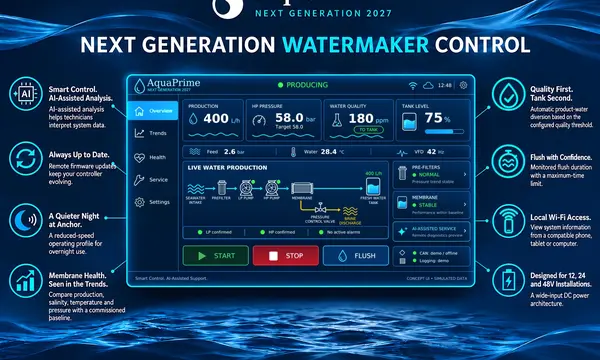
AquaPrime will preview its new watermaker control platform at METSTRADE, with touchscreen monitoring and diagnostic features under development for yacht crews.
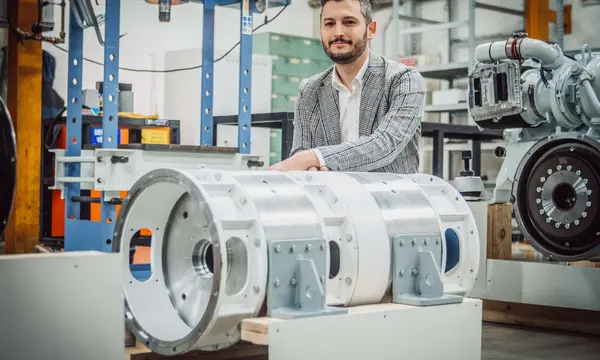
Vulkan Italia will present its 200kW H1000 parallel-hybrid module for marine diesel engines rated 500–1,500kW during METSTRADE's Next Gen showcase.
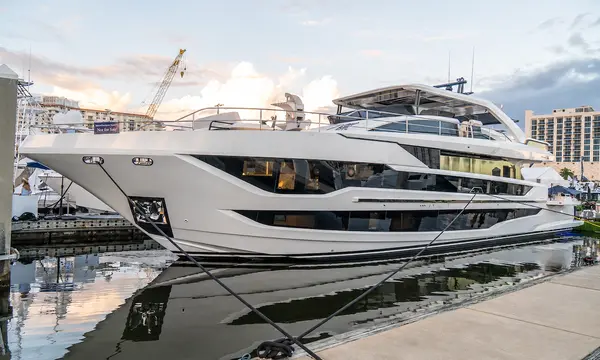
Pearl Yachts’ 30m Pearl 100 Hybrid makes its world debut at Fort Lauderdale with twin-shaft hybrid propulsion, five cabins and two full-beam suites.
Superyacht Guide
Continue into the wider Superyacht Guide.
Business opportunities · Superyacht Guide
Companies serving the superyacht market can discuss clearly identified advertising, sponsorship and business-profile opportunities. Commercial activity remains separate from independent editorial coverage.