

Burgess Blue Oceans Report Tracks Conservation and Maritime Training
By Superyacht Guide Newsroom · Edited by Superyacht Guide Newsroom
Burgess Blue Oceans Report Tracks Conservation and Maritime Training — licensed SYG News 26Nov batch03
Burgess’s published 2025 Blue Oceans report details marine conservation, Water Revolution Foundation collaboration and training through UKSA and Caribbean Crew.
Burgess's Blue Oceans Impact Report provides a useful perspective on how a major yacht brokerage and management business is addressing environmental stewardship and workforce development. The company's public summary, issued on 13 May 2026 and reflecting its 2025 activities, identifies marine conservation partnerships, industry sustainability collaboration and education initiatives for young people entering maritime careers. Burgess specifically highlights its work with the Blue Marine Foundation, a new Water Revolution Foundation relationship, and growth in Caribbean Crew and UKSA cadet programmes. Those are company-reported activities; they should be assessed against measurable results and not mistaken for a claim that the environmental effects of superyacht ownership have disappeared.
The 2025 reporting period coincided with Burgess marking its fiftieth anniversary. The firm presents the report as part of a wider effort to connect the health of the ocean with social wellbeing and its long-term commercial responsibilities. That framing recognises a basic reality for the yachting industry: vessels operate in marine environments whose condition can affect the value of destinations and the experience of owners and guests.
A corporate impact report is not the same thing as a third-party audit of every vessel operated or managed by a business. Its contents should be attributed to the company, with clear distinctions between projects, intentions and outcomes. Burgess's May announcement provides a summary of highlighted activities but does not set out a complete emissions inventory in the publicly visible text. Readers should not infer fleet-wide carbon neutrality or a quantified environmental benefit from the existence of the report.
Burgess says its Blue Oceans journey began in 2018. This history matters because marine conservation and responsible operations generally require sustained work rather than a single publicity campaign. Programmes may evolve as the company gains experience or develops new relationships, and annual reports create an opportunity to examine whether activities are becoming more structured.
Longevity alone is not proof of effectiveness. A programme that has existed for several years should be able to explain what it aims to achieve, who is responsible and how progress is monitored. Owners and industry partners can use that information to decide which efforts to support. The 2025 report offers a reference point, but its strongest claims should still be tested against the methods and evidence published for each individual initiative.
One of the highlighted achievements is a strengthened relationship with the Blue Marine Foundation. Burgess describes increased engagement by clients and staff during 2025 and links the partnership with wider marine conservation efforts, including work around the Greek island of Amorgos. That places the initiative in the context of ecological stewardship rather than simply a change in yacht onboard equipment.
Marine protection can involve community participation, scientific research and decisions about how coastal resources are managed. The impact of a particular programme may be measured through ecological data, local management arrangements or changes in human activity, depending on its objectives. Burgess's summary does not publish all supporting measurements. It would therefore be premature to assign a precise biodiversity improvement or a fixed area newly protected solely from the highlights.
The company identifies Amorgos as a potential benchmark for community-led marine conservation. The location matters because effective local projects often depend on relationships among residents, fishers, scientists, public authorities and other stakeholders. External funding can help, but lasting outcomes may rely on support from people whose livelihoods and daily activities are connected with the sea.
A superyacht business should be cautious about presenting a community's conservation work as its own exclusive achievement. Burgess credits partners and engagement in its public account, and that distinction should be maintained. The most meaningful evaluation would consider how the programme is governed, whether local voices are represented and what reliable data show over time. The company summary provides a starting point, not a substitute for a complete project evaluation.
Burgess's public highlights include a new partnership with the Water Revolution Foundation, an organisation focused on sustainability in the superyacht sector. Such collaboration can be relevant because many operational challenges extend beyond the control of one brokerage. Yacht builders, suppliers, classification bodies, owners and crew may need common approaches to information, technology and practical training.
A partnership announcement does not automatically establish a measured reduction in fuel use or embodied emissions. Its significance depends on what the parties subsequently do, what standards they use and whether their progress can be checked. Owners should look for specific projects, clear responsibilities and transparent reporting. The value of cross-industry cooperation lies in actionable outcomes rather than the number of logos displayed beside an initiative.
The report highlights the creation of a sustainability committee associated with LYBRA, an international alliance of major superyacht brokerages. This may help bring operational perspectives from companies with extensive experience in sales, charter and management into broader discussions about environmental responsibility. The potential advantage is coordination: one company's operating procedures or information requests may have wider relevance when adopted by several businesses.
However, the existence of a committee should not be confused with a binding regulatory standard. Participants may agree priorities or explore guidance, but actual requirements depend on the documents adopted and the jurisdictions involved. A committee can help create momentum, while owners and operators still need to verify their vessels' own legal and technical obligations.
Burgess identifies the expansion of Caribbean Crew and UKSA cadet initiatives as another important part of its 2025 work. These programmes address access to employment and training, a subject of practical interest to an industry dependent on experienced professionals. Getting started in yachting can involve qualification costs, travel, sea-service requirements and competition for entry-level positions.
Training initiatives may help people understand those barriers and identify realistic career pathways. Their success should be judged in terms of participant experience, qualifications and longer-term opportunities, not simply the number of announcements. The public summary does not provide a complete dataset covering every candidate's career, so no invented placement rate should be attached. It is appropriate to report the programmes as areas of company-supported development.
The Caribbean is one of the world's important charter regions, yet local access to international superyacht careers can be affected by the cost and availability of training. Supporting a regional entry pathway may help connect people who live near major cruising grounds with professional opportunities aboard yachts and elsewhere in the maritime sector. Such initiatives can also strengthen an understanding of local communities among businesses that depend on those destinations.
It would be misleading to imply that participation guarantees a yacht job or that every candidate wishes to work offshore. Some may prefer shore-based support roles or related industries. A thoughtful programme should offer accurate information about skills, certificates and the everyday demands of the career. Burgess describes growth in its initiative, leaving detailed outcomes to the supporting records and partners.
The company's UKSA connection offers another route into structured maritime education. Cadet pathways can help prospective seafarers gain qualifications and practical understanding before entering professional employment. The specific training undertaken and its recognition depend on the programme, so an editorial report should not invent certificate names or guaranteed routes to officer status.
The wider significance is that yacht workforce development includes more than senior captains or experienced engineers. The sector also requires dependable entry-level personnel who can learn safe practices and develop professionally. Investment in training may improve the quality of the talent pipeline over time, although the company report does not establish a quantified future crew supply.
Marine conservation donations are not equivalent to reducing a yacht's own impacts. Superyachts consume energy, require materials to build and maintain, and can affect sensitive environments through their operation. A company can legitimately support conservation while still facing substantial operational challenges. The two activities should be reported separately so readers can judge them accurately.
Owners may wish to discuss fuel monitoring, shore power, wastewater treatment, responsible anchoring and purchasing policies with their managers. Those practical choices can influence the vessel's own footprint, while conservation work addresses wider ecological concerns. Neither approach should be used to conceal the limits of the other. A credible sustainability account makes its scope and assumptions visible.
The health of a marine habitat cannot be established solely through a successful fundraising event or a corporate partnership. Useful measures may include changes in ecological conditions, habitat protection arrangements or participation by local communities. Such metrics need appropriate scientific methods and a clear time frame. Seasonal variability also matters, and isolated observations may not provide a reliable indication of long-term improvement.
Readers can ask what a project attempted, what was actually done and what evidence supports the result. In many cases, meaningful conservation develops over years. Burgess's report identifies priorities and partners, which is valuable, but the public summary does not supply enough detail to verify every potential outcome independently. That limitation should be understood rather than filled with speculative figures.
A superyacht owner may contribute financial support, while a captain or crew member may help by adopting careful operating procedures or participating in structured research. Both can be worthwhile, but activities should fit within safety, legal and professional responsibilities. A vessel used for scientific work, for example, requires clear arrangements with qualified researchers and the owner; it is not enough to describe any voyage as contributing to science.
Crew participation can be particularly effective when it is tied to normal procedures such as waste segregation, recording fuel consumption and protecting sensitive anchorages. Those tasks can produce information that managers can review and act upon. An annual report can help communicate the direction of travel, while actual operational records remain essential to measuring performance.
Burgess links responsible action with long-term business resilience. There is a credible commercial reason for a yachting business to care about ocean health: environmental degradation could harm destinations and the experience offered to clients. Nevertheless, commercial self-interest and ecological benefit are not necessarily the same thing. A project should be assessed on what it achieves for the marine environment or communities rather than solely on its value to a corporate brand.
Transparency makes these relationships easier to understand. If a programme is primarily educational, it should be evaluated as education. If it aims to influence conservation policy, it should explain that scope and identify the relevant partners. Clarity is preferable to using a broad sustainability label for activities with fundamentally different objectives.
The confirmed public summary identifies Burgess's Blue Oceans programme, active since 2018, its 2025 conservation and education priorities, the Blue Marine Foundation relationship, Water Revolution Foundation collaboration, LYBRA committee initiative and growth in Caribbean Crew and UKSA cadet programmes. The report itself was published in May 2026, and its reference year is 2025. It is not a new November launch.
For the international superyacht industry, the value of revisiting the report is its illustration of the different ways a brokerage can participate in conservation and maritime education. The most important next step is to look beyond intentions to documented progress. Meaningful responsibility depends on reliable information about the marine environment, the people involved and the operational decisions made aboard yachts.
Primary source: Burgess, official 13 May 2026 announcement of 2025 Blue Oceans Impact Report.
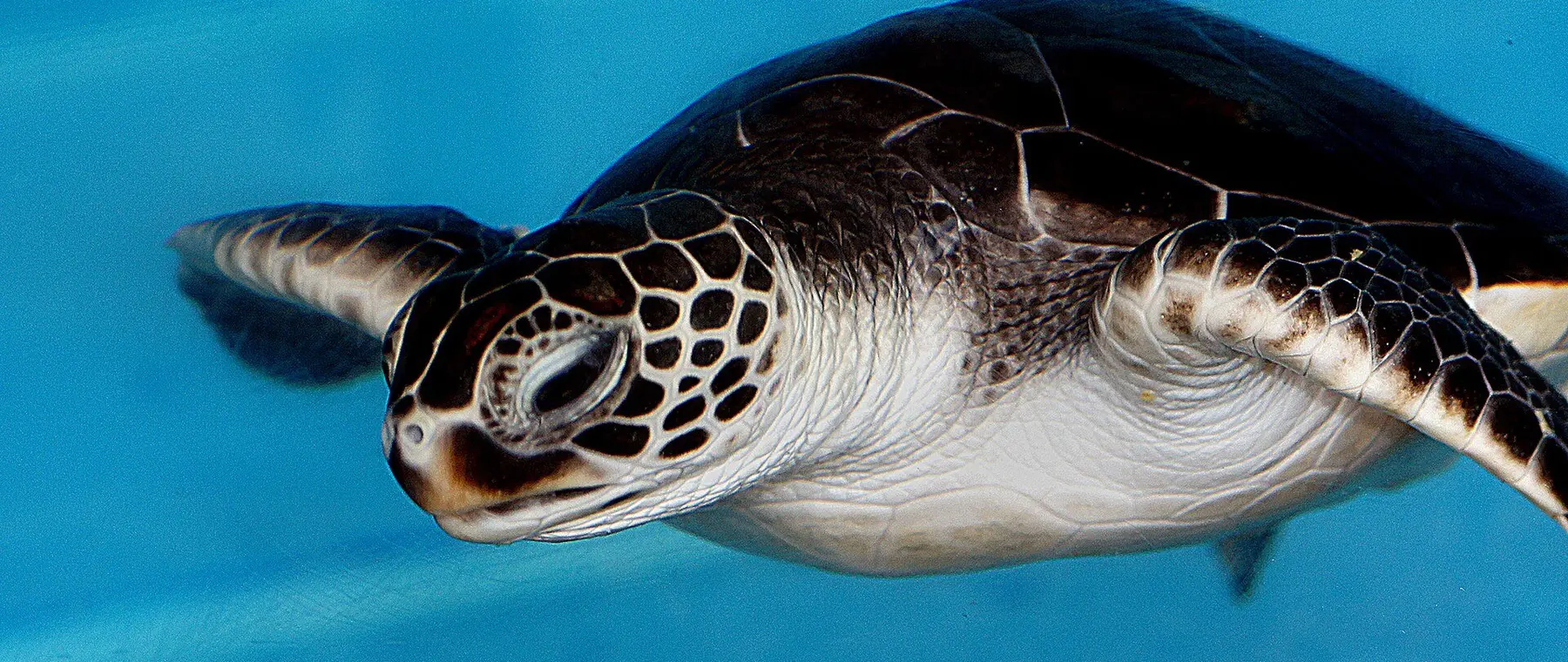
Licensed archival photograph of marine habitat or wildlife, illustrating conservation; not evidence of a Burgess project outcome. Photo: Bernard Spragg. NZ from Christchurch, New Zealand; CC0 via Wikimedia Commons. Official source.
Explore
Go deeper into the yachts, companies, events and destinations directly connected to this article.
Continue reading
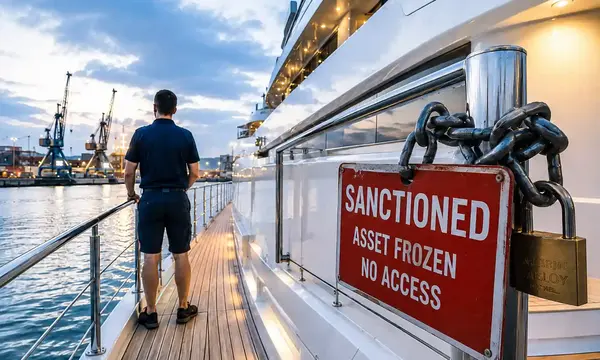
A sanctions freeze can immobilise a superyacht without making its crew sanctioned, leaving wages, contracts and daily operations caught between employment law and financial …

Burgess says charter days booked increased 35% in 2025, with demand also rising in the 40–60m sectors and winter 2026/27 bookings well ahead of …
Gard’s 2026 Crew Claims Report draws on about 3,000 P&I crew claims and finds elevated injury risk early in a crew member’s time on …

Crew fatigue on superyachts affects safety, judgement, service, maintenance, crew welfare and compliance, making rest management essential on board.
Superyacht Guide
Continue into the wider Superyacht Guide.
Business opportunities · Superyacht Guide
Companies serving the superyacht market can discuss clearly identified advertising, sponsorship and business-profile opportunities. Commercial activity remains separate from independent editorial coverage.