
Cantiere delle Marche's Haze² and Nasiba Win Two ISS Motor Yacht Awards
By Stephen Yardley · Edited by Stephen Yardley
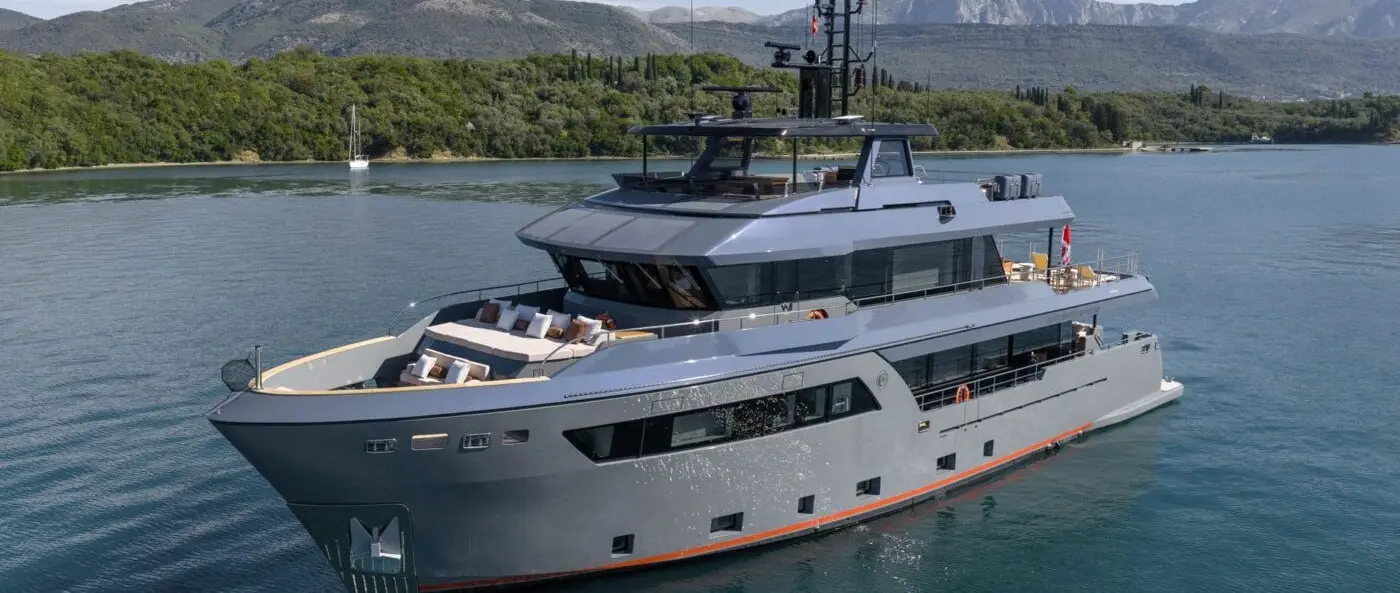
Two explorer yachts from Cantiere delle Marche were recognised at the 2026 ISS awards: Haze² in the under-300GT motor class and Nasiba in the 300–500GT class.
Cantiere delle Marche has secured two category wins at the 2026 International Superyacht Society Design & Leadership Awards, held in Fort Lauderdale on 28 October. The 30.8-metre Darwin Class explorer Haze² won Best in Motor Below 300GT, while the 44.3-metre Flexplorer 146 Nasiba received Best in Motor 300–500GT. The results recognise two very different ways of combining long-range cruising capability with the living requirements of a private owner.
The distinctions were announced as the ISS celebrated design, construction and professional achievement during its annual awards programme. Importantly, the two motor categories are divided by gross tonnage, a measure of enclosed volume, not the length or weight of a yacht. The winner in the smaller-volume class should not be treated as directly competing with a much larger yacht simply because both carry the same builder's name.
For the Ancona shipyard, the paired results also demonstrate the breadth of its explorer offering. Haze² belongs to the long-established Darwin family, where robustness and practical voyaging remain central. Nasiba is a Flexplorer shaped around an unusually detailed brief for personal wellbeing and a family's life at sea. Neither award is a new launch announcement; both vessels were already completed before this October ceremony.
Haze² is a Darwin Class 102 measuring 30.80 metres, with a beam of approximately 7.42 metres, built in 2025. The shipyard credits Hydro Tec and Sergio Cutolo for the exterior design work, while the interiors were developed by Lawson Robb. Its distinctive metallic-grey hull and contrasting blue superstructure give the compact explorer a recognisable profile without disguising the practical character of the platform.
The Darwin concept was introduced by the builder to deliver ocean-crossing aspirations and substantial living space in a comparatively manageable hull. That requires particular attention to storage, service access, stability and maintenance as well as to accommodation. On a yacht of just over 30 metres, every design decision must balance the needs of crew and equipment with the space an owner expects to enjoy at anchor.
Haze² takes that engineering-led basis in a more personal visual direction. The official shipyard description emphasises tactile finishes, lighter tones, natural-looking woods, bronze accents and mosaic detailing aboard. Lawson Robb's interior treatment therefore softens the working-boat associations of an explorer, making it feel like a distinctive home while retaining the purposefulness expected from the Darwin lineage.
Nasiba is the third vessel in the Flexplorer 146 series and measures 44.30 metres overall, with an 8.60-metre beam and a reported gross tonnage of 499. Her outside design and naval architecture are associated with Hydro Tec, while Winch Design shaped the interior around the owners' specific lifestyle. This puts her near the top of the ISS 300–500GT class, but her overall brief is markedly different from that of the smaller Haze².
In its official delivery announcement, Cantiere delle Marche explains that Nasiba's interior was assessed against a detailed set of health-conscious material and environmental criteria. Winch Design worked with EcoNest Architects to consider natural and responsibly sourced finishes, lower-volatile-organic-compound choices and indoor air quality. The result is not a claim that a yacht can eliminate every environmental or health concern, but a demonstrably deliberate design process guided by a demanding owner brief.
The yacht's arrangements include family learning and play spaces, areas for wellness and an infra-red sauna paired with an ice-plunge pool on the foredeck. Natural textures and botanical references feature throughout, including a preserved-moss wall beside the main staircase. These details matter less as isolated luxuries than as evidence that the entire interior was planned around a coherent way of living during extended voyages.
Nasiba also retains the expedition qualities expected from Cantiere delle Marche. The builder lists 65,000 litres of fuel and twin Caterpillar C32 Acert engines, with an approximate 5,500-nautical-mile range at an economical 10 knots. As with any quoted range, the result depends on loading, reserves, sea conditions, machinery use and the assumptions behind the builder's calculation; it should not be presented as a guaranteed passage distance.
The shipyard has highlighted emissions-reduction systems on Nasiba, including selective catalytic reduction equipment associated with IMO Tier III requirements. Such systems can be important when operating in regulated waters, but owners should verify the exact operating modes and compliance documents for a particular vessel. The technical distinction is relevant to a yacht intended to visit distant regions, not merely cruise familiar Mediterranean anchorages.
Haze² operates at a smaller scale, where the challenge of a successful expedition boat is to package comparable priorities into a tighter footprint. The value of that approach can be seen in crew working areas, provision storage, circulation and the balance between private and shared spaces. The two award winners thus offer prospective owners a useful comparison: the same builder's explorer philosophy can be adapted to very different volumes and missions.
International yacht awards can highlight design and construction choices that may be harder to appreciate from a photograph alone. In this case, the under-300GT award recognises Haze² within a smaller-volume motor category, while Nasiba's prize acknowledges a larger explorer where extended cruising and an owner-led wellbeing brief meet. The results do not establish performance figures, market values or an objective ranking of every yacht afloat.
For owners commissioning a new project, the contrast illustrates the importance of agreeing operational priorities before selecting finishes. A family setting out on long voyages may place high value on learning spaces, healthy materials, serviceability and range; another owner may prioritise a compact, robust vessel that can be handled and maintained efficiently. Both choices are legitimate, and both demand careful coordination between the naval architect, interior designer, builder and owner's team.
With the 2026 ISS results now confirmed, Cantiere delle Marche can point to one award in each of two motor categories for Haze² and Nasiba. The achievement is particularly noteworthy because these yachts do not simply scale the same interior and exterior formula up or down. They express different owner ambitions through long-range explorer platforms, giving the Fort Lauderdale honours a practical significance beyond the ceremony itself.
Explore
Go deeper into the yachts, companies, events and destinations directly connected to this article.
Continue reading
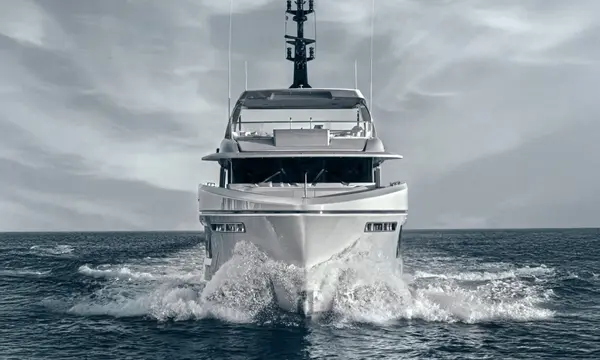
STELLAMAR's 35-metre RJ 115 design shows how expedition-grade engineering and Italian interior architecture can share one coherent owner-focused superyacht.
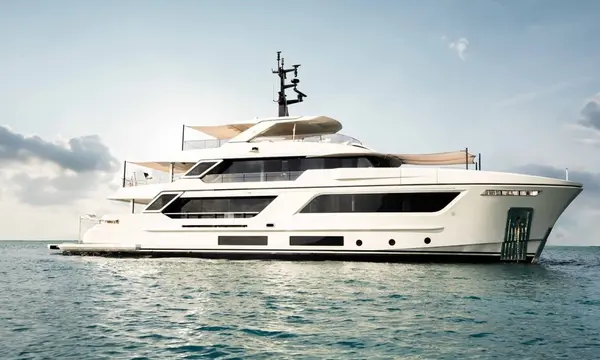
The 35-metre Cantiere delle Marche expedition yacht STELLAMAR will make her Fort Lauderdale International Boat Show debut from 28 October to 1 November.
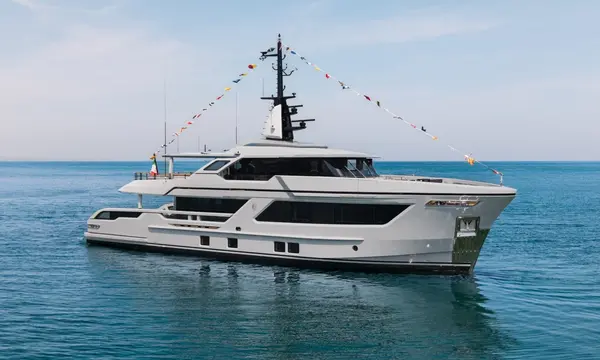
Cantiere delle Marche’s 31-metre RJ102 MON COEUR is part of the Cannes 2026 new-model lineup, bringing the yard’s RJ explorer DNA into its most …
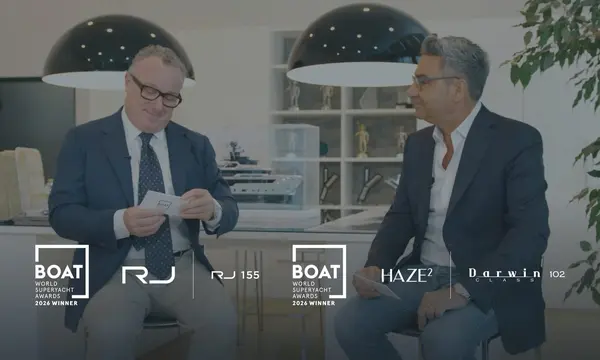
Cantiere delle Marche has marked World Superyacht Awards recognition for explorer yachts RJ and Haze2, highlighting two different approaches within its fleet.
Superyacht Guide
Continue into the wider Superyacht Guide.
Business opportunities · Superyacht Guide
Companies serving the superyacht market can discuss clearly identified advertising, sponsorship and business-profile opportunities. Commercial activity remains separate from independent editorial coverage.