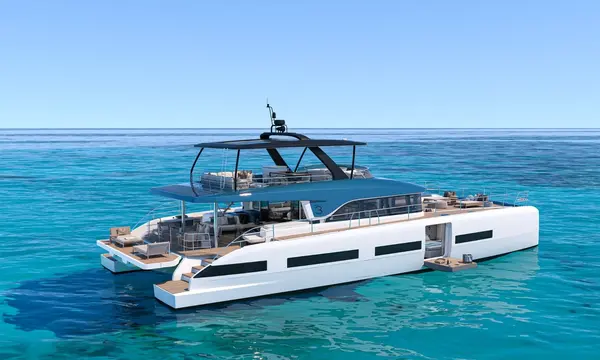
Lagoon Expands Its 24m-Plus Catamaran Market With EIGHTY 3
Lagoon product director Rosalie le Gall explains the growth in demand for catamarans above 24m as the company promotes its 24.4m EIGHTY 3 power …
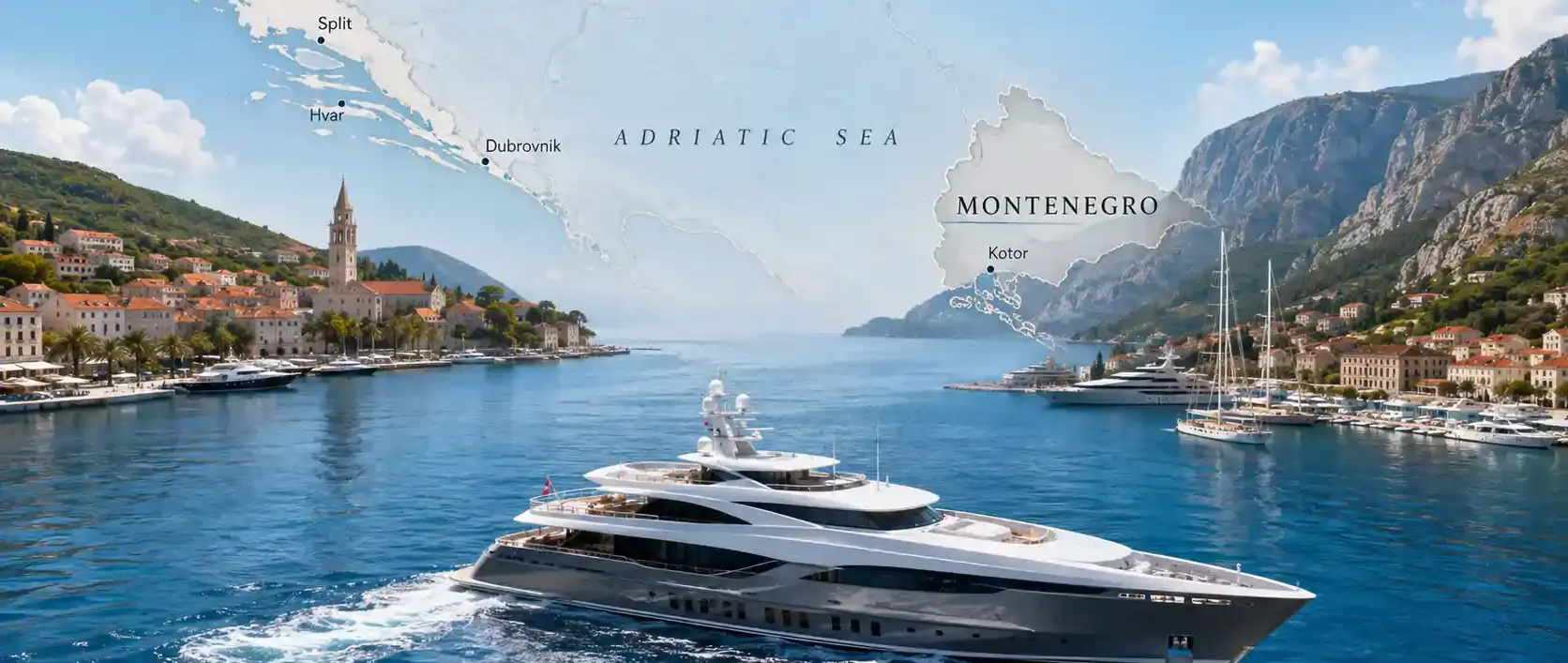
Croatia has the scale, islands and marina network while Montenegro has concentrated superyacht infrastructure, large-yacht berths and an increasingly ambitious home-port proposition. The competition is increasingly about where yachts berth, fuel, provision, refit and spend the shoulder season.
The distance between Dubrovnik and the entrance to Montenegro's Bay of Kotor is short enough for the two countries to sit naturally within the same superyacht itinerary, yet their nautical economies have developed in markedly different ways. Croatia has built depth through a long coastline, hundreds of islands, multiple cruising regions and a marina network extending from Istria to southern Dalmatia, while Montenegro has pursued concentration, using a much shorter coastline to build a small number of high-profile marina developments capable of attracting some of the largest yachts in the Mediterranean.
That makes the relationship more interesting than a simple contest for visiting yachts. A 60-metre yacht may cruise Croatia for a week and still choose Montenegro for fuel, a berth change, guest transfer or longer-term base, while another may home-port in Tivat but spend most of its summer moving through the Croatian islands. The competitive question is therefore where each country captures the higher-value parts of the yacht's stay.
Croatia's nautical sector is difficult to match for sheer breadth. The Croatian Bureau of Statistics recorded 216 nautical-tourism facilities in 2025, including 86 marinas, with 18,850 moorings in total. Of those, 1,045 were designated for vessels over 20 metres, while sea-mooring occupancy averaged 78% during the year and nautical ports generated almost €195 million of income excluding VAT, up 7.9% from 2024.
Those figures cover the entire leisure-boating market rather than superyachts alone, but they show the infrastructure supporting Croatia's position. ACI operates 22 marinas along the Croatian coast, connecting destinations from northern Istria to Dubrovnik, while private operators add substantial capacity around Zadar, Šibenik, Split and elsewhere. The resulting proposition is not a single superyacht marina but an interconnected cruising system.
For an owner or charter guest, that matters because Croatia can support an itinerary built around continual movement rather than one dominant base. Split-Dalmatia recorded 54,183 transit vessels using sea moorings in 2025, followed by Šibenik-Knin with 44,954, illustrating how heavily nautical traffic is distributed through central Dalmatia. The attraction is reinforced by the geography, where islands, historic ports, protected anchorages and short passages allow a yacht to change destination repeatedly without leaving the same cruising region.
Croatia has also continued pushing larger-yacht infrastructure. D-Marin Dalmacija near Zadar currently lists more than 1,000 berths and dedicated superyacht capacity up to 70 metres, while a new 250-tonne travel lift is scheduled to enter operation in autumn 2026, extending its ability to service larger yachts and catamarans. D-Marin Mandalina in Šibenik describes itself as Croatia's only marina specifically designed for superyachts and lists 452 berths with accommodation for yachts up to 70 metres on its current marina information.
The Croatian proposition is therefore strongest where cruising depth matters. It can offer the yacht a succession of destinations, service points and itinerary choices rather than requiring one marina development to supply the entire experience. That geographical breadth remains an important competitive advantage even as neighbouring Montenegro develops increasingly specialised large-yacht infrastructure.
Montenegro starts from the opposite position. Its coastline and domestic boating market are much smaller, but its flagship marina infrastructure was deliberately developed around internationally mobile large yachts. Instead of trying to reproduce Croatia's distributed marina system, the country has concentrated investment into a handful of destinations capable of acting as operational bases in their own right.
Porto Montenegro is the clearest example. Its current marina material describes more than 500 berths and accommodation for yachts up to 250 metres, together with year-round berthing, crew facilities, provisioning, technical support, concierge services and close access to Tivat's aviation infrastructure. The result is a marina designed not simply to receive visiting yachts but to capture the functions associated with a Mediterranean superyacht home port.
Portonovi has strengthened the same strategy at the entrance to Boka Bay. The marina currently advertises 238 berths and capacity for yachts and superyachts up to 140 metres, together with shore power, round-the-clock dock assistance, a border crossing, fuel, waste services and access to a helipad. Luštica Bay adds another marina-led destination around the bay, combining berthing with residential, hotel, dining and waterfront infrastructure.
Official Montenegro statistics show the wider nautical market continuing to grow. MONSTAT recorded 4,836 foreign leisure, sport and recreation vessels entering Montenegro in 2025, compared with 4,693 in 2024, while the number of people aboard those vessels rose from 22,774 to 25,800. Motor yachts accounted for 40.9% of the 2025 arrivals. The totals are not directly comparable with Croatia's marina-transit statistics because the two national statistical systems measure different things, but the Montenegrin figures show an increasingly international traffic base rather than a purely domestic marina economy.
Montenegro's competitive pitch is not based on scenery alone. Porto Montenegro explicitly markets duty-free fuel and preferential VAT treatment on qualifying spare parts among its marina advantages, while Portonovi also promotes tax-free fuel as part of its superyacht offer. The precise tax treatment depends on vessel status, transaction and applicable rules, so captains and managers need to verify eligibility rather than treating marina marketing as universal fiscal advice, but the promotion of these benefits shows how Montenegro is competing for operational expenditure as well as overnight visitors.
Croatia's counterweight is institutional rather than promotional. It is an EU member, has used the euro since 1 January 2023, and internal land and sea border checks with other Schengen states were lifted from the same date. For yachts, guests, crew and suppliers moving within European itineraries, that framework can simplify parts of the logistical environment, although customs, immigration, charter, VAT and vessel-status obligations still depend on the individual yacht and itinerary.
This creates two different commercial attractions. Montenegro has reason to make the high-value yacht want to stop and spend, particularly on fuel, berthing and waterfront services, while Croatia has reason to make the yacht want to stay and cruise between numerous destinations within one established nautical ecosystem. The competitive advantage therefore depends partly on which stage of the yacht's programme is being considered.
Peak-summer traffic is valuable, but the more strategically important yacht may be the one that stays for weeks or months. A home-ported yacht creates recurring revenue from berthing, provisioning, crew expenditure, maintenance, transport, agency work and guest logistics, while also generating activity during spring, autumn and winter when transient summer cruising falls away.
Montenegro has been particularly explicit about this market. Porto Montenegro promotes itself as a year-round home port and advertises flexible summer, charter and superyacht berthing arrangements alongside winter berthing, while Portonovi likewise promotes year-round occupancy and winter packages. The sheltered geography of Boka Bay and the concentration of crew amenities around the marina developments reinforce that proposition.
Croatia has much greater overall marina capacity, but much of its nautical economy serves a broader mix of charter boats, sailing yachts and smaller motor yachts. The national figures make that visible because although Croatia had 18,850 moorings in 2025, only 1,045 were classified for vessels above 20 metres. That does not mean Croatia lacks large-yacht capability; it means its infrastructure serves a much wider market, while Montenegro's most internationally visible marina investments are disproportionately focused on the upper end.
The distinction matters as superyachts become larger. A 35-metre yacht has many options along the Adriatic, while an 80-, 100- or 120-metre yacht has a much shorter list, and the ability to offer deep water, high-capacity shore power, secure access, fuel, waste handling, crew facilities and large-yacht manoeuvring space becomes a competitive asset in its own right. Montenegro's concentrated infrastructure becomes more relevant as vessel size increases.
Croatia remains the larger nautical market, but its 2025 statistics contain an interesting warning. The number of vessels recorded in transit fell 7.3% to 198,918, continuing declines recorded in the preceding two years, even as nautical-port income increased by 7.9%. That combination suggests raw vessel counts are not the only meaningful measure of performance, and that extracting greater value from each visit, longer stays, larger yachts and higher-value services is increasingly important.
For Croatia, that strengthens the argument for more dedicated large-yacht infrastructure, heavier lifting capability, high-capacity technical services and berths that allow superyachts to use the country as more than a cruising ground. D-Marin's planned 250-tonne lift at Dalmacija is an example of movement towards a more integrated service proposition, allowing marina infrastructure to capture technical expenditure as well as seasonal berth revenue.
Montenegro faces the opposite challenge. Its flagship marinas can berth extraordinarily large yachts, but the country cannot reproduce Croatia's island chain or the same breadth of cruising destinations. Its task is therefore to capture a larger share of each yacht's economic activity when the vessel enters Montenegrin waters. The rise from 4,693 foreign recreational vessels in 2024 to 4,836 in 2025 is useful, but for the superyacht sector the more important question is what those yachts do after arrival.
The competitive narrative becomes less binary when viewed from the bridge. Portonovi lists Dubrovnik at only 32 nautical miles away, meaning the border between the two markets is operationally a short passage rather than a major itinerary break. A yacht can embark guests in Croatia, cruise the Elaphiti Islands and Dubrovnik, clear into Montenegro, spend several days in Boka Bay, take fuel or change guests, and return north without treating either country as the exclusive destination.
That proximity may ultimately help both countries. Montenegro's large-yacht marinas can bring yachts into the southern Adriatic that subsequently cruise Croatia, while Croatia's established charter and cruising traffic creates a nearby pool of yachts that can be attracted south into Montenegro. The commercial competition is real, but it occurs inside an increasingly coherent Adriatic superyacht region.
The more important contest is therefore for which functions each country performs. Croatia currently dominates through geographical depth, distributed marina infrastructure and itinerary variety, while Montenegro has built a concentrated superyacht proposition around major berths, marina-resort infrastructure and operational incentives. Neither model automatically defeats the other because a yacht's summer programme may benefit from both.
The winner will be the country that converts yacht movements into the greatest long-term value through more home-port contracts, more technical work, more provisioning, more crew expenditure, longer shoulder-season stays and better infrastructure for the largest vessels. In that contest, the Adriatic is no longer simply a secondary alternative to the western Mediterranean; Croatia and Montenegro are competing over how much of the superyacht economy remains in the region once the yacht arrives.
Continue reading
Lagoon product director Rosalie le Gall explains the growth in demand for catamarans above 24m as the company promotes its 24.4m EIGHTY 3 power …
Northrop & Johnson’s Q3 2026 market analysis reports 126 used yacht sales above 24m, down from 160 in Q2, while 40–50m sales grew across …
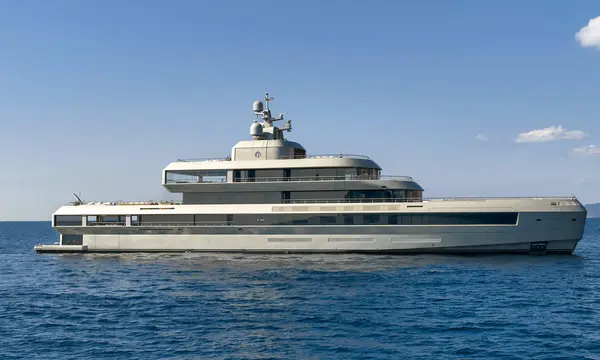
A reported interview indicates Leonardo Maria Del Vecchio is considering selling one of two yachts, but no named vessel or confirmed brokerage listing has …
BoatPro figures discussed by SuperYacht24 show 34 superyacht sales in September 2026, up from 23 a year earlier, alongside a rise in listing additions …
Superyacht Guide
Continue into the wider Superyacht Guide.
Business opportunities · Superyacht Guide
Companies serving the superyacht market can discuss clearly identified advertising, sponsorship and business-profile opportunities. Commercial activity remains separate from independent editorial coverage.