Marina Port de Mallorca Captains Explain the Winter Berthing Choice
Marina Port de Mallorca has published a new account of why yacht captains select a winter base in Palma, drawing on the experiences of …
BLICKFANG Vienna is taking place at the MAK Museum of Applied Arts from 6 to 8 November 2026, bringing independent furniture, fashion and jewellery designers together in one of the city's best-known cultural institutions. The organiser's published material describes a carefully selected international mix, with around 150 labels from more than 15 countries. It is an opportunity to discover contemporary pieces directly from makers rather than another mass-market retail promotion. For collectors and owners who commission distinctive interiors, that direct relationship can be the beginning of a more personal conversation about materials, craft and a designer's working methods.
Damen Yachting is returning to METSTRADE from 17 to 19 November 2026 with an explicit emphasis on long-term service and complex refit projects. The Dutch yard says it will exhibit alongside Damen Shiprepair and Damen Maaskant in Hall 7, Stand 340, building on the three businesses' joint presence in the show's Refit Cluster last year. The announcement is a trade-show commitment, not a new refit contract or the opening of a shipyard. It matters because an owner contemplating an extension, major systems upgrade or multi-season maintenance programme needs to compare capability across very different types of facility.
The Vlissingen-based superyacht business claims 25 years of continuous refit experience and says it welcomes vessels from other builders as well as its own Amels, Xplorer and Yacht Support families. That open-yard positioning is significant in a market where original-build information, specialist equipment and availability of dock space can strongly influence an owner's options. The purpose of a technical meeting at METSTRADE is not simply to inspect a stand. It is to decide what a yard can reliably scope, engineer, schedule and support when the work goes beyond routine seasonal maintenance.
The joint appearance groups specialist yacht work with wider shiprepair and maritime engineering resources. Damen Yachting presents the superyacht owner-facing expertise, while Damen Shiprepair and Damen Maaskant bring their own marine-service capabilities to the conversation. Their presence together does not mean that every repair must be carried out by all three firms. Rather, the arrangement gives a visitor a starting point for asking how specialist trades, engineering teams and production capacity are assembled around a complicated vessel. The precise facility and contracting entity should still be confirmed for every proposed job.
The Netherlands has a substantial cluster of yacht builders, refit specialists, component makers and marine contractors, and the Vlissingen hub is positioned to draw on that infrastructure. Proximity to a network, however, is only one part of delivery. Owners also need a clear project organisation, robust change-control procedures, transparent specification and realistic dates for dry-dock or alongside availability. If a refit includes new systems and major structural work, the choice of project manager and the allocation of design responsibility can make as much difference as the headline size of a facility. Those are the practical topics worth bringing to a trade-show meeting.
Damen points to the rebuild of HERE COMES THE SUN, subsequently sailing as MIRAGE, as an example of its ability to undertake large alterations. The yacht was extended from 83 to 89 metres, a change demanding much more than a cosmetic interior revision. Lengthening a yacht entails questions of structure, systems routing, stability, deck arrangements and the coordination of numerous specialist tasks. The case demonstrates that the yard has experience with ambitious interventions, but it cannot establish the timetable, cost or technical suitability of an entirely different owner's project without detailed engineering.
The yard also cites MOONSTONE, formerly a Delta-built yacht named ALBATROSS, to illustrate work beyond vessels originally constructed by Damen. Its announced scope included a 7.5-metre transom extension and a substantial rethinking of onboard spaces. Another reference, SYNTHESIS, represents the advantages that can arise when a yacht returns to its original builder. Together the examples support different procurement questions: does a yard have proven experience of structural changes, can it work from incomplete legacy drawings, and when does builder-specific institutional knowledge justify a particular choice? No single example answers all three.
Owners often begin with an aspiration that sounds straightforward: more outdoor space, a new guest suite, a quieter ship or lower hotel-load emissions at anchor. Turning that aspiration into a contract requires a naval architect, class and flag considerations, a systems inventory and an assessment of what must be disturbed to reach existing machinery or structure. A design that looks elegant in a rendering can require extensive new piping, cabling, ventilation or insulation. The earlier those consequences are exposed, the easier it is to establish a budget range and protect the owner's preferred delivery date.
For yachts approaching a periodic survey, the timing of major works can be particularly important. Coordinating a refit with survey activity might reduce duplicated docking and dismantling, but the benefits depend on the precise class schedule and agreed work package. Owners should ask for a baseline programme with milestones and define how emerging findings will be assessed. A hull inspection can reveal issues that were not visible when a fixed quotation was first discussed. A credible yard will distinguish what is included, what is provisional and how additional work affects cost and schedule before authorisation is given.
The press announcement also places lifecycle support at the centre of Damen's message. That is a useful lens for superyachts, which accumulate maintenance obligations long after the excitement of delivery has passed. Coating systems, generators, hotel systems, navigational electronics and interiors age at different rates. Some work is planned years in advance, while other repairs follow equipment failure or the changing requirements of an owner. A lifecycle plan can help managers coordinate work across seasons, reduce repeated access to the same spaces and establish which technical records should remain with the vessel when ownership changes.
The immediate challenge is keeping such a plan grounded in evidence. Maintenance hours, equipment condition and supplier recommendations matter more than a blanket assumption about how often a component must be replaced. If a yard proposes a multi-year service relationship, the owner should understand who retains technical documents, how spares are managed and whether the crew receives training after modifications. An updated specification and tested as-built drawings are not administrative luxuries. They are often essential when a problem occurs hundreds of miles from the yard that performed the alteration.
Michel Coens, Damen Yachting's Head of Refit and Services, describes returning customers as a measure of the business's success. The yard says some clients come back five or ten years after earlier work. That is an encouraging commercial signal, but a prospective client still needs vessel-specific references and evidence relevant to the intended project. A refit contractor that performed superb cosmetic work may not automatically be the best fit for a machinery replacement, just as a structural specialist may need additional design partners for an intricate guest-interior programme.
An owner considering bids should establish consistent evaluation criteria across yards. The quality of the preliminary survey, confidence in project controls, subcontractor supervision, warranty terms and availability of post-delivery support are all relevant. Price can only be compared fairly where specifications and exclusions are sufficiently aligned. Rather than selecting on the lowest headline figure, management teams can use a risk register to identify where different proposals transfer responsibility to the yacht or leave important decisions unresolved. This approach keeps an ambitious upgrade from becoming an open-ended series of surprises.
METSTRADE brings manufacturers, service businesses and yacht professionals together during the period when many yachts are preparing winter work. The show's expanded superyacht area, including refit representation, makes it possible to connect a yard discussion with technical suppliers that may provide equipment or specialist services for the same project. For an owner or captain, this concentration is useful only if meetings are prepared. A concise specification of the yacht, desired operational outcome and timing can produce more informative answers than a general enquiry about a proposed upgrade.
The timing also highlights the difference between exploring a capability and booking a production slot. Damen's announcement identifies the show dates and location; it does not guarantee immediate yard availability for any visitor. Interested yacht managers should agree how technical information will be exchanged, whether confidentiality arrangements are required and when an on-site survey can take place. The resulting record should state clearly which assumptions have been checked and which remain subject to engineering, class review or owner approval. Good procurement depends on traceable decisions after the exhibition closes.
The message from Vlissingen is that long-term yacht value increasingly depends on the ability to maintain, adapt and document a complex asset over successive ownership and operating cycles. Damen is using METSTRADE to demonstrate its refit experience and integrated marine capabilities, with the cited work on MIRAGE and MOONSTONE providing concrete points of reference. These examples should help serious buyers ask better questions, while never being treated as a promise that another yacht's project will have the same scope, cost or outcome.
For Superyacht Guide readers, the most useful next step is a disciplined brief: identify the operational problem, establish the desired result, collect the vessel's technical records and ask prospective yards to explain the engineering pathway. The owner can then assess whether a proposed refit supports cruising plans, safe operation and future asset value. The 17–19 November exhibition creates a convenient opportunity to start that conversation with Damen Yachting, Damen Shiprepair and Damen Maaskant. The actual investment decision should follow detailed surveys and proposals, not exhibition enthusiasm alone.
Primary source: original announcement; corroborating source: additional first-party or industry material. Report dated 7 November 2026. Announcements and operating plans may change; editorial interpretations are distinguished from confirmed facts.
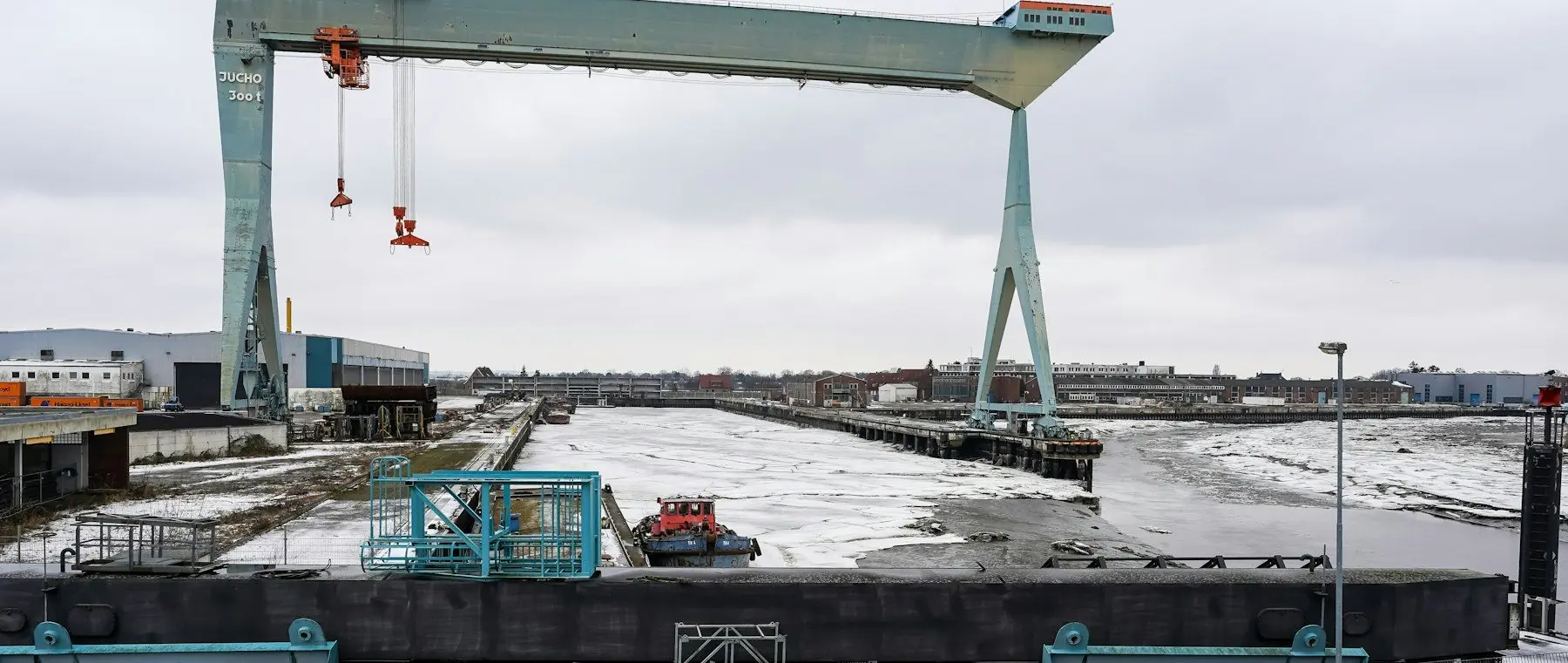
Editorial photograph: photographer and original image — Wolfgang Weiser / Unsplash License; Hamburg shipyard crane; illustrative dry-dock view, not Damen Vlissingen. Cropped and resized under the Unsplash License. Illustrative photograph only; it does not show the 2026 event or named product.
Continue reading
Marina Port de Mallorca has published a new account of why yacht captains select a winter base in Palma, drawing on the experiences of …

The Italian Sea Group's board has identified SRI Group Global Limited's €220 million proposal as the basis for its restructuring plan, while expressly reserving …

Sunseeker International has appointed Daren Morris chief financial officer, succeeding Dean Lawler. The move follows new ownership and advances in its 134 Superyacht programme.
The Mantaray Marina is open on Australia's Gold Coast, with early berth holders moving in. The development is listed with 67 berths for yachts …
Superyacht Guide
Continue into the wider Superyacht Guide.
Business opportunities · Superyacht Guide
Companies serving the superyacht market can discuss clearly identified advertising, sponsorship and business-profile opportunities. Commercial activity remains separate from independent editorial coverage.