Company
Superyacht Builders Association (SYBAss)
Explore the company profile and related Superyacht Guide coverage.
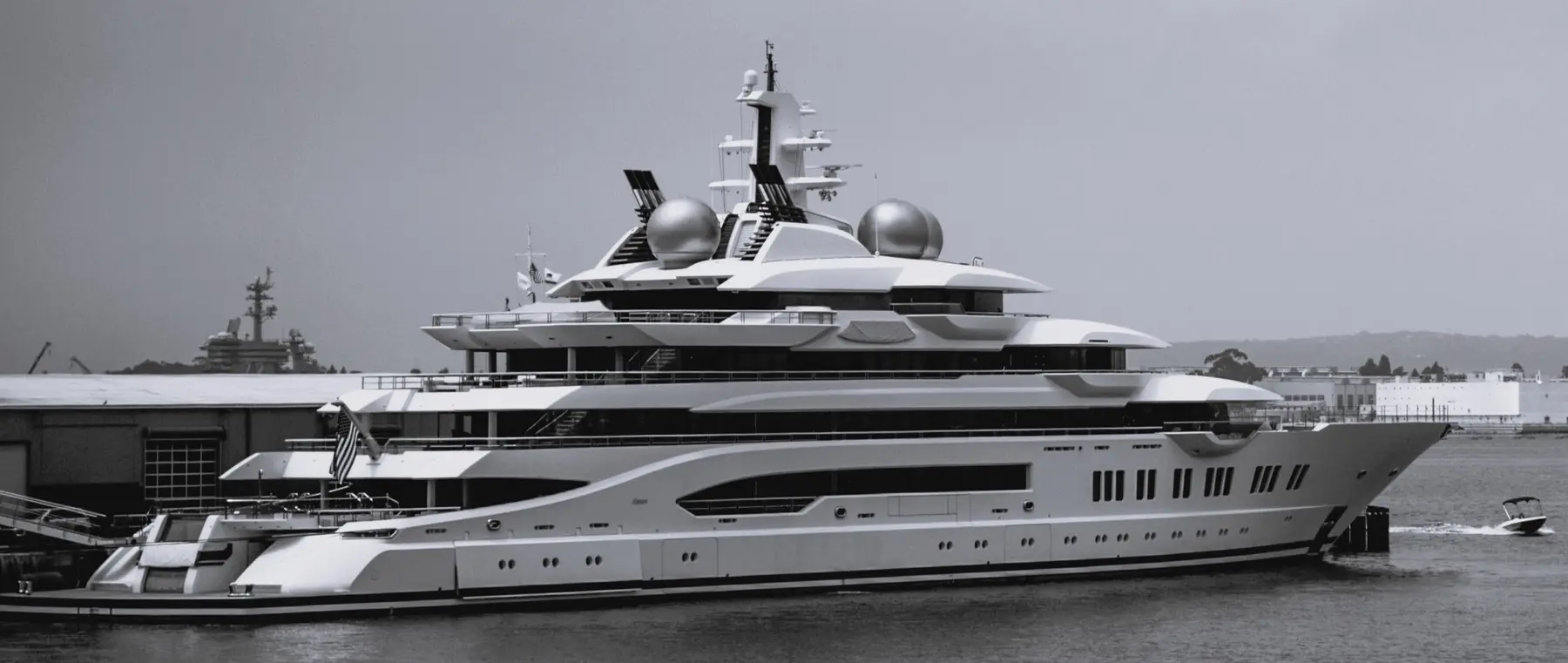
Image: Deloitte research commissioned by SYBAss and Superyacht Life; Superyacht Technology, 9 October 2026
Deloitte's analysis of the €54bn superyacht economy breaks down construction, refit, operations and the high economic contribution from yachts above 60 metres.
Deloitte's latest public analysis of the superyacht economy puts total industry output at €54 billion in 2022 and provides a detailed view of where money is spent during construction, refit and operation. The research, commissioned by the Superyacht Builders Association (SYBAss) and The Superyacht Life Foundation, was highlighted again in October 2026 as companies assess which technical investments may have the greatest commercial impact. The 2022 baseline is important: these figures describe the measured period, not audited turnover for 2026.
The study divides the economic footprint into categories that demonstrate why a superyacht is far more than a shipyard construction project. Fleet usage and tourism account for roughly half of the overall activity, new construction for 37%, refit and maintenance for 11%, and brokerage and charter services for the remaining two percent. Those shares reflect economic impact classifications within the research and should not be mistaken for the percentage of every owner's annual operating budget.
Within the construction cost-of-goods-sold analysis, hull and superstructure account for approximately 21% while mechanical systems contribute around 20%. This places fundamental engineering ahead of many more visible luxury elements. Steel or aluminium fabrication, structural integration, propulsion machinery, heating and cooling infrastructure, stabilisation and related equipment involve significant engineering labour, certification and supplier coordination before the yacht's furnishings are installed.
The proportions matter because owners and builders often discuss changes in terms of visual features, cabin areas and bespoke materials. In reality, an alteration to a machinery-space boundary or heavy structure can require redesign across stability, access, fire protection and systems routing. A single aesthetic change late in the build can therefore affect multiple engineering disciplines and the schedule for several subcontractors.
These findings also make clear that a percentage share is not a fixed tariff. A sailing yacht, fast aluminium motor yacht and 100-metre displacement vessel may have very different weight distributions, machinery specifications and outfitting requirements. The figures are industry-wide analytical categories and should be used to frame project questions rather than to estimate the price of an individual hull without proper engineering data.
Refit and maintenance represent roughly 11% of the economic footprint assessed in the report, underscoring the importance of specialist dry docks, travel lifts, paint facilities, machinery contractors and project-management teams. Large vessels require periodic survey work and planned maintenance whether or not an owner is commissioning a major interior refurbishment. Capacity constraints at suitable yards can therefore affect operational schedules as much as the availability of new-build berths.
The lifecycle view shifts attention from acquisition costs to repeated expenditure across decades. Coating systems, power generation, communications, hotel services, hydraulics and navigation equipment can each require inspection or renewal long before a yacht reaches the end of its structural life. It is often the interaction of several systems during a refit that creates delay, making early technical planning and documented scopes valuable to both owner and yard.
An owner considering a substantial upgrade should distinguish mandatory maintenance from optional enhancement and from work intended to support resale. These categories overlap, but they carry different risks and schedules. The Deloitte figures establish the wider economic importance of refit activity; they do not demonstrate that any particular upgrade will recover its cost on sale.
The study estimates that yachts longer than 60 metres represent about nine to ten percent of the fleet yet generate approximately 29% of total fleet expenditure. The result highlights how a limited number of large vessels can sustain extensive ecosystems of specialised suppliers and service providers. Larger yachts typically carry more elaborate hotel systems, greater crewing requirements and technical equipment whose maintenance calls for dedicated industrial capacity.
This concentration is relevant to chandleries and logistics companies as well as shipyards. A large yacht's provisioning includes technical consumables, safety products, spare parts, engineering supplies and hospitality inventory, often coordinated across changing ports and short notice windows. Service quality depends not only on stock but on traceability, customs arrangements, correct specifications and delivery reliability.
Even so, the analysis should not be interpreted as evidence that smaller yachts are commercially unimportant. The larger population of vessels below 60 metres supports marine contractors, marinas and local businesses around the world. Different segments generate different kinds of demand, and the economic health of the sector depends on both the highest-value projects and the broad network of businesses supplying the active fleet.
The combined structural and mechanical shares point to opportunities for vendors that can improve installation efficiency, quality assurance, serviceability and predictable delivery. Manufacturers offering a cheaper component without credible support or technical documentation may not reduce the total cost of a project. A builder must account for integration labour, warranty exposure, spare-parts access and downtime risk as well as purchase price.
Digital project records, modular systems and earlier coordination between naval architects and equipment suppliers could offer practical efficiency gains. Those are potential implications of the cost breakdown rather than financial savings proven by the report itself. Evaluation requires real project data, comparable specifications and a clear distinction between theoretical performance and results at sea.
SYBAss represents leading international superyacht builders and participates in discussions about standards and the industrial environment supporting large-yacht construction. The Superyacht Life Foundation works to communicate the broader value and activities of the superyacht sector. Their commissioning of the Deloitte study provides a sector-level framework, while the researchers' stated methods and the vintage of the data remain important when interpreting the results.
The updated coverage in October 2026 reinforces a central point for owners, shipyards and service companies: the industry's commercial footprint extends well beyond the moment a yacht is delivered. Its continuing demand for maintenance, crewing, provisioning, marine engineering and refit capacity generates an economic network whose scale cannot be captured by new-build order books alone.
Explore
Go deeper into the yachts, companies, events and destinations directly connected to this article.
Company
Explore the company profile and related Superyacht Guide coverage.
Continue reading
A new industry study estimates that superyachts over 30 metres generated €54 billion in global economic output in 2022 across direct spending and wider …

Cantiere Rossini renewed gender-equality certification in April 2026 and reported women in a quarter of its workforce and 40% of operational leadership.
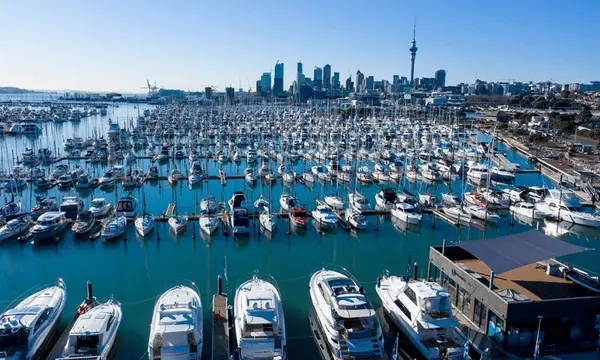
SeaKeepers South Pacific announced a July 2026 partnership with three Auckland Council marinas to widen access to citizen science and conservation programmes.

Northern Lights has expanded Diesel Marine NZ’s distributor role to cover marine generators, Lugger engines and Technicold equipment across the South Pacific.
Superyacht Guide
Continue into the wider Superyacht Guide.
Business opportunities · Superyacht Guide
Companies serving the superyacht market can discuss clearly identified advertising, sponsorship and business-profile opportunities. Commercial activity remains separate from independent editorial coverage.