Echo Yachts Becomes Naming Rights Partner of 2027 Australian Superyacht Conference
By Superyacht Guide Newsroom · Edited by Superyacht Guide Newsroom
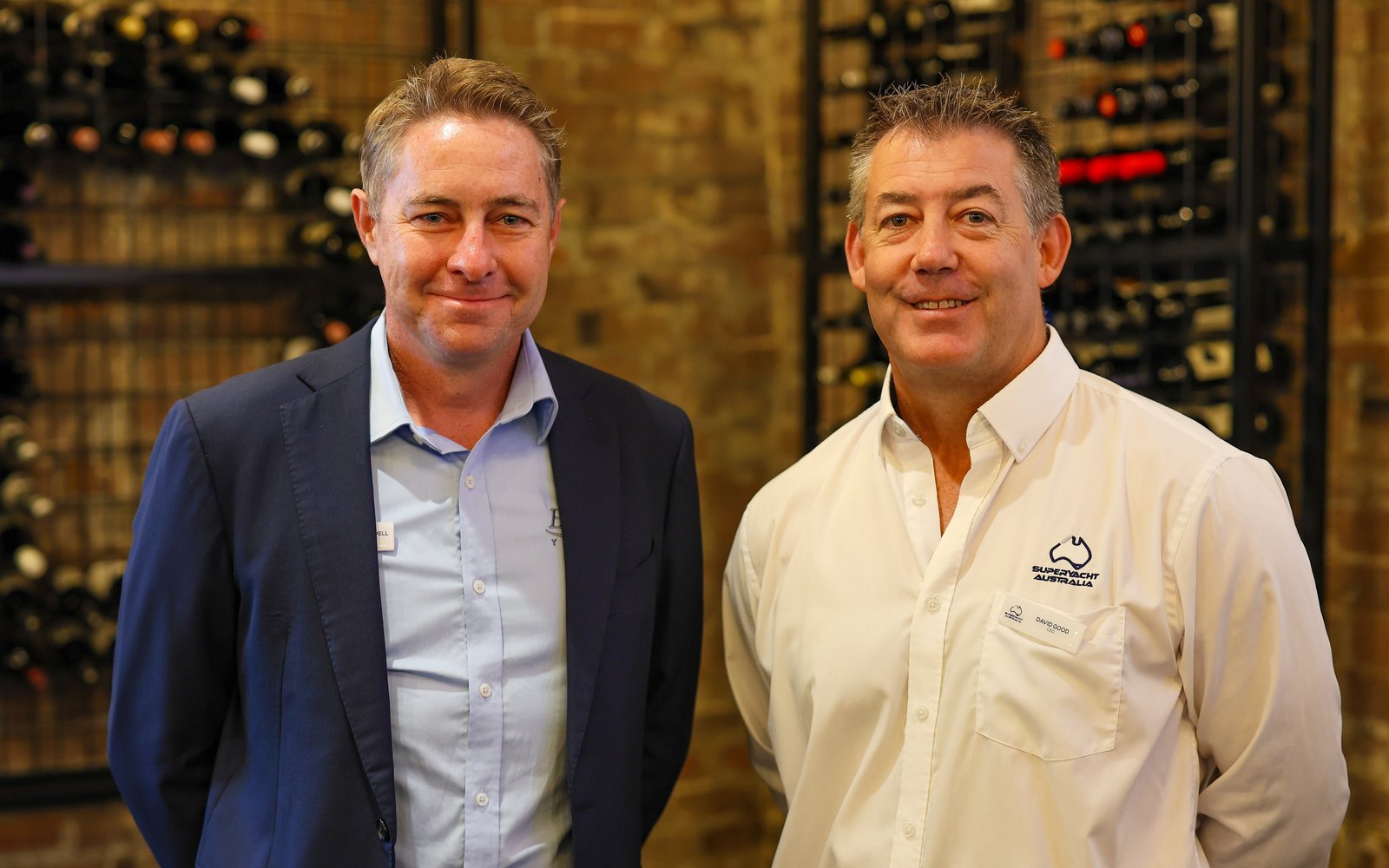
Echo Yachts and Superyacht Australia official naming rights partnership photograph November 2026
Echo Yachts has been named presenting partner of the March 2027 Australian Superyacht Conference, with international superyacht business development in focus.
Superyacht Australia has named Western Australian shipbuilder Echo Yachts as the naming rights partner of its second Australian Superyacht Conference in Sydney. The announcement, dated 16 November 2026 on the Australian Marine website, brings a major builder and refit yard into a prominent role at an event intended to strengthen commercial relationships between Australia's marine industry and overseas decision-makers. The conference takes place on 1 and 2 March 2027 at REVY, Doltone House, Jones Bay Wharf, Pyrmont. It will be presented under the Echo Yachts name.
The partnership is a new development following the previously announced expansion of the Sydney conference to two days. It is not a new yacht order, a change in ownership of the shipyard or evidence of contracts being awarded as a result of the event. It does, however, give the industry a clearer indication of the commercial audience the organisers want to reach. Builders and service companies will have an opportunity to present their capabilities to representatives of internationally operated yachts, including people whose purchasing decisions involve budgets and schedules extending across several years.
Echo Yachts operates from the Australian Marine Complex in Henderson, south of Fremantle in Western Australia. Superyacht Australia's announcement describes the business as the country's largest full-custom superyacht builder. The yard undertakes new construction as well as repairs and alterations to existing vessels. Its advertised capabilities include enclosed halls measuring 103 metres and 80 metres, a slipway rated at 800 tonnes and a floating dock rated at 12,000 tonnes. The organiser says its fabrication and engineering work spans steel, aluminium and composite structures.
These figures provide a useful starting point for understanding the range of work that can be considered at Henderson, but they should not be interpreted as automatic acceptance criteria for every visiting yacht. The usable dimensions of facilities, docking arrangements, available water depth, vessel displacement and structural support requirements must all be assessed for an individual project. An owner considering a stay in a particular yard will need to discuss the actual vessel and its proposed work scope.
Custom construction differs from buying an existing design in that many of the important decisions precede fabrication. The yacht's intended cruising profile can determine its required range, storage arrangements, systems redundancy and allocation of space between guests, crew and machinery. These choices influence the schedule and the eventual operating requirements of the completed vessel.
For a prospective buyer attending the conference, an early discussion with an engineering and construction team can therefore be valuable even before a detailed specification exists. Rather than simply comparing projected interior area or the length of a proposed vessel, the buyer's representatives can examine what is required to deliver the intended experience. A yard may need input from an independent naval architect, classification society, owner-appointed surveyor and specialist suppliers as the design evolves. Establishing working relationships at an early stage can help those participants identify which decisions need to be resolved before a construction contract is negotiated.
The organiser highlights the 84-metre WHITE RABBIT as an example of Echo Yachts' work. This aluminium trimaran was recognised for naval architecture at the 2019 BOAT International Design and Innovation Awards. The significance of the example is the demonstration of an ability to execute a yacht substantially different from the conventional single-hull arrangement. It does not imply that the same configuration will be appropriate for another owner's requirements.
A trimaran introduces different design considerations in relation to structural connections, width, hydrodynamic performance and access to infrastructure. The demands on the builder depend heavily on the particular naval architecture and systems arrangement. An owner seeking an unconventional platform needs to evaluate the proposed vessel on its own merits, including the potentially wider range of berthing and maintenance constraints. A history of completing demanding projects can support confidence in a yard's technical competence, but it is not a substitute for project-specific assessment.
The partnership also highlights an often less visible part of the business: work on yachts that were originally constructed elsewhere. The official announcement lists substantial repairs, surveys, interior and exterior alterations, hull extensions, helipad work and changes to propulsion systems among examples of past refit activities at the yard.
For a yacht already in service, the aim of a major refit may be to renew its useful life, bring systems into line with current operating needs or accommodate changes requested by its owner. Even a narrowly defined change can have consequences elsewhere on the vessel. A modification to a large machinery installation, for instance, may require evaluation of supporting structures, ventilation, power distribution, control systems and survey requirements. The extent of work may expand after the condition of existing components becomes clear. Owners and their technical teams should distinguish a preliminary estimate from a contract with a defined scope, contingency provisions and acceptance criteria.
A shipyard in Western Australia occupies a different geographical position from facilities in the principal Mediterranean and Caribbean yachting centres. For an internationally cruising yacht, the decision about where to undertake work must be considered alongside its upcoming itinerary and operational calendar. The distance to a yard is not the only determining factor: suitability of available facilities, access to specialist personnel, expected duration of work and whether the vessel can be supported before and after leaving the yard may be equally important.
A vessel intending to spend time in the Indian Ocean or elsewhere in the Asia-Pacific region may be able to incorporate Western Australian maintenance into a broader cruising plan. This does not imply that repositioning will always be economical or that a preferred subcontractor will be available at short notice. Such matters can only be assessed through quotations and a detailed review of the vessel's schedule. Technical staff should also consider the availability and lead times of parts and the requirements of equipment manufacturers.
Superyacht Australia describes the intended attendees as including international owners, family office personnel, prospective purchasers, yacht managers, captains and brokers. These groups approach a purchase or maintenance decision from different perspectives. An owner may be concerned primarily with the finished yacht and personal requirements; a captain is likely to bring detailed knowledge of the practical operating constraints; and the management organisation may need a reliable basis for budgetary and contractual commitments.
A conference that allows those groups to speak with builders, marinas and other suppliers can help clarify where their priorities overlap. It can also reveal the practical limits of an initially attractive proposal. A discussion on the waterfront is only a starting point, however. The agreements that follow must still be scrutinised through normal technical, commercial and legal processes.
Echo's naming rights role signals that the shipyard is investing in its public association with the Australian superyacht sector and its international promotion. The organisers have described their objective of developing relationships with overseas clients and emphasising the country's construction and support capabilities. They have not released the commercial value of the sponsorship, the length of the naming rights agreement beyond the announced event or a list of resulting customers.
It would consequently be premature to use this announcement to estimate sales or new construction volume. It is more useful to view the arrangement as evidence of the priority being given to business development. International owners often make decisions after repeated interaction with a series of advisers and suppliers. The conference provides a setting for that relationship-building process rather than a direct measure of its results.
The organiser says early-bird registration is available until 31 December 2026, with rates of A$1,195 plus GST for Superyacht Australia members and A$1,595 plus GST for non-members. The programme is intended to include discussions among industry participants, networking and an excursion on Sydney Harbour. Individual speakers will be announced later; participants should confirm the final programme with the organiser before committing to travel.
The naming partnership provides a specific reason to follow the event's development during the coming months. For the wider industry, the central question will be whether the conference helps visiting decision-makers better understand the range of Australian facilities available and how those facilities might fit into their yacht construction, cruising and maintenance plans. That outcome cannot be established until the event takes place, but the partnership announced today makes the organiser's international business-development ambitions unusually clear.
Primary source: Superyacht Australia / Australian Marine.
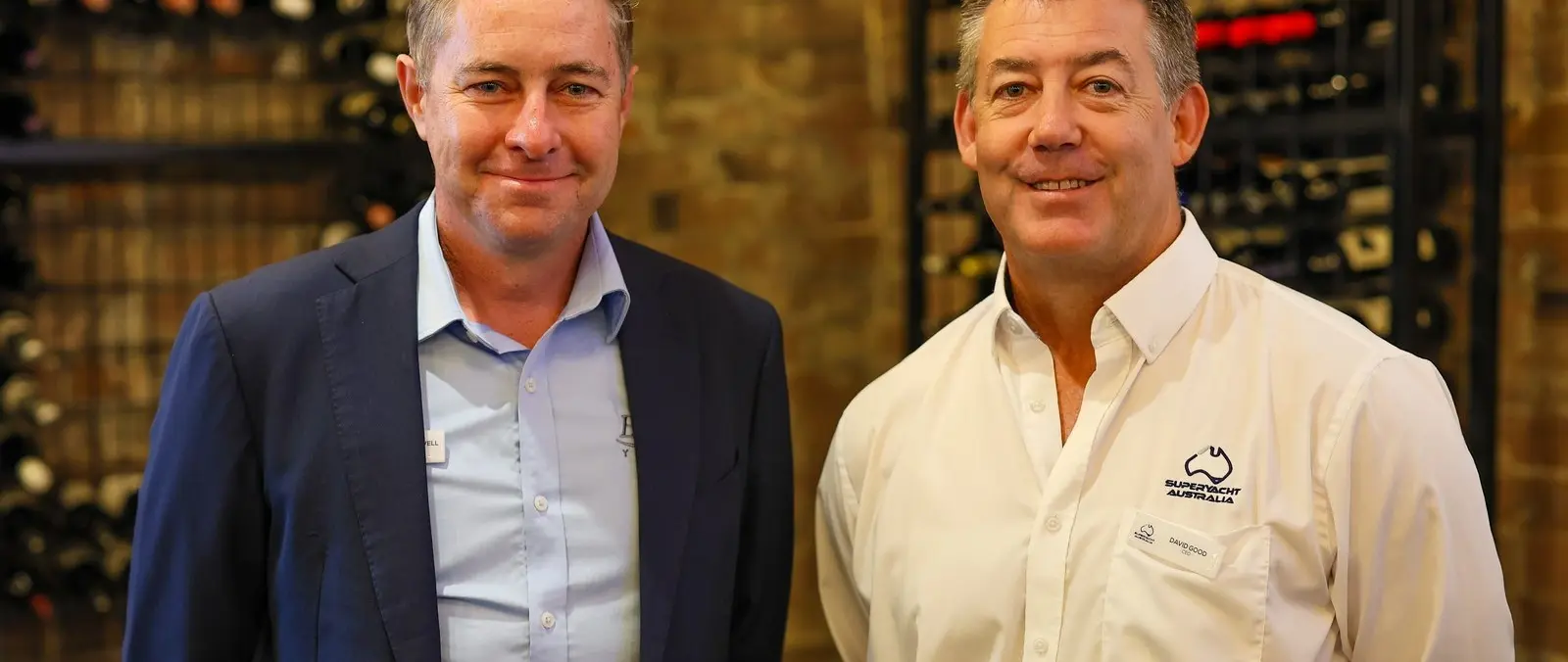
Photo: Superyacht Australia / Australian Marine, official 16 November 2026 partnership announcement; Chris Blackwell and David Good as captioned by the organiser. Official source.
Explore
Go deeper into the yachts, companies, events and destinations directly connected to this article.
Continue reading

Southern Wind reports Marco Alberti’s Lighthouse Legend recognition at the 2026 South African boatbuilding awards, honouring his long industry career.
FGI Yacht Group announces a partnership with flyExclusive, linking yacht brokerage and charter clients with private aviation and amphibious transfers.
ANP Pharma will exhibit tailored medical stores and replenishment services in the METSTRADE Superyacht Zone, addressing vessel-specific procurement needs.
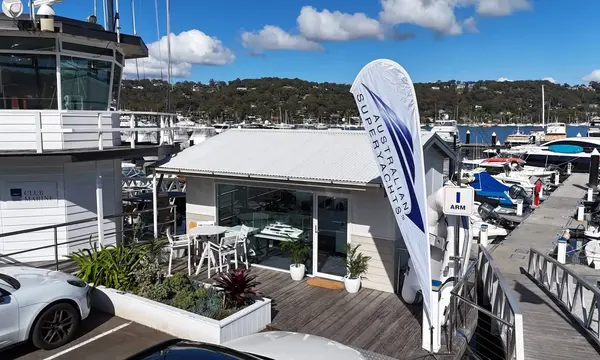
Australian Superyachts has established a long-term base at Royal Motor Yacht Club Newport, linking Sydney's Northern Beaches with its east-coast agency services.
Superyacht Guide
Continue into the wider Superyacht Guide.
Business opportunities · Superyacht Guide
Companies serving the superyacht market can discuss clearly identified advertising, sponsorship and business-profile opportunities. Commercial activity remains separate from independent editorial coverage.