
ANP Pharma Presents Bespoke Superyacht Medical Supply
By Superyacht Guide Newsroom · Edited by Superyacht Guide Newsroom
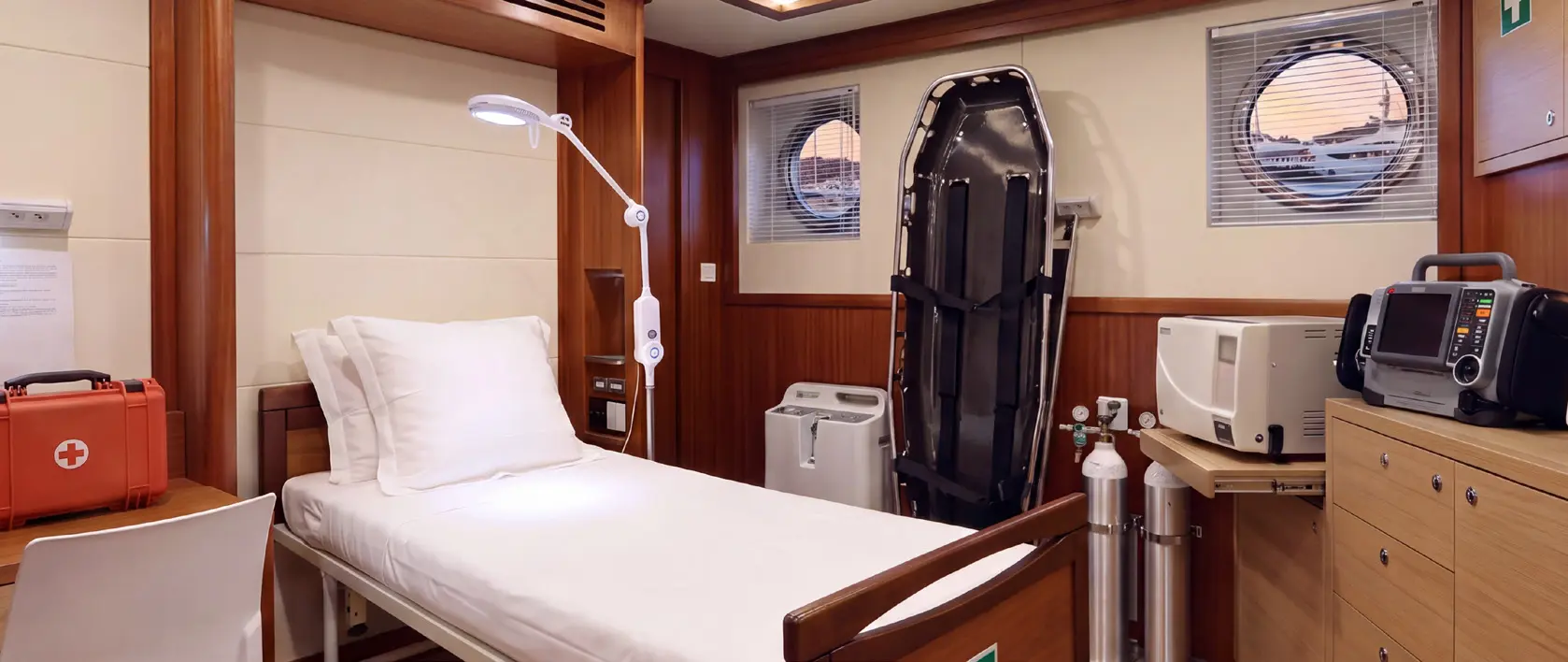
Illustrative onboard medical space — ANP Pharma newbuild brochure
ANP Pharma will exhibit tailored medical stores and replenishment services in the METSTRADE Superyacht Zone, addressing vessel-specific procurement needs.
Maritime medical supplier ANP Pharma will use METSTRADE 2026 to present its tailored approach to medical supplies for professionally managed yachts. The company confirmed in an announcement dated 13 November that it will exhibit in the Superyacht Zone at stand 8.532 in Hall 8. The presentation will address more than the procurement of individual items: it will explain how a yacht's inventory, packaging, labelling and replenishment can be planned around the particular requirements of the vessel. Amsterdam's marine equipment exhibition takes place from 17 to 19 November, providing an opportunity for owners' representatives, captains and shore-based purchasing professionals to discuss the service before the winter maintenance period.
The announcement is particularly relevant to larger yachts, where the responsibilities associated with guest welfare and crew safety remain in place whether the vessel is cruising locally, crossing an ocean or preparing for a charter. The company's emphasis is on a tailored service rather than a claim that one medical kit can satisfy every vessel. This distinction matters for both new yachts and existing yachts whose operations have changed since their original medical stores were specified.
In its statement, ANP Pharma identifies vessel dimensions, crew numbers, activities, intended voyages, storage arrangements and flag-state obligations as considerations when defining the contents of a medical inventory. For a superyacht management team, this means that the initial brief for a supplier needs to reflect the actual operation. The same physical yacht can be used in markedly different ways by successive owners, and equipment carried for short coastal passages may not match the requirements of a more remote itinerary.
A useful procurement conversation therefore starts with the yacht's verified operating profile rather than a generic shopping list. The captain and designated medical personnel should establish which requirements need to be assessed by an appropriately qualified professional; the purchasing department can then use the resulting specification to compare suppliers. This approach also helps distinguish items that are essential to the vessel's approved provision from optional additions selected for an individual operation. It is not a substitute for professional medical assessment or the applicable maritime rules.
ANP's announcement places considerable importance on the presentation of medical supplies: clear labelling, logical grouping and accessible packaging are as relevant to daily administration as to an emergency. A large inventory may be divided between a dedicated medical space, departmental first aid stores and other locations identified in the yacht's safety arrangements. Crew should be able to understand the location system without needing to depend on the memory of the original individual who organised it.
The layout must balance accessibility with proper security and storage. Some supplies may require special handling or appropriately restricted access, and those conditions need to be agreed with qualified personnel. For a refit, the useful discussion with a supplier is as much about the physical constraints of lockers, cabinets and designated storage spaces as the contents of the order. A well-documented inventory can enable the yacht to identify what is carried, where it is located and who is responsible for checking it without prescribing how any of the individual products should be used.
The company also highlights expiry dates, replenishment schedules and supply-chain continuity. These concerns are particularly significant aboard yachts that move between jurisdictions and frequently change their port of call. An item that can easily be replaced at a home berth may be more challenging to source during a remote cruising season. Requirements for regulated products can vary between countries, which is another reason for working with suitably licensed suppliers rather than treating medical procurement like ordinary deck stores.
For the yacht's shore office, it is advantageous to establish a documented replenishment process that accommodates both planned reviews and unexpected changes in the yacht's schedule. The purchasing team needs to know what information the supplier requires, what delivery constraints exist at a given port and how outstanding orders will be followed. The vessel should maintain an accurate record of stock received and reconcile the delivery with its approved specification. Reliable arrangements can reduce the risk that a missing or expired item becomes apparent only at departure time.
ANP refers to the United Kingdom Maritime and Coastguard Agency's MSN 1905 and the World Health Organization's International Medical Guide for Ships among the reference materials relevant to maritime medical preparedness. These references do not establish the governing requirements for every superyacht. The yacht's registration, type of operation and applicable rules must be considered before choosing the appropriate specification.
Owners' representatives should avoid interpreting the supplier's exhibition material as an independent certificate that their particular yacht is compliant. A procurement proposal can identify the categories of supplies offered, but the basis for selecting them needs to be established separately and recorded. Where a yacht changes flag, private or commercial status, or cruising programme, its management team should determine whether that change calls for review. A discussion at METSTRADE can be a starting point for the review, rather than its conclusion.
As part of Wescom Group, ANP describes a portfolio encompassing medical kits, medicines, consumables and diagnostic equipment. The exhibitor's announcement identifies customisable Category A and Category B kits alongside packaged Category C kits. The company has also published separate exhibitor literature directed at the medical supply requirements of newbuild projects, including yachts.
Consolidating purchasing through one specialist can simplify the administrative task of identifying suppliers, collating documentation and coordinating delivery, particularly where the same management company oversees several vessels operating in different regions. Such consolidation should not mean that every yacht receives an identical set of supplies. The useful distinction is between common administrative processes and the individual approved specification. Owners' representatives can standardise the format in which records are held while retaining the particulars of each vessel's inventory. The ability to obtain replacements and appropriate documentation over time remains an important element of evaluating any single-source proposal.
A yacht under construction offers the opportunity to coordinate the intended medical provision with the physical design of the vessel. The purchasing specification, storage dimensions, access arrangements, technical services and any designated medical treatment area should be discussed early enough for the project team to address relevant requirements. Retrofitting storage or reconfiguring a finished space after delivery can be more disruptive than incorporating the agreed arrangements during construction.
Existing yachts have a different starting point. The owner may be investing in an interior refurbishment, replacing technical installations, revising the charter operation or simply conducting an annual review. Reviewing existing medical stores as part of the refit planning process helps the management team avoid overlooking this less conspicuous element of the yacht's operational infrastructure. The supplier's brochure includes an illustrative onboard medical space, but the image is not evidence that ANP has supplied a particular yacht or completed a specified installation. The requirements of an individual vessel must be established by its own project and medical advisers.
A visit to stand 8.532 can be used to investigate how the supplier works with the shipyard, yacht manager or designated officer throughout a procurement project. Useful topics include how an inventory is documented, how modifications to the original specification are communicated, and how the supplier manages delivery to a moving vessel. Where fleet management is involved, procurement personnel can examine whether reporting formats and revision records can be made suitable for their own internal systems.
The appropriate qualified personnel should also establish the boundaries of the supplier's service, including who provides the medical expertise, which regulatory requirements are being assessed and how the responsibilities of the vessel's operator are documented. The exhibition announcement does not provide individual contract prices or identify specific newbuild customers, and commercial terms will need to be agreed directly. The value of this conversation lies in obtaining an accurate, vessel-specific proposal rather than assuming that a general presentation answers every operational question.
For the superyacht sector, the broader significance of ANP's METSTRADE presentation is the connection between medical provision and the established management of the vessel. Procurement is only one stage in a cycle that includes reviewing requirements, recording deliveries, maintaining stock and arranging appropriate replenishment. That cycle needs clear ownership within the vessel and its shore management organisation, particularly when personnel change or an itinerary is revised.
There is a practical advantage in involving those responsible for managing the yacht's medical provision in the review of any proposed supply arrangement. Their experience of the vessel's layout, crew structure and day-to-day operation should inform the specification, subject to the assessment of qualified advisers and applicable requirements. ANP's announcement indicates that this tailored approach will be central to its discussions in Amsterdam. The opportunity for visitors is to consider how a specialist supply relationship could support the yacht's existing procedures over its operational life, rather than simply supplying a collection of products at the point of purchase.
Primary source: ANP Pharma official METSTRADE announcement, 13 November 2026.
Illustrative onboard medical space — ANP Pharma official newbuild promotional brochure; photograph extracted from page 2. Official source.
Explore
Go deeper into the yachts, companies, events and destinations directly connected to this article.
Continue reading
Australian Superyachts has established a long-term base at Royal Motor Yacht Club Newport, linking Sydney's Northern Beaches with its east-coast agency services.
AIMEX moves the Brisbane 2032 Marine Project into its existing international events programme as its dedicated project manager completes a year of groundwork.

A METSTRADE interview with former Indian Navy engineer Darsitha Babu examines the transfer of engineering, project leadership and compliance skills to yachting.

IGY reports that Mert Oygut and Rajesh Kurup completed Advanced Marina Management training in San Diego, strengthening leadership and operational expertise.
Superyacht Guide
Continue into the wider Superyacht Guide.
Business opportunities · Superyacht Guide
Companies serving the superyacht market can discuss clearly identified advertising, sponsorship and business-profile opportunities. Commercial activity remains separate from independent editorial coverage.