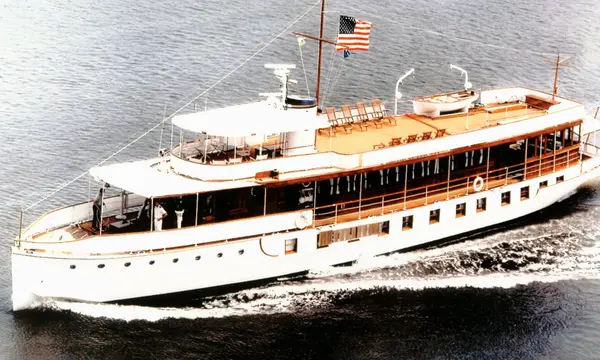
USS Sequoia: The Presidential Yacht Used by Nine U.S. Presidents
USS Sequoia served nine U.S. presidents and became a floating setting for diplomacy, political decisions and private presidential life. From Roosevelt and Kennedy to …
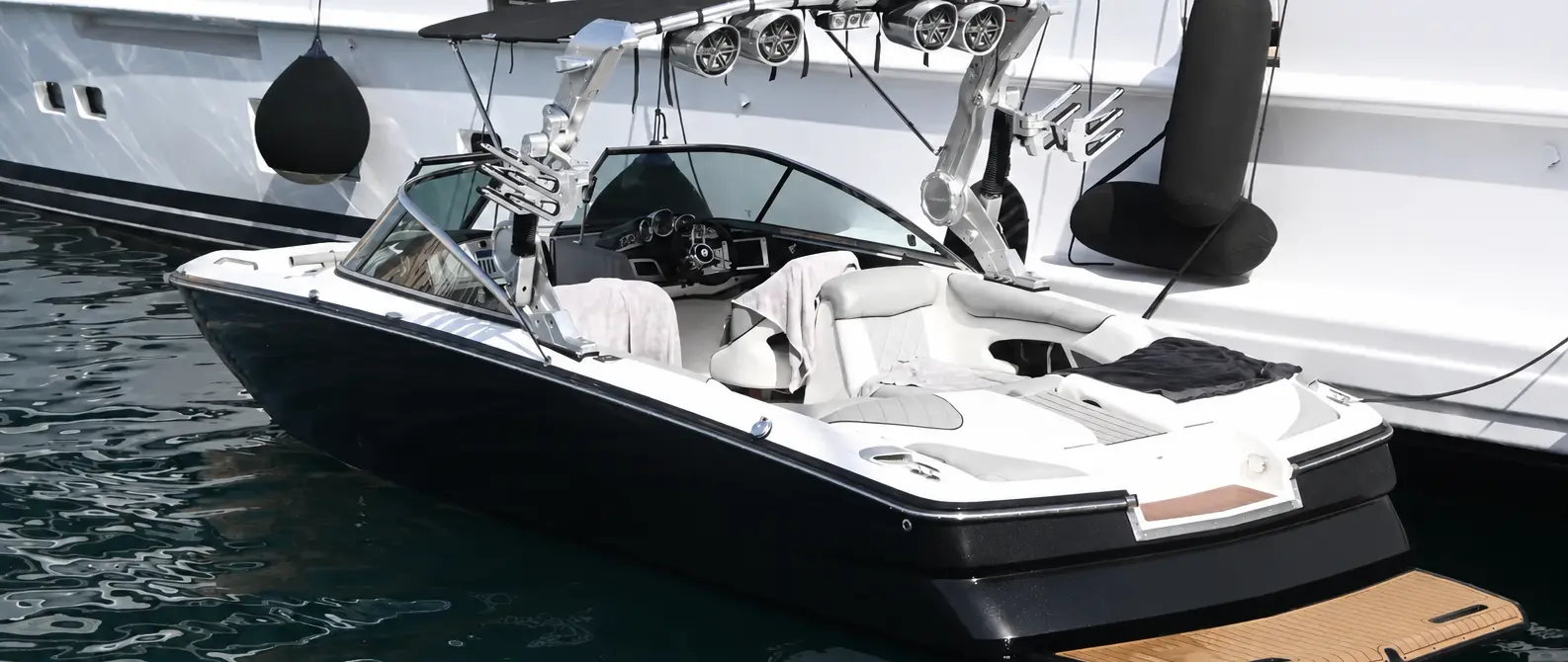
Electric tenders promise silent transfers, instant torque and no local exhaust emissions, but charging, range, battery safety and mothership integration can create an entirely new set of operational challenges.
There is something slightly absurd about stepping off a nearly silent €100 million superyacht and climbing into a tender that immediately fills the air with diesel noise, exhaust fumes and vibration. For years, owners have spent enormous sums isolating machinery, reducing generator noise and creating interiors in which the mechanical business of running a ship almost disappears, only for the final kilometre of the journey ashore to take place behind a conventional engine working hard beneath the seats.
Electric propulsion promises to change that experience completely.
Push the throttles forward and there is no engine roar building behind the passengers, no diesel smell drifting back into the cockpit and almost none of the vibration associated with a conventional drivetrain. Torque arrives immediately, acceleration can be remarkably strong and conversation continues at something close to normal volume. Approaching a beach club, waterfront restaurant or quiet anchorage under electric power feels entirely consistent with the modern idea of luxury: fast when required, discreet when desired and almost invisible in operation.
For a limousine tender carrying an owner and guests from yacht to shore, that is enormously attractive. Builders of dedicated superyacht tenders are increasingly offering fully electric propulsion, highlighting reduced noise, vibration and local emissions alongside the instantaneous torque available from electric motors. The technology is no longer simply a matter of replacing a diesel engine with an electric motor; hull efficiency, battery integration, cooling, control systems and propulsion optimisation all have to work together.
But the tender does not operate in isolation.
It lives inside another vessel.
It must be charged, launched, recovered, stored, cooled, monitored and ready whenever the owner wants it. It may spend the morning making short marina transfers, the afternoon towing waterskiers, then be called upon unexpectedly for a high-speed 20-mile run because guests have changed their dinner plans. Once lithium-ion batteries move into the tender garage, the mothership must also consider electrical capacity, fire detection, ventilation, charging procedures and emergency response in ways that a conventional diesel tender never required.
The question is therefore not whether electric tenders work.
They clearly do.
The more interesting question is whether they make the superyacht easier to operate — or simply move the complexity from the engine compartment of the tender into the engineering department of the mothership.
Electric propulsion makes its strongest argument from the passenger seat.
A conventional high-performance tender is an extraordinary machine, but it remains a small powerboat carrying large engines in close proximity to its passengers. Designers use insulation, engine mounts, exhaust systems and increasingly sophisticated construction techniques to control noise and vibration, yet the machinery is still there.
Electric motors change the character of the journey.
At lower speeds, particularly in marinas and around anchorages, propulsion becomes almost unobtrusive. Guests can talk without competing with engine noise, crew can communicate more easily during manoeuvring, and there is no exhaust plume hanging around the boarding platform while the tender waits alongside the mothership.
For enclosed limousine tenders, the difference may be even more noticeable. These boats exist specifically to make the journey ashore feel like an extension of the yacht itself. They are fitted with fine upholstery, climate control, sophisticated lighting and interiors that can resemble luxury road cars. Removing much of the mechanical noise and vibration beneath that environment is not merely an environmental benefit; it improves the product.
Modern electric limousine tenders can offer impressive acceleration, sophisticated battery systems and meaningful operating range, but real-world performance, as with any electric craft, depends heavily on speed, sea state, load and operating profile.
That last point is crucial.
Electric boats can produce impressive range figures, but speed changes everything.
The physics are unforgiving. A planing hull requires dramatically more energy to push through the water at high speed than it does travelling slowly. Electric propulsion does not escape that relationship; it simply makes the energy supply more visible because the battery has a finite stored capacity.
At moderate speeds an electric boat may travel surprisingly far. At sustained planing speeds, available range can fall rapidly. The contrast illustrates the central operational reality: electric boats can travel far, or they can travel fast, but sustained high speed consumes battery capacity very quickly.
For many superyacht tenders, that may not matter nearly as much as critics assume.
A surprising amount of tender operation consists of short journeys. Yacht to marina. Yacht to beach. Yacht to restaurant. Guests ashore and back again. In that role, a carefully designed electric tender may complete multiple transfers without approaching its practical range limit.
The challenge begins when the tender is expected to be everything at once.
The same boat may also be required to tow waterskiers, support diving, shuttle crew, collect provisions, run ahead to secure restaurant arrangements, operate as a chase boat and remain available for emergency use. A conventional diesel tender can be refuelled quickly and returned to service. An electric tender eventually needs time and electricity.
That changes how the crew has to think about energy.
Range anxiety receives most of the attention whenever electric boats are discussed, but on a superyacht the more important operational question may be what happens after the tender returns.
A yacht does not simply need enough energy to complete one journey. It needs to restore that energy before the next one.
If the tender spends the morning carrying guests ashore, returns with a partially depleted battery and is required again two hours later, the engineering team needs to know how quickly it can recharge and what electrical load that places on the mothership.
This is where integration becomes far more important than the tender’s brochure specification.
A new-build yacht can be designed around electric toys and tenders from the beginning. Electrical generation, transformers, distribution, charging circuits, ventilation, temperature monitoring, fire detection and garage arrangements can all be engineered with the intended battery loads in mind.
Adding a large electric tender later is different.
The yacht may physically have enough garage space, yet the original electrical architecture may never have been designed to recharge a battery bank containing tens or even hundreds of kilowatt-hours while simultaneously supporting air-conditioning, hotel loads, galley demand, stabilisers, swimming pools and every other system onboard.
The irony is obvious. An electric tender may create zero emissions while operating around the anchorage, but the electricity used to charge it may still be generated by the yacht’s diesel generators.
That does not make electrification pointless. Electric propulsion can still remove local exhaust, reduce noise and vibration, and potentially use energy more efficiently for the tender’s actual duty cycle. Increasing numbers of motherships also incorporate battery-hybrid systems, shore-power connections or more sophisticated energy management.
But it does mean that “zero-emission tender” requires context.
The tender itself may produce no exhaust while underway.
The total energy system supplying it is another matter.
Charging speed also influences operational flexibility. Slow overnight charging may be perfectly adequate for a tender used twice each day. It becomes less attractive if the owner expects the boat to operate continuously from breakfast until two in the morning.
Fast charging can reduce turnaround time, but higher charging power demands more from the yacht’s electrical infrastructure and creates additional heat that must be managed.
The crew therefore needs to understand the tender almost as an energy account.
How much charge remains? What is tomorrow’s itinerary? Will guests need a long transfer? Is waterskiing planned? Will the tender be required late tonight? When is the best charging window? Should the battery be fully charged now or managed according to manufacturer recommendations to preserve long-term battery health?
These are new questions for the deck department and engineers.
A diesel tender simplifies the calculation. There is fuel in the tank or there is not.
Electric propulsion creates a more sophisticated relationship between operational planning and energy management.
The situation becomes particularly interesting for yachts carrying several electric craft at once. A modern yacht may have an electric guest tender, electric jet skis, e-foils, diving propulsion devices and other battery-powered toys competing for charging infrastructure.
Regulators and classification organisations are increasingly treating this as a serious design and operational issue rather than a novelty. Guidance now specifically addresses the storage and charging of lithium-ion-powered craft aboard yachts, including charging spaces, monitoring, isolation, detection and emergency procedures.
The electric tender therefore cannot sensibly be specified as an isolated purchase.
It has to be specified as part of the yacht.
There is an important misconception surrounding electric tenders: that lithium-ion batteries automatically make them more dangerous than petrol or diesel boats.
That is too simplistic.
Petrol-powered craft present obvious fire and vapour hazards, which is why yacht tender garages have long been designed around ventilation, fuel isolation, fire detection and suppression requirements. Diesel also brings fuel, hot machinery and combustible liquids onboard.
Electric craft replace some of those risks with different ones.
Current maritime guidance recognises that electrically powered craft do not necessarily represent a greater fire risk than petrol-powered alternatives, but that the prevention, storage, detection and suppression measures required for lithium-ion systems differ significantly.
The key concern is thermal runaway.
A damaged, defective or overheated lithium-ion cell can enter a self-heating reaction that may propagate through neighbouring cells. Such events can produce extreme heat and flammable or toxic gases, and re-ignition remains possible after an apparent fire has been suppressed.
This becomes particularly significant when the battery is not sitting on an open dock but inside the garage of a yacht carrying dozens of people.
The scale is also substantial. Modern electric tenders can carry battery systems containing tens or even hundreds of kilowatt-hours of stored energy.
Modern battery systems incorporate sophisticated Battery Management Systems designed to monitor temperature, voltage, current and cell condition. Proper marine installations include containment, cooling and safety measures intended to reduce the likelihood of serious battery incidents.
But yacht design cannot rely on the assumption that failure will never happen.
Current guidance therefore goes much further than simply instructing crews to plug the tender in carefully. Dedicated charging arrangements, temperature monitoring, ventilation, fire detection, automatic charging shutdown, electrical isolation, crew training and appropriate emergency procedures all need consideration. For large yachts, structural fire protection around spaces containing and charging battery-powered craft may also become part of the design strategy.
This creates one of the biggest differences between specifying an electric tender for a new yacht and retrofitting one into an existing yacht.
A garage originally designed around conventional tenders may not automatically be suitable simply because an electric boat physically fits through the shell door.
The electrical supply may need upgrading.
The charging arrangement may need redesigning.
Temperature monitoring may need integrating into the yacht’s alarm system.
Ventilation and fire-suppression strategies may need reviewing.
Crew procedures and training may need changing.
Insurers, flag administrations and classification societies may also have requirements depending on the yacht and installation.
At that point, the electric tender stops being merely a tender purchase.
It becomes a mothership modification project.
That does not mean the idea should be abandoned. It means the cost and complexity need to be considered before the owner signs the order.
The smartest solution is integration from the earliest stages of a new build, when naval architects can design the tender garage, electrical infrastructure and safety systems around the actual equipment that will be carried.
The least elegant solution is discovering after delivery that the beautiful electric limousine tender selected late in the project requires charging infrastructure the yacht was never designed to provide.
The strongest argument for electric tenders may ultimately be that not every tender needs to perform every job.
For decades, yacht tenders have been asked to compromise. They must fit inside a restricted garage yet carry many passengers. They must look elegant enough for the owner but durable enough for crew operations. They must travel quickly, ride comfortably, tow toys, carry luggage, land on beaches and sometimes act as rescue craft.
Electrification may work best when the owner and design team resist trying to make one electric boat solve all of those problems.
A dedicated guest limousine has a relatively predictable operating profile. It leaves the yacht, carries passengers ashore and returns. Journeys are often short, comfort is extremely important and the ability to arrive quietly beside a restaurant or beach club has genuine value.
That is almost an ideal electric mission.
A hard-working crew tender operating continuously for provisioning, luggage, diving support and long-distance errands presents a different challenge. So does a chase boat expected to cover 100 nautical miles independently of the yacht.
In those roles, diesel or petrol may remain more practical for some owners, particularly where rapid refuelling and long high-speed range are essential.
The future superyacht tender garage may therefore become mixed rather than entirely electric.
An owner might have a silent electric limousine for guest transfers and a conventional high-performance utility tender for demanding operational work. Another yacht might use electric propulsion for nearly everything because its cruising style consists mainly of short transfers around Mediterranean anchorages. An explorer yacht spending months in remote regions may reach a completely different conclusion.
There is no single correct answer.
That may be the most important point.
Electric tenders are sometimes presented as though the industry is simply waiting for batteries to improve enough for every conventional tender to disappear. Reality is more nuanced. Battery energy density will improve, charging systems will become faster and yacht electrical architecture will increasingly be designed around large onboard batteries, but operational requirements will continue to differ enormously from one yacht to another.
What electric propulsion already does exceptionally well is redefine refinement.
A tender approaching the mothership silently at sunset, with no diesel exhaust drifting across the beach club and passengers speaking normally while travelling at low speed, offers something that is immediately understandable without any discussion of sustainability.
It simply feels better.
The operational headache appears when that experience is purchased without considering everything required to support it.
Range must match the yacht’s actual tender profile rather than an idealised brochure journey. Charging time must fit the owner’s schedule. The mothership must be capable of supplying the necessary electrical power. Battery safety has to be designed into storage and charging arrangements. Crew need procedures and training, and somebody needs to think about what happens not only when the tender works perfectly but when it returns with a damaged battery, a fault warning or 12 per cent charge remaining just as the owner announces an unexpected dinner reservation 15 miles away.
That is the difference between buying an electric boat and integrating an electric tender.
For the right yacht, the result can be one of the most satisfying improvements in the entire ownership experience: silent departures, almost vibration-free transfers, precise manoeuvring and no exhaust fumes around guests.
For the wrong yacht, it can become another sophisticated system competing for generator capacity, engineering attention and valuable garage infrastructure.
Electric tenders are therefore neither an automatic revolution nor an impractical experiment.
They are tools.
And like almost everything aboard a superyacht, whether they represent quiet luxury or an operational headache depends less on the technology itself than on whether somebody asked the right questions before the yacht left the shipyard.
Continue reading
USS Sequoia served nine U.S. presidents and became a floating setting for diplomacy, political decisions and private presidential life. From Roosevelt and Kennedy to …
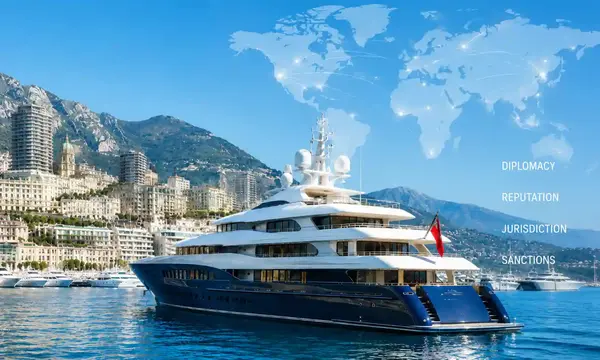
Superyachts are unusually visible forms of private wealth, so where they berth can carry reputational as well as legal significance. Soft power begins with …
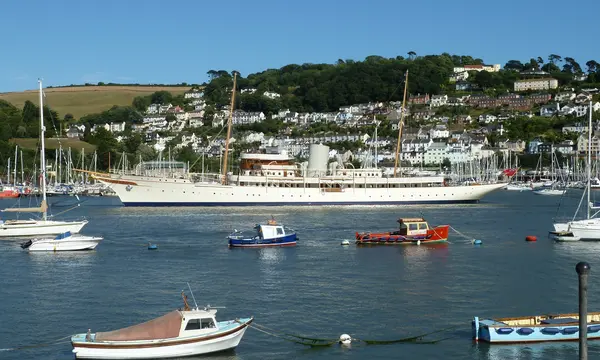
Nahlin is a 91.44-metre classic motor yacht built by John Brown & Sons in 1930 to a G.L. Watson design. Her 1936 Mediterranean charter …
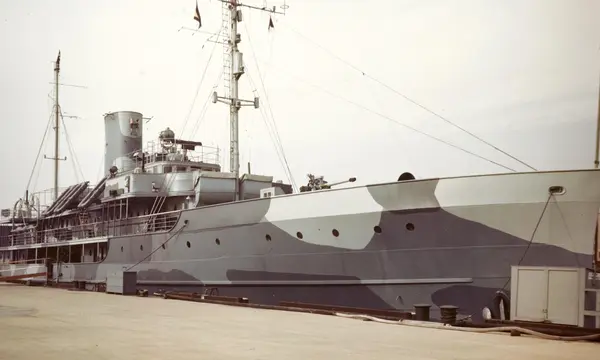
Built for Horace Dodge in 1921, SS Delphine survived sinking, wartime service as USS Dauntless and decades of uncertainty before a landmark restoration returned …
Superyacht Guide
Continue into the wider Superyacht Guide.