
Inside Enejota: How a Commercial Crew Boat Became a 47m Brazilian Explorer Yacht
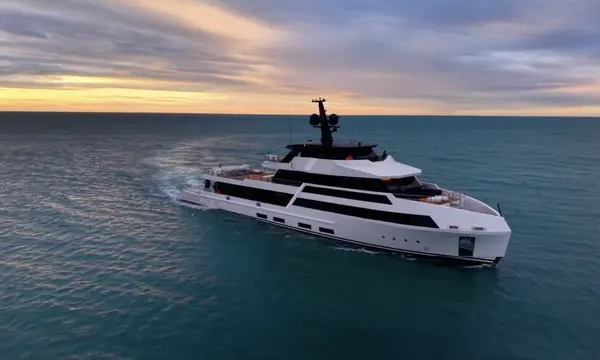
Inace Superyachts has delivered the 46.7-metre Enejota after transforming a former Brazilian offshore crew boat into a private explorer yacht.
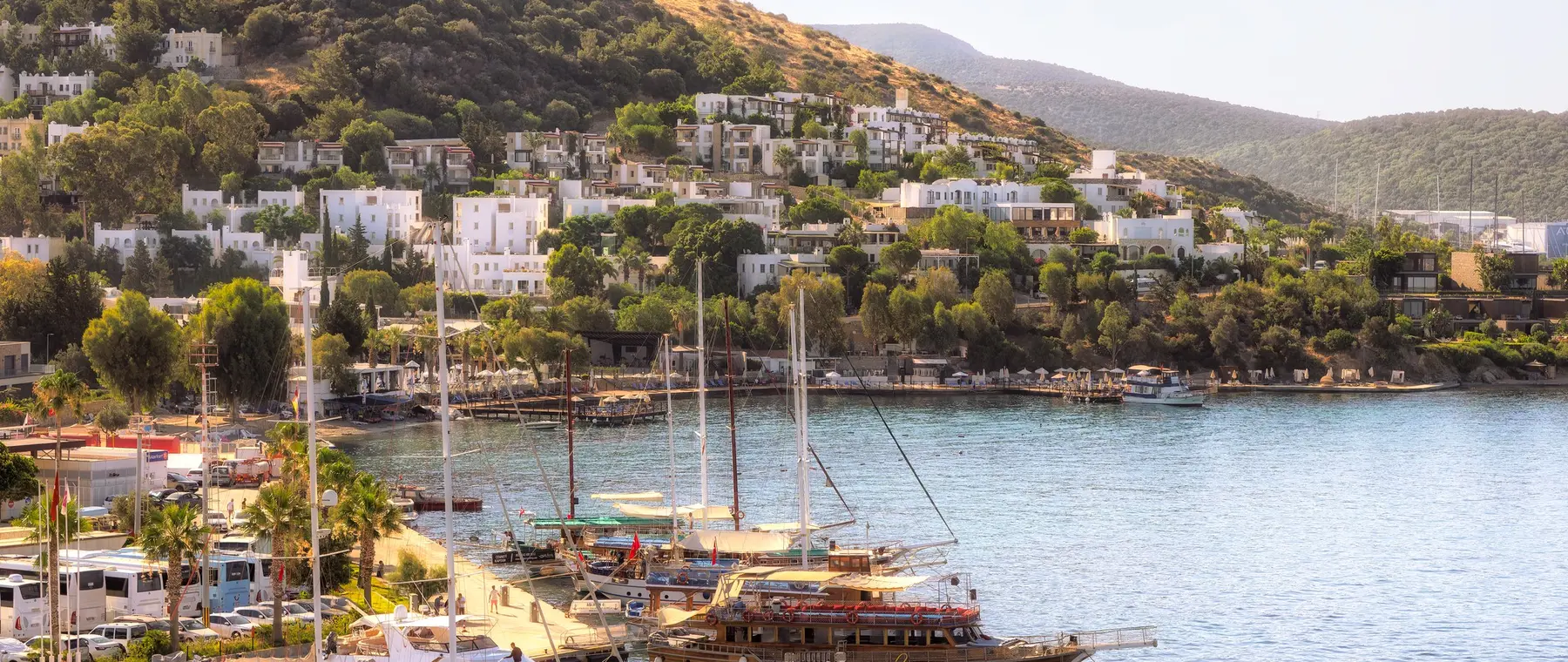
Bodrum Harbour, Türkiye, 2024 — Mustang Joe / Wikimedia Commons, CC0 1.0; archive location view, not the HEMDEMIM incident
The 26-metre Turkish-flagged motor yacht HEMDEMIM partially sank near Bodrum Castle on 3 November 2026 after hitting a breakwater; coastguard crews rescued two people on board.
The Turkish-flagged motor yacht HEMDEMIM, reported at approximately 26 metres in length, sank in the waters off Bodrum Castle on Tuesday 3 November 2026 after a collision with a breakwater. Turkey's Demirören News Agency, DHA, reported the incident from Bodrum on the same afternoon, including the time, reported mechanical difficulty, collision and rescue. The account describes two crew members being brought to safety by the Coast Guard. The event concerns an existing private motor yacht above the 24-metre superyacht threshold; it is not a new-launch story or an incident involving a commercial ferry.
The most important reported outcome is that both people aboard were rescued. Contemporary news accounts do not establish a cause through a completed official accident investigation, and no claim is made here about negligence, the owner's identity or who may be responsible for the loss. Early incident reporting gives a useful chronology but is necessarily incomplete. Its details can change when authorities inspect the vessel and gather the crew's evidence. The name, approximate size, location and immediate rescue can be reported, while technical and legal conclusions must remain open.
DHA placed the accident at around 13:30 local time off Bodrum Castle. According to its account, HEMDEMIM was manoeuvring to anchor when a failure affected the port-side engine. Wind reportedly pushed the yacht towards the breakwater, where it struck the rocks and suffered damage on its port side below the waterline. The description provides a plausible order of events, but it should not be turned into a finding about the engine or bridge team's actions. The precise technical fault, the effectiveness of remaining propulsion and the manoeuvres attempted are not independently established by the public reports reviewed.
Anadolu Agency's separate same-day report supports the central sequence: mechanical trouble during an anchoring manoeuvre, a breakwater collision in wind, subsequent water ingress and the Coast Guard rescue of two crew. It identifies the yacht as Turkish-flagged. These are two contemporaneous accounts, not a substitute for the port authority's eventual findings. Reporting the time and physical location helps readers understand why a yacht that was apparently approaching an anchorage could be exposed to hard infrastructure. It does not prove that the vessel was moving at any particular speed or that poor seamanship caused the accident.
The available reports describe an attempt to move the damaged yacht away from the breakwater towards open water. While that operation was under way, HEMDEMIM reportedly took on water rapidly and sank until much of the yacht was submerged. The upper deck remained visible above the surface in photographs and local accounts. It is therefore more precise to describe a partly submerged or largely sunk yacht than to imply that the vessel instantly disappeared into deep water. Information available in the first few days does not establish the final salvage outcome or whether any part of the yacht has since been recovered.
Once a hull has been breached below the waterline, the rate of flooding depends on the opening, compartmentation, pumps, sea conditions and how the vessel is handled. Those are general considerations, not identified failings aboard HEMDEMIM. A successful tow can require specialist assessment of stability, underwater damage and whether movement will worsen the situation. The published reports do not give sufficient technical detail to judge the recovery decisions made on scene. The fact that a tow was attempted and the yacht subsequently submerged does not establish that the attempt itself caused the loss.
Both DHA and the Anadolu Agency report that Coast Guard personnel evacuated the two crew from HEMDEMIM. The first accounts do not indicate any fatalities; later reporting describes the crew as unharmed. That distinction is central in covering an accident involving a private vessel: the safe rescue of people should remain more important than images of an expensive yacht disappearing under water. No passengers are identified in the contemporary accounts reviewed here, so the article does not infer that guests were aboard or attribute personal circumstances to either crew member.
Emergency response around a harbour entrance can involve several parties at once: coastguard teams concerned with life safety, the port authority responsible for navigation and marine operations, the master, nearby boats and eventual salvage specialists. Local reporting says a recovery operation was being coordinated after the sinking. It does not supply a complete incident-command record or name every responding unit. Until an official timeline is available, broad descriptions of a rescue are preferable to speculative claims about particular tactics, response times or the availability of safety equipment on the yacht.
International yachting reports identify HEMDEMIM as a roughly 25.5-metre Posillipo Technema 82, associated with the Rizzardi group of Italian yacht builders and constructed in the 2000s. Local Turkish reports round her length to 26 metres. Those measurements are compatible for ordinary news reporting, although the underlying build record and official registry should be consulted for a definitive specification. The model designation is a trade-press identification, not an authenticated hull identification reproduced from the accident authority's files. No unique hull number has been verified in the sources used for this article.
It is possible for older yachts to undergo renaming, major interior refits or equipment changes over decades. Photographs of sisterships and generic model plans cannot reliably establish precisely what was fitted on HEMDEMIM during the November incident. Statements about the yacht's original engine specification, structural design, owner or modifications would require specific records. This report therefore avoids repeating estimated horsepower, sale prices or an assumed refit history merely to fill in a vessel profile. What matters to the incident is the identity reported by the authorities and the two independent contemporary news agencies.
News reports refer to wind as a factor that pushed the yacht towards the breakwater after the reported engine problem. That does not by itself quantify the wind at the point of collision. Regional weather observations, harbour shelter and gusts on a specific quay can differ, while a yacht's immediate ability to manoeuvre depends on propulsion, rudder or thruster performance and how much room remains. Without verified instruments or bridge recordings, it would be irresponsible to assign a definitive wind speed, reconstructed track or collision angle to HEMDEMIM's final manoeuvre.
Likewise, the phrase engine failure covers several possibilities, ranging from loss of power to a control-system fault. There is no public evidence in the reviewed reports identifying a broken part or maintenance omission. A formal inquiry, if one is released, may distinguish the initiating event from subsequent decisions and the extent of hull damage. For readers responsible for yacht operations, the broad lesson is not to treat an uninvestigated accident as proof of a particular equipment defect. The practical question is whether their own emergency arrangements are documented, tested and appropriate to the ports they visit.
The immediate press accounts said work had begun to recover the partly submerged yacht, coordinated with Bodrum's harbour authorities and the captain. Later local maritime reporting stated that no visible marine pollution had been identified during initial checks. An initial observation is not a comprehensive environmental clearance; fuel and other fluids require proper assessment as conditions evolve. Neither the final salvage contract nor an up-to-date removal date is established by the primary same-day reports. Readers should not assume the hull has been raised simply because recovery was being planned.
Marine recovery is particularly sensitive when a casualty lies close to harbour infrastructure and other traffic. Any decision about stabilising, lifting or towing a damaged yacht has to consider its position, fuel and tank contents, structural integrity and prevailing weather. Those are general operational factors rather than a description of work definitively completed on this vessel. The local port authority and the owner or insurer may subsequently provide further details. Until they do, it would be premature to put a salvage cost on the incident or make claims about total loss, insurance cover or future reuse.
HEMDEMIM's sinking is a significant casualty for the 24-metre-plus yacht sector because it occurred near an active harbour and required the successful evacuation of two people. The confirmed reporting is sufficiently specific to establish an event on 3 November: an anchoring approach, a reported port-engine problem, a breakwater strike, heavy flooding during an attempted move and Coast Guard rescue. It is not sufficient to assign blame or validate the yacht's maintenance history. Any later official statement, environmental finding or verified salvage result should be reported as an update with its own date and source.
The principal source for this account is DHA's contemporaneous report from Bodrum, supported by an Anadolu Agency dispatch on the same afternoon and later international yacht-industry identification of the vessel's model. The accompanying photograph is a 2024 view of Bodrum Harbour by Mustang Joe from Wikimedia Commons under CC0 1.0. It illustrates the location rather than the accident: it does not show HEMDEMIM, the Coast Guard operation or the damaged breakwater at the time of the incident. That distinction is essential when an event has drawn attention through dramatic, potentially misleading pictures.
Principal contemporaneous source: Demirören News Agency (DHA), 3 November 2026, filed from Bodrum. Additional contemporary confirmation: Anadolu Agency, 3 November 2026. Model and size context: SuperYacht Times, 4 November. The recorded accident cause and salvage outcome remain subject to official updates.
Lead photograph: Bodrum Harbour, Türkiye, photographed in 2024 by Mustang Joe / Joe deSousa, under CC0 1.0. Resized for editorial illustration. It does not show HEMDEMIM or the reported 3 November accident.
Continue reading
Inace Superyachts has delivered the 46.7-metre Enejota after transforming a former Brazilian offshore crew boat into a private explorer yacht.
CRN published an official news and events update about M/Y Comfortably Numb is the perfect blend of bespoke design and sophisticated naval engineering by …
A METSTRADE interview with former Indian Navy engineer Darsitha Babu examines the transfer of engineering, project leadership and compliance skills to yachting.
With METSTRADE one week away, the Crew Voices programme offers captains and department heads a channel into discussions on training, leadership and onboard professional …
Superyacht Guide
Continue into the wider Superyacht Guide.
Business opportunities · Superyacht Guide
Companies serving the superyacht market can discuss clearly identified advertising, sponsorship and business-profile opportunities. Commercial activity remains separate from independent editorial coverage.