Halyard and Eminox Detail Exhaust Collaboration at METSTRADE
By Superyacht Guide Newsroom · Edited by Superyacht Guide Newsroom
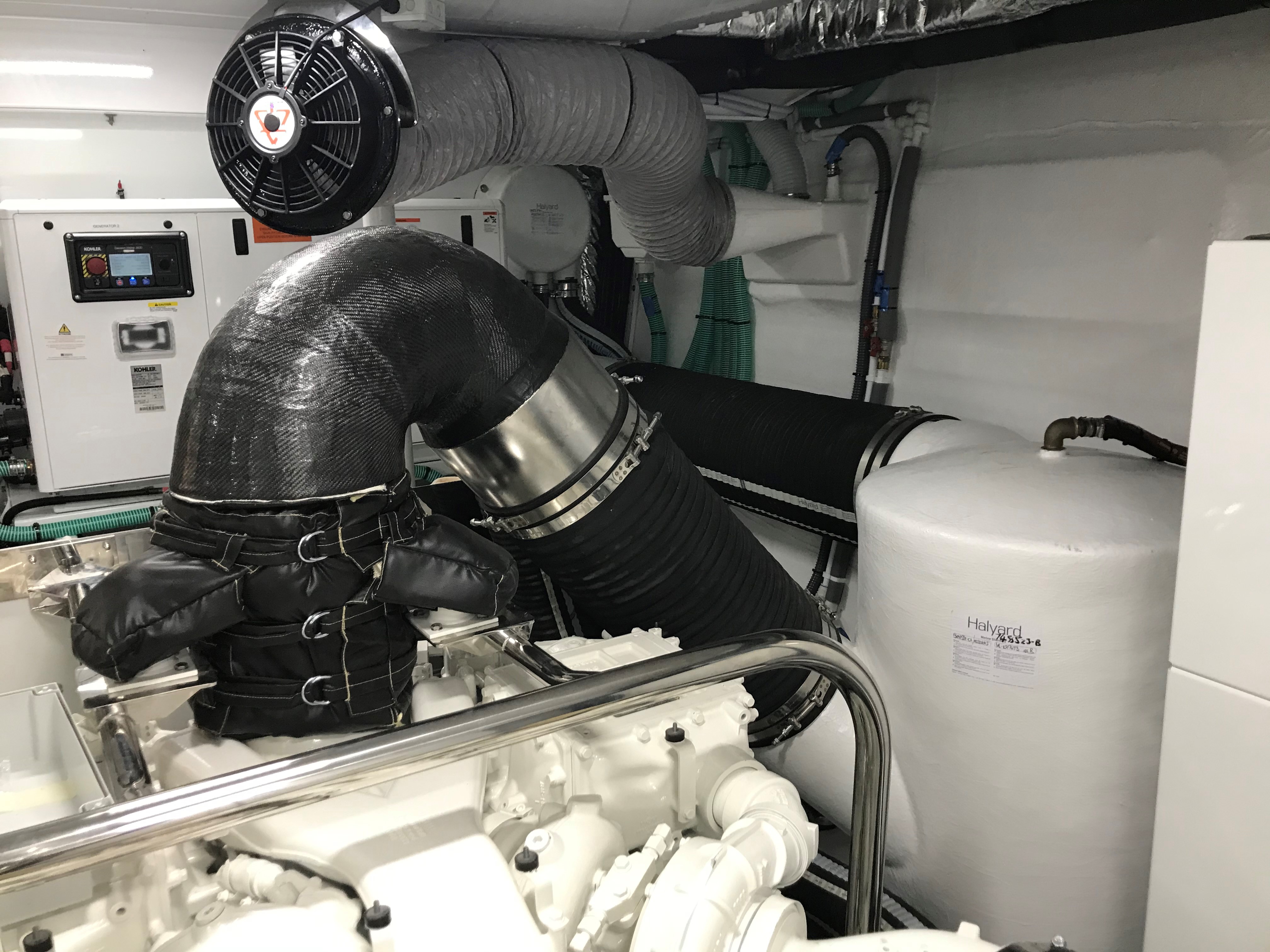
Halyard marine exhaust installation — official exhibitor photograph
Halyard and Eminox outline integrated exhaust and aftertreatment cooperation ahead of METSTRADE, following their letter of intent first publicised in July.
Emission Control by Eminox and Halyard (M&I) Ltd are highlighting their planned collaboration on integrated marine exhaust systems in the run-up to METSTRADE. Eminox first publicised the letter of intent on 17 July 2026 (https://eminox.com/news/emission-control-and-halyard-sign-letter-of-intent/). Their official METSTRADE announcement dated 29 October 2026 identifies selective catalytic reduction, commonly known as SCR, and diesel particulate filtration, or DPF, among the aftertreatment technologies covered by the proposed cooperation. The arrangement brings together a specialist in emissions-reduction equipment and a marine exhaust engineering business. It is an expression of intended cooperation rather than confirmation of a particular installation, subsequent contract or completed yacht project.
For the superyacht sector, the development is a reminder of the extent to which exhaust components must be considered as part of a vessel-specific machinery installation. A package must address operating performance, applicable emissions requirements, physical constraints and long-term maintainability. Sound and vibration also matter aboard yachts whose machinery spaces may be relatively close to guest accommodation. Ahead of METSTRADE, which takes place in Amsterdam from 17 to 19 November, the announcement offers a useful basis for considering how technical representatives should approach integration and procurement.
Eminox describes more than three decades of engineering experience in emissions reduction, including oxidation catalysts, particulate filters and SCR systems for different transport and machinery markets. The stated intention is to bring that expertise into marine projects alongside Halyard's exhaust engineering capability. Their prospective integrated packages are directed at vessel builders, operators and original equipment manufacturers.
A letter of intent is not the same as a detailed supply agreement for an individual yacht. No named vessel, engine specification, delivery date or commissioning result appears in the announcement. These are important distinctions for shipyards and owners considering the implications. The parties to a future project should establish who is responsible for specifying and providing each part of the system, who assesses the interface with the engine and who verifies the installed performance. A closer relationship between suppliers may facilitate coordination but does not replace these contractual and technical responsibilities. Clear allocation of responsibilities is particularly useful where the shipyard, engine manufacturer and specialist supplier come from different commercial organisations.
Selective catalytic reduction is intended to reduce nitrogen oxides in the exhaust through a catalytic chemical reaction involving a reductant. Diesel particulate filtration addresses particulate material. The two mechanisms have different characteristics, operating conditions and maintenance requirements, even when incorporated into the same package. A design team should therefore distinguish the evidence required for each function and understand the conditions under which the proposed technology is intended to work.
The announcement refers to IMO Tier III and Stage V among the emissions regimes for which Eminox develops equipment. That should not be read as confirmation that both regimes apply to every superyacht or that every combination of products meets them. Applicability depends on the individual vessel, engine, operating area and relevant regulatory framework. The technical representative should establish which requirements apply in consultation with the relevant authorities and classification society. In a project involving multiple propulsion engines and generators, the determination may have to address each installation separately. Approvals for a particular equipment configuration cannot be assumed from a general statement about the manufacturer's activities.
An exhaust arrangement aboard a large yacht forms part of a complex network of equipment, structure and access routes. Additional aftertreatment components must fit into the available space while remaining accessible for inspection and maintenance. Allocating room only for the dimensions of the principal housings can underestimate the installation requirements. Pipe connections, supports, thermal protection, instruments and the space required for intervention all need to be taken into consideration.
During a newbuild project, the naval architect and engineering team can consider these matters alongside the development of the general arrangement. A refit presents different constraints because existing machinery and structural elements may be difficult to move. A survey should also establish whether the available drawings accurately reflect previous modifications. An item that can be installed during construction may be much less straightforward to replace after the yacht's interior and other systems are in place. Early coordination between exhaust specialists and the yard could help identify these constraints before fabrication starts. Its usefulness depends on the scope and detail of the actual design work rather than on the commercial announcement alone.
Engine manufacturers define operating limits for their machinery, including relevant exhaust-system conditions. The introduction of additional equipment may change pressure losses downstream of the engine. The engineering design must consider all relevant components and account for their combined effects rather than assume that individually acceptable parts necessarily constitute an acceptable installation. Actual measurements during commissioning can provide evidence alongside the calculations prepared during design.
A luxury yacht can have a variable operating profile. It may spend extended periods at anchor, operate at relatively modest speeds during parts of a voyage and require different levels of propulsion power at other times. Generators also respond to changing hotel loads as guest services and machinery are used. The suitability of a proposed aftertreatment system must therefore be assessed against the expected range of operating conditions. Questions about temperature, pressure, monitoring and maintenance should be answered through product-specific technical documentation and the relevant engineering specialists. The collaboration announcement does not establish performance across those conditions. Proper evaluation requires agreement on the actual engine configuration and the operating requirements of the vessel.
Halyard's official METSTRADE exhibitor information describes dry and water-cooled exhaust systems, together with silencers, separators and connecting components. Against that background, the proposed collaboration has relevance to the coordination of emissions equipment with a wider marine exhaust installation. Noise, vibration and thermal considerations cannot simply be appended after the rest of the system has been designed. They may affect component placement, pipe supports and access arrangements.
The owner should understand the agreed acoustic and thermal performance requirements and how they will be assessed. Mechanical vibration can reach areas of the yacht through several routes, and equipment must be installed with appropriate consideration for the surrounding machinery and structure. Hot components also need suitable protective arrangements and maintenance access. The responsibilities of the exhaust supplier, naval architect and any acoustic specialists should be clear. A combined equipment proposal could make it easier to address some of these interfaces, but the quality of the result remains dependent on engineering design and verification. No acoustic or thermal measurements for a completed yacht have been disclosed in the announcement.
A decision to introduce or replace emissions-related machinery during refit may affect a substantial part of the works programme. The project definition should take account of surveying, procurement, fabrication, the removal of old equipment, installation and commissioning. The yard must understand how the exhaust work will interact with other engineering projects planned for the same period, particularly if access to shared machinery spaces becomes limited.
A useful technical proposal should identify any supporting works needed to accommodate the replacement system and establish whether those works fall inside or outside the supplier's contract. The owner representative should also consider the operational consequences of a delay or an unresolved commissioning issue. Careful coordination before the vessel arrives at the yard may reduce uncertainty during the installation. However, a proposed collaboration announced by suppliers cannot itself establish how long a particular retrofit will take. The timing must be developed around the condition and configuration of the actual yacht. A defined acceptance process is as important as the installation schedule because the vessel needs evidence of satisfactory performance before the relevant work can be considered complete.
A yacht may operate through several changes of crew, ownership and technical management while retaining much of its machinery. An installation must therefore be understandable and maintainable by the engineers who inherit it. Accurate documentation, component identification, appropriate training and access to technical support are practical considerations for procurement, not merely administrative obligations to address at handover.
The vessel's technical team should understand the requirements for inspecting and maintaining each component, the meaning of monitoring indications and the arrangements for obtaining replacement parts. Changes to the exhaust installation may also require changes to relevant engineering records and the maintenance plan. A single integrated equipment offering may simplify certain transactions, but the owner should still establish what the supplier will provide and which other parties remain involved. International cruising adds another consideration: the support arrangement should reflect the regions in which the vessel is expected to operate. It is reasonable to ask how technical documentation and parts support will be maintained if equipment is modified or a product generation is superseded.
The Halyard exhibitor catalogue includes Emission Control by Eminox among its products, describing SCR and DPF technologies and integrated engineering services. Together with the letter of intent, this gives builders and refit professionals an opportunity to investigate a coordinated approach at METSTRADE. It does not yet provide the project-specific evidence necessary to approve a particular system for a particular yacht.
For the industry, the most valuable next steps would be defined engineering scopes, clear specifications, verified operating limits and documented acceptance requirements. The owner has a legitimate interest in both the ongoing operation of the machinery and the ability of future crews to maintain it. Those interests are best served when equipment procurement is based on the total installation rather than on individual headline performance claims. Eminox and Halyard's announcement sets out a direction of cooperation. Its practical significance for superyachts will ultimately be established by the engineering work, support arrangements and commissioning evidence that accompany future projects.
Primary source: Halyard and Eminox official announcement, 29 October 2026.
Halyard marine exhaust installation — official exhibitor photograph of related equipment; not a completed collaboration project. Official source.
Explore
Go deeper into the yachts, companies, events and destinations directly connected to this article.
Continue reading
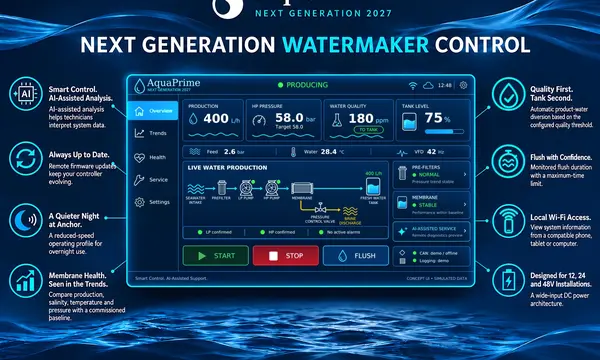
AquaPrime will preview its new watermaker control platform at METSTRADE, with touchscreen monitoring and diagnostic features under development for yacht crews.
BSI Rigging will unveil a standard range of single and double acting hydraulic sail-control cylinders at METSTRADE, expanding support for custom sailing yachts.
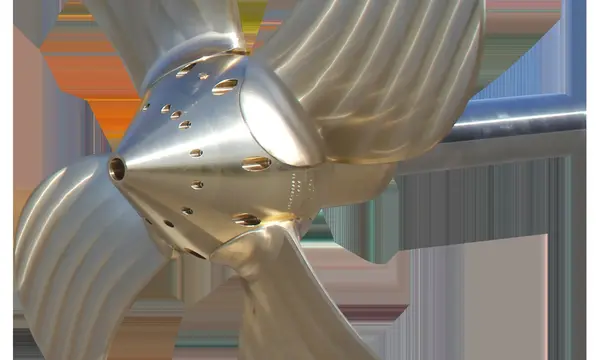
Hundested announces its first five-blade controllable-pitch propeller, developed to balance ice-impact strength, low underwater noise and energy regeneration.
Wescom Group will preview its SHIELD MAX emergency beacon and a survival-craft AIS search and rescue transmitter at METSTRADE, ahead of their 2027 release.
Superyacht Guide
Continue into the wider Superyacht Guide.
Business opportunities · Superyacht Guide
Companies serving the superyacht market can discuss clearly identified advertising, sponsorship and business-profile opportunities. Commercial activity remains separate from independent editorial coverage.