ePropulsion eCore Integrates 96V DC and AC Energy Management at Cannes
By Stephen Yardley · Edited by Stephen Yardley
Image: ePropulsion
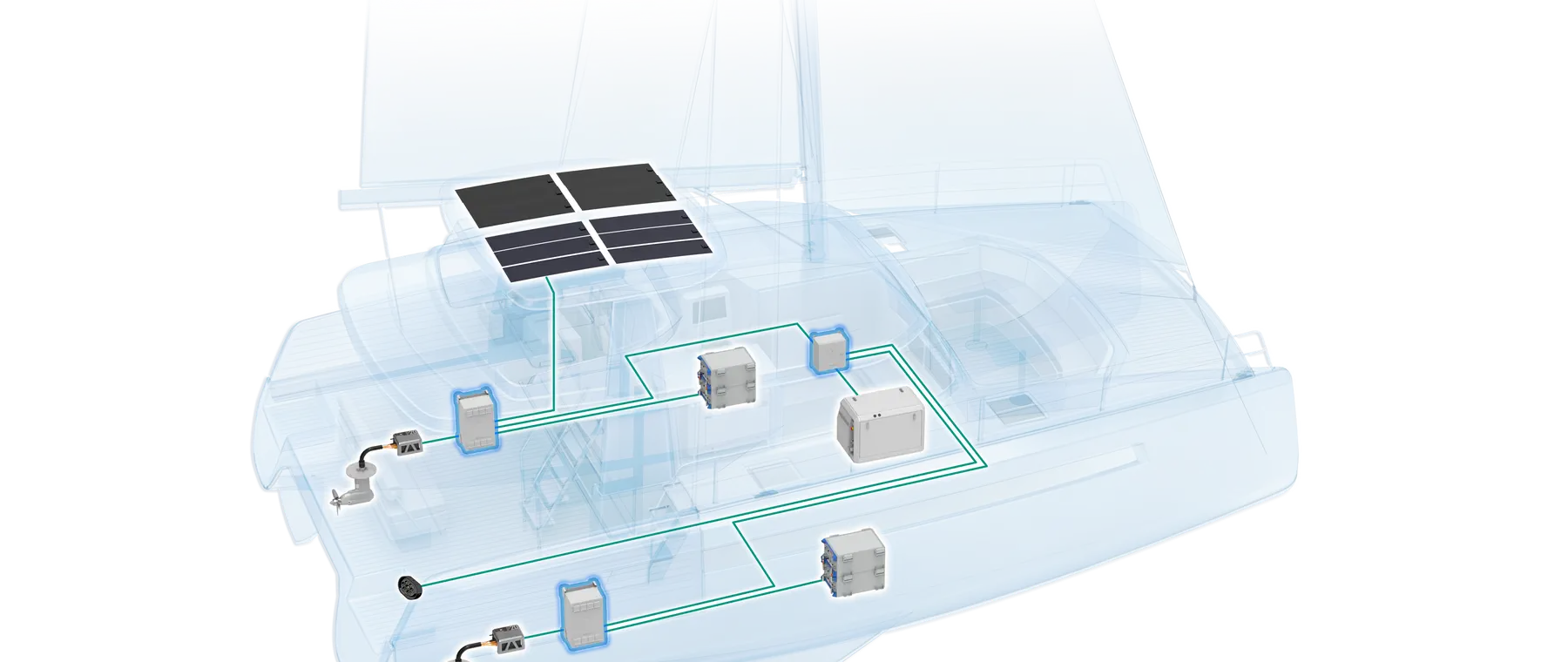
ePropulsion's new eCore Energy Management System combines a 96V DC core with an optional AC module to coordinate propulsion and onboard electrical demand.
ePropulsion introduced eCore, its integrated Energy Management System, at the 2026 Cannes Yachting Festival. The system brings propulsion, generation, battery storage and onboard consumption under a common control architecture rather than leaving each part of the electrical installation to operate as a separate unit.
The company is targeting electrified cruising craft and catamarans, with potential relevance to the tender and support-craft programmes surrounding larger superyachts. eCore is not being presented as a replacement for the higher-voltage power architecture of a large mothership, but the integration problem it addresses is familiar across the wider yacht industry.
At the centre of the system is eCore 96VDC, which manages power flow on the vessel's DC side. The optional eCore AC module extends that coordination to AC systems, allowing shipyards to start with a DC-focused configuration and add further onboard electrical capability according to the vessel's specification.
The integrated approach can draw on shore power, diesel generation, solar and hydrogeneration, while also managing the demands of propulsion and hotel loads. The actual equipment mix depends on the build, and eCore's role is to coordinate compatible sources rather than to create energy that is not available.
ePropulsion says the platform supports power-saving and load-shedding functions, consumption monitoring and historical operating data. That information can help crews see which systems are drawing power and respond when battery state or available generation makes continued operation of all loads impractical.
Custom human-machine interfaces are available for shipyard installations, and the company lists third-party display integration involving Raymarine, Garmin and Simrad/B&G. Remote monitoring is intended to help technicians troubleshoot problems without relying exclusively on a visit to the vessel, although onboard inspection remains essential for electrical safety and maintenance.
Integrating an electric tender or support boat involves more than installing propulsion motors and batteries, particularly when the vessel also has refrigeration, navigation electronics and auxiliary systems. A unified electrical architecture can help designers understand total demand and avoid unnecessary standalone components and cabling.
For superyacht teams specifying an electrified auxiliary craft, the useful questions are compatibility, charging arrangements, redundancy, fire protection and service support. The Cannes launch adds another technology option to that discussion and illustrates how onboard energy management is becoming a separate engineering discipline in its own right.
Explore
Go deeper into the yachts, companies, events and destinations directly connected to this article.
Continue reading

Volvo Penta is showcasing the D13-IPS1350H at Cannes, combining its most powerful IPS engine with an integrated hybrid propulsion architecture.
Elettromedia's new Audison Marine division has introduced the Thesis audio platform, with Hi-Res-certified systems and integrated speaker options for yachts.

Mase Generators has presented the Mariner Pro range, Easy Tracker monitoring and Easy Click helm control as part of its updated marine power portfolio.
Baudouin has expanded its yacht-engine offering at Cannes with the compact 100kW 4M11 and a new 16M23 platform aimed at larger yacht applications.
Superyacht Guide
Continue into the wider Superyacht Guide.