Ferretti Group Plans €30m Ancona Expansion for 40–55m Superyachts
By Superyacht Guide Newsroom · Edited by Superyacht Guide Newsroom
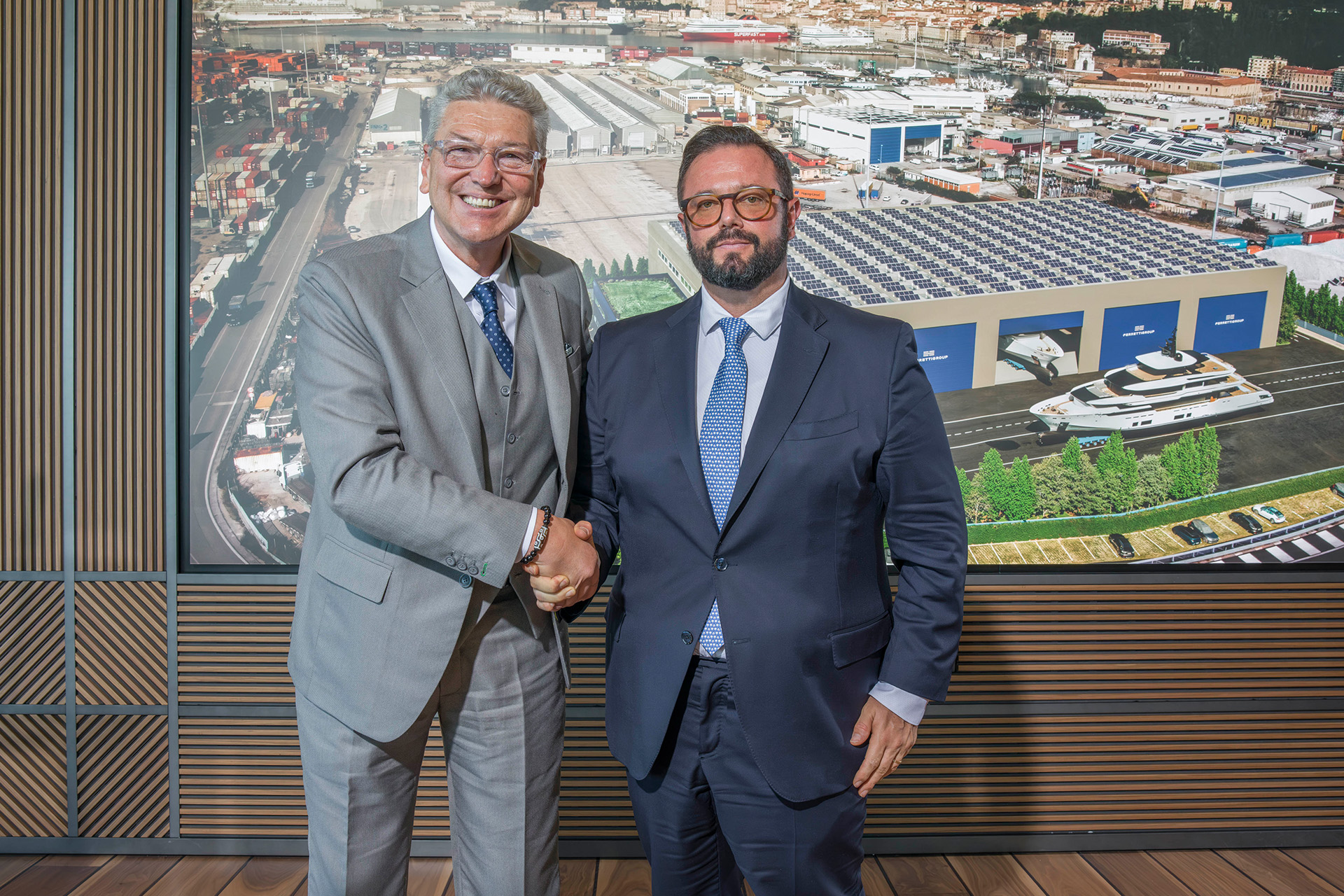
Ferretti Group Ancona shipyard expansion official press event, 18 November 2026
Ferretti Group plans five new production sheds at its Ancona superyacht yard, investing nearly €30m to double semi-custom metal-yacht capacity from 2028.
Ferretti Group announced on 18 November 2026 a substantial expansion of its superyacht manufacturing facilities in Ancona, Italy. The company intends to invest almost €30 million in transforming the former Tubimar property within the port area into an additional production hub. Five new industrial sheds form the centre of the plan, which the group says will double its production capacity in the semi-custom metal superyacht segment. The specified market is steel and aluminium vessels between 40 and 55 metres.
This is an industrial development rather than the introduction of a new yacht model. The company expects work to proceed progressively over approximately three years, with the first opening scheduled for 2028. Neither the full completion date nor a precise annual number of yachts produced by the expanded facilities was provided.
The plan directly concerns the section of the superyacht market served by large custom and semi-custom shipbuilding. It also underlines the importance of physical infrastructure to builders whose vessels involve lengthy structural fabrication, technical outfitting and specialist finishing. These processes require more than a waterfront location: they depend on work areas, skilled personnel, access to suppliers and the practical organisation of the yard.
Ferretti's headline ambition is to double production capacity in its semi-custom metal superyacht operation. It should not be interpreted as a prediction that deliveries or revenues will automatically double. Manufacturing capacity and completed production are different measures. A yard may have the physical ability to undertake additional work while being limited by customer demand, engineering schedules, specialist labour or the availability of equipment.
The company identifies the construction of five new sheds as the central means of expanding capacity, but its announcement does not specify the dimensions of each building, the number of hulls that can be accommodated simultaneously or the precise sequence in which the facilities will be commissioned. These will matter when the project develops beyond the planning and investment announcement.
For customers seeking a 40–55-metre steel or aluminium yacht, potential capacity can influence the range of build opportunities available in the market. It does not, however, establish the delivery date of any individual project. A prospective owner still needs to assess the actual yard programme, agreed technical specification, contract milestones and availability of the engineering and project-management team responsible for the vessel.
The site selected for the expansion is the former Tubimar property in Ancona's port area. Its redevelopment is presented by the company and the regional port authority as a way of returning an underused industrial area to productive use. Ferretti's announcement identifies the first relevant concession as Lot A, measuring approximately 16,175 square metres. The wider area to be made available for shipbuilding is described by the authority as approximately 37,030 square metres, divided into four lots.
Those figures concern the land involved in redevelopment, not the total floor area of the five proposed industrial sheds. Treating them as interchangeable would overstate what has been confirmed about the new buildings. The announcement also does not describe a completed construction programme for every lot.
A location within an established working port may offer access to a regional concentration of marine skills and services. It can also impose operational constraints relating to the movement of materials, harbour activity and the conduct of construction works. How the new facilities connect with the existing yard and launch arrangements will be an important practical aspect of the project as it advances.
The 40–55-metre range covers projects whose construction and outfitting differ substantially from those of most production leisure boats. Metal structures require welding, dimensional control, inspection and coordination between hull construction and subsequent systems installation. The spaces available for fabrication and assembly influence the sequence in which work can be organised.
The selection of steel or aluminium also has consequences for engineering. Material properties, structural arrangements, corrosion protection and the design of connections differ. An owner selecting a particular vessel should be guided by the design's verified specification and the relevant classification or statutory requirements, rather than assume that one construction material is universally superior.
Ferretti has identified the proposed capacity specifically with semi-custom metal yachts, not every category of craft within its wider portfolio. The announcement does not state that all Ferretti Group brands will be manufactured in the new buildings. Nor does it confirm a production allocation by brand or model.
For the wider industry, the development demonstrates the level of infrastructure that builders are prepared to commit to this section of the market. The strength of that commitment can be measured through the announced investment, while the eventual operational performance will become apparent only after the facilities are commissioned.
Ancona is already an important location for the Italian superyacht industry. Ferretti describes the existing yard as one of its principal centres of expertise and production, while the Central Adriatic Sea Port System Authority highlights the wider concentration of shipbuilding activity in the Marche region.
The authority's statement, reproduced in Ferretti's announcement, puts revenues from shipbuilding in Marche during 2024 at approximately €1 billion and employment across the regional supply chain at about 4,000 people. These are figures attributed to the authority, not independently audited results for Ferretti's Ancona yard.
The authority also reports that regional exports increased by 9.2 per cent during the first half of 2026, contrasting this with national export growth of 4.5 per cent over the same period. The contribution of ships and boats is identified as an important factor. Those aggregate measures give context to the regional industrial strategy, but they should not be treated as a forecast of the project's financial return.
For subcontractors, technical consultants and marine service businesses, additional facilities may generate opportunities for work. The number, timing and nature of any individual contracts remain to be determined as the programme progresses.
The group's stated objectives include generating employment, strengthening specialist skills and supporting Italian suppliers and craftspeople. These ambitions address a central practical challenge in superyacht construction: a new building is useful only if the teams required to work within it can be assembled, trained and supported.
A metal superyacht involves structural specialists, engineers, electricians, interior trades, project managers and quality-assurance personnel. Their work must be coordinated, often across several suppliers whose components have different lead times. Expanding capacity may therefore require changes not only to the number of workers but to the way teams share information and manage interfaces between systems.
Ferretti has not announced a numerical hiring target or a detailed training programme for the expansion. It would be premature to attach an estimated number of new jobs to the five sheds on the basis of the press announcement alone. The company and the port authority describe expected benefits, not completed recruitment outcomes.
Owners assessing a future build programme may reasonably ask how staffing and technical supervision will be allocated as the facilities come into operation. Those questions are relevant to the delivery of quality and the management of a complex yacht project.
Ferretti's planned investment will be implemented in stages, with the first inauguration forecast for 2028. Modular development can provide opportunities to bring some facilities into use before the entire project has been completed. It also requires coordination between continuing production and construction activity, particularly where the new hub shares access or services with established operations.
The company does not give a precise timetable for the remaining sheds or indicate which production activities will occupy the first building to open. There is no reported handover date for the complete project. Readers should therefore treat 2028 as the intended initial opening rather than a guaranteed date when the entire announced increase in capacity will be available.
The sequence will also depend on practical steps that are not fully specified in the announcement, including construction and commissioning of the individual buildings. A contract for a particular yacht should not be based on an assumption that every proposed production facility will be operational by that date.
At the same time, the incremental approach shows how a major industrial investment can be organised around a longer horizon. The eventual balance between existing work and additional projects will be a matter for the builder's management as capacity becomes available.
Mirco Carloni, president of the Central Adriatic Sea Port System Authority, described the former Tubimar site as an example of transforming an area that had remained idle for years into a new industrial opportunity. His remarks underscore that the project involves both private investment and the redevelopment of land under port authority oversight.
A working waterfront is a shared environment. Commercial shipping, port services, industrial activity and public infrastructure can compete for space, even where all contribute to the regional economy. The allocation of land to shipbuilding is therefore an important element of the announcement, separate from the amount the company intends to spend.
Ferretti's management thanked port and regional institutions for their support. That cooperation is a stated feature of the plan, but the press statement does not reproduce a complete concession agreement or identify every regulatory condition applying to the works. It should not be presented as a comprehensive record of permissions or construction authorisations.
From an industrial perspective, the redevelopment matters because a coastal shipyard cannot expand independently of the land and infrastructure surrounding it. The future ability to coordinate factory work, yacht movement and supporting services will help determine the usefulness of the completed hub.
Ferretti's announcement confirms a planned investment of almost €30 million, five new industrial sheds and a target of doubling capacity for semi-custom metal yachts in the 40–55-metre bracket. The first facility is expected to open during 2028, with the wider construction programme proceeding in stages.
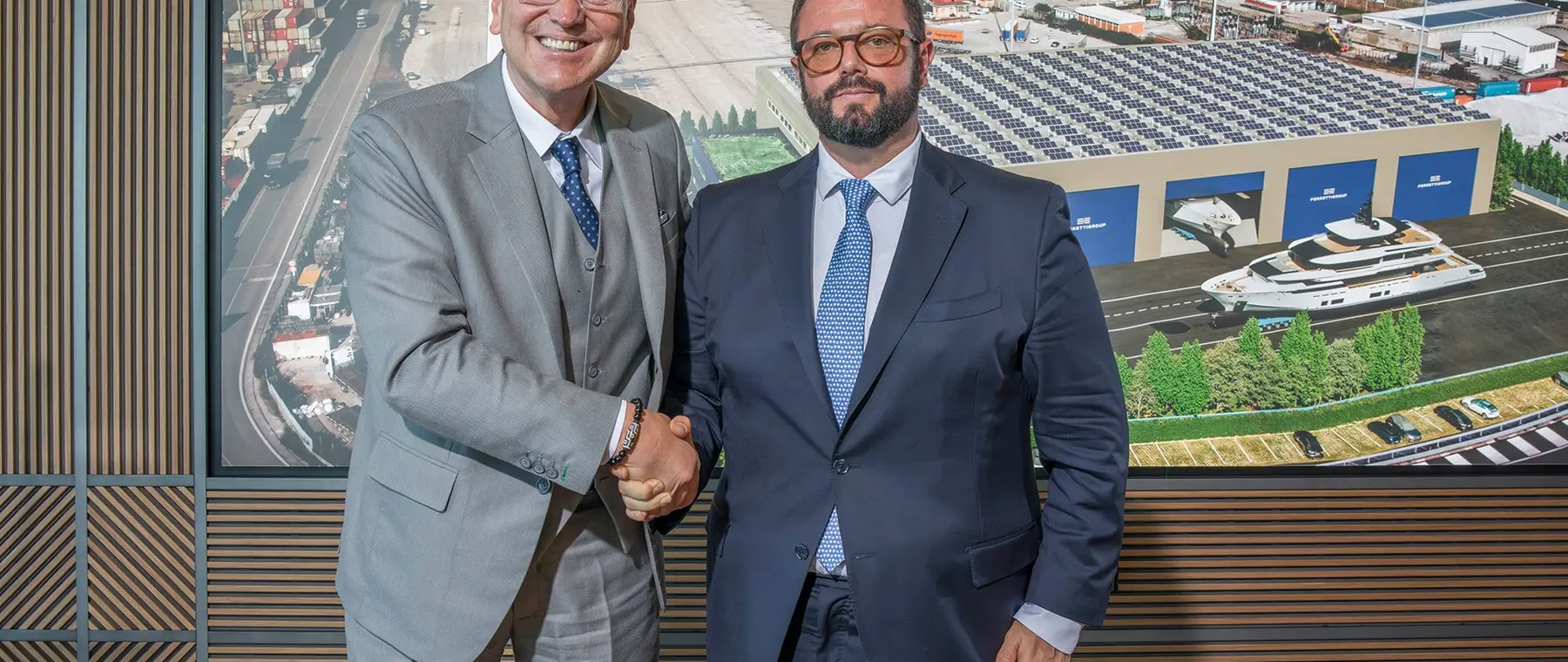
The press photograph accompanying the announcement depicts company representatives at the presentation. It should not be mistaken for a record of the proposed facilities in service. No new superyacht is reported as delivered as a result of the expansion, and no individual owner contract is identified in the release.
For the industry, the project is a significant indicator of the confidence a major Italian builder is placing in infrastructure for larger yachts. For owners considering a future commission, the important questions remain project-specific: engineering specification, yard scheduling, quality management, contractual terms and the ability of the selected team to deliver the vessel.
The commercial and regional benefits described by Ferretti and the port authority are ambitions supported by the investment announcement, not independently verified outcomes. Future reporting can assess construction milestones and operational capacity once the facilities begin opening.
Primary source: Ferretti Group official announcement, 18 November 2026.
Photograph: Ferretti Group, official announcement image depicting company representatives at the Ancona expansion presentation; the proposed facilities are not shown as completed. Official source.
Explore
Go deeper into the yachts, companies, events and destinations directly connected to this article.
Continue reading
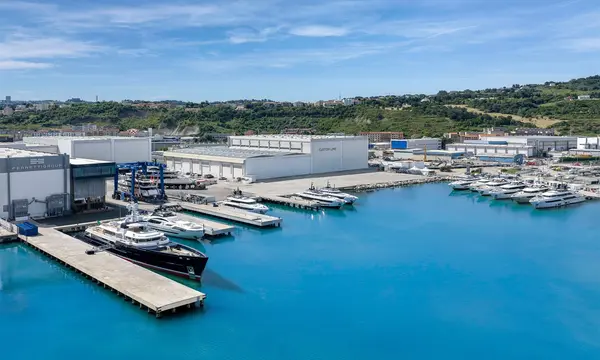
Ferretti Group has secured permission to enlarge a production hall at Ancona, enabling 100m superyachts. The port authority confirms a €3m building investment and …

CRN has stated that the launch of 70-metre Project Thunderball is planned for spring 2026.
The Superyacht Forum closes with a SYBAss economic study highlighting market growth, regional demand and constraints on large-yacht production capacity.
The 40.7m Sanlorenzo ANDIAMO has reported June and August 2027 Greek charter windows, with published weekly base rates of €209,000 to €239,000 plus expenses.
Superyacht Guide
Continue into the wider Superyacht Guide.
Business opportunities · Superyacht Guide
Companies serving the superyacht market can discuss clearly identified advertising, sponsorship and business-profile opportunities. Commercial activity remains separate from independent editorial coverage.