Ferretti Names Olivier Faujour to Lead Marketing and Development
By Superyacht Guide Newsroom · Edited by Superyacht Guide Newsroom
Ferretti Names Olivier Faujour to Lead Marketing and Development — licensed SYG News 26Nov batch01
Ferretti appoints Olivier Faujour as Chief Marketing and New Business Development Officer from January 2027, bringing a global consumer-brand background.
Ferretti S.p.A. has appointed Olivier Faujour as Chief Marketing & New Business Development Officer, with his role scheduled to begin in January 2027. The announcement, made on 23 November 2026, places an executive with more than 35 years of international business experience in charge of global marketing and new commercial development across Ferretti Group's seven brands. The company identifies customer experience, attracting new generations of owners and profitable international growth as priorities. The appointment is a confirmed corporate decision, while the results it may produce remain prospective rather than measured achievements.
Ferretti Group operates a collection of yacht brands addressing different parts of the international market, including Riva, Pershing, Custom Line and CRN. The appointment is framed as a group-level role rather than a management change at one individual shipyard. That scope matters because owners may encounter the group through several stages of their boating lives, beginning with a smaller yacht and later considering a larger custom vessel. A consistent approach to customer experience can therefore have implications beyond any single model launch.
At the same time, different brands maintain distinct identities and owner expectations. A highly customised CRN superyacht and a performance-led Pershing have different sales cycles, technical requirements and relationships with their buyers. A group marketing strategy needs to recognise these differences rather than apply one undifferentiated message. The official announcement describes a mandate to strengthen the seven brands, not to combine them or replace their individual design cultures.
Ferretti says the appointment becomes effective in January 2027. It is important to preserve that timing because a future start date is not proof that the new executive has already implemented structural changes. The company has announced the direction of the role and named the person responsible, but it has not released an operational plan with independently measurable targets for the coming years. Readers should separate the fact of appointment from the expected results.
A leadership transition can involve planning, team consultations and a review of existing activities. None of those specific internal steps should be invented if the company has not published them. The useful news today is the definition of responsibilities and the breadth of relevant experience being brought to the role. The progress of any new commercial programme can be assessed later through public announcements and actual business performance.
Faujour's background includes senior roles at Procter & Gamble, Danone and General Mills, according to the company. These businesses operate in consumer categories very different from custom yacht building, where purchases are infrequent, highly personal and often involve long technical processes. Ferretti's choice signals interest in experience spanning brand development, commercial organisation and customer relationships. The relevance lies in the management approach rather than an assumption that yacht buyers behave like ordinary retail customers.
A yacht brand must communicate heritage and design while also supporting a product that may be operated for decades. Owners expect after-sales help, reliable documentation and knowledgeable service personnel, not simply an attractive advertising campaign. Skills developed in large consumer organisations may help an executive coordinate teams and understand customers at scale. Yet adapting those methods to the small, specialised world of superyachts requires careful attention to its distinctive responsibilities.
Ferretti says Faujour served as Global CEO of Yoplait, overseeing a business representing approximately €5 billion in retail sales across 54 countries. This provides a specific indicator of the international scope of his previous responsibilities, but it should not be confused with the financial size of Ferretti's yacht operations or with personal revenue generated by Faujour. The €5 billion figure describes the retail-sales scale of the Yoplait business as presented by Ferretti.
Managing across many countries can involve different regulations, distribution structures and consumer habits. Yachting similarly spans regions with distinct boating cultures, operating conditions and commercial practices, although its sales volumes are much smaller. The experience may be useful when coordinating regional teams or evaluating how a brand is perceived internationally. Whether it produces identifiable improvements at Ferretti can only be judged through future outcomes.
The official biography also states that Faujour led General Mills' global Ice Cream & Yogurt category, including the Häagen-Dazs and Yoplait brands. Managing a category with established international products demands attention to how individual brand identities are maintained within a wider corporate group. That challenge has a conceptual parallel in the yacht industry, where a holding company may want shared commercial systems while preserving distinctive design and engineering traditions.
The comparison has limits. A custom superyacht is not a packaged consumer product, and a yacht's delivery involves contracts, surveying, construction milestones and extensive owner participation. Marketing techniques cannot replace technical competence or production discipline. A broad experience base may help align the commercial and service organisations, but its value in this industry depends on understanding the actual expectations of yacht owners, captains and advisers.
More recently, Faujour served as CEO of Alpange, which Ferretti describes as an ultra-luxury venture combining craftsmanship, design and technology. This is closer to the language of superyacht ownership, where buyers often value individual materials, personalisation and a carefully managed experience. It may also offer insight into how high-value products are presented to a relatively small customer audience. However, the company has not said that a particular Alpange product or service will be introduced within Ferretti's operations.
Craftsmanship and technology are familiar themes across the group's brands. Exterior styling, interior materials and the integration of electronic systems can shape owners' perceptions of quality. The challenge is making those attributes visible without overstating them. A luxury reputation is sustained by the finished yacht and service over time, not by promotion alone. The relevance of Faujour's background is that it spans both business organisation and premium-market positioning.
Ferretti identifies the ambition to attract new generations of yacht owners as part of the new officer's remit. That priority may encompass the way brands communicate the experience of boating and the services available to prospective buyers, but the company has not announced a particular programme or numerical target. It would be premature to claim that specific demographics have already changed or that a new sales campaign has begun.
A buyer entering yachting for the first time may need different information from someone ordering a fifth yacht. Training, ownership structure, technical maintenance and costs can be unfamiliar, even to individuals experienced in other forms of luxury travel. Clearer communication could help, but only if it provides genuine information rather than glossing over operational commitments. The best customer experience starts with realistic expectations and reliable support as well as distinctive design.
The announcement repeatedly identifies enhancing the customer experience as a goal. In superyachting, that term can have a broad meaning. An owner may be in contact with a yard during design, construction, sea trials, formal handover, warranty work and later service. Each phase involves different specialists and opportunities for problems to arise. A group-level commercial leader can influence how consistently those interactions are managed, but implementation requires close cooperation with operational teams.
Reliable after-sales support is particularly important for yachts cruising far from their builder's facilities. Spare parts, software updates and engineering expertise may need to be coordinated across countries. Owners also care about the quality of documentation and the ability to reach a knowledgeable contact when a system fails. These practical matters should be part of any serious discussion about luxury ownership. The official release sets customer experience as a priority but does not provide new service-level guarantees.
Ferretti has publicly identified profitable global growth as another objective for the new role. Its yachts operate in markets with very different climates, mooring infrastructure and boating regulations. A strategy aimed at reaching more owners must consider those differences. A customer in the Gulf may place particular emphasis on cooling and outdoor comfort, while a buyer based in northern Europe may have other seasonal priorities. Regional sales and service teams play a role in interpreting needs.
Expansion should not be equated automatically with greater profitability. New offices, marketing and service networks involve costs, and demand for expensive yachts can be influenced by broader economic conditions. The company has described its ambition, not promised a particular revenue increase resulting from the appointment. Financial outcomes will need to be judged from future public records rather than inferred from the executive's career history.
The group's portfolio spans varied yacht sizes and ownership preferences. CRN and Custom Line, for example, operate in parts of the market where customisation, construction capacity and owner involvement can be significant. Riva occupies a distinctive design and heritage position, while other Ferretti brands serve different practical and performance priorities. A single commercial narrative needs enough flexibility to represent those differences honestly.
An owner commissioning a highly individual superyacht may want to know about naval architecture, production slots and technical support. A buyer considering a smaller yacht may be more interested in delivery availability and the local dealer relationship. Communicating clearly to both audiences without reducing everything to lifestyle imagery is a complex task. The appointment creates a senior point of responsibility, but detailed execution will become apparent only as new decisions are announced.
Stassi Anastassov, identified in the official announcement as Chief Executive Officer of Ferretti S.p.A., welcomes Faujour's combination of brand building, consumer understanding, commercial expertise and operational discipline. The statement also emphasises Italian craftsmanship and the ambition to strengthen the ownership experience. These are the company's own assessments of why the appointment is attractive. They do not constitute independent evidence that the strategy will succeed.
Executive statements are useful indicators of intent, particularly when they identify clear areas of responsibility. They should be presented as such, without converting aspirations into measurable achievements. For owners and partners, the most interesting question is how the marketing and commercial organisation will interact with the group's yards and regional support services. The company has not published a detailed organisational chart for the new role in the initial release.
The company states that, according to the information available to it, Faujour does not hold shares in Ferretti S.p.A. at the time of the announcement. This is a specific corporate-disclosure detail and can be reported without speculation about his future compensation or incentives. The statement does not explain every contractual term of his employment, which remains a private matter unless subsequently disclosed.
Shareholding information can be relevant to governance reporting, but it should not be used to infer motives. An executive may have responsibilities and incentives that cannot be established from a public shareholding statement alone. The appropriate focus is the confirmed appointment, scope of duties and effective date. Any future change in ownership interest would need its own supporting source rather than an assumption based on the corporate role.
The most useful indicators of change will be specific programmes, updated customer services, measurable commercial outcomes or new partnerships announced after Faujour starts. A change in promotional materials alone may show a different communication style, but it will not necessarily demonstrate improvement in owner satisfaction. Investors and industry observers can assess developments as the company makes them public, while owners may judge the experience through service and the consistency of information.
There is also a question of how the group preserves each brand's character while finding ways to share commercial expertise. The formal remit spans all seven brands, so this balance is a natural area to follow. No claim can yet be made that the new officer will alter production volumes, launch schedules or the designs of particular yachts. Those decisions involve broader company responsibilities and should be reported only when verified.
Ferretti S.p.A. has appointed Olivier Faujour as Chief Marketing & New Business Development Officer, effective January 2027. Its official biography identifies more than 35 years of international experience, past leadership at major consumer companies, the Yoplait and General Mills roles, and recent involvement with ultra-luxury business Alpange. His stated responsibilities include global marketing, new business development, customer experience and international growth across the seven brands.
The announcement is significant because it places an executive with broad international consumer and luxury experience in a group-level role at a major yachtbuilder. Its results remain unknown. Reporting the appointment carefully means preserving the start date, the actual remit and the distinction between corporate expectations and outcomes that can only be measured after the work begins.
Primary source: Ferretti S.p.A. 23 November 2026 official appointment announcement, effective January 2027.
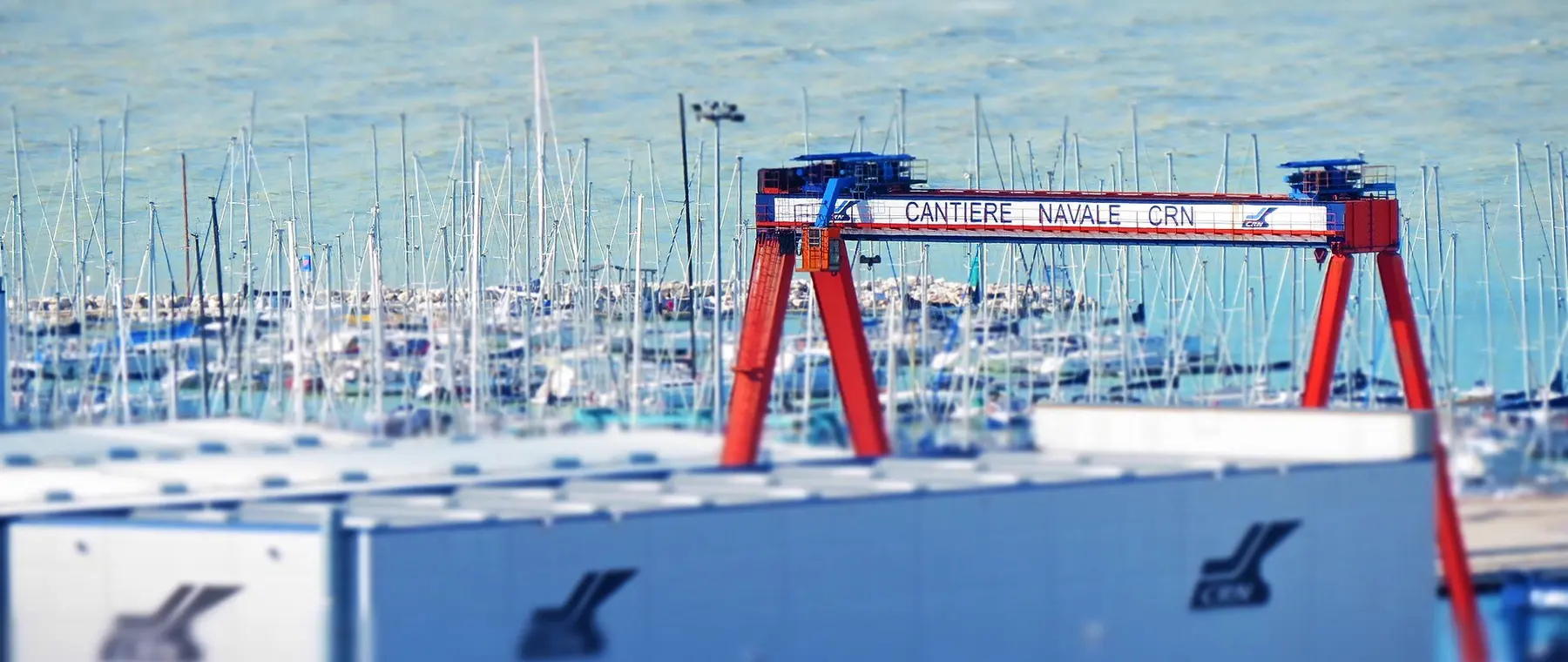
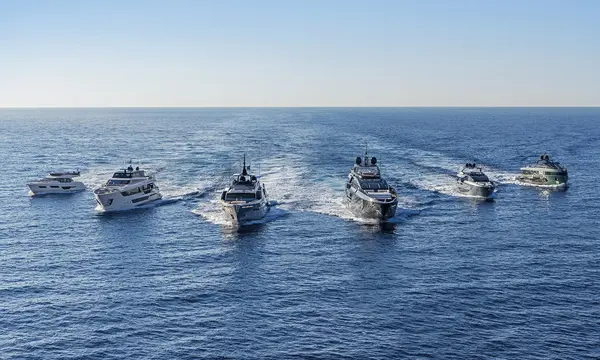
Licensed archival photograph of yachtbuilding activity in Ancona; not a portrait of Olivier Faujour or a new Ferretti programme. Photo: gianni del bufalo; CC BY 2.0 via Wikimedia Commons. Official source.
Explore
Go deeper into the yachts, companies, events and destinations directly connected to this article.
Continue reading
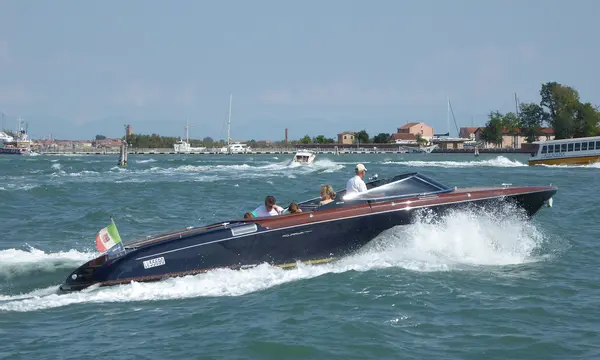
Ferretti CEO Stassi Anastassov discusses plans for larger Riva superyachts, a Wally relaunch and new group strategy in a recent interview on future growth.
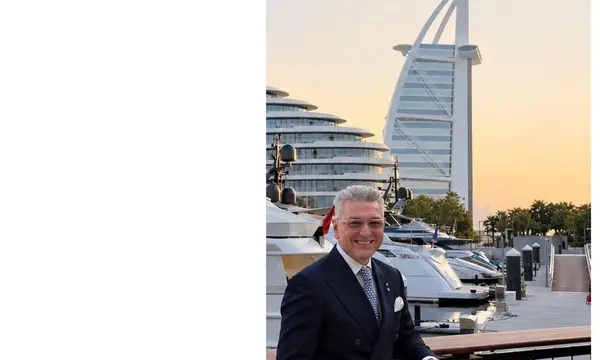
Ferretti Group has named the Middle East and Africa as a growth and investment priority, with CEO Stassi Anastassov speaking at the Dubai summit …
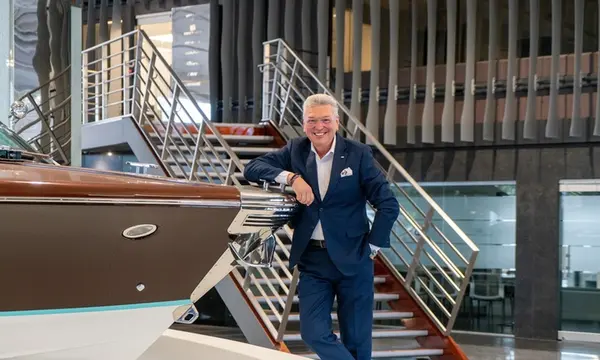
Ferretti CEO Stassi Anastassov outlines brand loyalty, yacht quality, after-sales service and warranty extensions for eligible yachts under 45m.
Ferretti Group is reorganising technical and operational leadership into separate manufacturing, research and development, and customer-quality functions as Matteo Cecada departs.
Superyacht Guide
Continue into the wider Superyacht Guide.
Business opportunities · Superyacht Guide
Companies serving the superyacht market can discuss clearly identified advertising, sponsorship and business-profile opportunities. Commercial activity remains separate from independent editorial coverage.

