Ferretti Splits Technical Leadership into Manufacturing, R&D and Quality Functions
By Superyacht Guide Newsroom · Edited by Superyacht Guide Newsroom
Ferretti Group Italian shipyards official photograph technology reorganisation — SYG batch10
Ferretti Group's official November reorganisation establishes separate heads of manufacturing, research and development, and customer quality reporting to the CEO.
Ferretti Group has announced a restructuring of its technical and operations leadership, dividing responsibility among three senior executives who will each report directly to the chief executive. The Italian group set out the changes in an official investor-relations statement dated 3 November 2026. Marco Ricci will lead manufacturing, Danilo Giunchi will oversee research and development, and Massimiliano Amato will direct customer-related quality and improvement. The group also confirmed that existing Chief Technical & Operations Officer Matteo Cecada is due to leave on 1 December 2026.
This is a significant governance decision for a group building yachts across seven brands, including large vessels from CRN and Custom Line. A superyacht project depends on coordination between engineering, purchasing, fabrication, outfitting and final owner acceptance. Ferretti's release identifies clearer accountability and faster decisions as its objectives. It does not establish that particular production sites are closing, that a model has been cancelled or that any specific vessel's delivery schedule has changed.
The prior Chief Technical & Operations Officer position brought a broad span of responsibility under one executive. Ferretti now defines manufacturing, research and development, and customer quality as separate areas reporting directly to its group CEO, Stassi Anastassov. The distinction is more than a change in title. It makes responsibility for particular activities more explicit, although practical coordination will still be necessary across the three functions.
A large yacht cannot be designed, built and delivered in isolated stages with no communication. Technical decisions influence what a factory can manufacture, while production experience feeds back into subsequent design. Separating leadership may improve focus, but successful execution will depend on the procedures connecting those teams. The release outlines the intended structure without publishing an internal operating manual or the specific decision rights of every manager.
Ferretti identifies Marco Ricci as Chief Manufacturing Officer. His remit covers shipyard operations, industrial efficiency, infrastructure and purchasing. The inclusion of purchasing is notable because superyacht construction depends on access to specialist materials and equipment, often sourced from several countries. Manufacturing efficiency cannot be assessed solely by the speed of work inside a building if essential components are delayed.
For a large custom vessel, the production plan must balance structural work, systems installation, specialist finishing and a variety of suppliers. A manufacturing leader therefore needs a clear view of workforce availability and the capacity of each site. The company does not disclose a new procurement platform, staffing plan or spending figure in its reorganisation statement. Such initiatives, if pursued, require later evidence.
Danilo Giunchi is named Chief Research and Development Officer, with responsibility for engineering, product development, research and proprietary technology. The prominence given to proprietary technology indicates the group's stated desire to develop more knowledge within its organisation. That could relate to many technical disciplines, but the announcement does not specify a new propulsion system, battery platform or patent filing.
Research and development within a yacht group must also operate within rules governing safety and performance. Product improvements require engineering validation and sometimes new approval work with classification or regulatory authorities. An executive with a dedicated remit may help align the timetable for research with the requirements of future models. It would be wrong, however, to imply that a specified innovation is already installed on a yacht simply because the company has changed the reporting structure.
Massimiliano Amato is appointed Chief Customer & Improvement Officer, responsible for product quality, testing, delivery quality and continuous improvement. This makes the customer experience a named part of the technical leadership framework rather than something addressed only after a vessel enters service. The point is important for a large yacht, where defects or incomplete documentation discovered at handover can interfere with an owner's programme.
Quality is not merely a visual matter. The reliability of electrical systems, water and climate plant, machinery, deck equipment and software can affect how a yacht is used and maintained. A dedicated senior quality function may support systematic review of issues, but the release contains no data on previous defect rates or a guarantee that all future yachts will be free of faults. The declared responsibility is what can be confirmed.
The investor statement confirms that Matteo Cecada, the outgoing Chief Technical & Operations Officer, is due to leave the group on 1 December 2026. It also thanks him for his contribution. That is the limit of the relevant personal information needed for reporting this management transition. The company notes a non-compete arrangement in its formal document, but does not provide a basis for speculation about his next position.
The departure date is future relative to the 24 November publication of this report. It would therefore be inaccurate to say he has already left. A careful description of executive changes preserves the difference between an announced exit and a completed one, just as an announced shipyard investment should not be confused with construction already finished.
The group says all three executives will report directly to Stassi Anastassov. That arrangement may shorten some escalation paths because manufacturing, engineering and quality leaders can present issues at the same senior level. It can also require more disciplined coordination to prevent conflicting priorities. A technically attractive new feature may be difficult to manufacture on schedule, while an efficient production choice may need further validation before approval.
A well-defined escalation process can help resolve such conflicts, but the organisational chart alone does not prove that decisions will become faster. The company identifies speed and accountability as objectives; measurable results will need to be observed later through project execution, quality and financial performance.
CRN builds large custom yachts within Ferretti Group. Custom programmes generally place heavy demands on design coordination, engineering and owner communication. A vessel may have unique accommodation, machinery arrangements and advanced technical systems that require the three functions in the revised structure to work together. This makes the reorganisation directly relevant to the superyacht industry, even though the statement is issued at group level.
The press release does not name a specific CRN build affected by the changes. It should not be used as evidence of a new contract, altered technical specification or hidden problem on any individual yacht. The appropriate conclusion is that group-wide governance may influence how future complex projects are managed.
Custom Line serves owners who may select among established platforms while specifying substantial individual variations. That business needs a balance between repeatable engineering and the flexibility demanded by owners. Manufacturing leadership must manage production flow, research and development must support design improvements, and quality leadership must ensure finished yachts meet appropriate standards.
The new division of duties may be especially useful when lessons from one hull need to be applied to later examples. However, the announcement contains no new published quality policy or a revised model delivery schedule. Any claim of improved production results should be reserved for later company evidence rather than projected from the structure alone.
Putting purchasing within the manufacturing remit highlights the connection between supplier availability and shipyard output. A late gearbox, navigation component or specialist finish can affect the sequence of other work. For a large yacht, an alternative product may not fit the original design or may require extra verification. Supply planning therefore has to be informed by engineering requirements as well as commercial price.
A manufacturing officer with procurement authority can coordinate such trade-offs more closely, but technical acceptance remains essential. The new organisational description does not announce exclusive vendor agreements or a new supplier network. It establishes accountability for purchasing within the senior manufacturing portfolio, which is a meaningful governance fact in its own right.
The official statement emphasises research and proprietary technology. Developing technology in-house can help a yacht builder control certain performance characteristics or integrate systems more effectively. It also creates obligations for ongoing maintenance, technical documentation and service support. An owner needs confidence that a custom technology can be maintained long after delivery.
Research investment should not be equated automatically with lower operating costs or environmental impact. Such outcomes require specific testing and comparable data. The release establishes a strategic priority, not verified technical results. The new R&D leadership will be judged by what is developed and implemented over subsequent years.
Customer feedback can be valuable when it is captured and analysed rather than handled as isolated correspondence. Problems identified during commissioning or early service might reveal a supplier issue, a design weakness or a need for better maintenance instructions. A quality function that sees these patterns can recommend changes to production and engineering teams.
That is an industry interpretation of what a Chief Customer & Improvement Officer may help achieve. Ferretti does not publish its internal reporting system or state that a specific complaint triggered the reorganisation. The distinction matters: a management change can be discussed as an opportunity without suggesting unverified defects in the existing fleet.
The release expressly includes testing and delivery quality in Amato's responsibilities. For owners, this is an important part of the project because the final yacht must function as well as look finished. Sea trials, system checks, acceptance procedures and complete manuals all support an effective transition from builder to operating crew. The relevant requirements depend on vessel design, class, flag and individual contracts.
A new executive title cannot replace these processes, but it may clarify who is accountable for coordinating them. Prospective owners should still seek detailed contract terms and project-specific test evidence. The group has not released a new universal acceptance checklist or warranty undertaking as part of the November statement.
Anastassov's remarks in the official announcement frame the reorganisation as an effort to combine Italian craftsmanship with technology, innovation, product quality and stronger industrial performance. He stresses clearer accountability and faster decisions. That description provides the company’s rationale and explains why a structural management change is being made now.
Management's aims are forward-looking. They do not constitute independently audited evidence that cost, waste, delivery intervals or defect rates have already changed. Readers comparing yacht builders should distinguish expressed ambitions from actual production results and not substitute one for the other.
The release does not provide a new superyacht launch date, an order intake figure, a shipyard acquisition or the details of employee-level restructuring. It identifies three leadership appointments, one scheduled departure and the general purpose of a reorganised technical structure. It also does not say that the group has abandoned external suppliers or that every model will soon use the same technology.
Those boundaries protect the accuracy of the story. A company may reorganise to improve processes without any single immediate effect on owners or yacht specifications. The next reportable milestones would be concrete industrial initiatives and measured operating results disclosed by Ferretti.
The significance of this 3 November statement is that the Italian yacht group has divided a large technical portfolio into manufacturing, engineering and customer-quality leadership with direct CEO accountability. Those are areas that directly affect the creation and handover of large custom and semi-custom yachts. Owners and suppliers will want to understand how the new structure supports continuity on existing projects.
The changes are not evidence of a completed turnaround or a problem on any named vessel. They are a verified corporate decision intended to influence how the group develops, builds and delivers its products. As the December departure and subsequent reporting cycles unfold, more evidence should become available about implementation and outcomes.
Primary source: Ferretti Group investor relations, official Technical and Operations reorganisation press release PDF dated 3 November 2026.
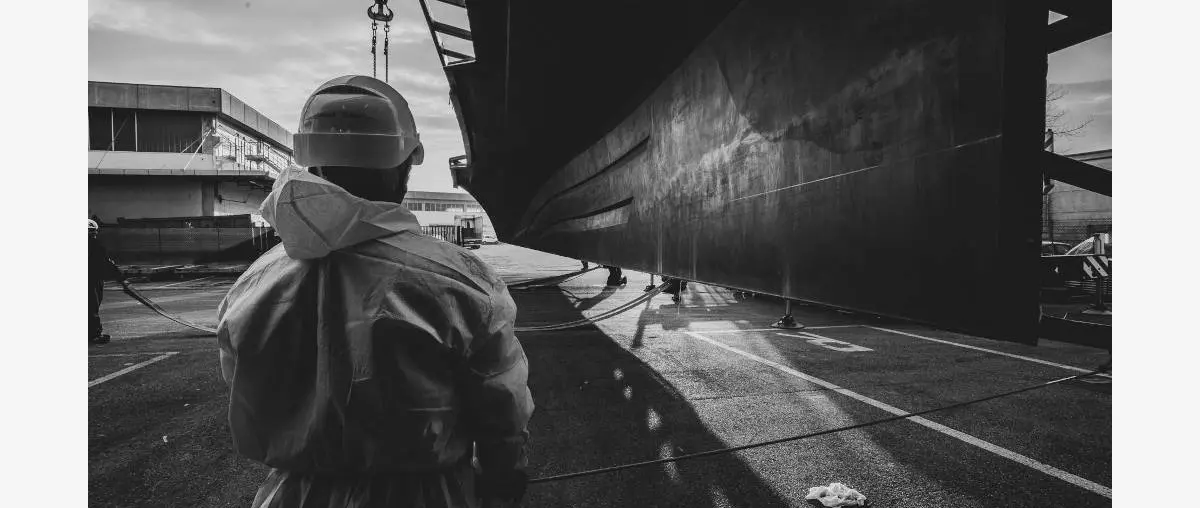
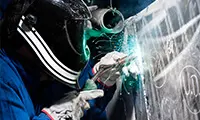
Photo: Ferretti Group, company-owned image of its Italian shipyards; representative illustration of manufacturing and engineering, not a photograph of a board meeting. Official source.
Explore
Go deeper into the yachts, companies, events and destinations directly connected to this article.
Continue reading
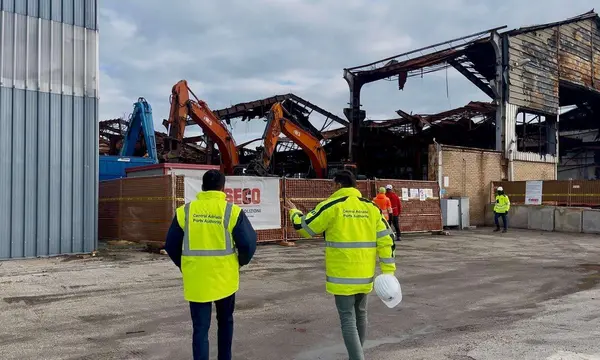
Ancona starts a €405,000 demolition of the former Tubimar complex to release industrial waterfront space for Ferretti Group and Palumbo Superyachts.
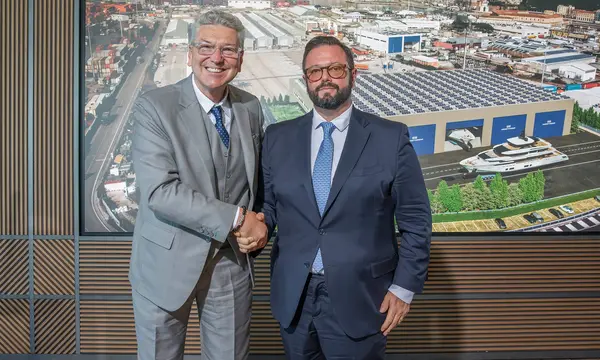
Ferretti Group plans five new production sheds at its Ancona superyacht yard, investing nearly €30m to double semi-custom metal-yacht capacity from 2028.
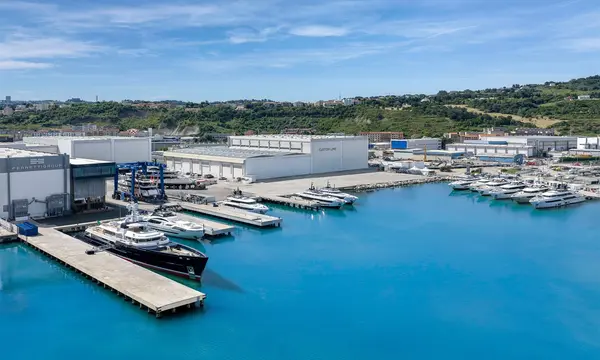
Ferretti Group has secured permission to enlarge a production hall at Ancona, enabling 100m superyachts. The port authority confirms a €3m building investment and …
CRN has stated that the launch of 70-metre Project Thunderball is planned for spring 2026.
Superyacht Guide
Continue into the wider Superyacht Guide.
Business opportunities · Superyacht Guide
Companies serving the superyacht market can discuss clearly identified advertising, sponsorship and business-profile opportunities. Commercial activity remains separate from independent editorial coverage.
