
FOILER Sets 2029 Launch Goal for 28m GHOST Flying Yacht
By Superyacht Guide Newsroom · Edited by Superyacht Guide Newsroom
FOILER Sets 2029 Launch Goal for 28m GHOST Flying Yacht — licensed SYG News 26Nov batch07
FOILER sets out its 28m GHOST hydrofoil superyacht with a planned 2029 launch, carbon and titanium construction, panoramic glazing and solar-powered systems.
FOILER is targeting a first launch in 2029 for GHOST, its proposed 28-metre private foiling yacht developed with engineering partner ENATA and exterior design by BOZCA. The builder's official GHOST presentation describes a yacht intended to raise its hull approximately two metres above the sea surface at speeds above 40 knots, with full carbon-fibre and titanium construction, extensive glazing and a roof carrying high-efficiency solar panels. The project is still at the pre-build stage according to the manufacturer's own description, which says construction is expected to begin soon. It is therefore best understood as a technically ambitious future superyacht concept with a published design direction rather than an operating vessel available for immediate inspection.
At 28 metres, GHOST enters the size bracket commonly used to identify a superyacht, with space and operating requirements different from a short recreational dayboat. Its promise is to combine high-speed hydrofoil operation with a meaningful volume of living accommodation. The manufacturer's programme includes a master cabin, additional guest cabins and an interior designed to be occupied during longer passages or time at anchor. That ambition changes the engineering challenge: a larger enclosed structure, hotel systems, guest comfort and extended cruising needs all place demands on weight distribution and energy supply. The stated length alone does not establish how the vessel would be crewed, classified or used in different jurisdictions.
FOILER says GHOST would use ENATA's proprietary hydrofoil technology and could travel with its hull approximately two metres above the water at speeds exceeding 40 knots. Those are design claims from the builder's public presentation, not figures backed here by an independent full-scale sea-trial report. Hydrodynamic lift can reduce hull contact with waves, but the operational outcome depends on payload, sea state, control systems, foil configuration and many design details that are not supplied in the brochure text. Responsible reporting should keep the distinction between an engineering target and a demonstrated capability visible, particularly where claims involve both high speed and extraordinary passenger comfort.
Hydrofoil systems have been applied to several types of smaller marine craft, while their integration into a private superyacht introduces more complicated accommodation and structural questions. The larger the yacht, the more substantial the lifting loads, with corresponding demands on hull stiffness, foundations and control authority. Designers must also manage the transition between hull-borne and foil-borne operation and establish safe procedures when the system cannot remain in its elevated operating mode. A 28-metre project may therefore be an important test of whether hydrofoiling can support the priorities of owners who want meaningful interior volume, not only an exciting fast ride.
FOILER describes a platform using carbon fibre and titanium. Both materials are associated with demanding applications where weight, corrosion resistance and structural properties must be evaluated carefully. Carbon-fibre laminates can be engineered for particular load paths, while titanium can serve specialised high-performance components. Neither material automatically guarantees long service life or simple maintenance. Repairability, inspection access, fatigue testing and the interface between dissimilar materials need attention over the yacht's operating years. For a prospective owner, the interesting question is how the materials support the design objectives without creating an impractical dependence on specialist facilities far from home waters.
The official presentation credits BOZCA Design with GHOST's exterior concept and describes a style based on clear geometry, sculptural surfaces and a sense of movement even while the yacht is stationary. That visual identity is not merely decorative if the structural design must integrate foils, glazing, access points and significant airflow at speed. Large windows and dynamic external forms may offer the dramatic appearance expected of a flagship, but they also demand careful engineering around visibility, thermal performance and load-bearing structure. The design's commercial credibility will ultimately depend on whether the built vessel preserves the intended proportions while meeting safety, strength and practical maintenance requirements.
FOILER's published arrangement includes a master cabin and a choice of additional guest cabins, with expansive glazing and approximately 200 square metres of living space claimed in the project description. That figure should be treated as a manufacturer's concept-stage specification until detailed general arrangement drawings establish how different areas are measured. The presence of accommodation is important: a superyacht is judged by living quality as well as speed. Circulation, privacy, crew access, storage and movement in a seaway can determine whether a striking concept becomes enjoyable in service. Owners should compare the proposed interior against actual intended use rather than evaluating only renderings.
The project places special emphasis on floor-to-ceiling glass and outward views. For an owner, panoramic visibility can strengthen the relationship between the interior and the sea, particularly while the yacht is at rest or travelling in suitable conditions. On a high-speed craft, glazing also becomes part of a demanding structural and operational environment. Engineers must resolve impact loads, solar gain, condensation, shading and visual clarity for navigation. The builder's presentation conveys the intended atmosphere rather than a full certified glazing specification. These detailed questions will matter when the design advances from concept images toward fabrication drawings and eventually a physical yacht.
FOILER says much of GHOST's superstructure roof would carry high-efficiency solar panels to support clean energy generation and quiet operations. Solar equipment can help feed onboard electrical loads or reduce the demand for other generating systems under suitable conditions. Its practical contribution depends on available area, power density, shading, weather and the yacht's hotel load. The public description does not establish that solar alone could propel a 28-metre foiling yacht at the proposed top speed. That distinction is essential. Solar panels may be a meaningful part of the energy strategy without eliminating the need for a powerful main propulsion system or other onboard energy sources.
A claimed operating speed above 40 knots is eye-catching for a vessel of this length, but speed has to be considered with the relevant operating conditions. Fuel or energy demand, ride quality, stopping distance, turning behaviour and rescue arrangements become important as velocity increases. When a builder eventually conducts trials, useful evidence will include documented displacement, sea state, measured speed, comfort and system response. The public presentation of GHOST does not replace that evidence. Prospective owners should seek a clear account of which operating modes are intended, their limitations and what happens if a control or lifting element is unavailable during a passage.
The manufacturer's presentation also proposes a concealed crane system for deployment of a jet-ski or tender. Integration of such equipment can be attractive because it preserves the exterior's visual continuity while still addressing practical leisure use. On a foiling yacht, however, added watercraft and lifting equipment affect mass distribution and may place load constraints on the deck structure. A designer must consider where equipment is secured during high-speed operation, how safely it can be launched and recovered and whether the arrangement is useful in typical anchorages. The brochure communicates the intent, not a complete engineering approval for all possible ancillary craft.
The official FOILER page states that construction is expected to begin soon and that the first launch is scheduled for 2029. That language leaves uncertainty around the exact construction start, contract status, final technical specification and completion milestones. There is no basis for calling GHOST a yacht already launched, delivered or successfully operating above the water. A multi-year development window is also unsurprising for a concept introducing unusual engineering demands at superyacht scale. Owners and industry partners should look for credible intermediate milestones: final design, build contracts, structural fabrication, systems integration and progressively more demanding trials before concluding that the published schedule is secure.
A purchaser interested in the programme should request a specification that distinguishes proven components from systems being developed specifically for GHOST. Matters for discussion include design maturity, class or conformity pathways, owner-change procedures, warranties, support responsibilities and the conditions attached to any performance assurance. Carbon structures, foil systems and bespoke controls may require specialised service, so support in anticipated cruising locations is an important economic consideration. It is also valuable to ask how technical updates will be incorporated during construction. An attractive proposed delivery year does not eliminate the need for defined acceptance criteria and a clear contractual allocation of risk.
ENATA is presented by FOILER as the engineering partner behind its hydrofoil technology, with BOZCA providing exterior design. The partnership illustrates how a specialist marine engineering business can pursue a new category of owner-focused yacht by combining control systems, materials expertise and a highly visible design concept. The interesting test is whether those disciplines remain integrated through full-scale construction, sea trials and after-sales support. Success would have implications for more than one model, but the current public material does not establish performance results for a completed GHOST hull. Its contribution today is a specific proposal for translating foiling ambitions into superyacht dimensions.
GHOST is worth monitoring because it addresses a difficult question: can high-speed foiling deliver superyacht accommodation and owner comfort without unsustainable complexity? The official design describes a 28-metre vessel, a 2029 first-launch objective, advanced construction materials, extensive glazing, multiple guest cabins and solar-supported hotel systems. Each element is significant, but the final engineering solution has not yet been demonstrated publicly on a completed yacht. The next meaningful evidence will come from an identified build programme, detailed specifications and independent operational observations. Until then, GHOST should be reported as a future project with a defined commercial and technical ambition, not as a proven revolution in large-yacht propulsion.
Primary source: FOILER, official GHOST model and construction programme, checked 26 November 2026.
Archival Abu Dhabi marina photograph; not a rendering or photograph of the planned GHOST yacht. Photo: Ralf Roletschek; CC BY 3.0 via Wikimedia Commons. Licensed photograph.
Explore
Go deeper into the yachts, companies, events and destinations directly connected to this article.
Continue reading
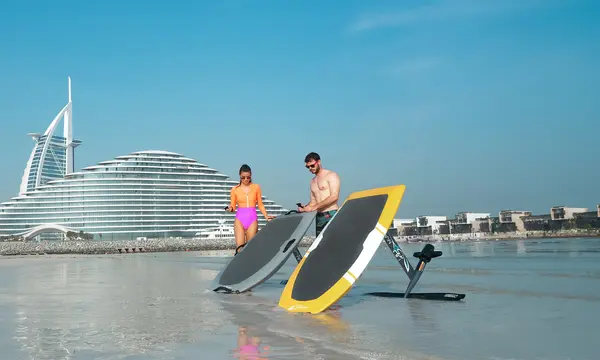
ENATA has acquired a minority stake in UAE-based Manta Foils, formalising a collaboration that will expand work across composites, engineering and marine R&D.
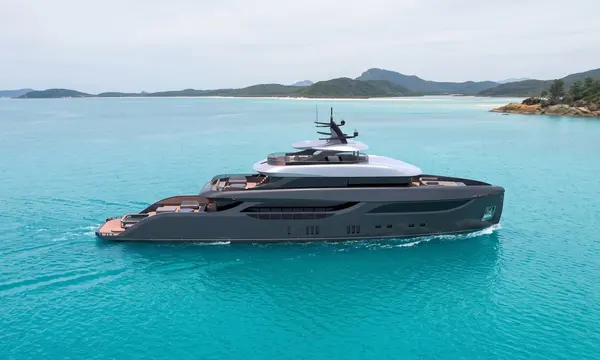
Australian designers unveil SATURDAY, a 43-metre aluminium superyacht concept with a proposed 2.5-metre draught, 9.1-metre beam and flexible indoor-outdoor spaces.
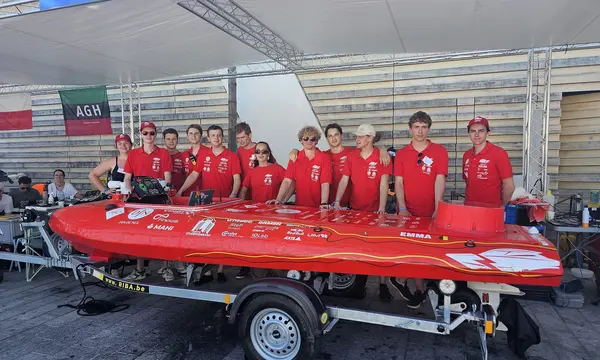
Yacht Club de Monaco invites engineering students to redesign its Energy Class catamaran, with May 2027 submissions and final presentations in Monaco.
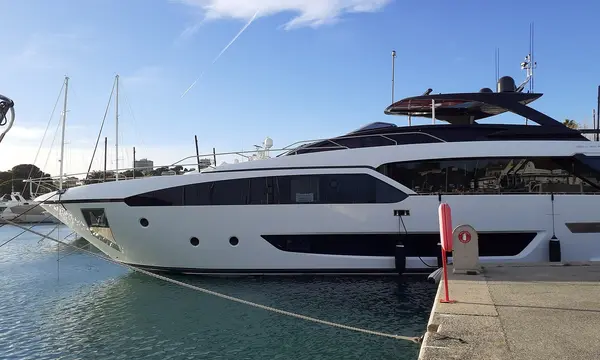
Riva reveals the 28.79m 96 Argo Super’s redesigned stern, versatile 20sqm cockpit, revised crew routes and main-deck suite in a detailed November technical.
Superyacht Guide
Continue into the wider Superyacht Guide.
Business opportunities · Superyacht Guide
Companies serving the superyacht market can discuss clearly identified advertising, sponsorship and business-profile opportunities. Commercial activity remains separate from independent editorial coverage.

