Monaco Energy Boat Challenge Invites Students to Redesign Catamaran Platform
By Superyacht Guide Newsroom · Edited by Superyacht Guide Newsroom
Monaco Energy Boat Challenge Invites Students to Redesign Catamaran Platform — licensed SYG News 26Nov batch05
Yacht Club de Monaco invites engineering students to redesign its Energy Class catamaran, with May 2027 submissions and final presentations in Monaco.
Yacht Club de Monaco is challenging university and engineering-school teams around the world to design a more efficient catamaran platform for its Energy Class, with the possibility that a successful concept could influence future editions of the Monaco Energy Boat Challenge. The Monaco Energy Class Design Challenge 2027 was launched on 3 November and detailed publicly on 6 November. Students have until 1 May 2027 to submit a proposal that improves hydrodynamic performance while remaining safe, practical to manufacture and compatible with multiple propulsion technologies. It is a small-boat engineering competition, but the issues it raises are familiar to designers and builders of much larger yachts.
The Monaco Energy Class has traditionally supplied participating teams with the same catamaran hull platform. That arrangement helps competitors focus on propulsion, energy management and cockpit systems under similar conditions. The 2027 challenge changes the brief by asking students to rethink the platform itself rather than work only within an existing standard structure.
This creates a more demanding engineering problem. Changes to hull shape can influence resistance, stability, structural weight and manufacturing cost. A successful design must therefore be justified as an integrated solution, not merely a more striking shape. The club's announcement makes clear that its judges will look beyond drawings to whether a concept could realistically be built.
Yacht Club de Monaco says students at universities and engineering schools may enter, including those studying naval architecture, hydrodynamics, marine engineering, composite materials and industrial design. Teams can bring together different disciplines and seek outside advice, but the students must remain the principal designers of their proposal.
Interdisciplinary work is important because marine projects rarely succeed through one speciality alone. A designer can create a low-resistance hull that is difficult to manufacture, or a strong structure that is excessively heavy. Engineers need to understand each other's constraints and agree priorities before producing a final design package.
Under the contest brief, the proposed twin-hull platform may be up to 5.5 metres long, compared with the current 5.0-metre arrangement. Maximum beam increases from approximately 2.5 to 2.7 metres. These changes may appear modest, but a difference of a few centimetres or kilograms can be significant in a small craft where the available energy and power are carefully controlled.
A longer or wider platform is not automatically more efficient. Designers must consider the relationships among wetted surface, wave resistance, trim and structural weight. Performance depends on the operating conditions being optimised. A successful submission should explain why its geometry offers a benefit for the competition rather than relying on larger dimensions as a selling point.
A central requirement is that the platform accommodate different energy and propulsion technologies without favouring a particular competitor's solution. This is fundamental to the Energy Class concept. If a hull is shaped to work well with only one motor or one battery arrangement, it may give that team an advantage unrelated to the quality of its energy-system engineering.
Students therefore need to think about standard interfaces, available space and load paths. Control systems, electrical equipment and cockpit modules may need to fit within a common envelope. Designers must balance flexibility with weight and structural requirements. This kind of interface planning is also relevant to larger yachts that may undergo future equipment changes.
The official announcement states that structural dimensions and interfaces must support a total continuous power output of up to 35 kW, taking account of thrust, torque, impacts and transient loads. The distinction between continuous output and temporary forces is important. A structure may experience loads during manoeuvres or in waves that are not obvious from the nominal propulsion rating.
A responsible design includes suitable load cases and explains how equipment will transfer forces through the hulls. It should not rely on a single idealised condition. The competition rules are detailed enough to require proper engineering judgement, but the public news article is not a substitute for the formal technical specification students must follow.
The club's release says the vessel, excluding the hulls, must not weigh more than 300 kilograms in race mode, including a pilot weighing at least 70 kilograms. The precise interpretation and measurement process belong to the official competition documentation. Even from the published summary, the requirement demonstrates the need for close coordination among structural, electrical and mechanical designers.
Weight affects acceleration, resistance and energy demand. Removing material may reduce weight but could also compromise strength or durability. A good team needs to show how its decisions balance these factors. For professional yacht builders, the principle is familiar: a lightweight design must remain safe and serviceable throughout the conditions for which it is intended.
Students can investigate foil-assisted arrangements, provided the boat remains supported at the water surface rather than operating in full flight. This allows exploration of technologies that may change resistance or dynamic behaviour without turning the competition into an entirely different form of vessel racing.
Foil-assisted design requires careful consideration of stability and load transfer. A foil that performs well at one speed may introduce complexity at another. Students should explain how their arrangement behaves during acceleration, low-speed manoeuvring and adverse conditions, rather than assume that a visually advanced appendage guarantees better efficiency.
Yacht Club de Monaco says designs must satisfy a category C design requirement associated with conditions up to Beaufort Force 6 and waves of approximately two metres. A competition that encourages innovation still has to consider structural integrity, stability and the safety of the pilot. The requirements do not imply that racing will always occur in those conditions.
A compliant concept must demonstrate why its construction and layout are suitable. Applicants should follow the precise standards identified in the official rules rather than rely solely on a short news summary. A technically impressive hull that does not meet the specified safety and interface criteria can be disqualified.
This is not simply an award for the most attractive rendering. Students must show that a prototype could be constructed and that a small production run of ten units would be practicable at controlled cost. That requirement introduces manufacturing considerations that can be overlooked during early-stage naval architecture work.
A design with highly complex geometry may be difficult to mould or assemble reliably. Conversely, a straightforward structure with well-defined processes can make testing and repair easier. Teams should explain how their materials and production methods relate to the scale of the proposed project, rather than assume that a technology used on a large yacht can be copied into a lightweight five-metre platform.
Composite materials may offer opportunities to control weight and stiffness, but their suitability depends on the layup, load paths, tooling and manufacturing quality. An approach that performs well in a laboratory may still have difficulties when repeated across ten boats. Students should consider not only strength-to-weight figures but also inspection, repair and the availability of appropriate materials.
Environmental questions may also enter design choices. A lighter platform could reduce propulsion energy demand, while a difficult-to-repair structure might create other costs over its life. The announcement does not require students to prove that one particular material is environmentally superior, and any such comparison would need a defined method and evidence.
The existing Energy Class format has allowed university teams to experiment with power systems on common hulls. By opening the platform design, Yacht Club de Monaco is inviting students to consider how naval architecture and energy management interact. Hull resistance influences the power needed to maintain a speed, and the chosen power system affects the boat's weight and balance.
A useful result may come from improving the complete system rather than focusing on one component. Designers could consider trim, structural layout and the placement of equipment together. However, no winner has been selected, and the announcement does not establish that any entry will achieve a particular percentage improvement.
The competition was launched on 3 November 2026. An optional preliminary progress review is planned for 12 March 2027. Completed designs, in English, are due before 1 May, after which applications will be examined during May. Finalists are to be invited to Monaco to present their projects to an international jury.
These dates are prospective at the time of writing. Universities should refer to the official organiser for entry requirements and any changes. The programme gives teams several months to develop and document a solution, but it also requires disciplined planning if they are to produce a credible design package before the deadline.
Successful entrants are expected to present during the 14th Monaco Energy Boat Challenge, scheduled for 29 June to 3 July 2027. That places the competition in a wider event where students and industry participants can discuss propulsion, energy and practical boat engineering. The audience can provide exposure to ideas that might otherwise remain within academic projects.
Participation is not a guarantee of a shipyard contract or commercial production. The benefit for students may include technical experience, feedback and professional contacts. Any future development of a winning design would require separate engineering and commercial decisions.
The announced prize is €1,000 for the winning design team. More significantly, the club indicates that an appropriate concept could inform a future standard platform for the Energy Class. The announcement explicitly states that adoption would not be automatic. Engineering studies, prototyping and testing would still be necessary before a decision on production.
That distinction is important for accurate reporting. There is currently no verified winning hull, selected manufacturer or completed new Energy Class boat resulting from the competition. The news is an invitation to design and potentially influence future development, not the launch of a new production yacht.
Although the competition concerns five-metre catamarans rather than superyachts, the engineering process has wider relevance. Large custom yachts also require interaction among hydrodynamics, structure, propulsion, electrical systems and manufacturing capability. Early coordination can prevent expensive redesigns later in a project.
A successful student team will need to defend assumptions and show how decisions fit together. That is an excellent preparation for professional naval architecture and marine engineering. The challenge also illustrates why future workforce development matters to shipyards that depend on a steady flow of technical talent.
Yacht Club de Monaco's initiative gives students a tangible problem with explicit constraints and a public presentation deadline. Unlike a purely theoretical exercise, it asks them to consider the boat's performance and whether it can be manufactured safely. These are skills that marine employers may value, even when a graduate goes on to work with much larger vessels.
Professional organisations can support this kind of work by making clear technical documentation and constructive feedback available. The purpose should be informed learning rather than making unsupported promises about future careers. The event may help create connections, but measurable outcomes will emerge only after participating teams complete their work.
The confirmed announcement is that Yacht Club de Monaco has launched the Energy Class Design Challenge 2027 and invited international student teams to propose a more efficient, safe and manufacturable catamaran platform. The dimensions, power and weight limits are stated in the official release, with submissions closing in May and finalist presentations scheduled for late June and early July.
For the wider yacht industry, it is an example of innovation being tested against practical constraints. The value of the contest lies not simply in finding a faster hull but in developing a design that can serve as a fair and adaptable platform for different technologies. The challenge is open; any claims about a future winner or proven performance will have to wait for the evidence.
Primary source: Yacht Club de Monaco official 6 November 2026 Energy Class Design Challenge 2027 announcement.
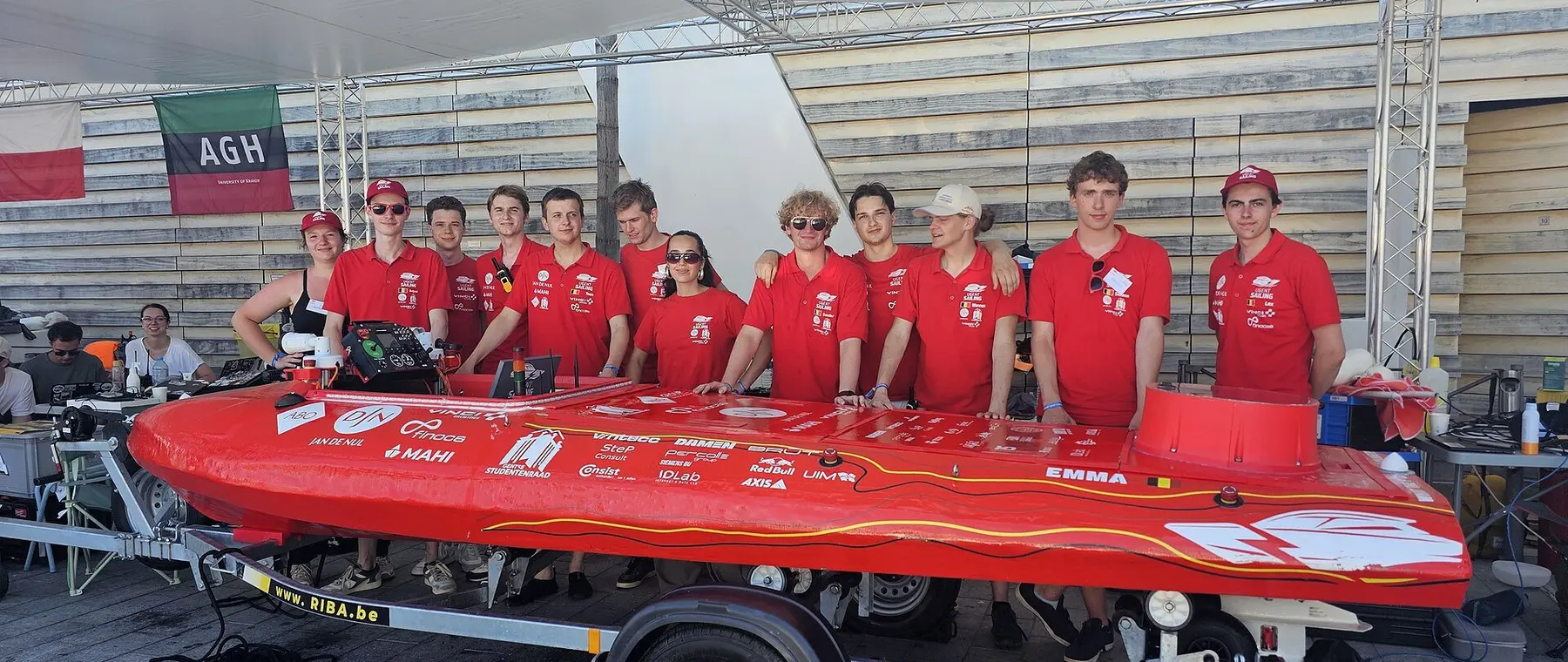
Licensed archival energy-boat competition image, not a winning 2027 design Photo: Ferre Neirynck; CC0 via Wikimedia Commons. Official source.
Explore
Go deeper into the yachts, companies, events and destinations directly connected to this article.
Continue reading
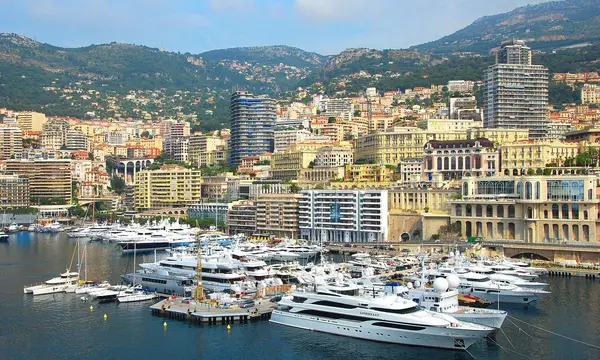
Monaco’s March 2027 exploration programme brings expedition yachts, scientific discussions, captains and marine innovation together at Yacht Club de Monaco.
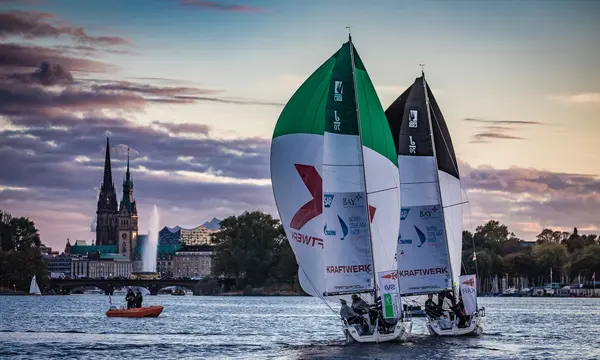
Yacht Club de Monaco sets the second J/70 Sportsboat Winter Series act for 10–13 December 2026, with further international racing scheduled through March 2027.

Damen Yachting will host nearly 4,000 Zeeland students at its Vlissingen site in December for TechXplore, a programme offering 180 engineering activities.
IDEA Data Solutions confirms new 2026.4.5 yacht-management software functions for crew records, maintenance tasks and shoreside fleet reports.
Superyacht Guide
Continue into the wider Superyacht Guide.
Business opportunities · Superyacht Guide
Companies serving the superyacht market can discuss clearly identified advertising, sponsorship and business-profile opportunities. Commercial activity remains separate from independent editorial coverage.

