
FOILER Sets 2029 Launch Goal for 28m GHOST Flying Yacht
FOILER sets out its 28m GHOST hydrofoil superyacht with a planned 2029 launch, carbon and titanium construction, panoramic glazing and solar-powered systems.
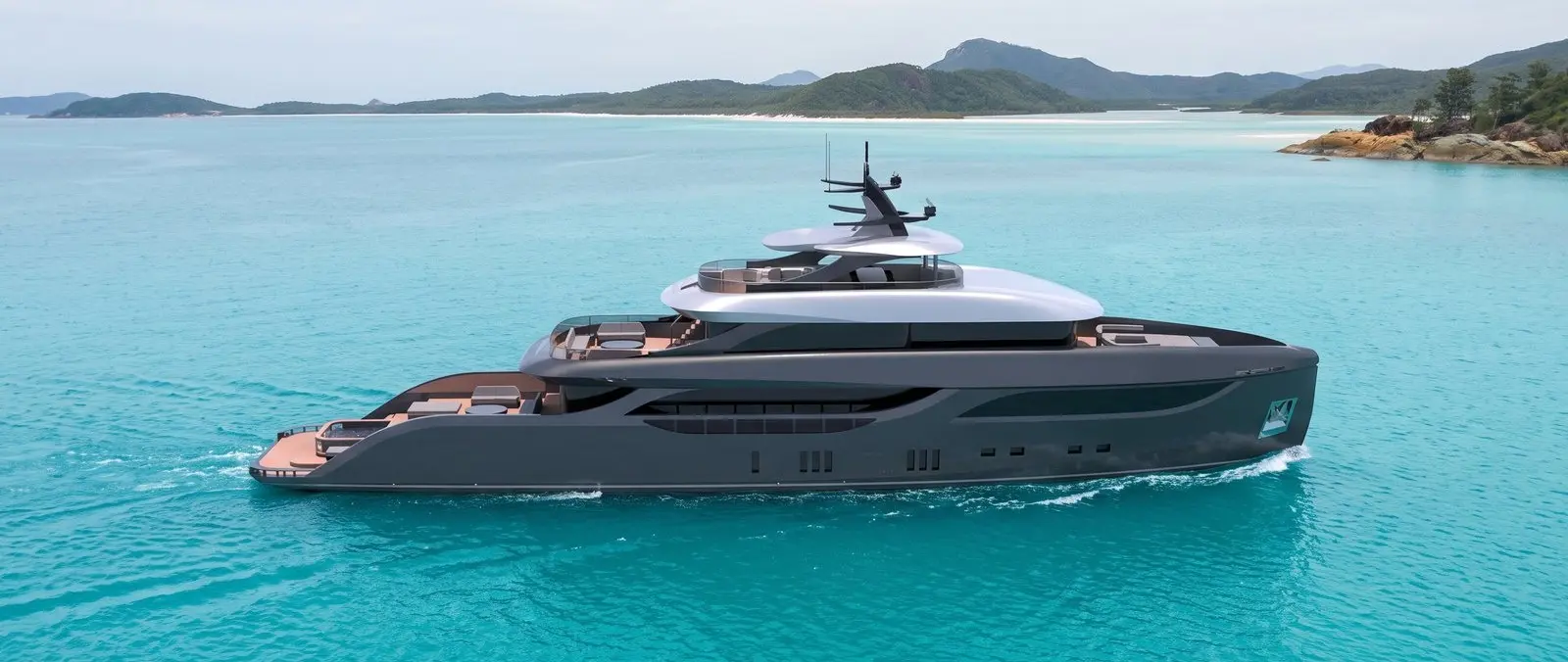
Rendering: Misha Merzliakov Yacht Design / Australian Marine. Concept publicity image, not a real vessel photograph; no build announced.
Australian designers unveil SATURDAY, a 43-metre aluminium superyacht concept with a proposed 2.5-metre draught, 9.1-metre beam and flexible indoor-outdoor spaces.
Australian studio Misha Merzliakov Yacht Design has unveiled a 43-metre superyacht concept called SATURDAY, with an emphasis on relaxed living, access to shallow-water cruising grounds and generous connections between indoor and outdoor spaces. Superyacht Australia's member announcement dated 17 November 2026 presents the design as a prospective private or charter yacht, with exterior and interior design by Misha Merzliakov Yacht Design and naval architecture by Periscope Naval Architects. The images show a contemporary vessel in the turquoise waters of the Whitsundays, but these are design renderings, not documentary photographs of a launched yacht. That distinction is essential: SATURDAY is a current proposal, with dimensions and performance targets published by its creators, not an existing vessel whose sea trials or delivery can be verified.
The studio's published particulars give an overall length of 43 metres, a beam of 9.1 metres and a target draught of 2.5 metres. The concept is described at 495 gross tons, with an aluminium hull and superstructure. These figures define the intended scale and help explain the design's focus on exploring areas where deeper-draught vessels may face greater limitations. Yet the numbers should not be treated as certified as-built measurements. Detailed engineering, weight development and regulatory decisions could change a proposal before construction, and there is no verified build contract or construction schedule in the association announcement. For prospective owners, the value of the concept is the opportunity to examine a coherent design brief before it becomes a fixed technical package.
A yacht's draught affects the waters it can safely approach, although depth is only one factor in the navigation decision. Merzliakov's design brief identifies reefs and smaller anchorages as part of SATURDAY's intended cruising environment. At a proposed 2.5 metres, the yacht is positioned to offer some flexibility compared with certain deeper large yachts. That does not mean a captain could enter any shallow lagoon or approach coral reefs without restrictions. Under-keel clearance, tides, charts, marine park rules, protected areas and conditions must still be assessed by qualified navigation professionals. The association's description of a low-draught yacht should be understood as a design goal rather than a promise of unrestricted access to environmentally sensitive locations.
The name SATURDAY is intended to communicate leisure and a sense of enjoyment shared among generations. The studio's account links the playful title with the wish to connect people and encourage new experiences. This is unusual only in the sense that many design projects are framed through performance or formal architecture first. Here, the emotional experience of being aboard is the starting point. The yacht is imagined as a place where guests can gather without the surroundings feeling overly formal. That intention is visible in the connected social spaces and the way the proposed arrangement engages with the view. It remains an ambition shown through plans and renderings rather than evidence of how actual owners and guests respond in service.
The official design narrative describes guest areas designed to connect with the sea and coastline, using balconies to preserve wide views. Aft-facing spaces are particularly important to the way many modern superyachts are used, as they link interior lounges and dining areas with places for swimming, tender access or relaxed gatherings. The brief does not set out a full construction specification for each balcony or platform, so it would be premature to describe the exact mechanism of an opening system. The meaningful design decision is the desire to reduce the visual and physical separation between the vessel and the destination. It is a familiar goal in contemporary superyacht design, but its success depends on careful engineering and real-life usability.
The association identifies two salons in the proposed layout, with an option for a full-beam sky lounge on the upper deck. That flexibility is relevant for a yacht intended to serve both private family cruising and potentially charter guests. Different groups may want quiet space, informal gatherings or more expansive settings for entertaining. A full-beam option changes how the upper deck may be used and how enclosed volume is allocated. It should not be assumed that both configurations would be built or available simultaneously on one finished yacht. They are alternatives offered within the design concept. An owner considering the project would need to assess how either arrangement affects circulation, crew service, glazing, privacy and the balance between sheltered and open space.
Generous glazing is central to the studio's stated approach. Large windows can bring light into social areas and maintain a connection with the water, making the destination a more active part of the interior experience. Such design choices also introduce technical questions: solar gain, heat load, privacy, glare and the structural requirements of large openings. The announcement describes the intended atmosphere but does not provide verified thermal or energy models for SATURDAY. It would be misleading to infer a particular insulation performance or air-conditioning capacity from the renderings. An informed owner should ask how the glass specification and climate-control systems would work in the tropical regions featured in the concept images.
Merzliakov's narrative mentions deliberately layered lighting across the interior, designed to change the atmosphere once daylight fades. This is a practical and aesthetic consideration, not merely an attractive rendering technique. A room used for breakfast, informal conversation and evening entertaining benefits from different lighting conditions. Integrating those scenes early can improve how furniture, finishes and glazing are experienced throughout the day. Yet the actual fixtures, circuits and control systems have not been documented in a completed yacht installation. The correct way to report the feature is as part of the interior brief. Future technical development would determine whether the result achieves the intended comfort, energy efficiency and ease of maintenance in use.
The design description specifically highlights a skylight above an open-air dining table, creating a connection with the sky during meals. This is a small detail with a clear experiential ambition: it makes a familiar daily activity part of the larger relationship between yacht and place. The feature also illustrates how a design must reconcile visual intent with real-world exposure to weather, movement and the demands of cleaning. The public material does not show detailed drainage, structural reinforcement or the operating conditions for any associated covering system. Those questions would need answers before construction. As a design idea, the skylight provides a useful example of how architecture can shape the feeling of life aboard without relying on a large or dramatic feature.
The announcement describes a hull door and storage for a range of water toys below deck. This is relevant to the yacht's intended use around tropical islands, where access to equipment can shape the daily programme. Storing toys and launching them safely require more planning than allocating a large compartment in a drawing. Crew circulation, handling equipment, the relationship to the waterline and safe deployment conditions all matter. The details of SATURDAY's tender and toy inventory have not been published, so it would be incorrect to claim that specific equipment is included. A prospective owner should approach this as an invitation to define the practical water-sports brief and have it integrated with the rest of the naval architecture.
The studio publishes a capacity of 12 passengers and eight crew for the concept. These headline figures help convey the balance between guest experience and service, though any eventual commercial operation would depend on the design's compliance with applicable rules, flag arrangements and certification. The announcement does not contain a complete general arrangement drawing with verified cabin counts or a final crew accommodation plan. The stated complement should therefore be viewed as a design target. Owners will need to consider how the proposed crew number relates to maintenance, charter service, watchkeeping and onboard activities. The size and operating profile of a yacht cannot be inferred from its guest count alone.
Published performance figures indicate a proposed 12-knot cruising speed and a 16-knot top speed. These numbers help describe the intended character of SATURDAY, which appears focused on comfortable and flexible cruising rather than extreme speed. However, an unbuilt design has not undergone independent sea trials, so the speeds cannot be reported as achieved performance. Propulsion selection, hull engineering, displacement and final equipment loads would all be relevant to proving them. The association announcement does not provide a verified fuel consumption or range figure. That absence matters to prospective owners: without a complete operating profile, it would be inappropriate to calculate a precise cost per nautical mile or to claim a particular passage capability.
The studio specifies aluminium for both hull and superstructure. This material can offer structural and weight advantages in appropriate yacht designs, but the benefits depend on the final engineering, build quality and maintenance programme. Corrosion management, equipment integration, coatings and inspection practices all form part of the picture. The announcement does not identify a contracted builder or a class-approved structural package for this concept. A buyer interested in developing SATURDAY would need to commission detailed naval architecture and construction planning before making claims about build cost, class compliance or delivery dates. It is appropriate to discuss aluminium as part of the declared design intent, not as evidence that any hull plating has already been cut.
The published renderings place SATURDAY in the waters of the Whitsundays, Queensland, while the design team says the concept could suit destinations farther afield, including the Mediterranean. The location is a visual expression of the proposed cruising lifestyle and connection to warm-water landscapes. It is not a record of an actual yacht visiting Australian waters. That distinction protects readers from mistaking an attractive image for a completed voyage. The design does, however, show how a yacht might be briefed around the appeal of destinations and everyday experiences rather than simply the number of decks. The real-world suitability of any anchorage or proposed itinerary would remain subject to navigation and local regulation.
Misha Merzliakov Yacht Design is credited with the exterior and interior work, while Periscope Naval Architects is named for naval architecture. These roles are complementary but distinct. Exterior and interior designers help define the vessel's appearance and guest experience, while naval architecture addresses fundamental aspects of hull geometry, stability and performance. A real newbuild would also involve a builder, engineers, equipment suppliers and other specialists. The official report names the design partners but does not present a confirmed construction team. Accuracy requires keeping those credits separate and avoiding the assumption that a conceptual partnership means the project has progressed through every technical stage. Clear authorship is especially important when a striking rendering circulates widely online.
SATURDAY is a yacht design proposal, not a confirmed existing or under-construction named yacht. This report concerns the announcement as industry news; it does not establish a delivery, owner, shipyard contract or public vessel identity. The difference is important for fleet databases and brokerage reports, where concepts should not be counted alongside yachts that actually exist. A proposal can influence design trends and provide a useful basis for discussing owner requirements without ever being built. If the project later receives a construction contract, that would be a separate, independently verifiable development. Until then, all performance and accommodation particulars remain proposed targets supplied by the designers.
The Australian Marine announcement dated 17 November 2026 describes SATURDAY as a 43-metre concept with 9.1-metre beam, 2.5-metre draught, 495 gross tons, aluminium construction and a proposed 12-knot cruise speed. It credits Misha Merzliakov Yacht Design and Periscope Naval Architects and describes two salons, flexible upper-deck arrangements, a skylight and a hull door for toys. The accompanying image is an official design rendering, not a photograph of a yacht in service. No builder, contract, buyer, launch, actual sea-trial data or delivered vessel is asserted here. The significance for the wider superyacht industry lies in a clear design brief built around shallow-water access, a connection with nature and the everyday pleasure of being aboard.
Continue reading
FOILER sets out its 28m GHOST hydrofoil superyacht with a planned 2029 launch, carbon and titanium construction, panoramic glazing and solar-powered systems.
Yacht Club de Monaco invites engineering students to redesign its Energy Class catamaran, with May 2027 submissions and final presentations in Monaco.
Riva reveals the 28.79m 96 Argo Super’s redesigned stern, versatile 20sqm cockpit, revised crew routes and main-deck suite in a detailed November technical.
A closer look at Sanlorenzo’s 25.5m SHE reveals heritage-inspired design, contemporary guest accommodation and a Volvo Penta hybrid IPS propulsion system.
Superyacht Guide
Continue into the wider Superyacht Guide.
Business opportunities · Superyacht Guide
Companies serving the superyacht market can discuss clearly identified advertising, sponsorship and business-profile opportunities. Commercial activity remains separate from independent editorial coverage.