Garmin Signal VHF Shares 2026 DAME Overall Award
By Superyacht Guide Newsroom · Edited by Superyacht Guide Newsroom
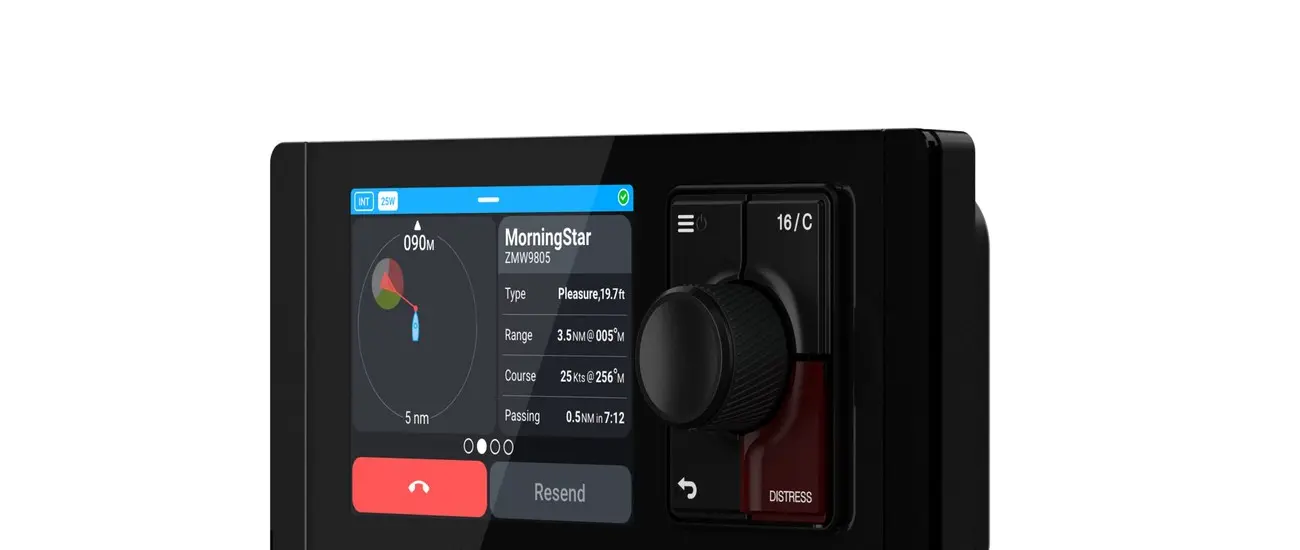
Garmin Signal RM 100 official manufacturer press photo for 2026 DAME VHF coverage
Garmin's Signal VHF series wins a joint Overall DAME Design Award at METSTRADE 2026, spotlighting AIS integration, channel replay and remote radio control.
Garmin’s Signal VHF marine-radio system has been named one of three joint Overall Winners of the 2026 DAME Design Awards, a result announced at METSTRADE in Amsterdam on 17 November. In its own announcement dated 19 November, Garmin described the recognition as its first Overall DAME win. The company shares the distinction with Scanstrut’s Wireless Powered Navigation Pole Light and Teignbridge Propellers’ controllable-pitch propeller. The judging panel chose three overall winners for the first time in the awards’ 35-year history.
This article concerns the new award for the Garmin radio system, not a new product launch. Garmin introduced the Signal range in May 2026 and had already received an IBEX Innovation Award for the VHF 400 in October. Those earlier developments have separate news value, but the latest jury recognition is a fresh, independently documented event. The DAME judges singled out a combination of communication functions, integration and ease of operation. For superyacht owners and managers, the award raises questions about how complex bridge communications are presented to professional crews, rather than implying that an award alone can certify a radio installation for every vessel.
The 2026 DAME jury described a product family which develops the conventional functions of marine VHF and adds integrated AIS transmission and reception, advanced channel monitoring and the ability to replay recent transmissions. The judges also commented on the visual relationship between the main radio and its remote station, observing that their design fits the appearance of a contemporary helm. Those comments are attributed to the jury in Garmin’s official release; they should not be confused with an independent Superyacht Guide equipment test.
METSTRADE says its competition considered 153 entries, including 74 nominated products. The jury selected nine category winners, 19 special mentions, an Environmental Design Award winner and the three joint overall recipients. This was a broad marine-equipment competition, not an award restricted to yachts over 24 metres. Nonetheless, radio communication, information integration and bridge-interface decisions are directly relevant to large-yacht navigation. The practical value of the Signal system on any particular superyacht would depend on its documented capabilities, the bridge architecture and applicable operating requirements.
Garmin says the Signal VHF 400 incorporates a Class B Automatic Identification System transponder. AIS can help display and exchange vessel-identification, position and related information with compatible installations, contributing to navigational awareness when correctly configured and operated. The company states that the VHF 400 can handle VHF, Digital Selective Calling and AIS through a single VHF antenna. That is a useful equipment-integration claim, but installers must still check antenna location, cable arrangements, radio-frequency compatibility, performance and the relevant approval requirements before using a shared installation.
An AIS-equipped radio does not relieve the bridge team of maintaining a proper lookout, complying with collision regulations or using radar and visual information. AIS information can be incomplete, delayed or absent, and not every vessel transmits it. On a commercial or large private yacht, the equipment requirements applicable to a given ship may also be different from those for a smaller recreational boat. The fact that the radio contains Class B AIS should not be taken to establish that it meets a requirement for another class of AIS installation. The manufacturer’s documentation and the ship’s flag and class requirements determine those questions.
The award announcement highlights the Signal family’s 3.5-inch colour touchscreen with edge-to-edge glass. Garmin calls the touchscreen approach an industry first for this type of radio. The screen is intended to make communication functions more accessible within a compact unit, while the surrounding controls and microphone retain familiar elements of a marine-radio interface. The visual effect matters on a bridge where the layout and legibility of many different systems can influence how readily an operator finds the right information.
Interface design has practical limits. A touchscreen is not automatically the best input method in every sea state or lighting condition, and touchscreen surfaces must be assessed for gloves, moisture, glare and deliberate control under pressure. On a large yacht, captains should consider where an operator stands or sits during close-quarters navigation, whether the display can be reached without leaving an appropriate station and how the radio is backed up if one component fails. An attractive design may improve daily use, but decisions about bridge ergonomics must be grounded in trials and the needs of the actual crew.
Garmin pairs the system with the Signal RM 100 remote station, which the company says can operate compatible Signal VHF radios from another helm or flybridge through the Garmin Marine Network. The secondary unit has a matching 3.5-inch screen, a microphone and an intercom function for communication between networked units. That creates the possibility of consistent radio control at more than one station without installing an entirely different user interface upstairs.
The relevance for superyachts depends on layout. Some vessels have a fully enclosed wheelhouse, bridge wings, flybridge control positions and separate docking stations, while others concentrate communication at a single helm. A remote radio control point may be useful where it allows a crew member to monitor or respond while operating from another approved station. It does not eliminate the need to think through redundancy, radio watchkeeping, vessel procedures and who has responsibility for a transmission. Proper system design should prevent confusion over which operator is using the channel and where the active microphone is located.
Garmin’s May product introduction describes automatic recording of up to three minutes of VHF audio from active channels. It says the system can record three channels simultaneously and offers monitoring modes covering as many as six channels for activity. The award judges specifically mentioned the replay capability as a feature which goes beyond what users expect of a conventional marine VHF. In busy harbour and pilotage environments, being able to review a recent instruction or call could be useful when radio traffic is rapid.
The recording function must be viewed as an aid, not a replacement for clear bridge communications. A replay feature does not make an indistinct or incorrectly received instruction authoritative, nor can it resolve the identity of a station without other checks. A professional bridge team still needs procedures for acknowledging traffic, recording relevant messages and ensuring navigational instructions are acted upon correctly. Owners should ask how the radio handles storage, recording limits, channel prioritisation and the interaction of several monitoring functions before treating a numerical channel count as an operational advantage.
The Signal range is advertised with Class D Digital Selective Calling, which Garmin describes as a means of transmitting digital distress information to compatible recipients. DSC can support maritime distress and routine communication processes, but an installation must be configured properly, including the Maritime Mobile Service Identity number and relevant position information. Crews also need to understand when to use voice procedures and how to follow the vessel’s safety management instructions.
In larger yachts, distress and safety systems are part of an integrated operational picture that may include additional marine communications, satellite systems, emergency beacons and equipment prescribed by the ship’s flag or trading status. A multifunction radio should therefore be evaluated within the vessel’s complete radio plan. It would be inaccurate to claim that winning the DAME award means the Signal range itself satisfies every commercial-yacht carriage requirement. Compliance decisions depend on type approvals, service area, the specific radio variant and the applicable rules.
Garmin says its Signal marine radios can integrate with Garmin chartplotters via NMEA 2000, the Garmin Marine Network and Garmin BlueNet. Its earlier technical announcement refers to support for 12- and 24-volt electrical systems, external speaker and hailer connections, GPS data, diagnostic functions and software updates using the ActiveCaptain app. These are manufacturer-stated product capabilities rather than a guarantee that every installed component can be networked without additional hardware or configuration.
For yacht engineers and electronics contractors, interoperability is only one part of an installation. Cable routing, circuit protection, network topology, antenna placement, electromagnetic compatibility and software version control all influence reliability. Any retrofit must take account of the existing bridge equipment and the captain’s procedures. The owner should receive up-to-date system documentation and a clear explanation of how the equipment behaves when a network connection is unavailable. An award-winning radio should remain intelligible and serviceable throughout the vessel’s normal maintenance cycle.
The DAME Design Awards rewards design work across the marine industry. It is not a flag-state certificate, type-approval decision or independent warranty of reliability. METSTRADE’s judging programme examines issues such as function, design, usability and the integration of technologies, whereas regulatory approval may require specific testing and documentary evidence under a particular standard. Both can be useful, but they answer different questions.
This distinction is especially important when a bridge team replaces radio equipment on a charter or commercially operated yacht. The responsible technical adviser needs to examine approved equipment lists and the present radio survey requirements before recommending a purchase. A radio that looks well suited to a family motor yacht may have a different role on a professionally managed vessel with mandatory radio installations. Superyacht Guide therefore reports Garmin’s award on its own terms and does not equate the design recognition with proof of universal regulatory compliance.
According to METSTRADE, the 2026 jury could not separate its three highest-rated entries in the final assessment. Rather than force a single selection, the organisers accepted the panel’s recommendation to name Garmin, Scanstrut and Teignbridge as joint Overall Winners. The result is distinctive because the products occupy quite different technical areas: marine communications, a navigation pole light and controllable-pitch propulsion. Their shared success illustrates how equipment development can emerge from improvements to interfaces, installation and mechanical design.
Garmin’s award is the communication-focused part of that result. Teignbridge’s propeller had already been the subject of separate Superyacht Guide reporting, while the Scanstrut product addresses a different use case and size range. Treating these technologies as equivalent would make the awards seem more homogeneous than they were. For an owner planning a new-build or refit, the most useful response is to identify which engineering or operational problem each nominated product might solve, then examine manufacturer data and trials rather than selecting products by award status alone.
Garmin International markets a broad marine-electronics portfolio that includes navigation displays, communication equipment, autopilots and connected systems. The Signal VHF range adds another component to that ecosystem, particularly for bridge teams already using compatible Garmin network equipment. Its DAME recognition follows other 2026 announcements, including Garmin’s IBEX awards and continuing marine-industry recognition from the National Marine Electronics Association. Such a sequence indicates an active product programme, but it does not by itself establish market share or installation numbers in the superyacht sector.
The award press release is also specific about product roles. The VHF 400 is the variant identified with integrated Class B AIS transmission, and the RM 100 provides remote radio control. A purchaser should distinguish those components from other Signal variants rather than assume the same features are available in every model. Software, licensing, radio region and hardware configuration can also matter when a vessel moves between operating jurisdictions. The practical installation should be agreed with a qualified marine-electronics specialist using the current product documentation.
The confirmed new development is Garmin’s first joint Overall DAME Design Award, announced by the organiser on 17 November and separately confirmed by the company on 19 November 2026. The jury cited integrated communication features, channel monitoring, message playback and the appearance of the main radio and remote station. The company provided additional technical details, including the VHF 400’s AIS functions and the RM 100 secondary control position. These details can be traced to the official sources and do not depend on unnamed industry speculation.
For superyacht owners and managers, the award is a reason to examine the product, not an instruction to install it. Large-yacht radio systems must support disciplined bridge operations and meet the vessel’s legal and technical requirements. The Signal family’s integration and interface choices may be useful in some circumstances, particularly where a second helm can benefit from consistent radio controls. Whether it is suitable for a given yacht should be established from current technical specifications, approval status, survey requirements and a real-world evaluation by the people who will operate it.
Primary source: Garmin Marine Newsroom, 19 November 2026, DAME Design Awards winner announcement.
Further information: Garmin Marine original Signal VHF 400 and 220 technical announcement, 27 May 2026.
Image: Garmin, official high-resolution Signal RM 100 and Signal VHF promotional press photograph released May 2026; illustrates the November 2026 award-winning system, not the awards ceremony. Official source.
Explore
Go deeper into the yachts, companies, events and destinations directly connected to this article.
Continue reading
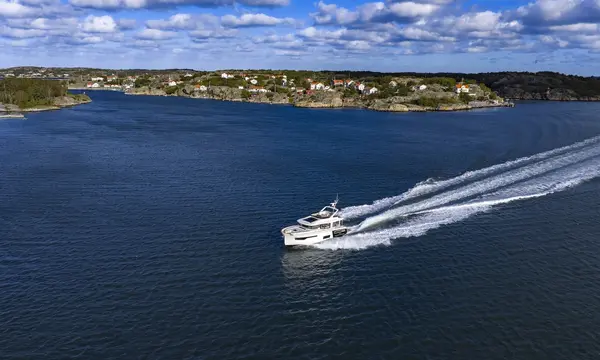
Garmin secures multiple IBEX honours for the Signal VHF 400 radio and OnBoard man-overboard system; large yacht crews should distinguish tender applications from required …
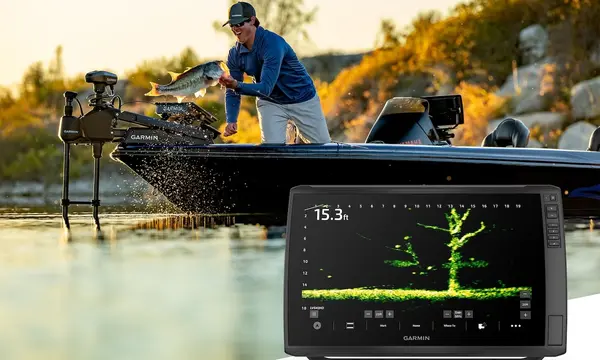
Garmin’s LiveScope 2 Series improves real-time sonar resolution, target separation and range while simplifying installation with direct MFD connectivity.
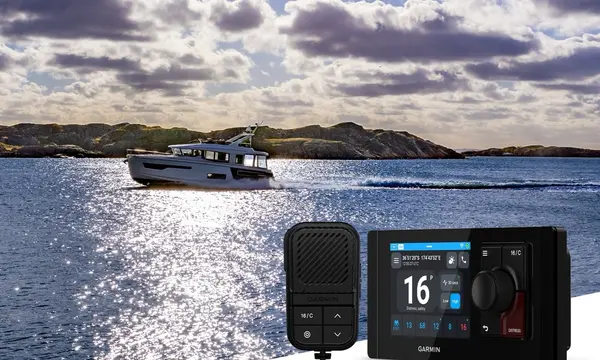
Garmin’s Signal VHF 400 and VHF 220 introduce 3.5-inch touchscreens, noise cancellation and deeper network integration for marine communications.
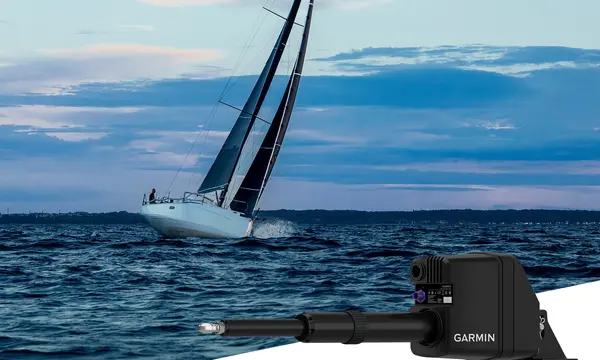
Garmin’s SmartDrive autopilot combines a brushless linear actuator, built-in ECU and rudder feedback for sailboats and catamarans up to 45 feet.
Superyacht Guide
Continue into the wider Superyacht Guide.
Business opportunities · Superyacht Guide
Companies serving the superyacht market can discuss clearly identified advertising, sponsorship and business-profile opportunities. Commercial activity remains separate from independent editorial coverage.
