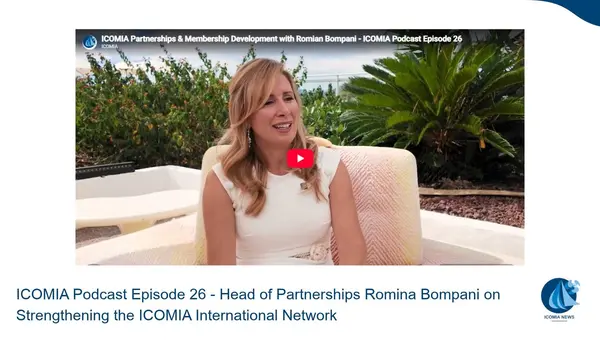
ICOMIA Partnerships Lead Romina Bompani Targets Stronger Global Yacht Networks
ICOMIA head of partnerships Romina Bompani discusses international marine business links, member value and the Asia-Pacific marina sector.
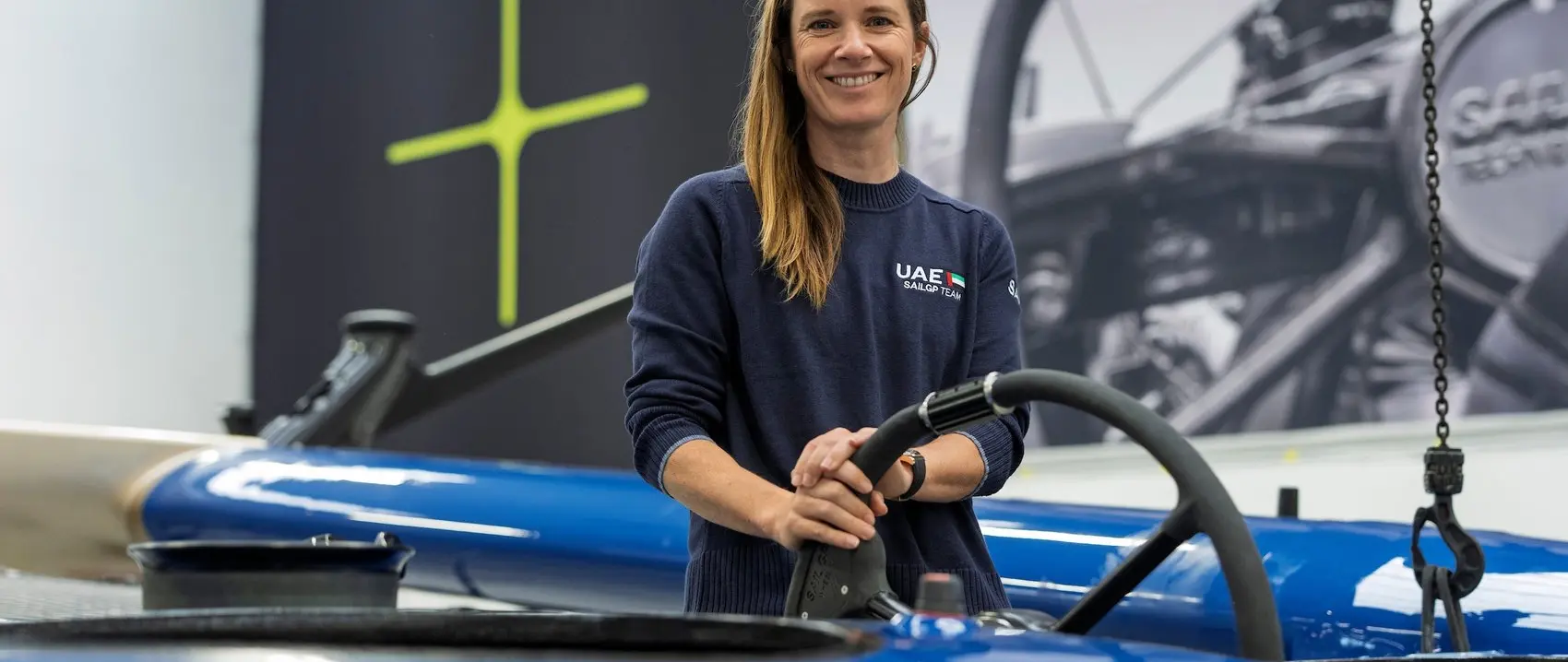
SailGP official real 2026 photograph of Hannah Mills at an F50 wheel during UAE team's technology and training announcement.
A new UAE SailGP team will become the league's fourteenth entry in 2027, led from the wheel and as team principal by two-time Olympic gold medal winner Hannah Mills.
SailGP has confirmed that a new United Arab Emirates team will join the international foiling championship in 2027, with double Olympic gold medallist Hannah Mills appointed both driver and team principal. The announcement, issued in Abu Dhabi on 24 November 2026, identifies the UAE as the league's fourteenth national entry and its first from the Middle East.
This is a forward-looking team launch, not a report that the new crew is already competing in the 2026 Abu Dhabi finale. The league's 2026 programme has thirteen teams, while the UAE outfit is scheduled to join the start line next season. Keeping the two seasons separate is essential because different team counts and roles apply.
Mills has been closely associated with Emirates Great Britain since joining its performance pathway in 2021, helping develop the British SailGP operation and contributing to its 2025 championship campaign. Her move to lead the UAE team represents a change in responsibility: she will not simply transfer her former strategist duties to another national team.
The driver position places her at the steering centre of the F50 racing operation, while the team principal role adds responsibility for the broader performance programme. The league's announcement confirms both roles, but it does not yet disclose every operational staffing decision or an entire race crew for the inaugural season.
The addition of a UAE team gives a country that has hosted SailGP events in Dubai and Abu Dhabi its own racing representative. That is a different commercial and sporting development from the continued staging of an event in the region. Hosting a regatta offers visibility and local activity; operating a national team creates an ongoing competitive presence across the calendar.
The league states that the new team will be the first from the Middle East. It does not mean no sailors from the region have previously participated in international foiling competition, nor does it establish a local youth programme or national selection policy without further details.
Expanding from thirteen to fourteen teams increases the number of entries seeking places in individual races and season finals. The operational consequences extend beyond one extra boat on the course. Training access, technical support, equipment allocation and event logistics must accommodate another organisation, and the competitive field becomes more complex.
The announcement is not, by itself, a published change to race scoring or the number of teams allowed into the championship final. Those matters depend on the league's formal regulations for 2027. The confirmed milestone is the entry and leadership arrangement, with competition starting next year.
SailGP identifies Chris Bake and Mubadala Capital as the investors behind the new UAE project. The release describes Bake as already connected to the Emirates Great Britain team's ownership, while Mubadala Capital has an existing investment relationship with SailGP through Brazil. Those details indicate how investors with experience of the championship are helping support its newest entry.
The public statement should not be interpreted as disclosure of a sale price, the size of each investor's stake or the team's annual budget. Private ownership and commercial terms require their own verification. The clear point is that the new team has named backers rather than being merely a future expression of interest.
A team principal must help establish the environment in which sailors and specialists work together. Recruitment, coaching, technical preparation, scheduling and commercial partnerships all influence a programme's progress. Mills will take that responsibility while also being designated to drive the F50, creating a dual role uncommon in many conventional team structures.
It would be unfair to predict that this combination will necessarily succeed or fail. The capability of the eventual crew and the resources available to it can only be assessed as the team is assembled and begins competing. The announcement establishes a leadership model, not a tested result.
Mills won Olympic gold in the women's 470 dinghy class and built a substantial record in elite sailing before joining SailGP. Her Olympic experience gives her familiarity with high-pressure racing, crew decision-making and long performance cycles. SailGP, however, involves a specialised foiling platform and different racing procedures, so an Olympic medal is not a guarantee of rapid adaptation to a new role.
Her experience as a strategist in the British organisation may provide insight into how established F50 teams operate. The challenge will be to put that knowledge into practice as part of a new crew with its own decision-making structure and training needs.
The departure of Mills creates a separate personnel story within Emirates GBR. The team's announcement names British foiling athlete Jemima Lines as her successor in the strategist role, with a racing debut scheduled during the Abu Dhabi weekend. The two announcements are linked, but they are not the same event: the UAE's future driver appointment and the British crew's immediate personnel change affect different seasons.
As with any crew list, race-day participation should be checked against official declarations. The published appointment is evidence of the plan, not proof that every scheduled heat has occurred.
An international foiling programme requires much more than a named driver and a sponsor. The F50 is a complex controlled platform, and teams depend on trained specialists who understand the boat's hydraulic, aerodynamic and electronic systems. Time spent assembling procedures, crew relationships and technical support can be as important as time on the racecourse.
The 2027 debut window allows the programme to develop, although the league has not published every step of the build-up. It is premature to report completed crew trials, technical certification or a final competition roster for the UAE team until those stages are formally announced.
Official photographs released with the team news show Mills around a foiling catamaran at SailGP Technologies. This workshop setting is relevant because it illustrates the technology-led nature of the racing fleet and the specialised infrastructure required between events. The yacht in the image should not automatically be described as the completed, race-ready UAE team's assigned boat.
The photograph is a genuine first-party SailGP image of Mills, credited to the league. It does not substitute for technical specifications or reveal undisclosed equipment. The distinction between a promotional visit and a certified race boat matters when the programme is still preparing for its first season.
A driver must work with a flight controller, wing trimmer, tacticians, strategists and shore-based specialists. The effectiveness of that group depends on shared procedures and clear communication under pressure. Racing against established teams creates an immediate benchmark, but a new organisation may need time to develop comparable teamwork.
SailGP's official news describes Mills's appointment and leadership ambitions without supplying a complete inaugural crew. A future personnel release would therefore be a distinct piece of news. It would be inappropriate to fill the gaps with names guessed from other teams or from sailors' previous racing partnerships.
Mills has spoken about expanding opportunities in high-performance sailing and using the new team to make the sport accessible to wider audiences. A high-profile woman in a driver and principal position can draw attention to pathways through sailing and technical disciplines. That potential deserves discussion, but it should not be confused with a new funded academy whose structure has not been announced.
For young sailors, visible leadership is one influence among many. Access to training, coaching, equipment and competition remains important. Future UAE team initiatives should be judged against the programmes actually delivered rather than broad aspirations in an inaugural press release.
The team will represent the UAE in the championship, but the nationality, residence and background of individual crew members may be governed by league rules and the team's selection process. The press announcement does not set out a final nationality policy for every role. It is therefore inaccurate to describe the future crew as already entirely Emirati.
Such distinctions apply across professional sailing, where national identities, international technical expertise and commercial ownership sometimes intersect. Transparent reporting should describe those arrangements as they are officially defined.
The emirate is hosting the 2026 season finale while the new UAE team is announced ahead of the 2027 campaign. The overlap gives the region a prominent role in the sport's immediate calendar and long-term expansion. It also connects an established international event venue with the prospect of a home team competing in future seasons.
The presence of a team may encourage more public interest and local participation, but no attendance forecast or economic impact figure can be established solely from the team launch. Those outcomes depend on future programmes, scheduling and engagement.
SailGP's F50 boats provide a common competitive basis, yet the human and organisational elements remain decisive. Different teams use the same type of high-performance craft while achieving different results through training, communication and decision-making. This combination is central to why a new entry can add genuine sporting interest even without a completely new boat design.
For the wider yacht sector, the lesson concerns the relationship between sophisticated hardware and operating competence. Having access to comparable machinery is only the beginning of building a competitive marine organisation.
An expansion team offers opportunities for sponsorship, hospitality, media exposure and new relationships with the marine industry. These possibilities are part of the business model of professional sport, but none is a guaranteed return to investors. The announcement identifies the investors and sporting roles without providing an independently verified economic forecast.
Readers should distinguish what has already been agreed from what remains a strategic intention. A published team identity, driver and principal are concrete facts; prospective sponsorship revenue and final season standing are not.
The next meaningful updates will concern the completed crew, training programme, competition calendar and actual debut at a 2027 event. The team's performance cannot be assessed until it has raced and results are published. Mills's record gives the project a credible high-performance leader without resolving its future competitiveness.
For now, the confirmed development is substantial: SailGP is expanding to fourteen national teams, the UAE gains its first entry, and Hannah Mills will lead it from the wheel and as team principal. That is a new international sailing operation with practical preparation still ahead, not a completed championship result.
Continue reading
ICOMIA head of partnerships Romina Bompani discusses international marine business links, member value and the Asia-Pacific marina sector.
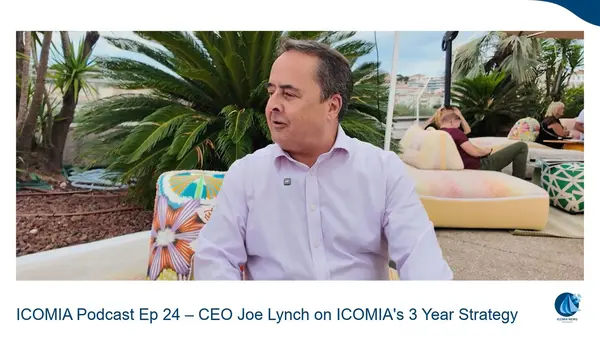
ICOMIA chief executive Joe Lynch outlines a three-year strategy centred on international collaboration, industry market data and technical standards.
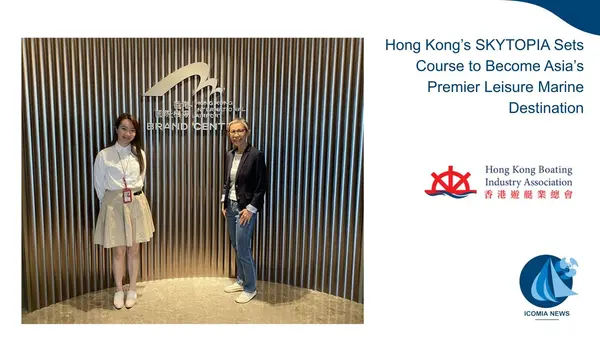
Hong Kong airport developer AAHK has issued an expression of interest for SKYTOPIA Yacht Bay investors and operators, distinct from marina promotion milestones.
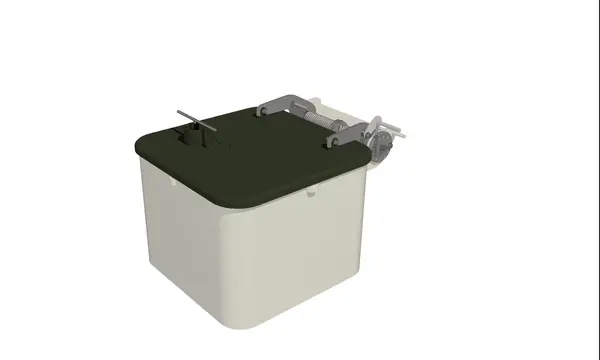
Oceanco adds established Dutch marine manufacturer Winel to its group, bringing custom yacht door and hatch engineering, tank vent valves and specialist suppliers.
Superyacht Guide
Continue into the wider Superyacht Guide.
Business opportunities · Superyacht Guide
Companies serving the superyacht market can discuss clearly identified advertising, sponsorship and business-profile opportunities. Commercial activity remains separate from independent editorial coverage.