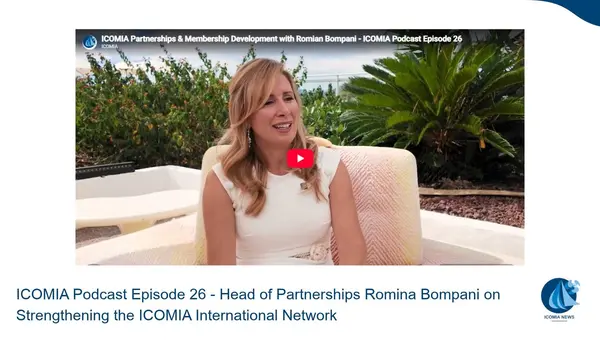
ICOMIA Partnerships Lead Romina Bompani Targets Stronger Global Yacht Networks
ICOMIA head of partnerships Romina Bompani discusses international marine business links, member value and the Asia-Pacific marina sector.
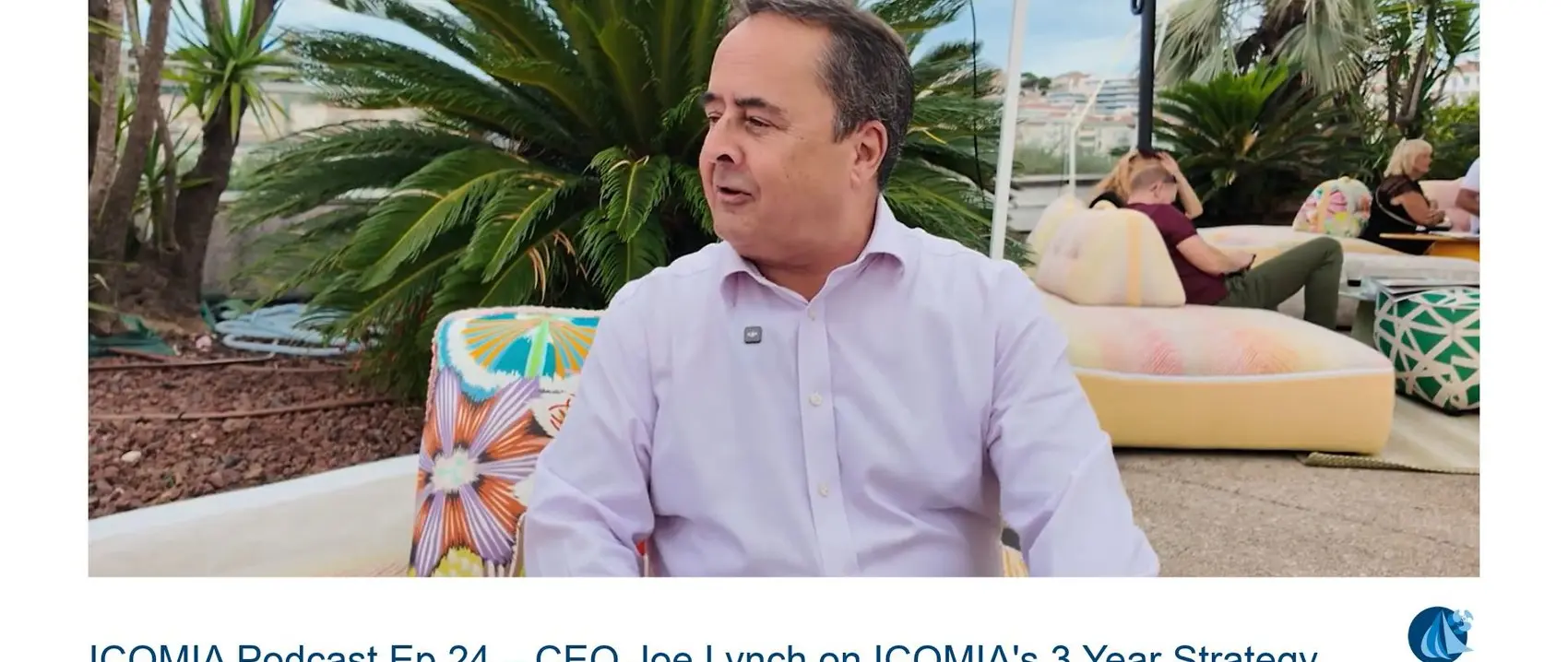
© ICOMIA. Official first-party podcast artwork published with Joe Lynch’s three-year strategy interview.
ICOMIA chief executive Joe Lynch outlines a three-year strategy centred on international collaboration, industry market data and technical standards.
The International Council of Marine Industry Associations has used a new podcast conversation with chief executive Joe Lynch to outline its evolving three-year strategy. Published on 28 October 2026, the discussion with Ben Taylor identifies global collaboration, better industry data and harmonised standards as the organisation's central areas of focus. While the association represents a broad recreational-marine sector, its priorities carry consequences for large-yacht builders, marinas and their technical suppliers. The announcement is about how industry interests are coordinated internationally rather than a new yacht model or a single regulatory change. That distinction helps clarify why the conversation matters to the superyacht supply chain.
A yacht may be designed in one country, built in another, equipped by suppliers from several more and operated internationally after delivery. Differences in technical requirements, trade arrangements and practical guidance can add complexity to that process. ICOMIA describes itself as a unified voice for the marine industry and places collaboration at the centre of its strategy. Coordination can help members identify common problems and communicate them to regulators, but it does not eliminate national differences or create an automatic right to operate under the same rules everywhere. Owners and yards should continue to verify the specific standards applicable to their projects.
The podcast summary is explicit about three broad priorities: international collaboration, industry data and harmonised standards. Each addresses a different part of the business environment. Collaboration concerns relationships among markets and institutions. Data can support decisions by establishing reliable information about activity and demand. Harmonised standards seek greater consistency where technical and regulatory approaches differ. The three areas overlap, but they are not interchangeable. A successful strategy should be assessed by identifiable work within each, rather than by the number of industry events attended or general statements about supporting boating.
Yachtbuilding businesses invest in facilities and skilled teams on time horizons that extend well beyond a single sales season. Misleading market figures can cause expensive decisions, especially when data mixes small consumer boats with large custom vessels. ICOMIA's emphasis on industry information offers an opportunity to improve the basis for such planning. Yet information must be interpreted according to scope, methodology and date. Statistics for registered leisure boats do not automatically describe demand for 70-metre newbuilds. Suppliers and shipyards need to understand what a dataset actually measures and resist using a broad industry headline as a forecast for their own sector.
Harmonised standards are attractive because equipment and vessels often cross borders, but the word should not be confused with an immediate legal change. Different jurisdictions retain authority over matters that may include registration, safety, environmental controls and vessel operation. An industry association can advocate technical consistency, help circulate expertise and participate in consultation. It cannot unilaterally replace national laws or decisions by classification societies. For superyacht projects, the practical benefit of greater consistency is potentially reduced uncertainty. Any claimed saving or approval advantage still needs to be demonstrated for the specific vessel and regulatory context.
ICOMIA's official account says the conversation covers the association's role in representing recreational marine interests to organisations such as the International Maritime Organization. That matters because large-yacht operations may intersect with international maritime debates about emissions, safety and design. Representation provides an opportunity for the sector to explain practical consequences of proposed measures, but participation in a meeting is not the same as adoption of a preferred policy. The official podcast description does not report a new IMO rule coming into force. Readers should treat the subject as ongoing advocacy and technical engagement rather than a change in compliance obligations announced by the interview.
The discussion looks ahead to the ICOMIA World Marinas Conference in Shanghai, linking the strategic agenda with waterfront development and investment. Marinas are a necessary part of yacht ownership, but facilities designed for consumer boats differ substantially from berths suitable for major superyachts. Water depth, shore power, security, mooring loads, waste handling and local technical services all affect what a destination can accommodate. Improved cooperation among marina operators and public authorities can make those requirements more visible. However, an international conference cannot establish the suitability of a particular harbour without site-specific engineering and operational assessment.
Joe Lynch's conversation identifies Asia-Pacific as an important potential growth region for marina infrastructure. This is a forward-looking assessment, not a guarantee of construction or berth availability. Coastal development involves planning, environmental review, land access and complex finance, and projects may take years to reach operation. Superyacht owners considering new cruising routes should distinguish proposed destinations from those offering proven berths, customs procedures and support services. Investors face a similar task in evaluating whether projected demand is credible. The strategic opportunity exists, but its size and timing require evidence beyond a promotional statement.
Standards and reliable information are important not only to builders but to firms supplying navigation equipment, electrical systems, coatings and interior components. A manufacturer may have to demonstrate compliance to multiple yards and authorities, creating duplicated testing or paperwork when requirements are inconsistent. Industry dialogue may help identify opportunities for clearer technical pathways. It does not remove the need for product-specific certification or installation checks. A superyacht equipment supplier should track the actual regulations and standards affecting its products, then use association participation as one source of information rather than as a substitute for professional compliance advice.
The costs of operating a yacht extend well beyond its first delivery. A refit yard may need to work with systems installed years earlier under different technical expectations, while owners seek improved efficiency, safety or functionality. Better coordination among organisations can help companies discuss common problems such as component compatibility and the availability of qualified technicians. Yet the ICOMIA strategy summary is not a refit specification or an announcement of a universal update timetable. Each vessel retains its own documented configuration. The potential relevance lies in improved communication across the companies involved in long-term vessel support.
A strategic horizon is useful only if the organisation can explain what it is trying to change and how progress will be assessed. The official summary identifies broad themes but does not publish a complete schedule of deliverables and deadlines in the short podcast description. Members might reasonably ask what information products will be developed, where technical representation will increase and how collaboration will be documented. That is not a criticism of the interview's format; a conversation is designed to introduce priorities rather than function as a detailed operating plan. Follow-up material will be important for judging practical outcomes.
International coordination also depends on people able to interpret technical rules and apply them consistently. Shipyard managers, marina operators, surveyors and specialist suppliers require training suited to their work. As technology changes, existing teams may need new competencies in software, batteries or energy systems. Although the podcast's brief official summary does not specify a new training programme, its priorities raise questions about how expertise circulates among member associations. An effective network can connect organisations with relevant knowledge while allowing local institutions to determine how that knowledge is used within their own frameworks.
Yacht owners and builders are increasingly asked to consider emissions, energy use, waste management and the effects of marine infrastructure. These topics often require comparable data and clear terminology. An industry organisation that values information and harmonised methods may help establish better discussion, but a general sustainability claim still needs to be supported by project-specific evidence. Fuel choices, shore power, hull efficiency and operational practices have different implications. The association's latest strategy should not be presented as proof that the industry has resolved these challenges. Its value will depend on whether future technical work produces useful and verifiable results.
A global industry network includes businesses operating under very different economic and regulatory conditions. A solution that works for an established Mediterranean marina may not be suitable for a developing port in the Pacific. Collaboration should therefore allow local experience to inform shared discussions rather than assume that every market can copy one operating model. The podcast's focus on international cooperation is relevant to this tension. For yachts that travel widely, a more informed international network may improve access to accurate local information, provided its recommendations remain sensitive to specific infrastructure and legal settings.
ICOMIA connects national and regional marine-industry bodies, making its influence different from that of a single shipyard or product manufacturer. The practical work of a membership organisation involves gathering information, identifying common positions and communicating them through consultations and events. Those functions are sometimes less visible than a boat launch but can affect the conditions in which an entire supply chain operates. Members should be able to examine how priorities are selected and how their own technical concerns are represented. The strategy outlined by Joe Lynch is an invitation to monitor such processes more closely.
The next useful evidence will come from identifiable changes in association outputs: more detailed industry datasets, documented technical engagement, partnership activity and the programme for Shanghai's World Marinas Conference. Builders and marina operators can use these developments to refine their own planning, but should continue to rely on current standards and local approvals for operational decisions. The podcast, published on 28 October, is not a new shipyard contract or an announcement that a regulation has changed. It is evidence of the organisation's direction as the international marine sector adjusts to technological, environmental and commercial pressures.
A superyacht may be an individual and highly customised asset, but it depends on a broad industrial network. International standards, equipment supply, reliable market intelligence and suitable marinas all influence whether a project can be built and operated successfully. ICOMIA's three-year priorities therefore have a legitimate place alongside vessel launches and brokerage news. Their effects will be indirect and should not be overstated. The important message is that the industry's operating environment is shaped not only by shipyards and owners, but also by the organisations working to coordinate technical knowledge and commercial cooperation across borders.
Continue reading
ICOMIA head of partnerships Romina Bompani discusses international marine business links, member value and the Asia-Pacific marina sector.
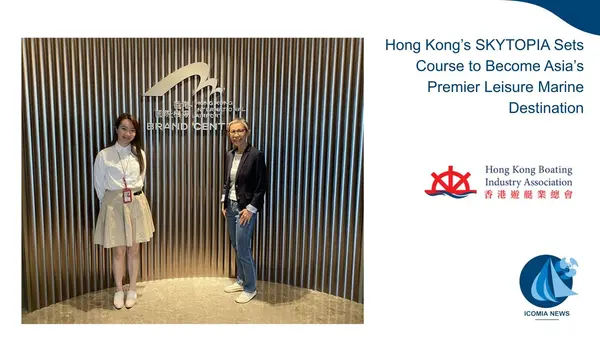
Hong Kong airport developer AAHK has issued an expression of interest for SKYTOPIA Yacht Bay investors and operators, distinct from marina promotion milestones.
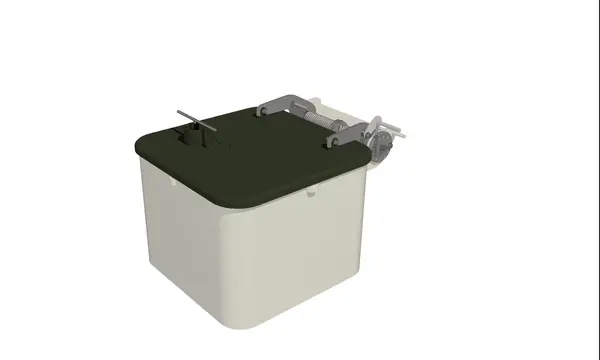
Oceanco adds established Dutch marine manufacturer Winel to its group, bringing custom yacht door and hatch engineering, tank vent valves and specialist suppliers.
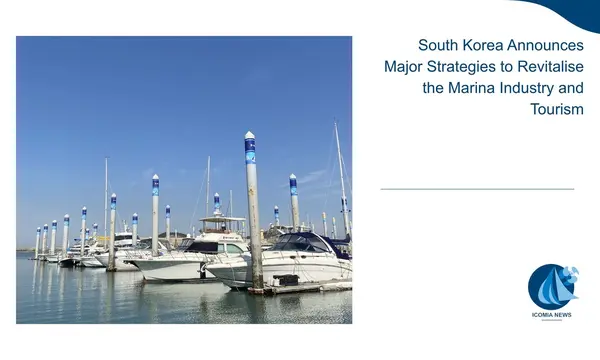
South Korea’s Ministry of Oceans and Fisheries outlines a marina revitalisation strategy focused on regional visitor demand and AI-enabled berth information.
Superyacht Guide
Continue into the wider Superyacht Guide.
Business opportunities · Superyacht Guide
Companies serving the superyacht market can discuss clearly identified advertising, sponsorship and business-profile opportunities. Commercial activity remains separate from independent editorial coverage.