Hong Kong Airport Authority Opens SKYTOPIA Yacht Bay Development Expression of Interest
Hong Kong airport developer AAHK has issued an expression of interest for SKYTOPIA Yacht Bay investors and operators, distinct from marina promotion milestones.
© ICOMIA / originating news and event partners. Official first-party editorial press image from the association’s release.
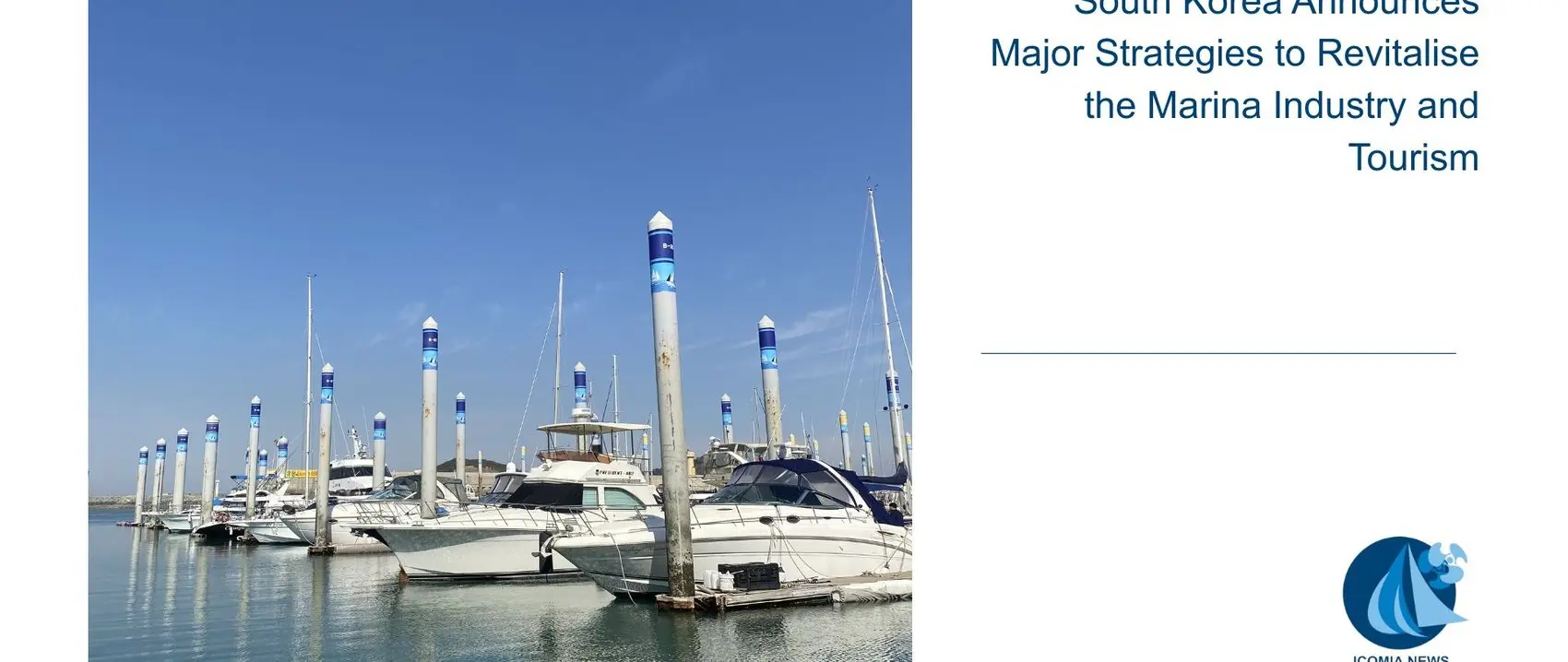
South Korea’s Ministry of Oceans and Fisheries outlines a marina revitalisation strategy focused on regional visitor demand and AI-enabled berth information.
South Korea's Ministry of Oceans and Fisheries presented a plan to revitalise its marina sector at a ministerial economic meeting in Seoul on 19 June 2026. The International Council of Marine Industry Associations published an account on 1 July describing a demand-oriented approach that links marina infrastructure with tourism and digital services. For owners of yachts over 24 metres, the initiative is relevant as an indication of possible future marina development in a region where berth availability and local service capabilities must be verified carefully. The plan is a policy direction, not confirmation that new superyacht berths or AI systems are already operating.
The official report explains that South Korea has extensive coastline but faces seasonal patterns and varied regional demand for marine leisure. Marina development has encountered both environmental and socio-cultural constraints, according to comments from the Marina and Marine Industry Association of Korea. These conditions complicate investment because a waterfront facility needs enough suitable activity throughout the year to sustain its operating costs. Building additional pontoons without assessing actual users could result in underutilised assets. A demand-oriented strategy aims to consider local markets and tourism patterns before expanding infrastructure. Its commercial effectiveness will depend on how proposals are researched, approved and managed.
The Ministry of Oceans and Fisheries presented what the association calls a Demand-Oriented Marina Revitalisation Plan. This title conveys the emphasis on responding to genuine user needs instead of assuming every harbour requires the same facilities. The report is an industry account of a government initiative and should not be mistaken for the complete legal or technical text of the policy. Detailed budgets, construction permissions and implementation schedules are not established in the release. Owners and investors considering specific projects will need to consult the responsible Korean authorities for current requirements and evidence that an individual site is available for development.
Park Gone-Woo, secretary-general of the Marina and Marine Industry Association of Korea, welcomed the government's focus while acknowledging structural challenges. He described seasonal concentration and differences among regions as issues the sector has to overcome. This is valuable context because industry participants often encounter the gap between an attractive development vision and the realities of demand. It also shows that the policy was not presented as a simple claim that every marina will expand rapidly. The association's response supports an interest in adapting infrastructure to actual conditions. It is not an audited forecast of marina profits or superyacht arrivals.
The report argues that visitors increasingly seek combinations of natural scenery, relaxation and hands-on experiences rather than standardised sightseeing alone. This change could encourage marinas to connect with local culture, accommodation and commercial districts. For a visiting superyacht, shore-side services are important, but a destination also needs safe marine access and facilities suitable for the yacht itself. Tourism appeal cannot substitute for water depth, secure mooring or competent port operations. The emerging approach is to see marinas as part of a broader regional experience, while recognising that infrastructure and hospitality require different types of investment and expertise.
Marina managers face different users, from small recreational boats to commercial service vessels and visiting yachts. An effective plan should identify what types of craft need accommodation, their seasonal patterns and the facilities that create value. Superyachts introduce specific questions about length, draft, beam, power, security and support services. A marina developed mainly for small domestic craft may not have capacity for larger international visitors. The Korean policy announcement does not specify design dimensions for new superyacht berths. The relevance is the possibility that future projects will consider real vessel demand, which would require careful data collection and consultation.
One of the most distinctive elements of the announcement is the planned introduction of AI-based smart-marina technology to improve access to real-time berth availability information. The industry account suggests that better information could increase utilisation, convenience and service competitiveness. These benefits are prospective, not measured results from a named operating system. A software tool cannot make an unsuitable berth safe for a large yacht, nor can it independently verify water depth or legal entry conditions without accurate underlying data. Digital information can improve decisions only if berth records, restrictions and availability are maintained consistently by the responsible marina.
An electronic berth search can show a space as available, but suitability requires more information. The vessel's dimensions, electrical requirements and planned arrival conditions may make a particular berth inappropriate even when unoccupied. For superyacht operations, managers must confirm infrastructure specifications, approach restrictions and services directly. AI could assist with matching or forecasting demand, but the official release does not document a system architecture, vendor or accuracy level. Owners should therefore view smart-marina planning as a potential enhancement rather than an existing substitute for speaking with an experienced harbour master or marina operator.
The source suggests that digital systems may improve berth utilisation and marina profitability. This is a business objective, not a verified economic result. A marina's financial performance also depends on tariff structures, staffing, maintenance, demand and capital costs. Better occupancy information could reduce administrative work or identify unused capacity, but implementation and data quality carry expenses. Investors should examine the cost of new technology against realistic operational benefits. The relevant policy lesson is that software and infrastructure planning should be considered together rather than installing a costly system without clearly defined problems it is intended to solve.
A marina serving international yachts needs staff able to manage vessel movements, utilities, safety and guest services. Digital tools may help organise those duties but cannot replace competent personnel. Harbour staff require knowledge of navigation conditions and emergency procedures, while customer-facing teams need accurate information and clear communications. The Korean initiative's focus on convenience and service competitiveness can be valuable if accompanied by training and operational standards. An owner assessing a destination should ask how the facility works during a real arrival, not merely whether it advertises smart technology or a scenic waterfront setting.
The policy discussion points to stronger connections between marine leisure and local tourism resources, including culture, accommodation and business districts. A vessel calling at a new marina may generate demand for taxis, provisioning, visitor attractions and specialist services. Yet the degree of benefit depends on the scale and behaviour of each visitor. A superyacht with a full crew and stores may purchase different services from a small family boat. Economic impact should be assessed through actual spending rather than estimates based solely on vessel length. Integrating marina and tourism planning can provide opportunities, but owners need reliable service before an itinerary is confirmed.
South Korea's coast contains diverse geographical and population conditions. A marina designed for a metropolitan visitor market may have different requirements from one serving a seasonal coastal resort. Standardising every project would risk ignoring local needs. The reported demand-oriented approach recognises that infrastructure should reflect regional circumstances. For the superyacht sector, this suggests that a limited number of well-equipped hubs may be more practical than promising deep-water facilities everywhere. The announcement does not endorse a specific distribution of large-yacht berths; that question needs engineering studies, demand forecasts and consultation with communities.
International yacht owners considering a Korean itinerary must separately examine port-entry rules, immigration, customs, permits and any charter restrictions. A marina-development policy does not automatically change those regulations. Captains may also need local information about pilotage, navigation hazards and facilities for fuel or maintenance. An attractive new waterfront destination becomes workable only when these details are clear and reliable. Industry promotion should direct owners toward current official sources instead of suggesting that a planned investment guarantees unrestricted access. The strongest destination-development programme combines marine engineering with competent administration.
Marina construction can affect coastal habitats, sediment movement, water quality and public access. Site-specific environmental studies and permissions may influence the scale or location of development. A demand-oriented policy should help avoid building infrastructure without credible use, but commercial demand does not remove ecological obligations. Operators also need procedures for waste, fuel handling and appropriate shore services. Superyacht owners increasingly encounter environmental rules during cruising, so responsible facilities are a practical benefit. The source does not publish an environmental assessment for any named future marina, and no project should be described as compliant before the relevant work is complete.
A smart marina that gathers bookings, vessel details and customer information must consider data security. Yacht movements and guest information may be sensitive, while financial and utility records require appropriate access controls. A system that improves convenience could create new risks if it exposes data or becomes unreliable during an outage. The Korean announcement describes ambitions for real-time information but does not specify data governance or cybersecurity protections. Buyers and operators should insist on clear responsibilities for data ownership, access, backups and incident response as technology is developed. A successful marina must be trustworthy as well as efficient.
The official report demonstrates policy interest in growing the marine-leisure economy and improving how facilities serve their users. It does not establish a list of investable projects, development rights or expected rates of return. International marina operators considering participation should seek independent information about land rights, concessions, environmental rules, financing and actual demand. Software vendors may see opportunities in the planned smart-marina concept, but product suitability requires local integration and a business case. An attractive national strategy provides context for enquiries, while project-level due diligence determines whether an investment is viable.
The 19 June policy presentation and July industry account show that South Korea is examining how marinas can become more useful, connected and commercially sustainable. The emphasis on real-time berth information and tourism integration is notable, especially as other regions discuss similar digital challenges. For large-yacht operators, it is too early to assume that new facilities meet specific operational needs. The next credible evidence will involve funded projects, published standards, functioning systems and actual vessel services. The initiative is newsworthy as a strategic direction, with its practical consequences still dependent on implementation and verification.
Continue reading
Hong Kong airport developer AAHK has issued an expression of interest for SKYTOPIA Yacht Bay investors and operators, distinct from marina promotion milestones.

Oceanco adds established Dutch marine manufacturer Winel to its group, bringing custom yacht door and hatch engineering, tank vent valves and specialist suppliers.
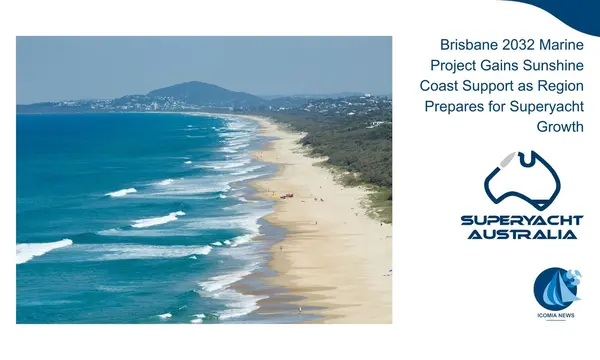
Sunshine Coast Council voices support for the Brisbane 2032 Marine Project as officials consider superyacht berthing needs and regional economic opportunities.
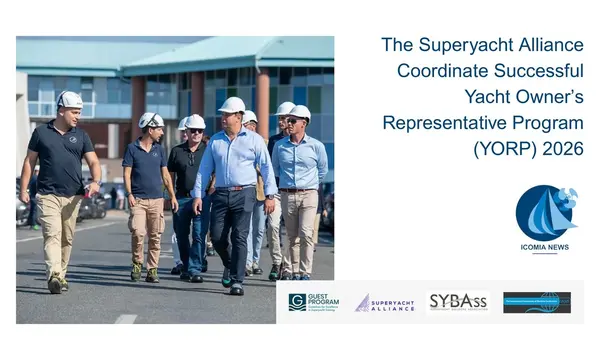
SYBAss shipyards back the Yacht Owner’s Representative Program, which the Superyacht Alliance says has trained 89 industry professionals in client representation.
Superyacht Guide
Continue into the wider Superyacht Guide.
Business opportunities · Superyacht Guide
Companies serving the superyacht market can discuss clearly identified advertising, sponsorship and business-profile opportunities. Commercial activity remains separate from independent editorial coverage.