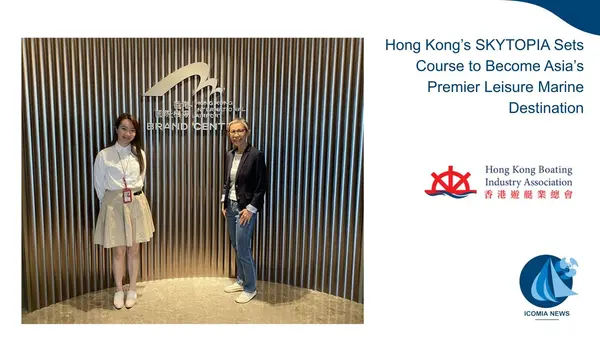
Hong Kong Airport Authority Opens SKYTOPIA Yacht Bay Development Expression of Interest
Hong Kong airport developer AAHK has issued an expression of interest for SKYTOPIA Yacht Bay investors and operators, distinct from marina promotion milestones.
© ICOMIA / originating news and event partners. Official first-party editorial press image from the association’s release.
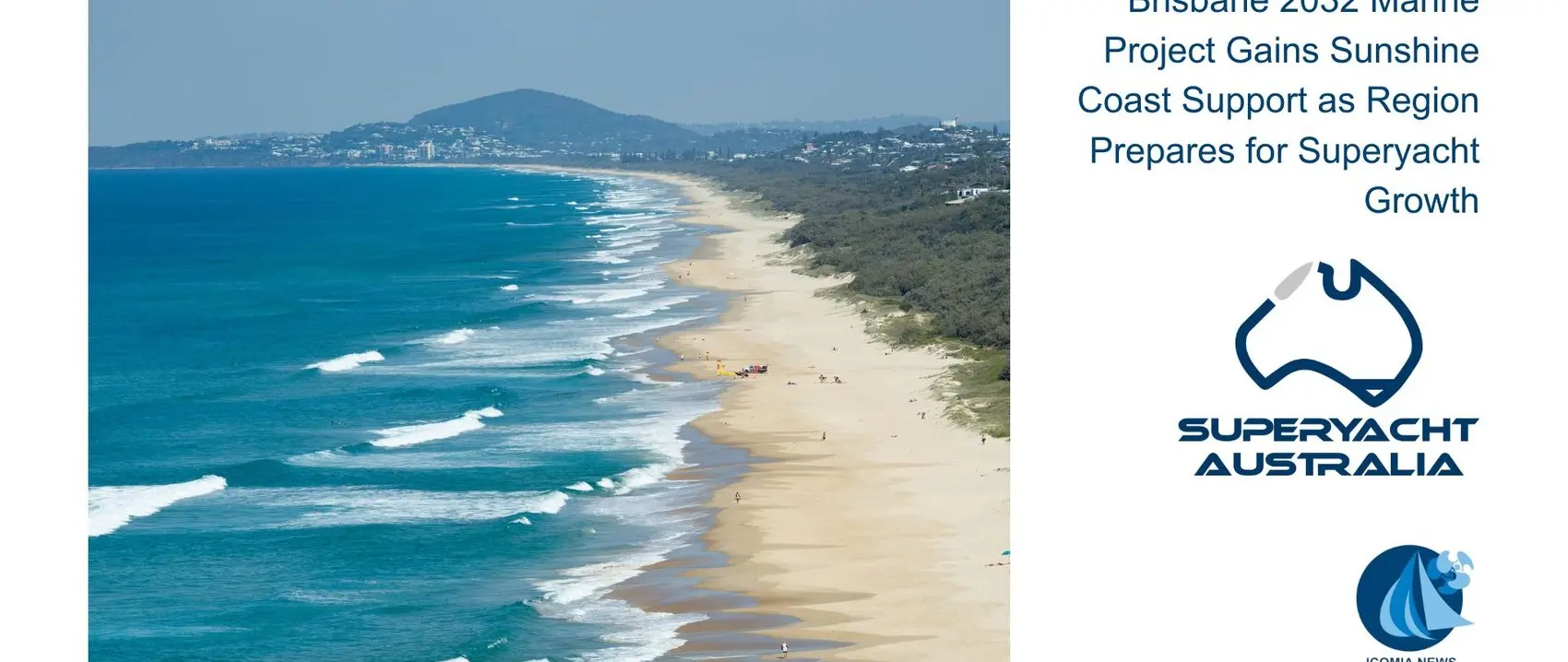
Sunshine Coast Council voices support for the Brisbane 2032 Marine Project as officials consider superyacht berthing needs and regional economic opportunities.
Sunshine Coast Council has indicated its support for the Brisbane 2032 Marine Project and intends to advocate for it with the Queensland Government. The development was reported by the International Council of Marine Industry Associations on 22 July 2026, following a meeting with local officials and superyacht industry representatives on 17 July. For international superyacht owners, this is relevant because a long-range visit depends on suitable berths, technical facilities and shore services rather than promotional enthusiasm alone. The council's support is a step in regional coordination, not evidence that new berths have already been constructed or that individual yachts have received permission to operate.
The official account identifies Sunshine Coast Mayor Rosanna Natoli, Councillor Joe Natoli, Council Economic Development Manager Angela Lisle and Brisbane 2032 Marine Project Manager Stephen Joyce. Captain Gordon Scott and Sarah Toxward, general manager of Carter Marine Agencies, also attended. Their involvement gives the discussions a combination of public-sector, operational and regional maritime perspectives. A captain can explain vessel access and service needs, while agencies understand the practical processes surrounding yacht visits. Local government can assess economic-development priorities. The meeting is a useful example of those perspectives being brought together, but the published report does not describe a completed planning approval or a funded construction contract.
The Brisbane Olympic and Paralympic Games are scheduled for 2032, creating a long planning horizon for the maritime sector. Superyachts may visit for hospitality, private cruising or related programmes, although the actual number will depend on the owners' decisions and the facilities available. The Brisbane 2032 Marine Project aims to prepare for potential arrivals and encourage longer-lasting benefits beyond the Games. Marine infrastructure cannot be created instantly when demand becomes visible: feasibility studies, environmental processes, berth design and financing take time. Early engagement by local councils is therefore commercially meaningful even while most of the eventual investment outcomes remain uncertain.
The Sunshine Coast is part of a wider Queensland coastal region rather than a single marina destination. The official account describes opportunities for visiting yachts to stop locally and use regional businesses. However, a picturesque shoreline does not necessarily provide an appropriate berth for a vessel of 50, 70 or 100 metres. Captains must consider depth, swing space, clearance, shore power, security and the ability to load provisions or manage crew. A council's expression of support can help advance discussion of such facilities, but vessel-specific suitability requires current engineering and operational information. The project should be evaluated against those practical requirements.
ICOMIA reports that Sunshine Coast joined councils and regions already supporting the project, including Townsville, Cairns, the Whitsundays, Mackay and the Gold Coast, alongside support from the Northern Territory Government. This geographic spread matters because large-yacht visitors may cruise along multiple stretches of coast rather than remaining in one port. Coordinated development could make regional itineraries easier if services and clearance procedures are reliable. The existence of supportive councils, however, does not establish a common berth standard or unified legal framework. Each destination has its own restrictions and capacity. Regional cooperation is an opportunity to address differences, not an assurance that they have disappeared.
A central issue raised in the meeting was a shortage of suitable berthing infrastructure for some international superyachts. The official article suggests that inadequate facilities could cause vessels to bypass Queensland or continue to other Australian states or New Zealand. That is a plausible business concern, but it should not be converted into a quantified loss without supporting vessel-movement and spending data. The practical response is to understand the types of yachts potentially visiting, their actual requirements and the costs of appropriate infrastructure. An expensive berth designed for a large vessel may be underused if demand forecasts prove optimistic, so planning needs credible evidence.
The source cites modelling by AEC Group projecting more than 200 additional foreign-flagged superyacht visits associated with Brisbane 2032. It also refers to potential national economic output of A$1.8 billion and support for more than 7,600 jobs. These are modelled expectations presented in the project discussion, not recorded visitor counts or guaranteed income. The release further suggests Queensland could capture more than 60 percent of projected expenditure. Analysts should keep those estimates attached to their assumptions and avoid describing them as money already secured. Infrastructure investment should be assessed through demand scenarios, operating costs and the risk that owner itineraries change.
The official account gives the example of one superyacht sourcing 380 separate items from 64 organisations while preparing for its next journey. This illustrates how a visiting vessel can interact with a network of local businesses, rather than only a marina or fuel supplier. The example does not establish an average purchasing pattern across all yachts. A vessel's size, guest programme and technical condition influence what it needs, while spending can occur in several locations. Still, it helps explain why regional economic organisations are interested in superyacht visitation. Marine tourism can involve logistics, food, equipment and professional services as well as headline charter activity.
A yacht visiting an unfamiliar region may need maintenance or repair during its stay. The source describes a tour of Marine Structures and its work on projects including Colmslie Wharves and Howard Smith Wharves extensions. This establishes local marine construction experience, although it does not prove that every capability applies to all superyacht refit requirements. Owners should verify yard facilities, specialist contractors, lifting limits and experience with the actual vessel. Marine infrastructure works can help develop skills and supply chains that also support yachts, but their suitability must be evaluated. A berth alone does not make a destination a complete technical operating base.
Meeting participants also visited MachJet International, where they were shown a new hangar intended to store and prepare private aircraft. The report highlights the relationship between private aviation and superyacht travel. Owners may need efficient links between international airports and their vessels, especially when schedules involve several destinations or guests joining for short periods. This connection is commercially important but should not be overstated. A hangar does not automatically create a direct air-to-yacht transfer service or confer aviation permissions. Actual arrangements depend on operators, airport access, customs and suitable onward transport. The meeting offers evidence of discussions connecting different luxury travel services.
An investment programme targeted at large yachts should begin by identifying the vessel classes it expects to serve. Length overall is only one measure; draft, beam, manoeuvring characteristics and power demand also affect suitability. A berth advertised by its nominal length may not safely accommodate a particular yacht under local wind or tidal conditions. Shore-side access and utility infrastructure matter as well. Project planners should therefore consult operators and engineers before selecting designs. The Brisbane 2032 discussion highlights why ports with existing visitor appeal may still lack infrastructure appropriate to the largest private vessels.
Supporters of marina infrastructure often point to jobs and regional business activity. These benefits can be real, but they should be measured with transparent definitions and realistic assumptions. Some expenditure may be displaced from other destinations, and the scale of demand varies between vessels and seasons. Coastal development can also impose environmental, financial and public-access costs. Councils need to balance potential yacht-related revenue with the interests of residents and other waterfront users. The source describes advocacy and potential economic value; a later project proposal would need independent assessments to justify particular construction works or public investment.
A local agent can help visiting yacht operators understand port arrangements, provisioning, contractors and practical clearances. Sarah Toxward's participation in the council meeting reflects the relevance of that experience. Yet an agent cannot replace official customs or immigration authorities, and an owner should not assume all agency advice is legally binding. Reliable service requires clear communication, documentation and current local knowledge. For regions trying to attract visiting large yachts, access to experienced agents may be as important as marketing. The council discussion combined infrastructure interest with insights from people already familiar with yacht operations.
The strongest case for new maritime infrastructure is one that remains useful after the 2032 Games. Seasonal yacht visits can fluctuate, and berths or service facilities must operate within a broader waterfront economy. Potential uses may include domestic marine activity, commercial vessels and refit, depending on site suitability and regulation. The Brisbane project is intended to create long-term opportunities, but the announcement does not establish which projects will proceed or what their final business models will be. Financial due diligence should examine recurring demand, staffing and maintenance beyond an Olympic-related peak.
A captain considering Queensland during a future cruising programme can begin gathering verified information about existing facilities, clearance requirements and local services. The official meeting may indicate where industry development is being discussed, but it is not an operational notice. Berth reservations should be based on current capabilities, not projected infrastructure. A large yacht may need to evaluate alternative ports if preferred facilities are unsuitable. Early dialogue with marinas and port authorities can help identify constraints. Future improvements should be confirmed when they are built and commissioned, not while they remain intentions or forecasts.
Sunshine Coast Council's reported support includes a stated intention to advocate to the Queensland Government. That is a distinct step from obtaining funding, environmental permissions or construction approval. Media accounts can blur those stages when discussing major projects. The useful news is that local leaders participated and expressed support for further development. An investor should still ask which authority controls a site, what studies are required and who will bear financial risk. The association's account contains important context, but not a complete legal or planning record. Accurate reporting needs to retain those boundaries.
The 17 July meeting and 22 July report establish growing public-sector interest in the Brisbane 2032 Marine Project and the potential of the Sunshine Coast to serve visiting superyachts. The proposed benefits are connected to real operating needs: safe berthing, technical work, provisioning and transport. The economic projections provide a scenario for discussion rather than a promise. For yacht owners and marine businesses, the central question will be whether coordinated advocacy translates into viable facilities and reliable services before major event demand materialises. The announcement is a credible milestone in that process, while the eventual investment outcome remains open.
Continue reading
Hong Kong airport developer AAHK has issued an expression of interest for SKYTOPIA Yacht Bay investors and operators, distinct from marina promotion milestones.

Oceanco adds established Dutch marine manufacturer Winel to its group, bringing custom yacht door and hatch engineering, tank vent valves and specialist suppliers.
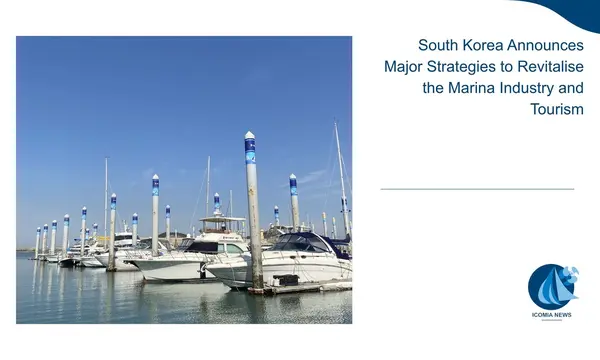
South Korea’s Ministry of Oceans and Fisheries outlines a marina revitalisation strategy focused on regional visitor demand and AI-enabled berth information.
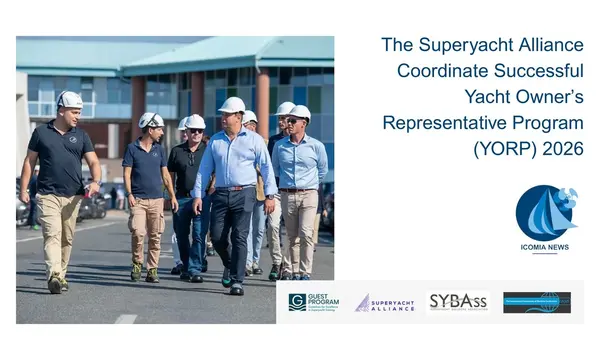
SYBAss shipyards back the Yacht Owner’s Representative Program, which the Superyacht Alliance says has trained 89 industry professionals in client representation.
Superyacht Guide
Continue into the wider Superyacht Guide.
Business opportunities · Superyacht Guide
Companies serving the superyacht market can discuss clearly identified advertising, sponsorship and business-profile opportunities. Commercial activity remains separate from independent editorial coverage.