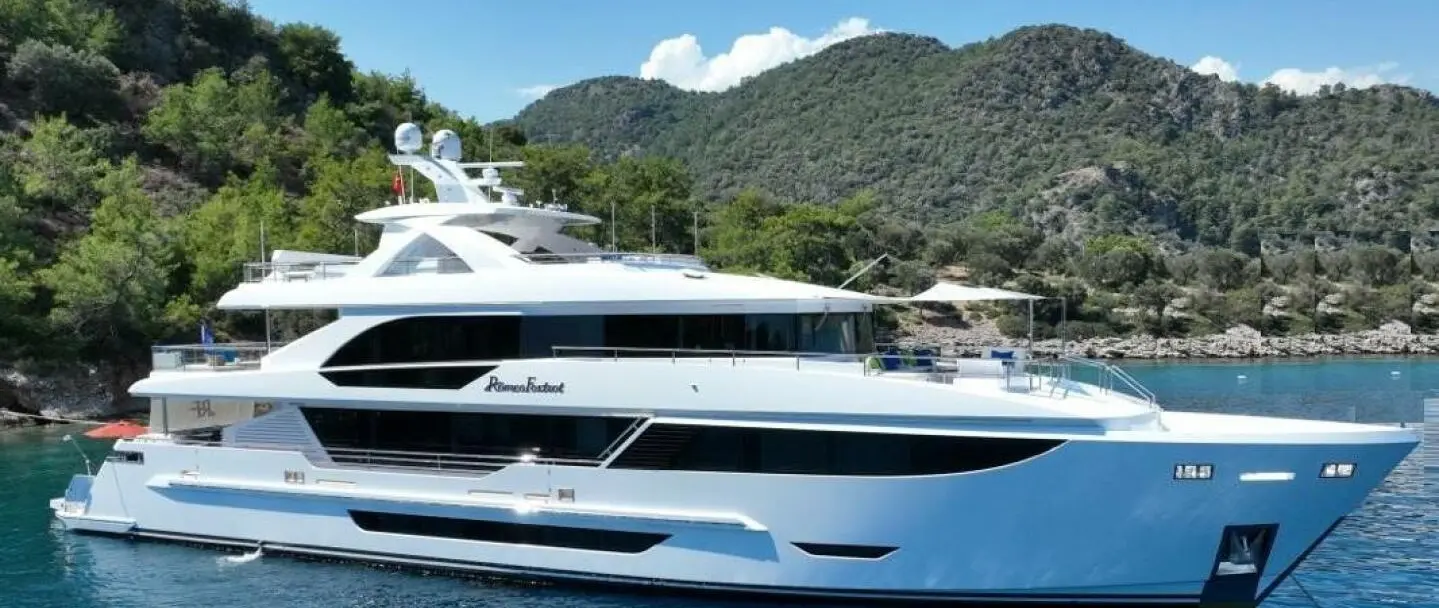
36m Hargrave ROMEO FOXTROT II Highlights 2,500nm Cruising Range
By Stephen Yardley · Edited by Stephen Yardley
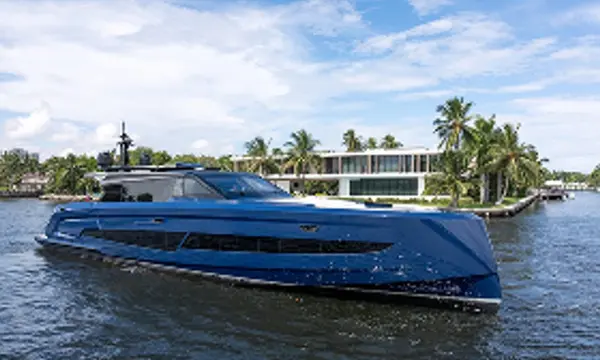
Image: Hargrave Custom Yachts
ROMEO FOXTROT II brings a different balance of high-volume accommodation and cruising independence to Hargrave's 2026 Fort Lauderdale presentation.
The 36-metre Hargrave ROMEO FOXTROT II gives visitors to the 2026 Fort Lauderdale International Boat Show another way to assess private-yacht design beyond the glamour of exterior profiles. The E Series tri-deck is presented in the builder's current sales material as a 2024 vessel, with the specification naming an overall length of 36.04 metres. It is a comparatively compact superyacht by modern standards, but its accommodation and operational figures suggest an ambition to cruise well beyond short weekend itineraries.
Hargrave's official show announcement places the yacht in its Fort Lauderdale selection, giving prospective owners a chance to compare a completed vessel against the yard's other offerings. That context matters because ROMEO FOXTROT II is neither a generic concept nor a newly announced model with hypothetical specifications. The most valuable conversations will be about how this existing yacht functions at anchor and under way, and what its operating assumptions mean in the real world.
The builder lists five staterooms, all with king berths, for a total guest complement of ten. The full-beam main-deck owner's suite is the defining accommodation decision, reserving the most convenient residential position for the principal while keeping other guests in separate cabins. A properly planned owner's deck relationship can make longer stays noticeably easier, particularly when meetings, family routines or private meals take place while others use the main lounge.
The sales particulars also indicate separate crew accommodation for eight across four cabins, including captain's quarters and a crew mess. Such separation is vital on a boat where the guests may expect restaurant-level service while maintaining domestic privacy. During an inspection, the quality of crew circulation deserves as much attention as the apparent size of the owner cabin, because efficient service is often a product of corridors, doors and equipment access.
Hargrave quotes a 2,500-nautical-mile operating range at 10 knots, making the endurance figure one of this yacht's strongest discussion points. It is an indication of the distance the boat can cover under specific conditions, not a promise that every passage will produce the same result. Fuel reserve requirements, wind, currents, generator demand, hull condition and the amount of equipment carried can all change the available range substantially.
The same listing identifies a 15-knot cruising speed and 19-knot maximum speed from Caterpillar C32 machinery. A captain setting out on a long crossing would normally balance progress against fuel consumption rather than automatically run at the published cruise figure. Serious owners should ask for the speed-versus-consumption table, actual voyage logs if available, the machinery-maintenance history and an example passage plan with sensible reserves.
ROMEO FOXTROT II has day heads distributed across the decks, including leisure areas such as the sundeck and beach club, according to the builder's highlights. It sounds like a small convenience compared with engine power, yet it changes the way guests use upper decks for entire afternoons. Fewer unnecessary journeys through the guest accommodation mean a calmer interior and better separation between private cabins and communal entertaining spaces.
The yacht's design provides outdoor room for people to gather in several groups while preserving private retreats. A successful tri-deck should let a family breakfast, a working session and a quiet place to read coexist without conflict. At the show, it is worth checking the protection from wind and sun, the distance between pantry and dining areas, and whether the chosen arrangement gives crew unobtrusive routes to guests.
The builder describes fibreglass construction with carbon-fibre reinforcement to the superstructure, paired with a fast-displacement hull form. Stated gross tonnage is 323, and the beam is 26 feet, approximately 7.92 metres. These are useful markers of volume and proportions, but they are not substitutes for evaluating noise, vibration, weight distribution and accessibility to important service points. The most attractive cabin layout is of limited benefit when equipment cannot be maintained efficiently.
Zero-speed Naiad stabilisers and bow-thruster assistance appear in the yacht's specification. In practical terms, the two systems address quite different moments: fin stabilisation can help the yacht remain more comfortable at anchor, while thrusting assistance contributes to controlled manoeuvring near a dock. Both require correct operation and routine attention from the engineering team, and both should be demonstrated where the purchase process permits.
Prospective buyers should make time for detailed viewing of machinery access, the condition of exterior seals, ventilation arrangements and the routes by which tenders and water toys are handled. Those factors can generate more operational inconvenience than the absence of a decorative feature. ROMEO FOXTROT II's published fuel capacity of approximately 8,350 US gallons also deserves discussion in connection with the listed endurance, available payload and intended cruising schedule.
Equally important are the documents behind the attractive specifications: class status, maintenance records, warranty terms, surveys and any record of modifications. The builder's marketing material describes a 2024 refit year as well as the vessel's 2024 build year, a detail a buyer should clarify rather than guess at. Asking straightforward factual questions can distinguish a well-prepared purchase from one based too heavily on the emotions of a boat-show visit.
While the latest Fort Lauderdale exhibition includes impressive new launches and large design statements, ROMEO FOXTROT II illustrates another owner priority: a yacht that already embodies a defined accommodation plan and stated long-range capability. Its 36-metre length is still a substantial operating commitment, yet the design tries to make every metre count through five equal king cabins, a separate main-deck owner's suite and practical crew provisions.
The figures and configuration cited here come from Hargrave's current official listing and show presentation. As with any yacht offered for sale, equipment, commercial terms and access may change, and technical performance should be verified before relying on it for passage planning. The resulting story is about what a real tri-deck can offer a cruising owner, rather than an unsupported claim of a new launch.
Explore
Go deeper into the yachts, companies, events and destinations directly connected to this article.
Continue reading
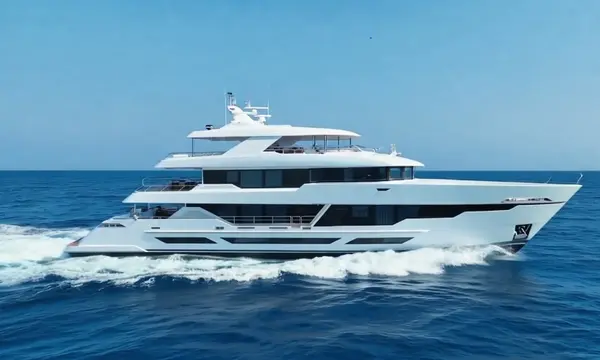
Hargrave's 38.1-metre RESONANCE is a study in how North American owners can combine substantial guest accommodation, private-deck living and serious cruising autonomy.
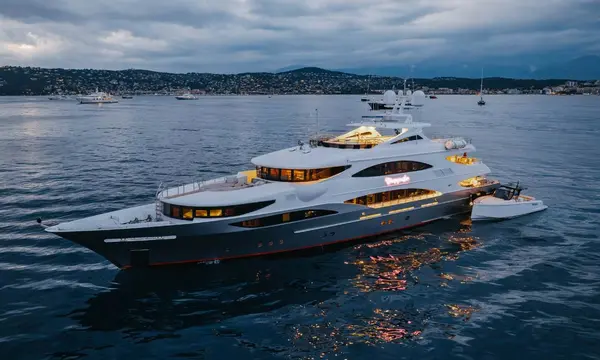
The 49.99m Trinity motor yacht CHAMPAGNE SEAS is on the market through Hargrave Custom Yachts at $15.9 million after extensive refit work culminating in …
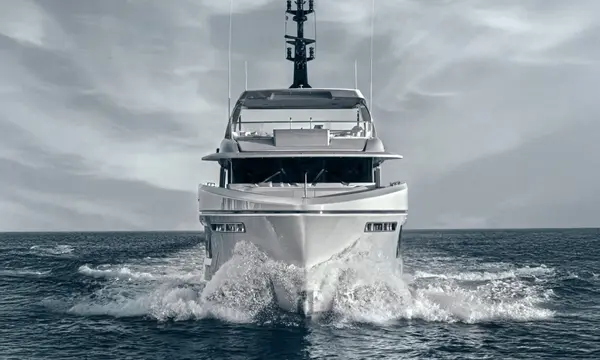
STELLAMAR's 35-metre RJ 115 design shows how expedition-grade engineering and Italian interior architecture can share one coherent owner-focused superyacht.
Vanquish's 34.5-metre VQ115 illustrates how a performance-first aluminium superyacht challenges familiar assumptions about cruising speed and luxury yacht deck plans.
Superyacht Guide
Continue into the wider Superyacht Guide.
Business opportunities · Superyacht Guide
Companies serving the superyacht market can discuss clearly identified advertising, sponsorship and business-profile opportunities. Commercial activity remains separate from independent editorial coverage.