

HUISFIT Promotes Winter 2026–27 Superyacht Refit Capacity at METSTRADE
By Superyacht Guide Newsroom · Edited by Superyacht Guide Newsroom
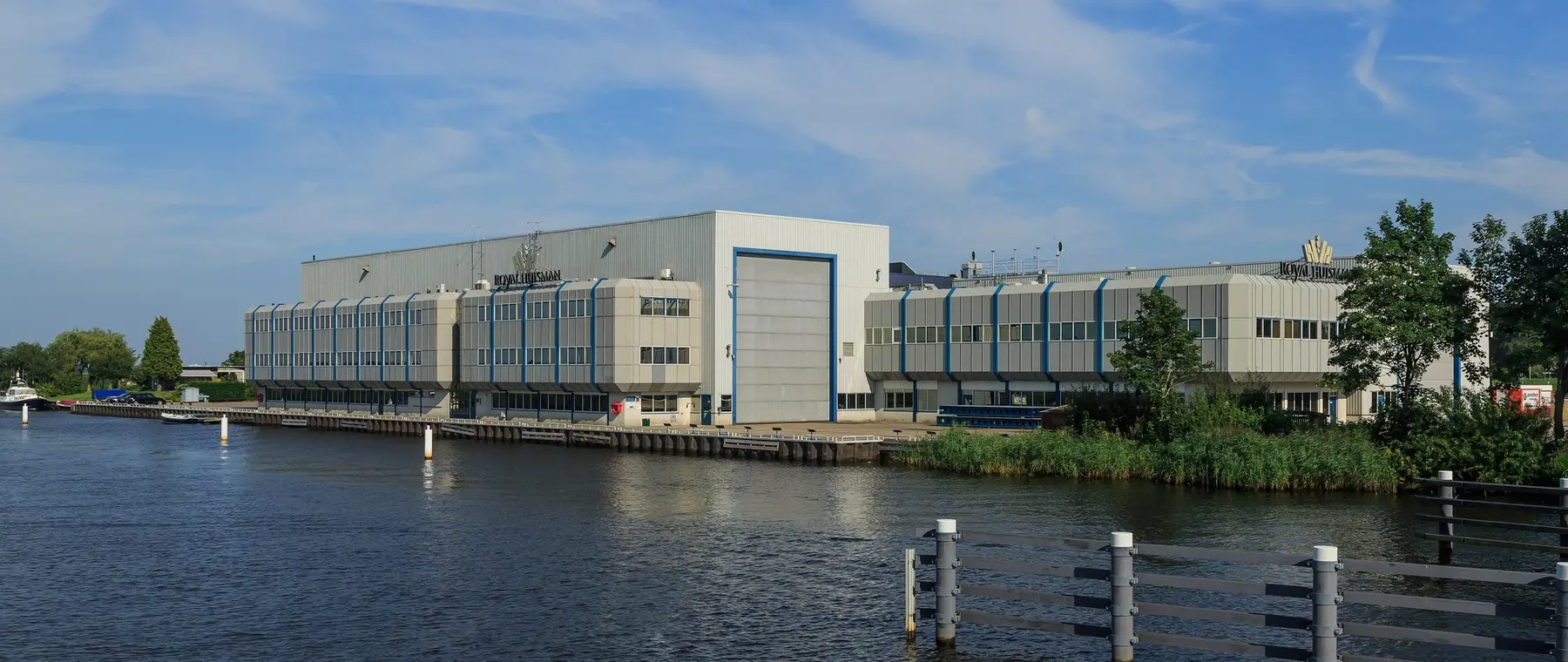
Royal Huisman yard in Vollenhove — archival photograph by CEphoto Uwe Aranas
HUISFIT by Royal Huisman is promoting a winter 2026–27 refit opportunity at METSTRADE, with availability and scope subject to direct confirmation with the yard.
As METSTRADE runs in Amsterdam on 17–19 November, HUISFIT by Royal Huisman is continuing to advertise a winter 2026–27 refit opportunity through its official exhibitor profile. The capacity notice, originally released on 31 August, invites interested owners to discuss work and arrange an inspection with the yard. It is not a new vessel contract or a newly announced facility opening. Nor does the presence of the listing independently guarantee that a berth remains unallocated today. Nonetheless, the advertisement is relevant to captains and technical managers still evaluating where to undertake winter maintenance, particularly on complex sailing and motor yachts. HUISFIT's parent company is Royal Huisman, and the service business operates from facilities in the Netherlands.
A booking at a major yacht refit facility involves substantially more than finding somewhere to put a hull. The yard must have appropriate access, lifting or docking arrangements, suitable dimensions, technical labour and the ability to coordinate suppliers that may be required throughout the project. An apparently available slot does not automatically mean that a particular yacht can be accommodated. A large spar, a substantial propulsion intervention or an extensive interior alteration can create physical and operational requirements that differ markedly from routine maintenance. Capacity also has a time dimension: a yard might be able to receive a vessel in a certain week while the specialist team required for a critical item is already committed elsewhere. The starting point is therefore a conversation about the yacht, her technical scope and her operational deadlines.
The traditional cycle for many yachts based in northern European and Mediterranean waters is to combine summer operation with more intensive work during the winter. A sailing superyacht can pose special challenges because rigging, sails, deck hardware and machinery must function together within a tightly integrated design. A decision to remove or examine a mast may have consequences for transport routes, cranes, workshop capacity and the sequence of other deck repairs. Owners planning a large voyage should also consider whether the proposed maintenance programme allows adequate time for sea trials and rectification after the work has been completed. A production schedule that ends immediately before a guest arrival or organised regatta leaves little time to investigate unforeseen problems. The opportunity to negotiate an appropriate winter period can therefore influence the following cruising season.
The strongest yard enquiry usually begins with a concise account of the intended work rather than a broad request for a full refit quotation. It is useful to distinguish statutory or classification requirements, essential reliability improvements, cosmetic work and optional modifications. Captains can contribute service records and current defect lists, while managers and owners' representatives can identify schedule constraints and the budget approval process. Drawings, specifications and relevant inspection information may be required before the yard can make robust assumptions about access and labour. It is not unusual for part of the technical scope to become clear only after dismantling has started. A refit contract therefore needs an orderly method for authorising changes and allocating responsibility when originally concealed conditions are discovered.
A yacht's survey requirements depend on its individual flag, classification status, regulatory framework and operational use. The owner and technical team should establish which inspections are due and discuss their sequencing with the relevant authorities and service providers. It can be economical to combine planned maintenance with survey work when the same equipment or spaces need to be accessed. However, the yard's project plan is not a substitute for the independent decisions of a surveyor, class society or flag administration. Owners should identify who is responsible for communicating with those bodies and ensure that reports, repair approvals and completion evidence are collected. Any work affecting approved arrangements should be assessed with the relevant parties before irreversible modifications are undertaken. The objective is not simply to return the vessel to service on time, but to preserve a reliable and documented maintenance history.
Numerous apparently straightforward upgrades introduce dependencies elsewhere within a yacht. Electrical equipment may require changes to distribution, cooling or monitoring systems. New interior materials can require assessment of weight, fire performance and other design constraints. An alteration to the rig of a sailing yacht may affect structural and mechanical interfaces that are not obvious from a deck-level inspection. Technical planning should therefore consider the vessel as an integrated system, not a collection of independent replacement items. A yard capable of engineering support may be particularly valuable when original drawings need to be reconciled with later modifications. Owners should ask how the project team intends to capture those changes for future maintenance. Even when the visible result is primarily cosmetic, the underlying technical work should receive appropriate scrutiny.
It is difficult to compare competing refit offers if the quoted scope and assumptions differ. One contractor may have included access work and removal of fittings, while another may have estimated the central task only. Travel, storage, specialist supplier charges, dockage and reinstatement may be treated in different ways. A useful commercial comparison identifies the exclusions and assumptions before attempting to compare headline totals. Owners should also clarify the treatment of taxes, exchange exposure and invoicing milestones. A project budget may need a separate allowance for emergent work that cannot reasonably be quantified before inspection. This is particularly relevant to older yachts with long modification histories. The cheapest initial quotation is not necessarily the lowest eventual cost if it leaves substantial responsibilities unresolved. Clear reporting and change-order procedures are therefore important components of a credible offer.
The yacht's crew possesses considerable practical knowledge about how the vessel performs between scheduled inspections. Engineers may know which machinery produces unusual readings or which systems are difficult to service, while deck crew can identify areas where specific equipment is awkward during routine operation. The captain's operational experience can help the project team distinguish isolated defects from recurring reliability concerns. During the yard period, however, the division of responsibility between crew and contractors must remain clear. Maintenance activities, working hours, access restrictions and onboard living arrangements may change significantly while the yacht is undergoing repair. Keeping an accurate record of removed equipment, temporary arrangements and outstanding tasks helps prevent important information from being lost between shifts or suppliers. A well-managed handover also supports future crew members who did not participate in the refit.
The final days of a refit should ideally be treated as a distinct phase rather than simply the end of physical construction. Systems need appropriate testing, commissioning and documentation before the team can determine whether the agreed work is complete. The owner should understand how deficiencies identified during acceptance will be recorded and resolved. A sea trial can be essential where alterations affect propulsion, sailing systems, manoeuvring or other operating characteristics. The work programme should leave room for testing under conditions appropriate to the nature of the repair. Guarantees and technical records should be assembled into a coherent package rather than arriving separately after the yacht has departed. This makes the refit more useful to the next engineer, surveyor or purchaser, and reduces uncertainty concerning exactly what has been installed or repaired.
METSTRADE offers a concentration of companies supplying technical services and equipment relevant to yacht operation. For owners and managers already attending the event, a conversation with yard representatives can be a useful opportunity to discuss work that might otherwise require separate meetings. It can also help identify specialist suppliers before the final scope is agreed. Nevertheless, an exhibition appointment is primarily a business discussion; it is not evidence that a particular arrangement has been concluded. A technical visit to the vessel or facility and a detailed written proposal may still be required. The historic yard photograph accompanying this article shows Royal Huisman's Vollenhove site and is included as an archival illustration of the parent shipbuilding operation, not as a depiction of a currently vacant HUISFIT dock.
The advertised winter opportunity should be treated as a lead that requires direct confirmation from HUISFIT. Owners should provide the vessel's main dimensions, planned arrival and departure dates, the intended work and any particular restrictions, and ask the yard to identify what can actually be accommodated within the remaining programme. It is worth clarifying whether the dates include the time needed for inspection, mobilisation, testing and potential remedial work. The appropriate decision depends on the vessel rather than simply on the existence of a slot in a trade-show listing. At a time when many yachts are planning their next season, the announcement is a reminder that timely definition of the refit programme, realistic schedule allowances and documented technical decisions can be as important as securing the yard itself.
Primary source: HUISFIT official exhibitor capacity notice, released 31 August 2026 and advertised at METSTRADE 2026.
Further information: HUISFIT by Royal Huisman official shipyard service website.
CEphoto, Uwe Aranas / Wikimedia Commons, CC BY-SA 3.0 (resized and JPEG re-encoded). Archival Royal Huisman Vollenhove site; not the HUISFIT Amsterdam dock or a current vacancy. Official source.
Explore
Go deeper into the yachts, companies, events and destinations directly connected to this article.
Continue reading
MarQuip details a tightly constrained charter yacht exhaust replacement and a refit pipeline spanning yachts from 55 to 200 metres, with SCR and DPF …

Huisfit reports progress on the 37-metre Royal Huisman cutter PUMULA, highlighting its extensive engine room rebuild and the captain's experience of the refit.
Nautipaints Group adds a workshop and operational base at VMG Sagunto in Valencia, giving its specialist yacht painting, hull, containment and supply teams a …

Royal Huisman's Huisfit division has confirmed the return of the 55-metre Vitters sailing yacht ADELE for a further refit and her 20-year survey programme, …
Superyacht Guide
Continue into the wider Superyacht Guide.
Business opportunities · Superyacht Guide
Companies serving the superyacht market can discuss clearly identified advertising, sponsorship and business-profile opportunities. Commercial activity remains separate from independent editorial coverage.