Huisfit Reports Progress on PUMULA Refit
By Superyacht Guide Newsroom · Edited by Superyacht Guide Newsroom
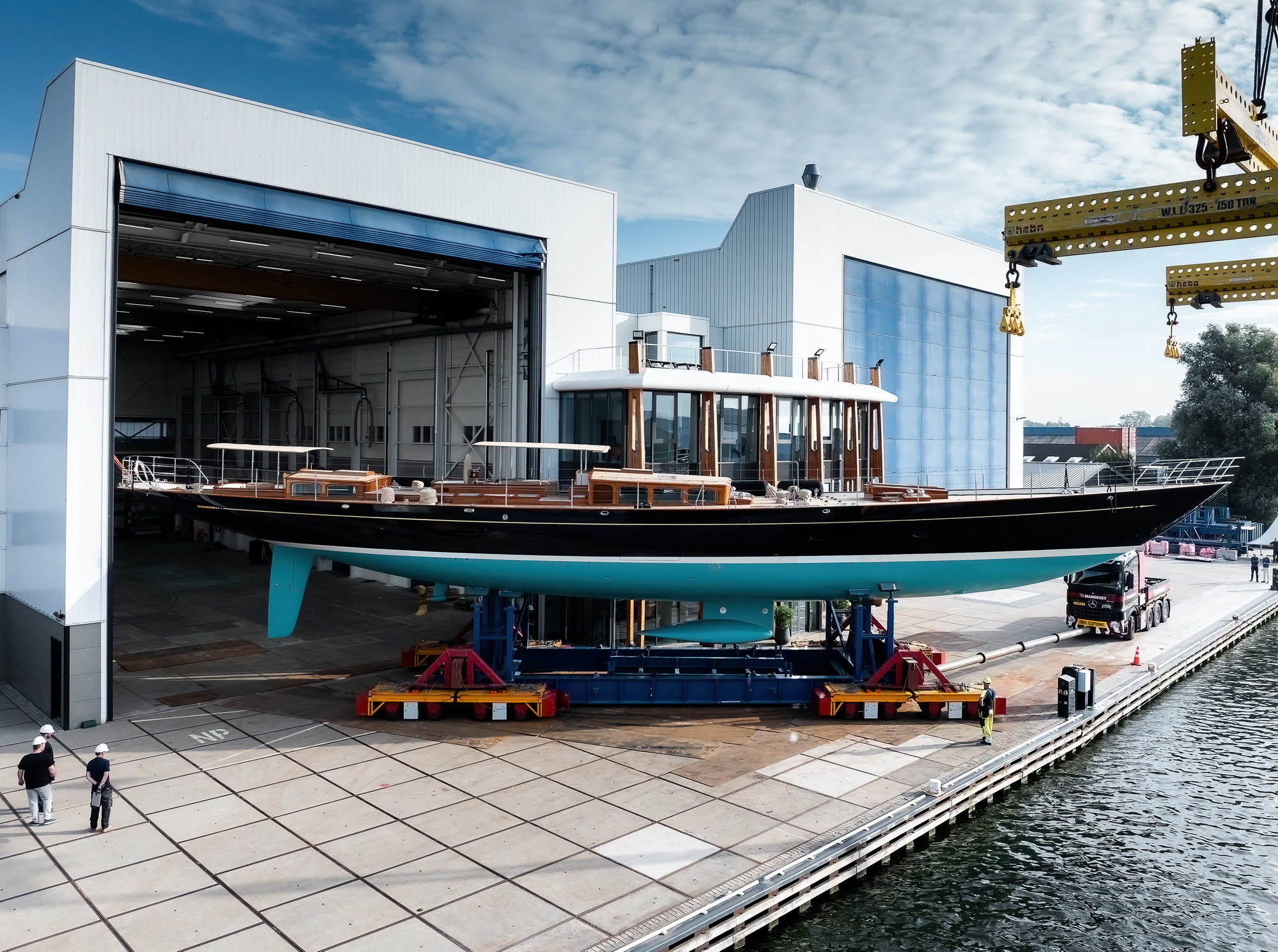
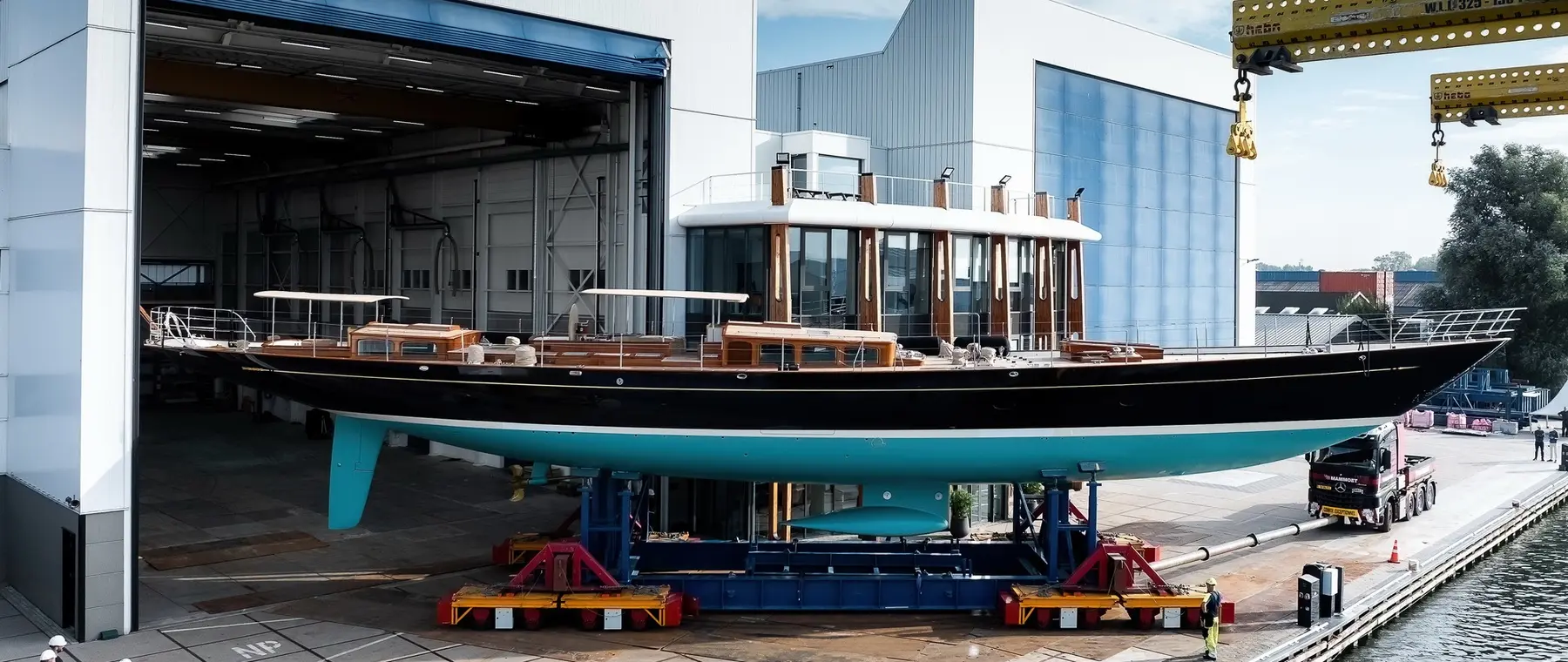
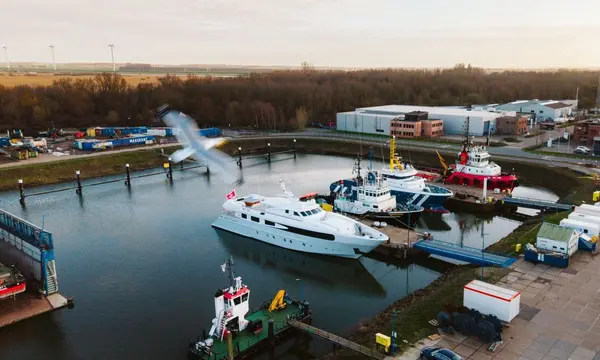
PUMULA at Huisfit — official shipyard refit photograph
Huisfit reports progress on the 37-metre Royal Huisman cutter PUMULA, highlighting its extensive engine room rebuild and the captain's experience of the refit.
Huisfit by Royal Huisman has published an update concerning the extensive refit of PUMULA, the 37-metre cutter originally delivered by Royal Huisman in 2012. Its 23 October 2026 METSTRADE announcement draws on feedback from captain Oliver Hervé and identifies the rebuilding of the engine room as a major achievement of the project. The yard's reference material dates the refit to 2025–2026 and records the yacht's launch in September 2026, after which the captain described the refurbishment as approaching completion.
PUMULA had travelled more than 195,000 nautical miles before returning to the builder's refit operation, according to the captain's account. He describes the programme as preparation for the yacht's fifteen-year milestone and the most technically demanding refit undertaken on the vessel. The yard has not published a complete machinery inventory, final cost, formal commissioning results or confirmation of every item in the work programme. The October statement should therefore be understood as a progress report and a first-hand account of the project, rather than an independently verified declaration of its final performance.
The distance recorded in the captain's account provides an indication of the extent to which PUMULA has been used since delivery. Distance travelled is an especially useful contextual measure for an oceangoing sailing yacht because its service experience may extend across a variety of climates, wind conditions, port facilities and maintenance environments. The published figure does not, however, establish machinery running hours, the number of individual passages or the condition of any specific equipment.
A substantial refit following extended cruising gives an owner and technical team an opportunity to reconcile experience at sea with the yacht's original drawings and equipment records. The crew may have developed considerable knowledge of which spaces are difficult to access, which systems require attention most frequently and how the yacht behaves under different operating conditions. That practical information can help establish priorities for a refurbishment. The aim should be to preserve capabilities that remain valuable while addressing the specific limitations identified through inspection and operation.
Hervé identifies the stripping and rebuilding of the engine room as a particularly demanding part of the Huisfit project. A sailing yacht's machinery space can present a complex arrangement in which propulsion equipment, electrical generation, hydraulic services, plumbing and ventilation must be accommodated within a location whose geometry is also influenced by the hull and rig. Even relatively modest changes to one piece of machinery can affect access to another.
Before undertaking an extensive rebuild, a technical team normally needs to establish the existing layout and the condition of the equipment, together with the requirements of systems that will be retained. The design of the revised installation should consider not only whether equipment can be physically fitted but also how it will be inspected, serviced and eventually removed. Installation sequencing may be critical where larger components cannot be introduced after adjacent systems have been assembled. Huisfit's announcement indicates that the whole engine-room rebuild was an important achievement but does not identify individual new components or their manufacturers.
A major machinery refurbishment can create an unusual opportunity to inspect areas normally obscured by equipment, service pipes and protective panels. The value of that opportunity depends on documenting what is found. Photographs, identification labels and accurate records of existing connections can reduce uncertainty as components are removed. Where discrepancies between original drawings and the vessel's actual configuration are discovered, they should be investigated rather than automatically carrying the original information into the new installation.
For a yacht that expects to undertake further long-range passages, updated technical documentation has particular value. A future crew or technician may need to locate a connection, isolate a system or identify a replacement part while away from the original yard. A well-organised record of the work completed during refit can shorten that investigation and improve the accuracy of subsequent maintenance decisions. The scope of the records handed over for PUMULA has not been disclosed in the public testimonial.
Although the refit announcement does not give an equipment schedule, the layout of an engine room is relevant to several aspects of a yacht's operation beyond propulsion. Electrical generation, distribution and support services may be concentrated in or near the machinery space. The demands placed upon these systems can differ markedly between sailing passages, periods under power, time spent at anchor and marina stays.
An effective refurbishment should consider those different operating states before deciding how equipment will be arranged or what changes are appropriate. Engineers need to assess the interfaces between newly installed components and any retained systems, including protective devices and control functions. Physical accessibility and ventilation also matter, because the ability to maintain equipment can depend on the arrangement of services around it. None of these general considerations should be interpreted as confirmation that PUMULA received new generators, batteries or other particular equipment not identified by the yard.
The captain says the owner and his team chose to return PUMULA to the place where she was built for the yacht's most technical refit. For a custom sailing yacht, an original builder may possess detailed information about the design and construction that makes the early stages of a complex intervention more straightforward. Knowledge of the original production methods can be valuable where the work requires access to concealed areas or coordination with elements of the vessel's structure.
That familiarity is a potential advantage, not a substitute for an up-to-date survey. A yacht may have undergone modifications and replacement of equipment during years of operation away from the builder. The refit team must establish the actual condition and arrangement before deciding how revised systems will be installed. A successful return to an original yard therefore involves bringing together original construction knowledge, the current crew's experience and the expertise of the professionals responsible for the new work.
Hervé also highlights the convenience of the shipyard's Amsterdam location and access to Schiphol Airport. The practical arrangements for crew during a substantial refit can materially affect the management of the project. Depending on the conditions aboard the yacht, some personnel may need alternative accommodation during particular phases, and specialist technicians or replacement crew may have to travel to and from the facility.
Reliable access to transport and services outside the yard can assist with that coordination. It is nevertheless important to establish the actual arrangements for access, safety and the management of people working aboard. The owner and captain may also need to decide which crew will remain involved throughout the work and which can return at a later commissioning stage. The location is one of several considerations in selecting a refit partner, and its usefulness will vary according to the personnel and programme of the individual yacht.
The yard's references identify the September launch as a milestone, while the subsequently published captain's feedback refers to the refit approaching completion. Launching after a major refurbishment does not by itself demonstrate that every system has completed its commissioning or that all work has been accepted. The remaining programme may include checks of installations under their intended operating conditions, confirmation of documentation and resolution of any outstanding findings.
For an owner, the appropriate evidence of completion depends on the agreed work packages and acceptance criteria. A useful handover distinguishes items that have been verified from those awaiting commissioning, further inspection or documentation. Depending on the modifications made, trials may be needed to evaluate the operation of systems away from the shipyard. Neither the October announcement nor the reference page publishes a full set of PUMULA's sea-trial results. Claims about measured improvements in propulsion, fuel consumption or electrical performance would therefore be premature.
Huisfit's account illustrates the importance of planning a major technical refit around the actual requirements of a yacht with substantial cruising experience. The project connects the history of a distinctive 37-metre Royal Huisman cutter with the practical challenges of renewing machinery in a confined space. The captain's testimony provides an informed account of the cooperation and work experienced by the operating team, although it remains published through the yard's own channels.
Owners considering comparable work can consult the yard's project references at https://www.huisfit.com/references/ and obtain details appropriate to their intended programme. The immediate confirmed information concerns the engine-room rebuild, September launch and progress reported in October. The accompanying official exhibitor photograph illustrates the Huisfit project announcement. Subsequent assessment of the completed refit should be based on documented results and the yacht's return to its operational programme, rather than assumptions about improvements not yet published.
Primary source: Huisfit official METSTRADE project update, 23 October 2026.
PUMULA at Huisfit — official shipyard refit photograph. Official source.
Explore
Go deeper into the yachts, companies, events and destinations directly connected to this article.
Continue reading
Royal Huisman's Huisfit division has confirmed the return of the 55-metre Vitters sailing yacht ADELE for a further refit and her 20-year survey programme, …
Damen Maaskant reports the renewal of crew accommodation and galley spaces aboard the 42-metre SOPHIE BLUE during its Stellendam lifecycle refit programme.

KM Yachtbuilders welcomes the 2012 German Frers-designed aluminium sailing yacht TULIP back to Makkum for an extensive refit, with scope yet to be disclosed.

Palumbo Upfit will present its seven-yard Mediterranean maintenance and refit network at Metstrade 2026, with its Amsterdam exhibitor listing confirming stand 07.350R.
Superyacht Guide
Continue into the wider Superyacht Guide.
Business opportunities · Superyacht Guide
Companies serving the superyacht market can discuss clearly identified advertising, sponsorship and business-profile opportunities. Commercial activity remains separate from independent editorial coverage.