Company
Damen Maaskant | Yacht Refit & Conversion
Explore the company profile and related Superyacht Guide coverage.
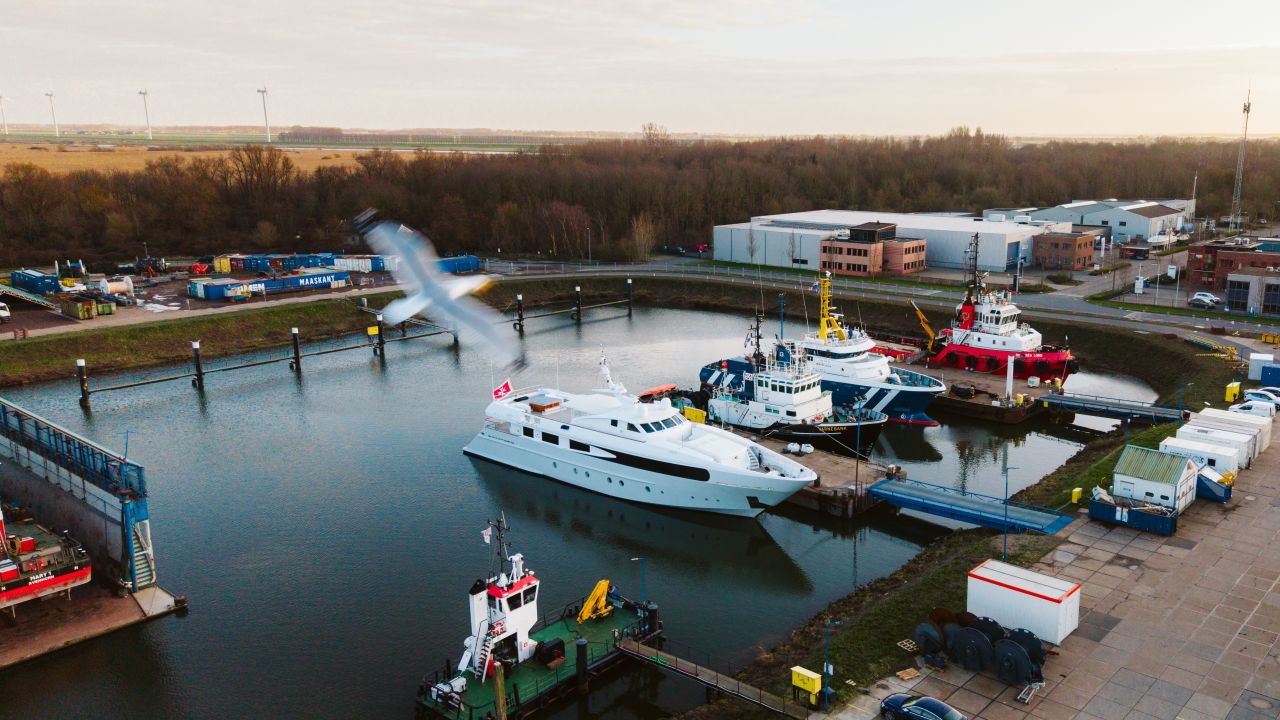
SOPHIE BLUE refit at Damen Maaskant — official shipyard photograph
Damen Maaskant reports the renewal of crew accommodation and galley spaces aboard the 42-metre SOPHIE BLUE during its Stellendam lifecycle refit programme.
Damen Maaskant has provided an account of the recent refit of the 42-metre motor yacht SOPHIE BLUE at its Stellendam shipyard in the Netherlands. The yard's official METSTRADE announcement, published on 29 October 2026, identifies a comprehensive renewal of crew accommodation and galley areas, together with associated modifications intended to improve onboard functionality and comfort. It also reports positive feedback from the yacht's captain concerning the proposal and execution of the project.
The announcement is noteworthy because the principal work described concerns the operational spaces of a superyacht rather than the guest accommodation or an exterior redesign. Damen Maaskant identifies lifecycle extension and improvement programmes as an increasing part of its yacht refit activity. It thanks the owner, crew and Dutch joinery specialist Scheepstimmerbedrijf IJtama for their involvement in the project. The yard has not disclosed the financial value of the works, detailed equipment specifications or an independently measured assessment of the yacht's performance after refit.
On a professionally crewed superyacht, accommodation for employees is a working and living environment occupied for extended periods. Its design affects the ability of crew members to rest, prepare for duties and maintain separation between their private time and the services they provide to guests. An owner evaluating an existing yacht may understandably focus first on the configuration of guest suites and entertainment areas. A lifecycle refit can provide an opportunity to address the different requirements of the people responsible for operating those facilities.
A successful accommodation renewal should be informed by the actual experience of the crew. The arrangement of berths, storage, ventilation, lighting and circulation can influence how suitable a cabin is for successive occupants. The cumulative effect of smaller improvements may be particularly important where the vessel has been in service for a considerable period. Applicable requirements for crew accommodation depend on the yacht's flag, size, certification and operation. The official announcement does not establish that the previous accommodation was non-compliant, nor does it identify particular changes to the number or dimensions of crew cabins.
The galley is central to the delivery of hospitality aboard a large motor yacht. A professional team may need to prepare meals for owners, guests and crew on different schedules, while adapting to varying requirements for ingredients, dietary preferences and occasions. The arrangement of equipment, storage and working surfaces can therefore affect the way in which the service operates throughout a voyage.
When renewing a galley, the design team should consider the actual sequence of preparation, cooking, service and cleaning. Equipment that appears adequate in isolation may be difficult to use effectively if movement between workstations is restricted or if several people require access to the same areas simultaneously. The locations of refrigerated storage, ovens, sinks and ventilation systems can influence the practical results of the design. Consultation with the personnel who use the space can help a refit team identify these issues before deciding on the final arrangement. Damen Maaskant has not published the new equipment schedule for SOPHIE BLUE.
The yard acknowledges the cooperation of Scheepstimmerbedrijf IJtama in the project. The involvement of a specialist joinery company illustrates the relationship between finished accommodation and the technical systems concealed within it. A cabin or galley refurbishment can require coordinated access to electrical cables, plumbing, ventilation, insulation and structural surfaces. The appearance of the finished installation is only one element of a successful refit.
Where work requires removal of existing cabinetry or partitions, it is useful to record the conditions encountered before the new finishes are installed. The opportunity to inspect previously concealed areas can help determine whether additional maintenance is appropriate. Updated documentation should identify any revised routes for services, access panels and equipment connections. If the installation is subsequently opened for maintenance, that information may reduce unnecessary dismantling. Changes to materials and arrangements must also be assessed against relevant marine safety requirements.
A refit team working on a yacht already in service faces constraints different from those of a builder developing a new vessel. The position of existing bulkheads, structural elements, machinery spaces and utility connections may limit the changes that can be made economically or safely. A proposed improvement that requires moving equipment from one location to another may have consequences for ventilation capacity, service access or weight distribution.
For an accommodation project, the implications of altering the arrangement should be considered before selecting materials and ordering new components. A detailed survey of the existing spaces can provide a basis for design development and identify areas where further investigation will be necessary after dismantling. The resulting specification should distinguish alterations to finishes from changes requiring assessment by qualified engineers or the responsible survey organisation. Damen Maaskant refers to supporting modification works but does not identify their individual extent.
The captain's feedback, published by the yard, emphasises its flexibility during the proposal and execution phases. This is a practical consideration for owners because the actual scope of work on an existing vessel may become clearer as dismantling proceeds. An initial proposal can be based on available drawings and inspections, but conditions discovered after work begins may require a revised approach.
A well-managed project establishes how additional findings are communicated, priced and approved. The crew and the owner's representatives should understand who can authorise an alteration to the agreed specification. This becomes particularly important when a new finding affects other trades or the expected completion date. Flexibility should coexist with accountability: a willingness to adapt does not remove the need for proper documentation, technical approval and realistic assessment of the time and cost implications. The positive captain's account is a statement of his experience on this project, not a guarantee of identical results on every future refit.
A refitted crew area or galley should be assessed as a functioning installation rather than only as a finished interior. Electrical equipment, lighting, plumbing, drainage and ventilation may need to be tested under conditions relevant to their intended operation. Where equipment has been replaced, the crew benefits from access to appropriate operating and maintenance information. An organised handover should explain which components have changed and what maintenance arrangements apply to them.
The commissioning phase can also reveal practical issues that are less apparent when the shipyard is carrying out static checks. The relationship between equipment, service workflow and the surrounding accommodation may be best understood after the crew has resumed its normal activities. The owner's project team should establish how defects or adjustments identified after completion will be addressed. The October announcement does not provide the commissioning records for SOPHIE BLUE or quantify any improvement in energy consumption, noise or working conditions.
Damen Maaskant places the refit within its wider approach to supporting yachts after delivery. An established vessel may retain considerable value for an owner if its underlying design remains suited to the intended programme and appropriate investment can address areas of deterioration or changing requirements. A refurbishment of operational spaces can be particularly worthwhile where the yacht's guest areas remain satisfactory but its working environment would benefit from modernisation.
Deciding between refit and replacement requires more information than the visible condition of accommodation. The yacht's structural and machinery condition, expected future expenditures, classification and statutory requirements, and the owner's changing cruising programme all influence the comparison. A targeted investment should be evaluated in relation to the complete vessel. The works described for SOPHIE BLUE illustrate one aspect of lifecycle management rather than establishing the financial merits of the yacht's entire ownership strategy.
The location of the project at Damen Maaskant's Stellendam facility demonstrates the role of specialist Dutch shipyard expertise in supporting existing large yachts. The work described brought the yard, crew and joinery contractor into a coordinated project focused on improving the interior spaces essential to daily operation. The announcement provides a confirmed account of the general scope and reported experience, but does not give a detailed inventory of the finished spaces.
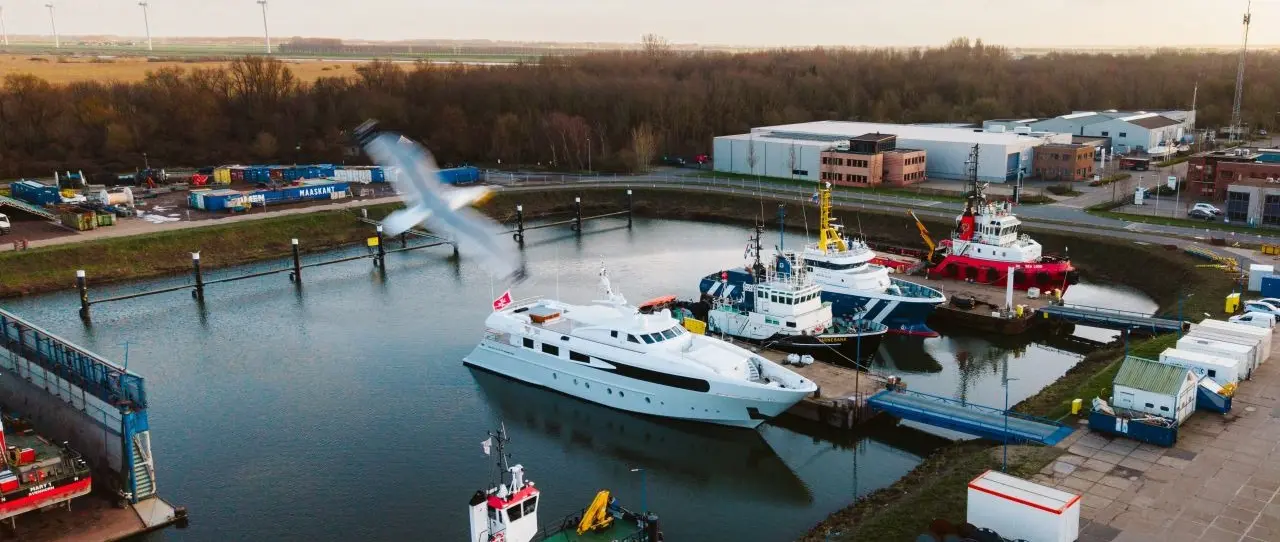
For yacht managers considering a comparable refurbishment, it is useful to start with a documented assessment of the crew's requirements and the condition of the supporting systems. Project priorities can then be reconciled with the yacht's technical calendar, budget and regulatory obligations. The SOPHIE BLUE project is a reminder that maintaining a superyacht's quality of operation involves investment in the people and working environments behind its hospitality. The accompanying photograph is the official image published with Damen Maaskant's October project announcement.
Primary source: Damen Maaskant official METSTRADE announcement, 29 October 2026.
SOPHIE BLUE refit at Damen Maaskant — official shipyard photograph. Official source.
SOPHIE BLUE refit at Damen Maaskant — official shipyard photograph.
Explore
Go deeper into the yachts, companies, events and destinations directly connected to this article.
Company
Explore the company profile and related Superyacht Guide coverage.
Continue reading
Malta-based Melita Marine Group has started construction on a waterfront facility for captains and crew during yacht refits, with a gym, sauna, shared social …
Damen Maaskant's 50m VEGA conversion in Stellendam aims to turn a 1964 Swedish icebreaking lighthouse-supply vessel into an ocean-capable explorer yacht.

Cantiere Rossini has begun a €2 million crew and staff facility at its Pesaro superyacht refit yard, with completion scheduled for October 2027.

A METSTRADE interview with former Indian Navy engineer Darsitha Babu examines the transfer of engineering, project leadership and compliance skills to yachting.
Superyacht Guide
Continue into the wider Superyacht Guide.
Business opportunities · Superyacht Guide
Companies serving the superyacht market can discuss clearly identified advertising, sponsorship and business-profile opportunities. Commercial activity remains separate from independent editorial coverage.