26.61m TULIP Returns to KM Yachtbuilders for Extensive Refit
By Superyacht Guide Newsroom · Edited by Superyacht Guide Newsroom
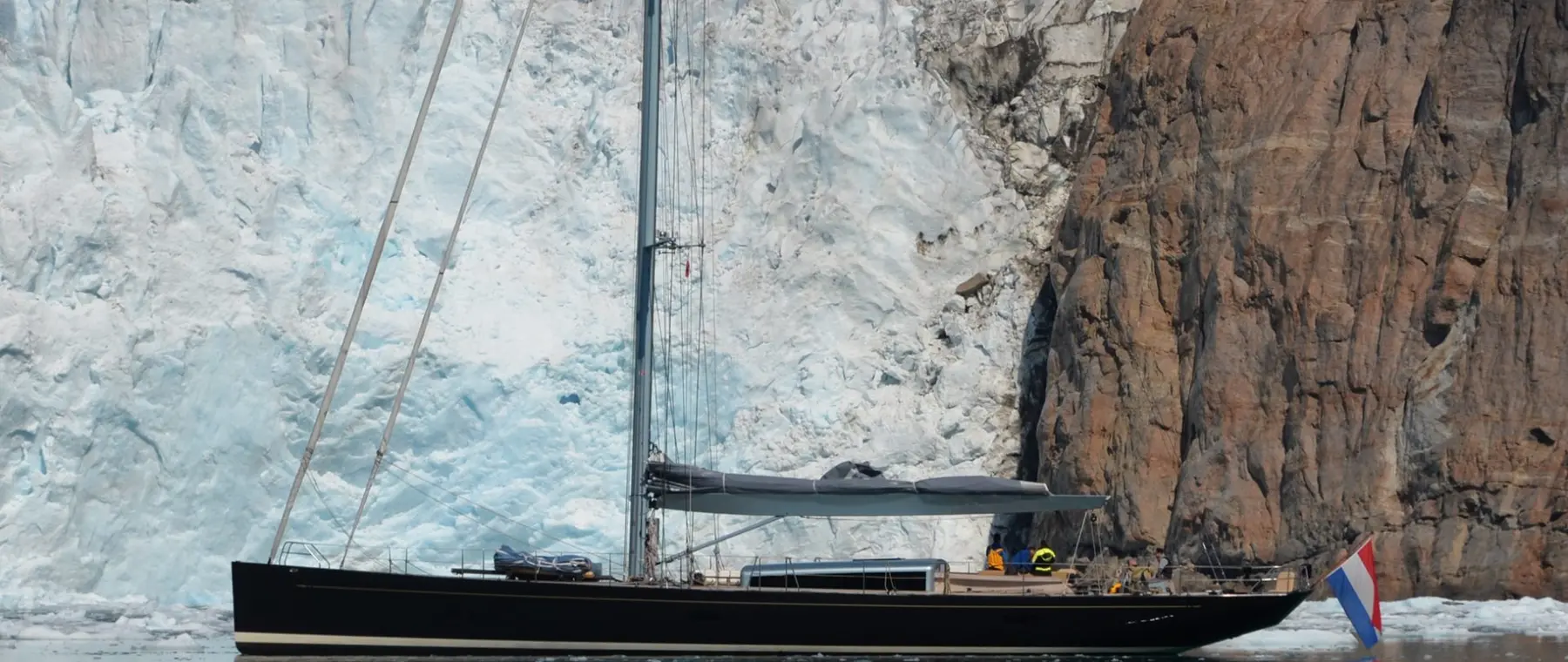
TULIP under sail — official KM Yachtbuilders fleet photograph, before the 2026 refit
KM Yachtbuilders welcomes the 2012 German Frers-designed aluminium sailing yacht TULIP back to Makkum for an extensive refit, with scope yet to be disclosed.
KM Yachtbuilders has announced the return of TULIP to its Makkum shipyard for an extensive refit. The Dutch builder confirmed the development on 11 November 2026 through its METSTRADE exhibitor news channel, identifying the sailing yacht as a design by German Frers. It has not disclosed the contract value, planned completion date or detailed work specification. The milestone is therefore the commencement of a new period of shipyard involvement, rather than the delivery of a completed refit or confirmation of particular technical modifications.
The builder's fleet documentation provides unusually useful context for understanding the project. Delivered in 2012, TULIP measures 26.61 metres, with a beam of 6.12 metres, an aluminium structure, carbon rig and lifting keel. The original published displacement is 43 tonnes. The yacht is an example of custom sailing superyacht construction in which the relationship between the hull, appendages, rig and interior has to be understood before changes are made. Returning to the original builder can help preserve an individual vessel's engineering and architectural character.
For a one-off project, familiarity with the underlying structure can be a considerable advantage during refit. The builder may retain original structural drawings, details of fabrication methods, machinery installation records and photographs taken before concealed spaces were closed. These records can reduce the time required to investigate particular assemblies. Familiarity with the location of structural frames, welding details, service routes and removable panels also helps a shipyard develop a more realistic access plan before producing a final schedule.
Original records cannot substitute for examining the yacht as it exists today. During fourteen years of operation, equipment may have been serviced, replaced or modified, and the crew may have commissioned work at other locations. A careful refit begins by reconciling the original design with the current equipment inventory and physical condition. That process can establish which parts of the vessel are accessible without significant dismantling and which require a surveyor or designer to assess further. The announcement does not identify any defects or document previous alterations to TULIP.
According to KM Yachtbuilders, the yacht's draft varies from 3.20 to 5.10 metres. This is a distinctive feature of the design because the shallower configuration makes certain locations more accessible while the deeper configuration can provide different hydrodynamic characteristics under sail. It introduces moving mechanical components and structural interfaces that have to accommodate the loads associated with sailing, manoeuvring and the movement of the keel assembly.
The demands placed on such an arrangement differ from those of a conventional fixed keel. To prepare a maintenance specification, a technical manager would need to consider the actual design, relevant inspection intervals, the operation of the raising mechanism and records from previous servicing. Procedures for supporting the yacht ashore and controlling access to the mechanism also require coordination with the yard. No work on the keel has been explicitly mentioned in the release. Its significance here is as an illustration of why the original specifications matter when selecting a yard for a complex sailing yacht refit.
Aluminium is well established in specialist custom yacht construction, where it provides scope for building an individual hull without the tooling required for conventional moulded series production. Its structural and corrosion characteristics require appropriate treatment. Relevant considerations include the isolation of dissimilar metals, water drainage from enclosed spaces, the condition of protective coatings and the behaviour of electrical bonding systems. Owners should ensure that the professionals responsible for inspection understand the particular materials and construction methods used on the yacht.
An external visual examination may not reveal the condition of every area hidden behind equipment and interior finishes. Where the survey findings justify further investigation, the yard can establish which additional inspection methods and access arrangements are appropriate. Findings should be recorded before affected parts are repaired or replaced. The specification should distinguish necessary structural maintenance from optional modifications, so that the owner can assess the implications for safety, budget and schedule. There is no report of structural failure in the builder's announcement.
The original specification describes a carbon rig in a sloop/cutter configuration. A yacht's sailing system extends beyond the spars and sails: standing rigging, deck fittings, winches, control systems, hydraulic installations where fitted and the supporting structure form an interconnected network. Changing a component in isolation can affect the conditions under which several other components operate. A responsible refit plan therefore takes account of the entire installation rather than assuming that a replacement selected principally for convenience will be suitable.
In practical terms, the timetable for rig inspections and related interventions needs to be coordinated with specialist personnel, access to the yacht and the applicable equipment manufacturers' maintenance recommendations. Whether the mast is removed is a decision for the specific work programme. For owners considering comparable refits, it is useful to request clear acceptance criteria for each package of work, including any inspection records, commissioning documentation or sailing trials that will provide evidence of satisfactory results. TULIP's specific rigging work, if any, has not been announced.
The original builder's description attributes the interior to Sinot Yacht Design. It describes a glazed wheelhouse forming a central living space, together with the separation of owner and guest accommodation from working areas, including the crew quarters and machinery space. The deck arrangement also incorporates elements intended to improve shelter for people using the cockpit. These details illustrate how a custom cruising yacht can integrate exterior design and accommodation around the owner's intended pattern of use.
When a yacht of this character receives modern equipment, access can become a significant consideration. New communications equipment, environmental controls or lighting may require alterations behind finished joinery. A carefully defined work package specifies which surfaces must be protected, how existing panels should be removed and reinstated, and how new services can be routed without compromising the original layout. Replacing an interior for stylistic reasons is a very different proposition from preserving it during an engineering intervention. The available announcement does not confirm any accommodation redesign.
Different trades may need access to the same limited spaces at different stages. A machinery renewal might require removal of joinery, wiring or ventilation services; painting and coating work may be incompatible with simultaneous fabrication nearby. For this reason, the quality of work sequencing is often as important as the size of the workforce assigned to the project. Dependencies should be identified before the yard commits to milestones, and revised when additional findings emerge after disassembly.
The operating crew can provide a useful record of intermittent malfunctions, equipment accessibility problems and recurring maintenance requirements. This information assists the yard in distinguishing improvements that provide measurable operating benefits from replacements undertaken chiefly because equipment is approaching a prescribed service interval. A defect register, approved work list and controlled process for variations give the owner better visibility of the project. They also help establish a useful technical handover at the end. The scope described as extensive by the builder does not yet permit an assessment of the likely cost or duration.
The stated original displacement of 43 tonnes is especially relevant to an individual aluminium sailing yacht. Successive changes to electrical equipment, domestic systems, batteries, furniture and insulation can alter both overall weight and its distribution. The consequences depend on where changes are made and their scale in relation to the yacht's actual condition. Changes affecting sailing performance, trim or stability should be assessed by appropriately qualified professionals when warranted.
A useful project handover includes an updated technical inventory and records of equipment added or removed. Commissioning can then confirm that systems operate together under their intended conditions, while appropriate trials provide opportunities to assess the yacht's behaviour at sea. Owners should distinguish documented improvements from broad claims about enhanced performance. The yard has not announced TULIP's planned trials or a target displacement after refit; those details cannot be inferred from the original fleet specification.
KM Yachtbuilders' portfolio includes a range of aluminium custom sailing yachts and specialist repair and refurbishment services. The original fleet record for TULIP is published at https://kmyachtbuilders.com/fleet/tulip/ and gives info@kmy.nl as the yard's public contact. For an owner selecting a refit partner, the significance of such a portfolio lies partly in the continued availability of expertise associated with construction long after a yacht has been delivered.
The return of TULIP demonstrates that a distinctive vessel from an established yard's earlier portfolio can become the subject of a renewed engineering relationship. It also underlines the difference between acquiring a bespoke yacht and managing it over a long service life. The confirmed November 2026 development is the yacht's return to Makkum for extensive refit. The accompanying official fleet photograph shows TULIP before the new works. An assessment of the completed project will require subsequent information about the actual changes, commissioning and return to service.
Primary source: KM Yachtbuilders exhibitor announcement, 11 November 2026.
TULIP under sail — official KM Yachtbuilders fleet photograph, before the 2026 refit. Official source.
TULIP under sail — official KM Yachtbuilders fleet photograph, before the 2026 refit.
Explore
Go deeper into the yachts, companies, events and destinations directly connected to this article.
Continue reading
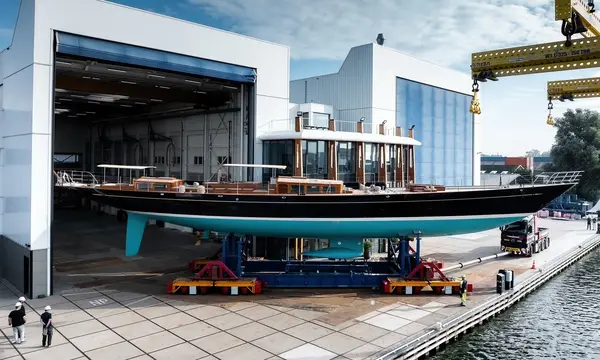
Huisfit reports progress on the 37-metre Royal Huisman cutter PUMULA, highlighting its extensive engine room rebuild and the captain's experience of the refit.
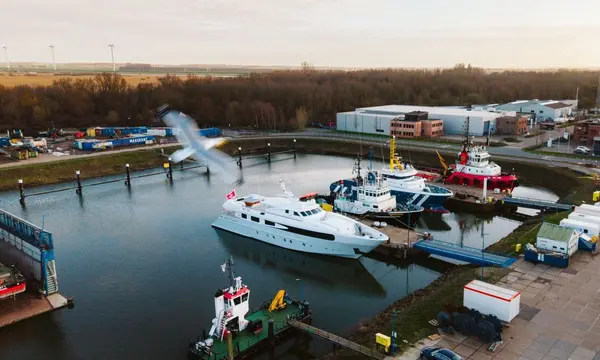
Damen Maaskant reports the renewal of crew accommodation and galley spaces aboard the 42-metre SOPHIE BLUE during its Stellendam lifecycle refit programme.

Palumbo Upfit will present its seven-yard Mediterranean maintenance and refit network at Metstrade 2026, with its Amsterdam exhibitor listing confirming stand 07.350R.
The 2015 Van der Valk explorer Santa Maria T is advertised at €7 million, with Royal Balk Shipyard offering prospective owners design paths for …
Superyacht Guide
Continue into the wider Superyacht Guide.
Business opportunities · Superyacht Guide
Companies serving the superyacht market can discuss clearly identified advertising, sponsorship and business-profile opportunities. Commercial activity remains separate from independent editorial coverage.
