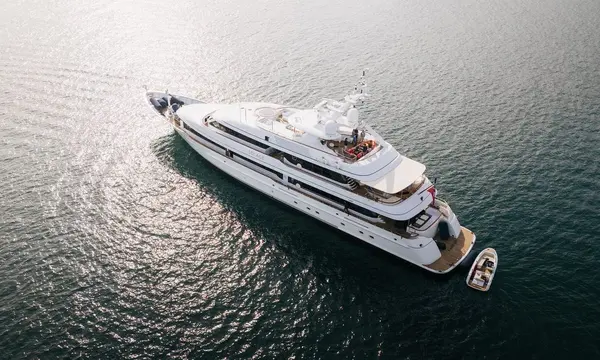
Pendennis Refit of Solace Wins 2026 ISS Award After World Yacht Honour
Pendennis has won Best in Refit at the 2026 ISS Awards for the motor yacht Solace, following a World Superyacht Awards win after a …
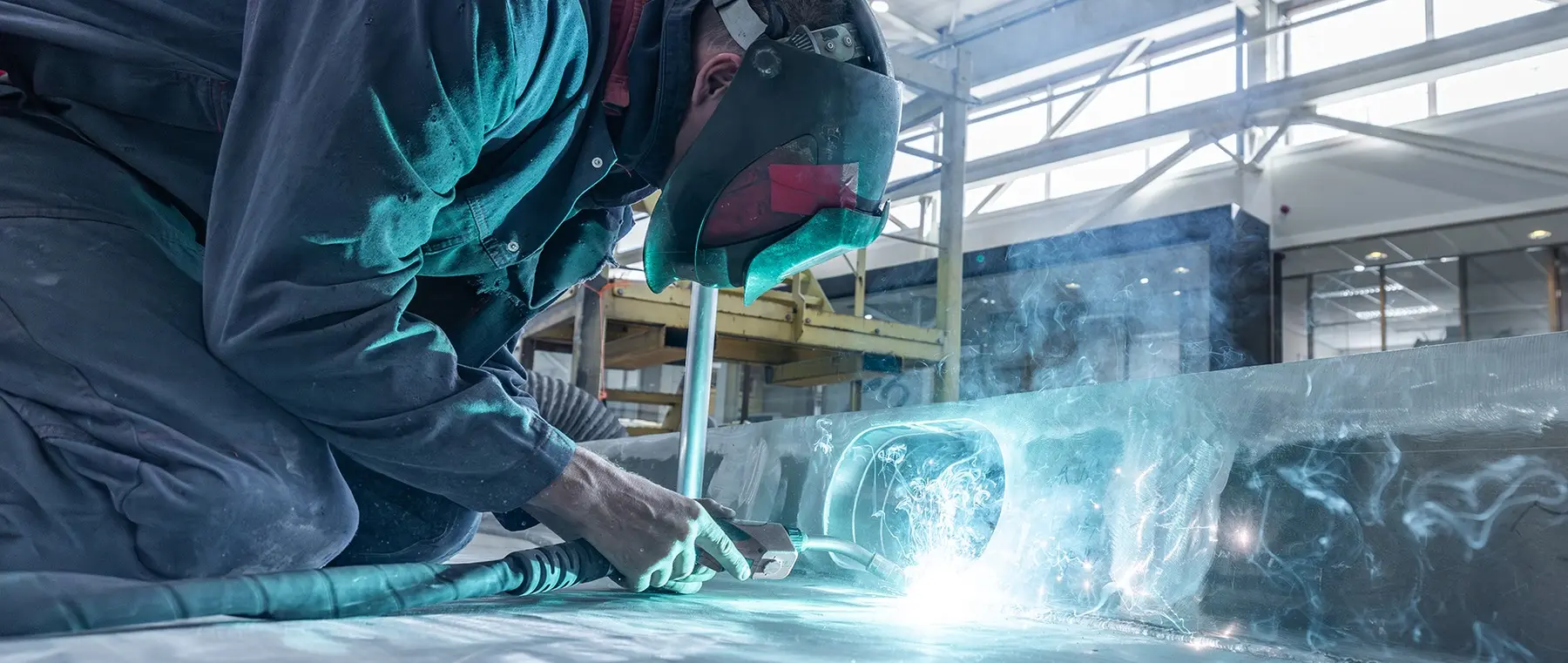
The 2015 Van der Valk explorer Santa Maria T is advertised at €7 million, with Royal Balk Shipyard offering prospective owners design paths for a possible major refit.
The 36.8-metre Dutch-built explorer yacht Santa Maria T is being marketed not only as a vessel for sale but also as a potential basis for a tailored refit. Royal Balk Shipyard has published a dedicated ReCraft proposal for the 2015 Van der Valk yacht, inviting prospective buyers to consider different ways of updating her while retaining the established steel-hulled platform. The yard’s current page lists an asking price of €7 million and identifies València, Spain, as the yacht’s location. That figure is the advertised purchase price, not a quotation for every possible refurbishment. The distinction is central to understanding the opportunity. A buyer could acquire the yacht in her current configuration, commission a limited programme or investigate a more extensive transformation. No new owner or signed refit contract is confirmed by the yard’s material. The project is therefore an offer and design exercise rather than a completed restoration.
The Urk-based Dutch shipyard presents Santa Maria T as a candidate for its ReCraft service, a term it uses for substantial yacht updates and transformations. Its published material emphasises the combination of an existing vessel and a choice of possible outcomes. The proposition is that a prospective owner could begin with a proven hull and machinery arrangement, then specify an aesthetic and technical programme suited to intended cruising. That differs from ordering a newly built yacht, where the hull, equipment and accommodation are shaped through a production process from the outset. It also differs from buying an older vessel with no yard-backed renovation concept. Royal Balk’s dedicated webpage illustrates possible visual directions, but those are proposals. Prospective purchasers should not assume that the illustrated layouts or finishes are already installed. The work, price and delivery schedule would require a separately agreed specification.
Santa Maria T was built by Van der Valk in the Netherlands and delivered in 2015. The original builder identifies her as a 36.80-metre Explorer with a 7.75-metre beam and a draft of 2.30 metres. Guido de Groot Design worked on the exterior and interior styling, while Ginton Naval Architects is credited for naval architecture. The yacht’s steel hull and aluminium superstructure are consistent with the long-range trawler-style profile that distinguishes her from more speed-oriented composite motor yachts. Van der Valk records a full-displacement round-bilge form and twin Volvo Penta D16-MH diesels. The shipyard’s own portfolio remains a useful source for original-build specifications, which should be distinguished from any changes that may have occurred during subsequent service. A complete buyer’s survey would be needed to establish current condition, equipment status and the scope of any refit.
According to Royal Balk’s listing, Santa Maria T has two Volvo Penta D16 MH main engines rated at 651 horsepower each, with two 55 kW generators. The yard gives fuel capacity as 33,000 litres and describes an approximate range of 3,600 nautical miles. It also cites about 90 litres per hour of total fuel use at cruising speed with both generators running. These are supplier-stated figures rather than independently measured operating results in every sea condition. Consumption changes with speed, weather, hull cleanliness, loading and the equipment in use. The original builder records an approximately 11.2-knot cruising speed and a maximum of 14.6 knots. Taken together, the published characteristics suggest a vessel conceived for economical long passages rather than high-speed coastal hopping. They are also relevant to a refit: preserving or improving a yacht’s existing performance may require different choices from altering the hull or adding significant topside weight.
The original Van der Valk specifications describe four guest cabins: an owner’s suite, a VIP cabin, a twin and a queen-bunk guest cabin. Royal Balk’s detailed introduction refers to accommodation for up to eight guests and six crew, including the captain, while a separate summary on the same yard page uses a ten-guest headline. In view of that inconsistency, potential buyers should request the approved general arrangement and current certificates before relying on a maximum occupancy figure. The yacht’s existing interior is described as Art Nouveau, with mahogany, decorative burl, herringbone flooring and detailed finishes. The saloon opens towards the aft deck through folding stainless-steel doors, creating a strong visual link between interior and exterior. This established personality is part of the investment choice: an owner might retain much of it, or pursue a distinctly different aesthetic through the proposed ReCraft process.
Royal Balk highlights the yacht’s volume of approximately 320 gross tons and long-range intentions. The figure describes internal volume under the applicable measurement system; it is not the vessel’s weight or the same as displacement. Van der Valk separately quotes a displacement of about 250 tonnes. The builder’s specifications also include bow and stern thrusters and a fin-stabilisation system designed to operate underway and at zero speed. The latter is cited as a particular feature of Santa Maria T at delivery. No set of specifications can, by itself, demonstrate whether an older yacht is ready for a transoceanic passage today. That assessment requires survey evidence, current machinery information, inspection of tanks and hull systems, and confirmation of navigation, communications and safety equipment. A refit proposal should therefore be evaluated alongside the existing vessel’s technical condition.
The yard’s public ReCraft page introduces six possible pathways for Santa Maria T and shows design material under names including Royal Blue and Pearl White. The source page groups the concepts around possible use as an expedition or offshore-fishing-oriented superyacht, with the intention of controlling programme length and capital commitment. Its key-benefit statements include a shorter route to operation, an established platform and a practical configuration. These are advertised benefits, not guaranteed results for a particular purchaser. Any design change must be tested against structure, stability, escape routes, classification requirements and equipment space. A proposed fishing-oriented deck arrangement, for example, may place different demands on storage and crew circulation from a family expedition configuration. The choice of pathway would have to follow the buyer’s operating brief, not simply the preferred colour or marketing rendering.
The yard’s current online advertisement states an asking price of €7 million for Santa Maria T. A contemporary report in Megayacht News describes a more comprehensive purchase-and-ReCraft scenario with an indicative total around €10 million and a possible completion period within 12 months, depending on scope. Those latter figures are reported scenario estimates rather than a binding public quotation from the yard’s listing. They should not be represented as a fixed-price contract or an unconditional delivery promise. The real acquisition budget also needs to allow for independent condition surveys, professional advice, any necessary machinery or class work, yard costs, insurance, transport and contingencies. The status of VAT should be verified for the specific transaction: brokerage advertisements describe the yacht as VAT paid, but the legal documentation and applicability to a buyer remain matters for transaction review. A buyer should obtain a detailed written yard proposal before adding purchase and refit estimates together.
A responsible conversion programme begins by understanding what is already aboard. Machinery hours, steel corrosion protection, tank condition, electrical distribution, fire-protection equipment, stabilisers, ventilation and documentation can all affect the eventual works list. Even a well-maintained yacht can conceal expensive issues that are not apparent from photographs or a broker’s description. The vessel’s age also means the buyer should check upcoming statutory and class-survey obligations, especially if the planned use differs from the previous private operating pattern. Royal Balk offers survey and refit services alongside ReCraft, but the buyer may still choose independent technical advisers. Neither the €7 million asking price nor attractive concept drawings remove the need for due diligence. The result of surveys should inform the final scope, contingency and contractual milestones before the purchaser commits to an extensive transformation.
An established explorer hull offers a tangible starting point. Its dimensions, machinery access, current deck arrangement and sea-going characteristics can be inspected before deciding on large design changes. That reduces some forms of uncertainty compared with an entirely unbuilt concept, although it introduces other risks associated with existing equipment and the constraints of the original structure. Santa Maria T’s long-range tankage and full-displacement form are relevant advantages for a buyer who wants the yacht to retain an expedition role. Someone seeking a dramatic change in speed or volume might find those same parameters restrictive. The commercial idea behind the Royal Balk presentation is to make those trade-offs visible early. The most useful concept is one tied to realistic engineering, a credible programme and the owner’s actual way of using the yacht.
Guido de Groot Design’s involvement is noteworthy because the studio shaped Santa Maria T’s initial appearance and interior character. That familiarity may help when examining how a new aesthetic or layout fits the vessel’s proportions and underlying arrangement. It does not imply that the original design must be preserved unchanged. A refit project can be successful either by carefully retaining defining features or by establishing a different identity, provided technical and operational constraints are respected. The published ReCraft presentation is especially relevant to readers interested in substantial yacht transformations, where a concept can sometimes be shown before the vessel changes hands. At the same time, renderings and intentions should remain clearly labelled until they have been translated into a contracted, engineered design and executed aboard.
The Santa Maria T case sits at the intersection of yacht brokerage and refit sales. A conventional listing focuses on the vessel as she can be inspected today: build, specifications, location, condition and price. Royal Balk adds another dimension by illustrating what the same hull might become. Buyers may appreciate a clearer view of possibilities, but it is important that the marketing does not blur the line between existing assets and prospective improvements. Independent valuation should distinguish the market value of the yacht in current condition from the capital required for a chosen refit and from any resale assumptions. There is no evidence in the shipyard statement that a later conversion would automatically be recovered in market value. The appeal may instead lie in obtaining a customised operating platform without commissioning a wholly new hull.
As of the latest public material, the confirmed facts are the yacht’s original 2015 build, the current €7 million asking price, the Royal Balk ReCraft proposal and the shipyard’s published main specifications. A new sale, refit contract, completion date and final design have not been confirmed. Superyacht Guide has therefore treated the story as a brokerage-and-refit opportunity, not as an announcement that Santa Maria T has already been transformed. Buyers can consult the primary material from Royal Balk Shipyard and Van der Valk and request updated brokerage documents, survey access and a detailed quotation. The wider industry significance is the effort to present a pre-owned long-range superyacht as a deliberately planned platform for owner-specific redevelopment. Whether that proposal becomes an actual yard project will depend on a buyer, technical findings and a defined scope of work.
Primary sources: Royal Balk Shipyard’s current Santa Maria T ReCraft listing; Van der Valk’s original-build specifications. Additional reporting: Megayacht News, 8 November 2026, for the indicative combined project budget.
Continue reading
Pendennis has won Best in Refit at the 2026 ISS Awards for the motor yacht Solace, following a World Superyacht Awards win after a …
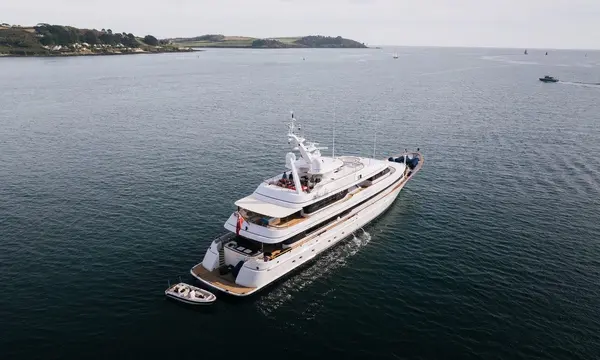
The 57-metre Feadship motor yacht Solace has won Best in Refit at the 2026 International Superyacht Society Design & Leadership Awards, recognising an extensive …
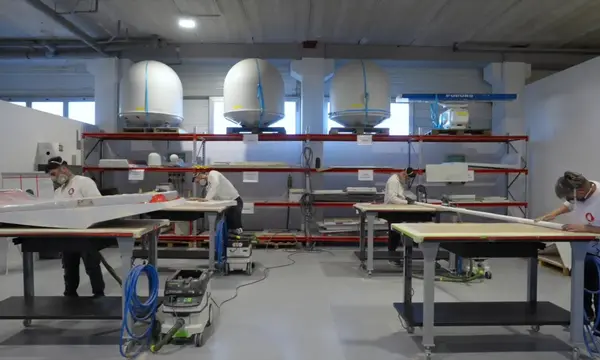
Nautipaints Group adds a workshop and operational base at VMG Sagunto in Valencia, giving its specialist yacht painting, hull, containment and supply teams a …
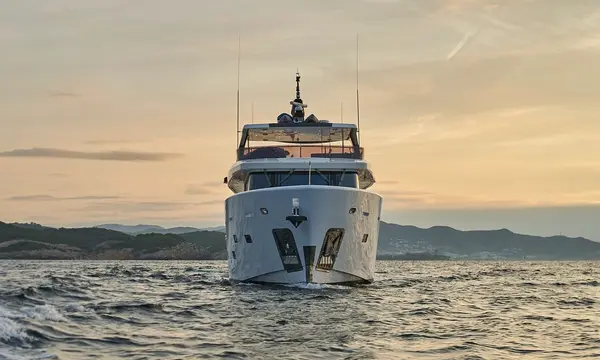
Pendennis has completed a comprehensive refit of the 27m Nauta 86 expedition yacht ROX, formerly Silver Fin, renewing cabins, galley, paintwork, teak decks and …
Superyacht Guide
Continue into the wider Superyacht Guide.
Business opportunities · Superyacht Guide
Companies serving the superyacht market can discuss clearly identified advertising, sponsorship and business-profile opportunities. Commercial activity remains separate from independent editorial coverage.