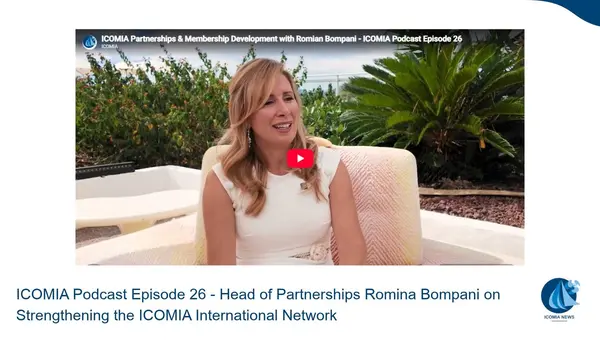
ICOMIA Partnerships Lead Romina Bompani Targets Stronger Global Yacht Networks
ICOMIA head of partnerships Romina Bompani discusses international marine business links, member value and the Asia-Pacific marina sector.
© ICOMIA / originating news and event partners. Official first-party editorial press image from the association’s release.
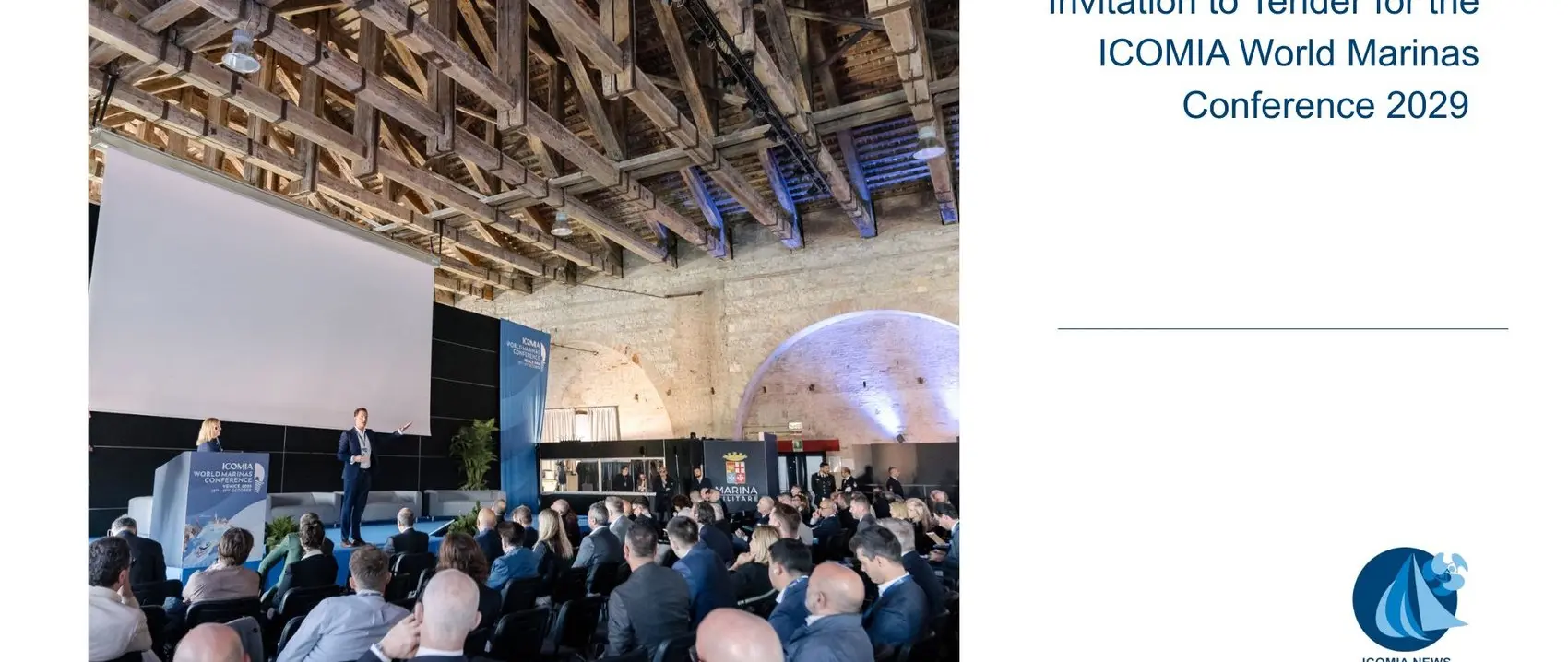
ICOMIA has published the 2029 World Marinas Conference host selection procedure, including bids, marina-group requirements and a planned 2027 announcement.
The International Council of Marine Industry Associations has set out the selection process for the 2029 ICOMIA World Marinas Conference, which is organised by the ICOMIA Marinas Group. Its tender announcement was published on 14 September 2026, with applications due by 6 November and presentations scheduled for the group's METSTRADE meeting on 17 November. Those deadlines have now passed, but the final host has not been identified in the source. The procedure remains relevant to marina developers and large-yacht operators because the host location can shape which infrastructure markets, policy questions and business networks receive attention at a major international forum.
ICOMIA reports that the conference began in Amsterdam in 1993 and has subsequently taken place in locations including Genoa, Fort Lauderdale, Sydney, Singapore, Istanbul, Dubai, the Algarve and Venice. The geographical rotation reflects a wish to bring marina discussions to different regions rather than allow one national market to dominate. The next edition is planned for Shanghai in 2027, with a future host to be announced at its conclusion. This history provides context for the 2029 selection, but should not be interpreted as a guarantee of future venue availability or commercial success. Each new host must organise an event suited to its conditions.
The conference is intended for marina owners, operators, developers, consultants, service providers, public authorities, equipment manufacturers and nautical-tourism businesses. For the superyacht industry, this mixture is important because infrastructure problems cannot be solved by berth operators alone. A new marina may require substantial navigation works, utility connections, environmental approvals and skilled staff. Public authorities influence land and water access, while investors evaluate whether the revenue can justify construction. A conference bringing those parties together can help identify opportunities for collaboration, although a discussion or exhibition is not a substitute for the approvals and technical studies required by any project.
ICOMIA's tender announcement says more than 650 delegates participated in the 2025 Venice conference. That provides a concrete indication of the event's scale, but it is not a forecast for 2027 or 2029. Delegate numbers depend on location, programme, travel arrangements and business conditions. Host candidates must consider whether a proposed venue can accommodate a comparable international gathering without assuming the same attendance. For suppliers and marina operators, a well-attended conference can offer useful commercial introductions. The actual value depends on the relevance of participants and the quality of the technical conversations rather than an isolated number.
The association requested a proposal identifying the applying organisation, city and country, proposed venue and event dates. Candidates were also expected to provide an initial budget, covering sponsorship and delegate-fee assumptions, and plans for marketing to local and international audiences. The requirements show that hosting is a business and logistical project rather than a simple ceremonial appointment. A bidder must establish how it will support delegates, attract relevant speakers and coordinate with suppliers and authorities. These are meaningful tests of preparedness. The tender's requirements do not, by themselves, indicate which applicant was strongest or how the selection will be resolved.
The announcement specifies that the eventual host must be a member of the ICOMIA Marinas Group at the time of the conference. This establishes a formal relationship with the organising body and suggests an expectation of ongoing engagement with the international marina sector. Membership does not automatically qualify a candidate or guarantee commercial support; it is one of the stated conditions. Interested organisations were directed to obtain a bid-information package describing the relationship between ICOMIA and the host. The publication does not reproduce the full contract, so no conclusions should be drawn about liability allocation, revenue sharing or termination terms without seeing the actual documents.
The tender process scheduled presentations from applicants at the ICOMIA Marinas Group meeting on 17 November 2026. Each pitch was to be limited to ten minutes, with a PowerPoint proposal of up to ten slides. A concise format can force bidders to concentrate on essentials, including venue, budget and international reach. It cannot replace subsequent commercial and legal negotiation. The association's stated process is for the group to recommend a host to the ICOMIA Board of Directors. Because the announcement does not confirm that meetings produced a final agreement, it would be inaccurate to report a winning location based only on the advertised timetable.
ICOMIA describes a signed agreement with the appointed host as part of the final confirmation, expected within 28 days after the successful bidder is announced. This is distinct from a committee recommendation or a preferred bid. For businesses planning participation, that distinction matters: a location under consideration is not the same as a confirmed venue with published dates and registration arrangements. The association envisages announcing the 2029 host toward the end of the 2027 Shanghai conference, accompanied by a formal handover. Those are procedural expectations, not completed outcomes. Industry calendars should use the organisers' future official confirmation before making non-refundable arrangements.
Large yachts need infrastructure designed around their actual dimensions, manoeuvring requirements and service expectations. A marina market receiving international attention may benefit from exchanges about berth design, shore power, utilities, security and maintenance access. The conference can also bring investors into contact with operators who understand operational demand. However, a venue's selection would not prove that its local facilities can accommodate every superyacht. Captains and managers must still verify depth, clearances, power and local rules for any intended visit. The conference is a platform for exchanging expertise; operational suitability is established through engineering and current facility information.
Marina development is often capital-intensive, with income influenced by berth occupancy, fees, maintenance costs and services. A host bid may emphasise a region's growth opportunity, but investors need verified demand and realistic financial models. The conference can showcase successes and discuss challenges, yet it cannot ensure that a new project will be profitable. In particular, superyacht-focused developments should not assume that all visiting vessels will pay high seasonal rates or require the same shore services. Local tourism patterns and year-round technical demand vary considerably. Honest case studies are more useful than broad claims that an attractive coast guarantees a market.
A functioning superyacht marina may require deep-water access, breakwaters, firefighting systems, shore-power connections, water and waste services, fuel facilities and emergency arrangements. Large vessels can also need secure guest access, heavy goods delivery and technical contractors. Planning these systems early can be more cost-effective than retrofitting them after berths are occupied. Conferences that bring designers and operators together can help expose such dependencies. The value comes from discussing what has worked in real facilities and where projects have encountered problems. A host selection should ideally support that technical exchange rather than focus exclusively on the attractiveness of the venue.
Modern marina projects affect water quality, coastlines and surrounding communities. Environmental obligations can influence dredging, drainage, energy supply and the management of waste. A conference may provide a useful venue for sharing methods, but each proposal must meet local requirements and site-specific conditions. Superyacht owners increasingly encounter restrictions around anchoring and sensitive habitats, making responsible facilities an important part of cruising plans. The host city's environment and regulatory framework may shape some discussions, but the association's tender announcement does not prescribe a specific sustainability score. Responsible project assessment needs evidence beyond the general theme.
ICOMIA's requirements ask bidders to demonstrate strategies for attracting both local and international audiences, including authorities, operators and suppliers. That is a sensible balance. A conference that engages only foreign experts may miss local regulatory or operational challenges, while an entirely domestic gathering offers less opportunity to learn from global experience. Host organisations need connections with accommodation providers, transport services, the media and public authorities. For superyacht businesses, international participation can reveal different approaches to berth management, vessel clearance and customer service. The practical test is whether those exchanges produce knowledge that delegates can apply at home.
A host may receive income from sponsorship and delegate fees, but the broader benefit could include relationships, tourism exposure and technical cooperation. These outcomes have different measurement methods and timescales. An initial budget can account for event costs, while longer-term investment or business connections are harder to forecast. The tender announcement asks candidates for financial and marketing plans, indicating that ICOMIA expects a professional organisational framework. It does not publish final revenues or guarantees. A responsible industry analysis should avoid treating conference hosting as an assured economic windfall, regardless of which city eventually wins.
Marina businesses considering attendance in 2029 should monitor the eventual official location, dates and programme rather than assume a preferred venue will be confirmed. Delegates may want to know whether sessions will cover large-yacht berth operations, utilities, financial management or waterfront development. Exhibitors should investigate the expected audience before committing resources. Investors might prefer case studies with verifiable project data rather than promotional presentations. These practical considerations can help businesses extract value from a conference whose purpose is international learning and networking. The 2026 tender is the start of that preparation, not its conclusion.
The 2027 World Marinas Conference is scheduled for Shanghai from 30 March to 2 April. ICOMIA plans to use that event as the setting for announcing the subsequent host. This creates a sequence in which one edition serves both its own delegates and the institutional handover to a new region. The Shanghai programme is a separate conference, with its own sponsors and themes, and should not be confused with the 2029 tender. The association's process aims to provide continuity while changing geography. Businesses following both events should check official updates for any timetable alterations.
ICOMIA has published the 2029 hosting invitation, the required information for bids, the November 2026 submission and presentation timetable, the membership condition and the proposed board-approval sequence. It has not named a final host in that announcement. That distinction is essential because selection news can be misreported when a call for bids is mistaken for an appointment. For the superyacht industry, the process underscores the importance of global marina networks and professional standards. The eventual conference could bring useful attention to another waterfront market, but its location and commercial impact remain matters for later verified reporting.
Continue reading
ICOMIA head of partnerships Romina Bompani discusses international marine business links, member value and the Asia-Pacific marina sector.
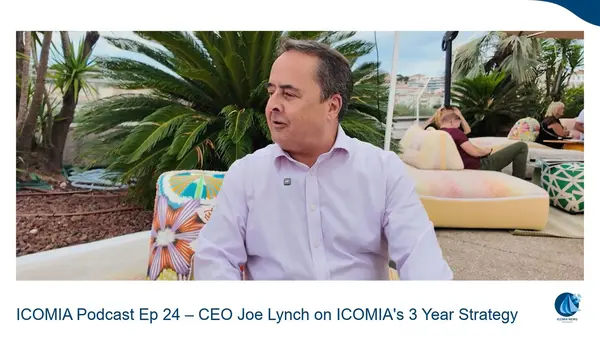
ICOMIA chief executive Joe Lynch outlines a three-year strategy centred on international collaboration, industry market data and technical standards.
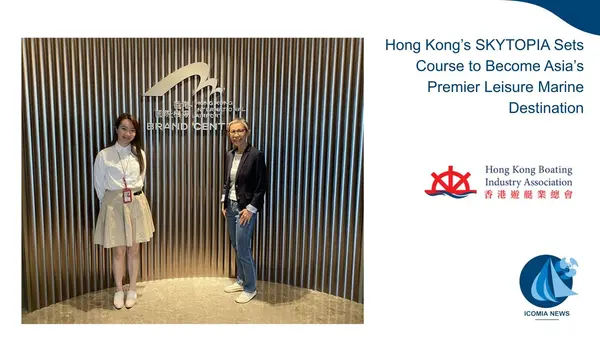
Hong Kong airport developer AAHK has issued an expression of interest for SKYTOPIA Yacht Bay investors and operators, distinct from marina promotion milestones.
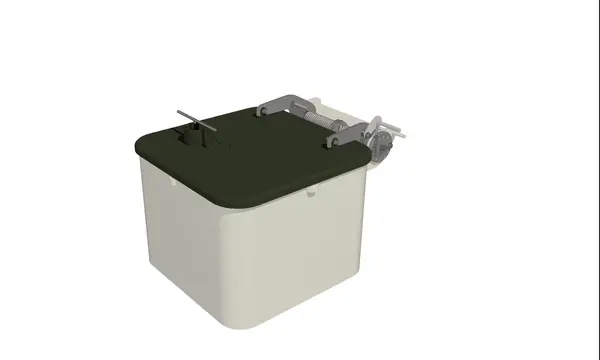
Oceanco adds established Dutch marine manufacturer Winel to its group, bringing custom yacht door and hatch engineering, tank vent valves and specialist suppliers.
Superyacht Guide
Continue into the wider Superyacht Guide.
Business opportunities · Superyacht Guide
Companies serving the superyacht market can discuss clearly identified advertising, sponsorship and business-profile opportunities. Commercial activity remains separate from independent editorial coverage.