IGY Reviews USVI Charter Yacht Show as Caribbean Season Opens
By Superyacht Guide Newsroom · Edited by Superyacht Guide Newsroom
IGY Reviews USVI Charter Yacht Show as Caribbean Season Opens — licensed SYG News 26Nov batch06
IGY’s 20 November report confirms the USVI Charter Yacht Show awards and more than 150 brokers, opening the Caribbean’s 2026–27 crewed charter season.
The US Virgin Islands has opened its 2026–27 crewed yacht charter season following the tenth annual USVI Charter Yacht Show, held at IGY Yacht Haven Grande in St. Thomas from 14 to 17 November. In a report published on 20 November, IGY Marinas describes a gathering of more than 150 charter brokers alongside captains, chefs and yacht crews, with vessels displayed in a boutique fleet of sailing catamarans and power yachts. The event's results underline how much the Caribbean charter market depends on onboard service, professional relationships and accurately presented yacht information, as well as the attractiveness of the islands themselves.
The Virgin Islands Professional Charter Association, or VIPCA, hosted the show at Yacht Haven Grande. Brokers travelled from the Caribbean, the United States and Europe to inspect yachts, meet their crews and discuss options for the coming charter season. Activities also included culinary and mixology competitions, networking and local supplier displays.
The timing matters. By 26 November the exhibition has concluded, so the available facts include published results and comments from participants. An industry report should not advertise the 14–17 November dates as future booking opportunities. Instead, it can examine what the organiser says occurred and what those observations may mean for owners and charter professionals during the months ahead.
The report describes yachts from approximately 45 to 78 feet, including crewed sailing catamarans and power vessels. This is a different segment from the 40- or 60-metre superyachts often presented at Mediterranean brokerage shows. The USVI event concentrates on smaller crewed charter experiences, where an individual yacht's service style and cabin arrangement can strongly influence guest satisfaction.
The term luxury should therefore be understood in relation to the product being offered. A smaller crewed catamaran may deliver highly personalised hospitality without having the facilities or carrying capacity of a far larger yacht. Prospective guests should evaluate the actual vessel, crew arrangements and itinerary rather than rely on a broad category label.
VIPCA Executive Director Kennon Jones says the event welcomed more than 150 brokers from around the world. This is an organiser-reported figure, not an independently audited measure of every attendee or a count of completed charter contracts. It nevertheless indicates the show's role as a familiarisation event for professionals who advise clients.
Such visits can improve a broker's understanding of specific yachts. Seeing cabin sizes, meeting the captain and tasting onboard cuisine may help distinguish vessels that look similar in online photographs. The benefit comes from accurate impressions and sustained communication, not from any guaranteed conversion rate following the show.
The event divided Best in Show awards into three length categories. IGY identifies Ola Azul, a Bali 4.8, as winner in the 45–53-foot class; Wanderlust, a Lagoon 55, in the 54–59-foot class; and Aeolus, a Lagoon 77, in the 60-foot-and-over category. Each award reflects the event's competition results, not a universal ranking of all Caribbean charter yachts.
Judging at a show can consider presentation and other criteria, but clients must still determine whether a particular yacht meets their needs. A prize is a useful point of interest rather than a substitute for checking availability, safety credentials, cabin arrangements and the services included in a charter contract.
Captain Sylvio LeBlanc and chef Mellissa King of Ola Azul were recognised in the smallest yacht category. The official report describes their approach as calm, friendly and focused on making guests comfortable. They also received runner-up recognition in the Best Crew category. This highlights an aspect of crewed charter that can be difficult to express through technical specifications: the atmosphere created by the team.
Service expectations differ among clients. Some prefer a formal programme, while others value relaxed interaction. A broker can use crew interviews and actual guest preferences to help make an appropriate match. Winning a service award does not mean the same style is ideal for every charter party.
The Lagoon 55 Wanderlust won the 54–59-foot class, with captain Francois Botha and chef Katie Harrison. In the published report, Harrison discusses the yacht's additional generator, lithium battery bank, solar installation and spare water pump, placing emphasis on equipment redundancy alongside guest comfort.
These details should be treated as descriptions attributed to the crew. They do not constitute an independent survey or proof that every onboard system meets a particular standard. For guests, reliable utilities and maintenance can be as important as attractive interiors. The yacht's individual configuration should be confirmed with its operator before any booking.
Aeolus, a Lagoon 77, received Best in Show recognition in the 60-foot-and-over class. The report names captain Keith Allen, chef Jamison Laxton, first mate Christo Theron and stewardess Chene Nel as the crew. It also identifies the team as winner of Best Crew in Show. These multiple awards reflect the organiser's 2026 results rather than a claim about the entire global charter fleet.
Allen credits the combination of committed owners, competent people and sustained work behind the guest experience. This is a useful perspective for yacht owners considering commercial operations. Hospitality quality requires ongoing training, maintenance, provisioning and management, not simply expensive fittings.
The official IGY report quotes Aeolus captain Keith Allen as saying that the yacht had 15 commercial charters already under contract, with additional interest under consideration at the time. That is an attributed statement about one yacht, not a market-wide indicator and not confirmation that the vessel has open dates for a new enquiry.
Charter availability can change quickly. Brokers and clients should request up-to-date terms from the authorised operator. A successful season for one vessel does not establish an average occupancy rate for every catamaran in the Virgin Islands.
Beyond the yacht classes, the show included separate culinary and mixology contests. The published winners include chef Ariq Flax of Xandros in the culinary competition and Ariel Thrasher of Xandros in the judges' choice mixology category. Chene Nels of Aeolus is identified as recipient of the people's choice mixology recognition in the published results.
Specialist hospitality skills can be important to charter clients, particularly on vessels where a relatively small crew performs several roles. Competitions provide a way to showcase these capabilities. However, prize-winning food or drinks at one event should not be presented as a guaranteed menu or service standard for every future voyage.
IGY lists Germán Liubitch of Ritzy Charters as recipient of the Distinguished Broker Award. The report also names Catie Rosko, founder of Uncharted Collection, for an Industry Recognition Award connected with the Slow is Pro campaign. These awards recognise people who contribute to the charter sector in ways that go beyond operating individual vessels.
The Slow is Pro initiative promotes reduced speeds in sensitive bays, anchorages and mooring areas. The campaign is a voluntary effort as described in the event report; it should not be mistaken for a newly imposed speed limit across the US Virgin Islands. Captains must follow the actual local rules and exercise appropriate seamanship.
Rosko notes the value of additional USVI charter options, including flexibility around pick-up and drop-off arrangements. Guests may choose their itinerary based on flights, accommodation before boarding or the islands they wish to visit. Flexible logistics can improve the experience, provided the vessel's licensing and operating arrangements permit the proposed programme.
A broker should confirm where a yacht may embark and disembark guests and whether any customs or charter restrictions apply. These questions are particularly important when an itinerary might involve nearby jurisdictions. General show enthusiasm is not a substitute for current legal and operational information.
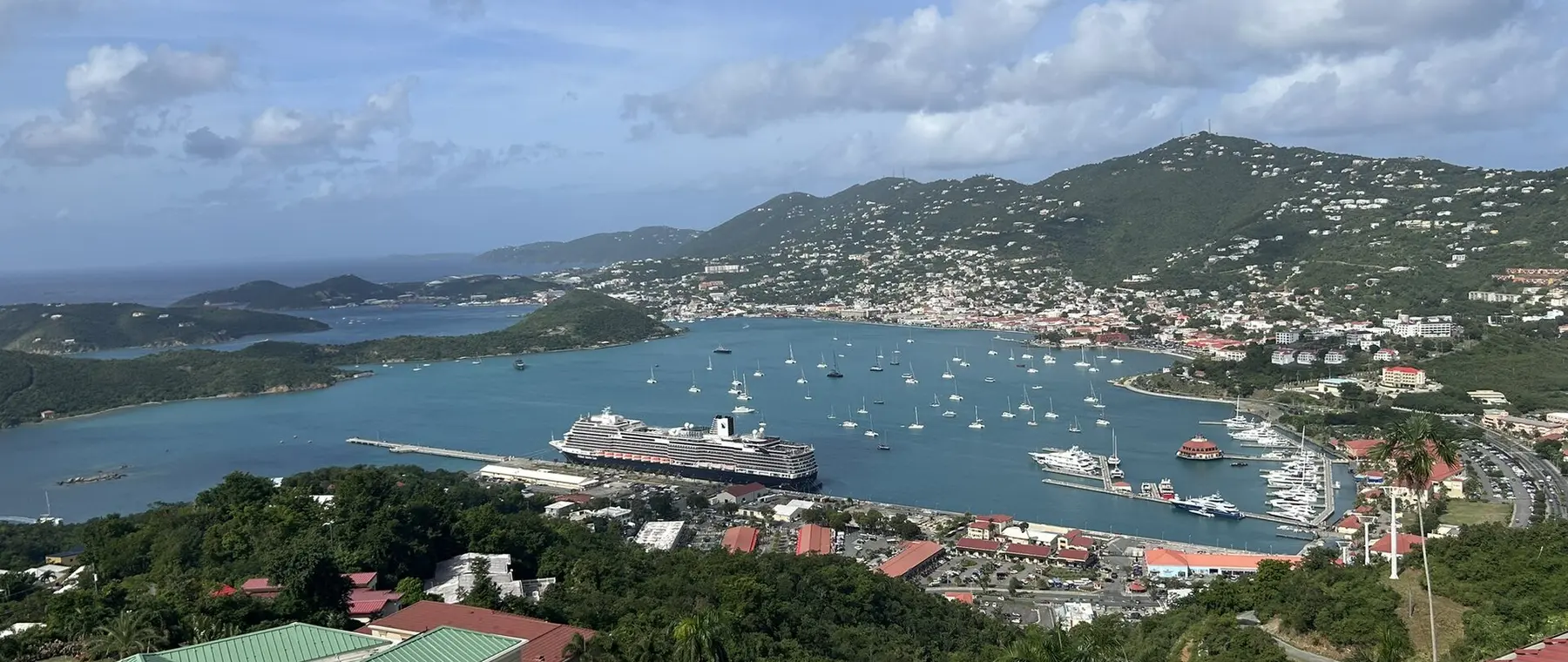
Yacht Haven Grande in St. Thomas provides the waterfront setting for the annual show. Its role is different from a destination that receives yachts only for occasional tourism visits: the event brings together operators, brokers and marine-service businesses to prepare for a seasonal market.
For owners, reliable marina operations can influence charter turnaround and maintenance scheduling. Fuel, provisioning, waste handling and crew support must be coordinated, especially when one charter ends shortly before another begins. The facility's hosting of the show illustrates its industry role, but the event report does not guarantee the availability of any individual berth.
The USVI charter market draws on St. Thomas, St. John and St. Croix, each offering a different mix of scenery and visitor activities. IGY's report notes the region's appeal to travellers and cites recognition from Fora Travel's 2027 Hot List. Such destination lists are promotional indicators rather than audited forecasts of future bookings.
Yacht itineraries should match the vessel, guest group and expected sea conditions. Popular anchorages may have restrictions or mooring requirements. Captains remain responsible for safe navigation, while brokers can help clients understand the practical trade-offs between a busy schedule and a more relaxed cruising experience.
The charter sector depends on attractive marine environments, creating good reasons to consider wildlife, anchoring practices and waste management. The Slow is Pro recognition shows that operating behaviour is a visible topic within the professional community. But a single award does not measure ecological outcomes or certify that all participating yachts follow the same policies.
A credible environmental programme requires specific actions and, where possible, evidence. Owners and captains should understand applicable rules and local conservation guidance. Guests can contribute by accepting reasonable itinerary changes when safety or sensitive habitats require attention.
The report describes a charter sector that has continued to operate through hurricanes, pandemic disruptions and changes in fees. Resilience is an assessment made by industry participants, not a guarantee that every business is financially secure. Seasonal demand, maintenance costs, insurance and regulation can create different challenges for individual operators.
Owners contemplating charter activity need realistic budgets and current commercial advice. A show may provide valuable introductions, but it does not remove the need for appropriate licensing, management and insurance. Sustainable business performance depends on matching the vessel's costs and capabilities to a viable charter programme.
IGY reports that the eleventh USVI Charter Yacht Show is planned for 13–16 November 2027. This is a future event date, not confirmation of its fleet, winners or broker attendance. The organiser expects registration information to be announced separately, so anyone seeking to participate should monitor official updates.
The existence of a recurring show can help owners and brokers plan ahead. Nevertheless, individual vessel participation will depend on commercial and operational decisions made closer to the event. Past winners should not be presented as automatic entrants in the next edition.
The confirmed results are those of the tenth USVI Charter Yacht Show held at IGY Yacht Haven Grande, including three Best in Show winners, separate crew and hospitality awards, and organiser-reported attendance of more than 150 brokers. The event marked the beginning of the 2026–27 crewed charter season according to the association.
For the wider yacht industry, the story illustrates why brokers invest time in visiting smaller crewed yachts and meeting the people responsible for operating them. Technical features and destination appeal matter, but credible hospitality depends on owners, managers and crew delivering a consistent service. The value of the show will be reflected in those relationships throughout the season, not merely in its awards ceremony.
Primary source: IGY Marinas / VIPCA, 20 November 2026 report on USVI Charter Yacht Show held 14–17 November.
Licensed archival St Thomas or Charlotte Amalie waterfront photograph; not a 2026 Charter Yacht Show image. Photo: Danivpat; CC BY 4.0 via Wikimedia Commons. Licensed photograph.
Explore
Go deeper into the yachts, companies, events and destinations directly connected to this article.
Continue reading

An IYC and SuperYacht Times panel at Monaco Yacht Show 2026 examined how crew rest, staffing, mental wellbeing and working culture affect the guest …
During a charter, the captain has to balance guest expectations with crew capability, rest requirements and a weather picture that can change by the …
Guests may experience the first day of a superyacht charter as a seamless transition from airport to anchorage. For the crew, it is a …
The annual Newport Charter Yacht Show returns June 22–25, 2026, at Safe Harbor Newport Shipyard , once again transforming downtown Newport’s waterfront into one …
Superyacht Guide
Continue into the wider Superyacht Guide.
Business opportunities · Superyacht Guide
Companies serving the superyacht market can discuss clearly identified advertising, sponsorship and business-profile opportunities. Commercial activity remains separate from independent editorial coverage.

