The IMO has warned of a renewed piracy threat in the Gulf of Aden, reinforcing the need for yachts and commercial vessels to reassess routing and security planning.
The International Maritime Organization has warned that piracy and armed robbery are again escalating in the Gulf of Aden and surrounding waters after another vessel was hijacked in August, adding a renewed security problem to an already difficult operating environment around the Red Sea. IMO Secretary-General Arsenio Dominguez issued the warning on 24 August following reports that SEAMULL had been hijacked on 20 August 2026.
The IMO said the latest incident meant six vessels were being held by pirates and armed robbers, with more than 90 seafarers in captivity. Dominguez called for their immediate and unconditional release and said the deteriorating maritime-security situation required urgent attention from flag States, coastal States and the wider international community.
The latest warning follows a marked deterioration during 2026 rather than a single isolated incident. In July, the IMO said it had recorded 24 attempted and actual piracy and armed-robbery incidents in the Red Sea and Gulf of Aden region during the preceding three months, while 44 seafarers were then being held aboard three hijacked vessels.
By late August, the number of vessels being held had risen to six and the number of captive seafarers had increased beyond 90. The piracy problem is also unfolding alongside conflict-related attacks on shipping, including the fatal August attack on the cargo ship TIHAMAH off Yemen, making the regional security picture broader than traditional piracy alone.
The IMO statements concern international shipping generally rather than superyachts specifically, and the organisation has not identified a superyacht in the latest incidents. The implications nevertheless extend to privately operated vessels considering passages through the Gulf of Aden, Bab el-Mandeb and southern Red Sea because the same waters form part of major yacht repositioning routes between the Mediterranean, Middle East and Indian Ocean.
Large yachts considering that passage must weigh the security situation against the considerable additional distance involved in routing around the Cape of Good Hope. A deterioration in regional security can therefore affect itinerary planning, crew exposure, insurance decisions, fuel requirements, operating costs and the availability of specialist security support.
The IMO has called on flag and coastal States to ensure vessels are adequately prepared to manage security risks and specifically points operators toward industry Best Management Practices for Maritime Security and relevant IMO guidance. For yacht captains and managers, that turns security planning into a vessel-specific operational decision rather than a generic assumption that a route remains acceptable because it was used in a previous season.
Speed, freeboard and manoeuvrability can differ substantially between a yacht and a laden commercial ship, but those characteristics do not remove the need for a current threat assessment. Routing decisions must consider the vessel, crew, insurance position, intended operating profile and the latest information from recognised maritime-security authorities before committing to transit.
The renewed piracy warning is particularly significant because the region has already been affected by conflict-related attacks on international shipping. On 12 August the IMO again urged shipowners and operators to conduct thorough risk assessments before transiting the Red Sea and Gulf of Aden after the cargo ship TIHAMAH was hit by a projectile off Al Mokha, Yemen, causing confirmed seafarer fatalities.
For superyachts, the practical consequence may be continued reliance on alternative routing, delayed repositioning or substantially more detailed security preparation before any Red Sea passage. The IMO's latest intervention confirms that piracy has again become a material part of the regional threat picture, meaning yacht operators considering the Gulf of Aden must evaluate it alongside the wider conflict and security risks already affecting navigation through the region.
Explore
Go deeper into the yachts, companies, events and destinations directly connected to this article.
Continue reading
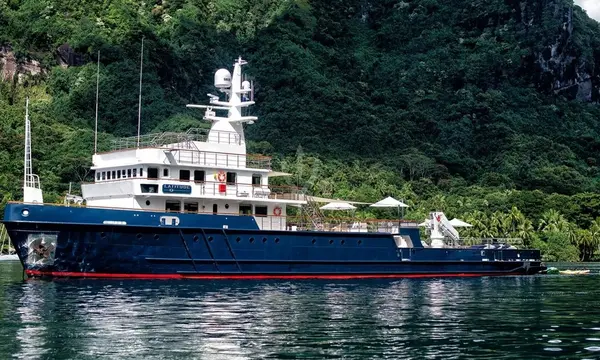
The 54.7m BUCCARA LATITUDE has been photographed in Germany’s Kiel Canal while sailing westward, highlighting a 1973 commercial vessel converted into an explorer yacht.
The S-100 navigation transition is not just a chart-data upgrade: Teledyne Raymarine Commercial says bridge teams and shore managers must plan workflows, training and …
Can a Superyacht Transit the Suez Canal? Fees, Security and Planning Yes. Tourist yachts can transit the Suez Canal, with current Suez Canal Authority …
Can a Superyacht Transit the Panama Canal? Cost, Size and Booking Yes. Superyachts transit the Panama Canal, but tolls, booking options, pilotage and scheduling …
Superyacht Guide
Continue into the wider Superyacht Guide.
Business opportunities · Superyacht Guide
Companies serving the superyacht market can discuss clearly identified advertising, sponsorship and business-profile opportunities. Commercial activity remains separate from independent editorial coverage.