Company
International Maritime Organization
Explore the company profile and related Superyacht Guide coverage.
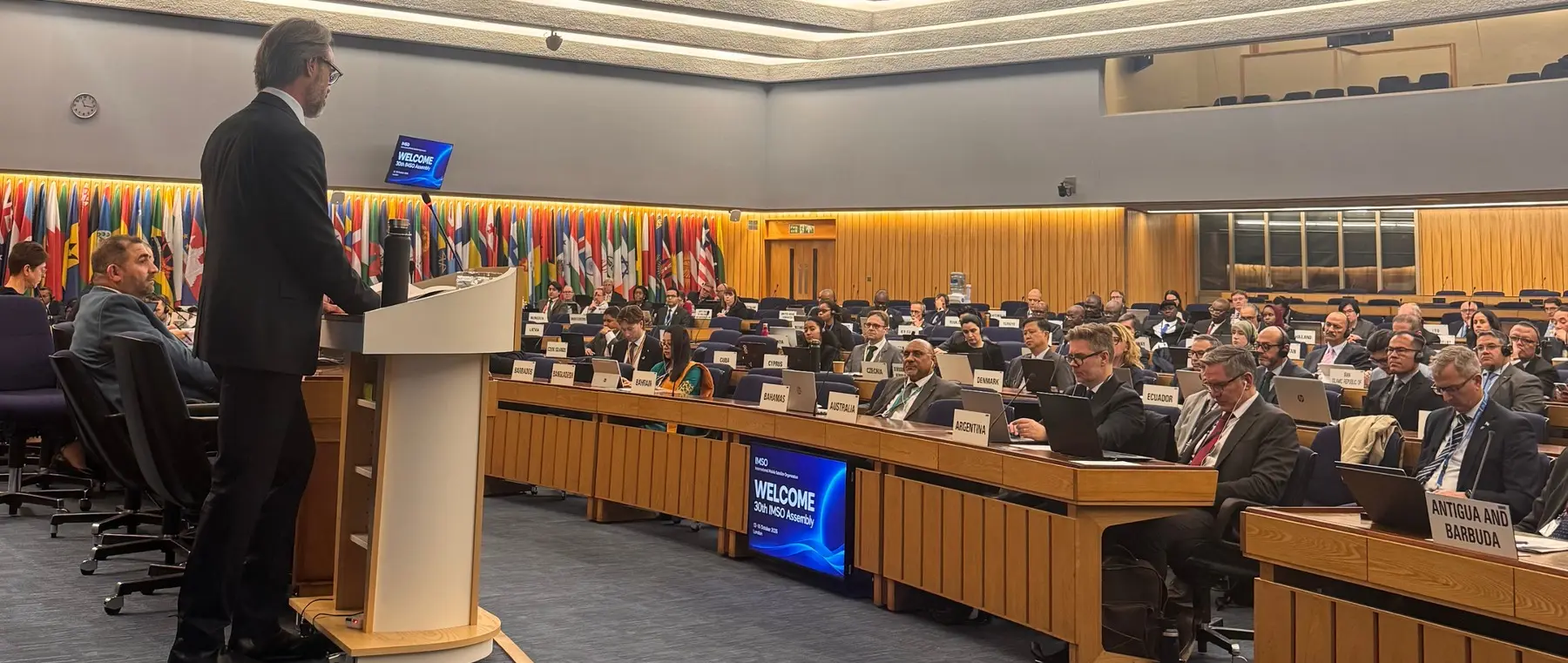
IMSO opens its 30th Assembly in London with delegates from 112 Parties reviewing GMDSS satellite distress service resilience and LRIT performance.
The International Mobile Satellite Organization (IMSO) has opened its 30th Assembly at the headquarters of the International Maritime Organization (IMO) in London, with maritime satellite safety and resilience at the centre of the discussions. The organisation's 12 October 2026 announcement says representatives of its 112 Parties are meeting as rapidly changing orbital networks alter the way ships and other vessels remain connected at sea.
Although this is an international regulatory and oversight event rather than the launch of a new yacht product, its agenda carries significance for larger superyachts that venture well beyond the limits of ordinary shoreside communications. Satellite distress services and long-range tracking arrangements form part of the wider infrastructure supporting safe voyages and informed maritime operations.
The International Mobile Satellite Organization opened its 30th Assembly at the International Maritime Organization's London headquarters on 12 October 2026. Representatives from its 112 Parties assembled to examine the resilience and reliability of satellite services that support maritime safety, against a backdrop of new satellite constellations and changing technology.
The meeting is relevant to the operational side of superyachting as well as merchant shipping. Large yachts travelling offshore depend on well-understood distress arrangements and access to reliable communications, and the availability of satellite services can affect the ability to summon help when terrestrial networks are no longer practical.
The Global Maritime Distress and Safety System, or GMDSS, is the internationally regulated framework for maritime distress alerting and associated safety communications. Its equipment and carriage requirements vary with the ship, flag, voyages and applicable convention rules; it should not be reduced to a claim that every yacht is legally obliged to carry precisely the same satellite hardware.
For yacht masters, one practical lesson is that an emergency communications plan should account for several independent methods and the limitations of each. Crew training, antenna installation, shore contact procedures and periodic testing all affect whether distress systems work when required, irrespective of the prestige or value of the yacht.
According to IMSO's official release, the Assembly is reviewing performance and resilience of recognised satellite services underpinning GMDSS. That agenda comes as the communications sector introduces new networks and operators, which can create opportunities for greater coverage as well as difficult questions over continuity, recognition and technical interoperability.
A satellite connection used for guest entertainment or ordinary business communications is not automatically a recognised service for international distress and safety purposes. Owners and technical managers must therefore distinguish between bandwidth purchased for leisure or work and the separately specified systems required for essential safety communications.
Long-Range Identification and Tracking, known as LRIT, is another item on the Assembly's agenda. The international system supports identification and reporting of vessels in relevant regulatory contexts, and its oversight raises questions about operational continuity and the performance of the chains of systems used to provide information.
LRIT should not be confused with AIS, the Automatic Identification System used in many coastal and vessel-to-vessel scenarios. The systems have different functions and regulatory arrangements; a superyacht's compliance needs to be assessed by its flag administration and qualified advisers rather than inferred from the presence of a navigation display.
IMSO notes that new technologies, emerging operators and rapidly evolving satellite constellations are reshaping the communications environment. For large yachts, the changes can be visible in hybrid onboard networks combining different satellite links and, where available, cellular access, typically routed through a network management system.
More service options do not eliminate vulnerabilities. Onboard installations still depend on electrical power, cabling, antenna positioning, provider coverage and contractual support, while cyber resilience and management access should be considered during refits. The owners' question is not simply how fast the internet works, but which essential functions can survive a failure.
Requirements for radio installations and emergency preparedness are closely linked to vessel registry, certification and operational area. A private superyacht, a commercially registered yacht and a vessel conducting a special-purpose voyage may have different legal obligations and inspection arrangements, depending on the facts.
Superyacht managers planning satellite-system upgrades should start by checking the current flag-state and classification requirements where applicable. An equipment choice made only because it is fashionable or offers exceptional data speeds can create extra cost if it does not integrate properly with the vessel's mandated safety procedures.
The 2026 Assembly also marks the 50th anniversary of the 1976 convention establishing INMARSAT, the intergovernmental organisation from which IMSO subsequently evolved. The anniversary provides context for why dependable maritime satellite services are treated as a public safety issue rather than only a competitive telecommunications market.
IMSO's announcement names IMO Secretary-General Arsenio Dominguez, Viasat and Inmarsat leader Mark Dankberg, Iridium chief executive Matt Desch and International Chamber of Shipping secretary-general Thomas Kazakos among those addressing the gathering. Those are participants in the official meeting, not endorsements of a particular yacht product or satellite contract.
The Assembly is an institutional meeting rather than a regulation taking immediate effect on every yacht, and its published opening announcement does not in itself create a new installation deadline. It would be inaccurate to suggest that large-yacht owners must buy new systems solely because IMSO convened in London.
The practical action for yacht operators is to follow any subsequent official decisions and flag-state guidance, review equipment service arrangements and keep crew emergency procedures current. Until specific outcomes are formally published, the verified news is that IMSO's 112-party Assembly has opened and is considering the future resilience of satellite safety communications.
Explore
Go deeper into the yachts, companies, events and destinations directly connected to this article.
Company
Explore the company profile and related Superyacht Guide coverage.
Continue reading

Sharp prepares to demonstrate its MEO/LEO tracking satellite user terminals at CEATEC 2026, with marine vessels among the planned mobile use cases.

Schottel reports 20 superyachts on order with its forward-facing EcoPeller azimuth propulsion system, highlighting efficiency, manoeuvrability and reduced onboard noise.
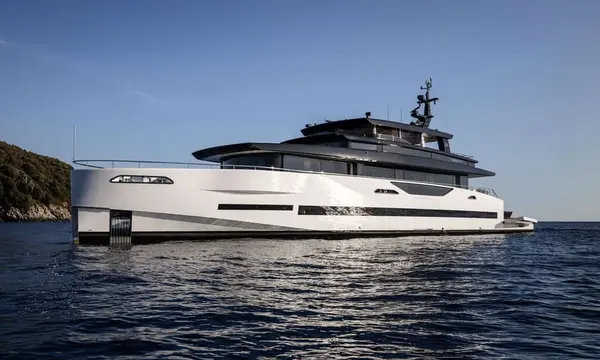
GX Superyachts has presented the 42-metre GX42 with a parallel hybrid drivetrain, substantial battery storage and solar generation integrated into one energy-management architecture.
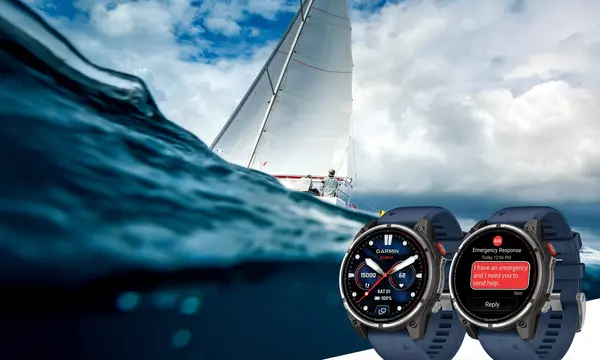
Garmin’s quatix 8 Pro combines inReach satellite and LTE connectivity, marine controls, SOS support and up to 15 days of smartwatch battery life.
Superyacht Guide
Continue into the wider Superyacht Guide.
Business opportunities · Superyacht Guide
Companies serving the superyacht market can discuss clearly identified advertising, sponsorship and business-profile opportunities. Commercial activity remains separate from independent editorial coverage.