Important award for the world’s largest true sportfish yacht
Royal Huisman announced that Special One, the world’s largest true sportfish yacht, won the ISS Best in Motor 300–500 GT award.
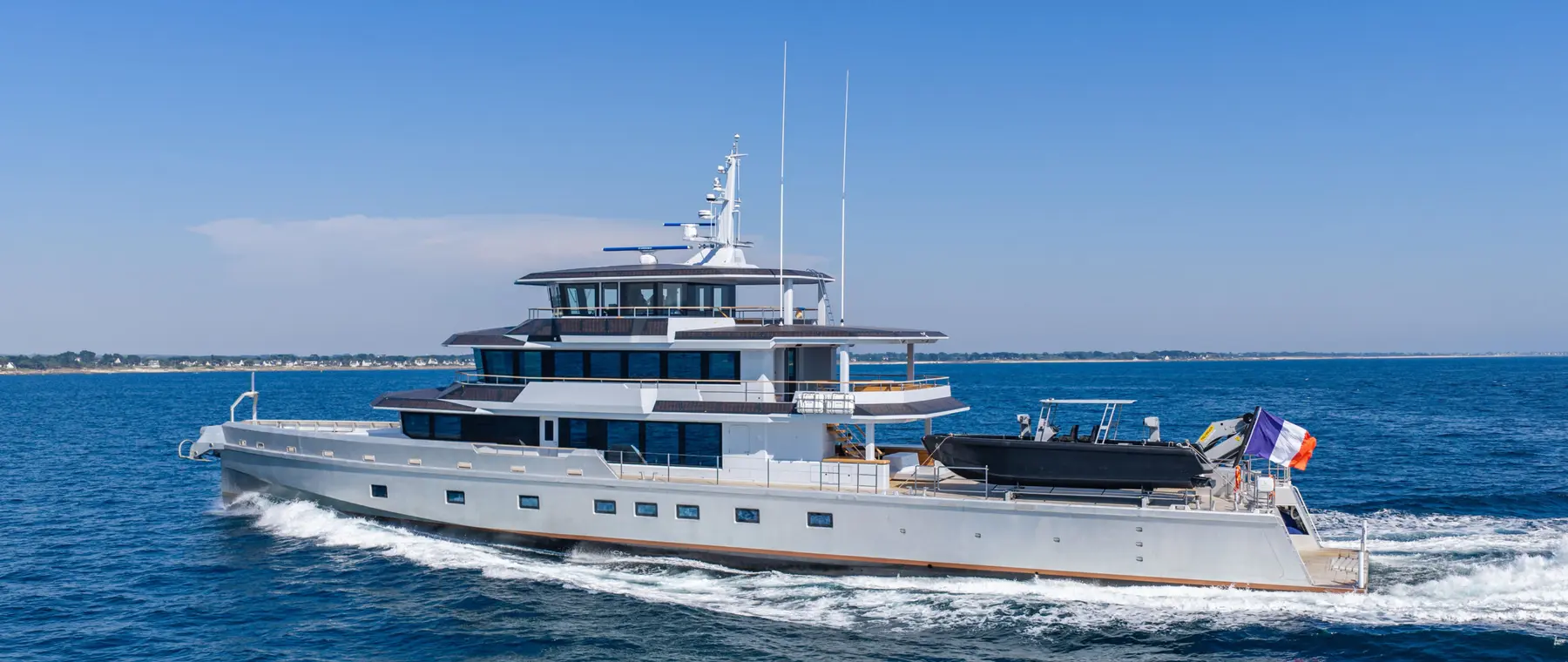
JFA Yachts has delivered 50-metre explorer Canoa, the largest yacht built by the French shipyard, combining hybrid propulsion with more than 5,000 nautical miles of range.
JFA Yachts has delivered Canoa, a 50-metre custom explorer yacht that becomes the largest yacht completed by the French shipyard and one of its most technically ambitious projects to date. Developed with Humphreys Yacht Design, the yacht combines genuine long-range capability with parallel-hybrid propulsion, lightweight construction and systems intended to reduce energy consumption during extended cruising.
The delivery marks the culmination of several years of development at JFA Yachts' Concarneau shipyard. Rather than treating hybrid technology as an isolated feature, the project integrates propulsion, hull efficiency, structural weight and onboard energy management around a cruising programme intended to take the yacht far beyond conventional Mediterranean or Caribbean itineraries. JFA says Canoa has a range exceeding 5,000 nautical miles at 12 knots, giving her the endurance required for transoceanic passages and extended operation away from major yachting centres.
Humphreys Yacht Design was responsible for both Canoa's naval architecture and exterior design, allowing the hull form, engineering requirements and visual profile to be developed as an integrated package. The result is a fast-displacement hull conceived to operate efficiently across a broad range of speeds rather than being optimised for a single cruising condition.
JFA says extensive hydrodynamic work was used to improve efficiency during long passages while retaining the ability to operate at higher speeds when required. For an explorer yacht, that balance matters: range is determined not simply by fuel capacity but by resistance, weight, machinery loading and the efficiency with which the yacht can maintain its intended passage speed.
Comfort was treated as another part of that equation. Canoa combines fin stabilisers with a gyroscopic stabilisation system, providing motion control both underway and at anchor. That is particularly relevant for an owner intending to spend extended periods aboard, where the quality of life at anchor or during long passages can be as important as headline range figures.
At the centre of Canoa's technical package is a parallel-hybrid propulsion system combining two MTU diesel engines with electric motors. The arrangement allows the crew to select different operating modes according to the yacht's speed, location and power requirements rather than relying on the main engines for every situation.
Electric operation can be used for harbour manoeuvring and low-speed running, reducing noise and vibration while limiting local exhaust emissions. The diesel engines remain available for sustained ocean passages where greater power and long-distance endurance are required. A substantial battery installation and solar panels also contribute to the yacht's onboard electrical supply.
The significance is less about describing Canoa as an emissions-free yacht — she is not — than about using several technologies together to reduce unnecessary engine and generator use. Hybrid systems can be particularly valuable when a yacht moves repeatedly between very different operating conditions: crossing an ocean, manoeuvring into harbour, remaining at anchor or moving quietly through a sensitive cruising area.
Canoa also incorporates dynamic positioning, allowing the yacht to maintain its position without deploying an anchor when circumstances permit. Beyond its operational value for an explorer, the system can help avoid physical anchor contact with sensitive seabeds in appropriate conditions.
Canoa also represents a construction milestone for JFA. The yacht combines an aluminium hull with composite superstructures, drawing together techniques the shipyard has developed through both conventional aluminium yacht construction and its Long Island multihull projects.
According to JFA, reducing structural weight in the superstructure lowers the yacht's centre of gravity and contributes to stability, efficiency and onboard comfort. Less weight aloft can also reduce the amount of energy required to propel the vessel, illustrating how efficiency on a large yacht can depend on decisions made across the entire design rather than propulsion technology alone.
The practical side of the explorer brief remains equally visible. A large aft deck is arranged to carry substantial tenders and equipment, increasing the yacht's ability to operate independently and giving guests access to coastlines and anchorages that the mothership itself cannot reach. Technical spaces, storage and equipment capacity have similarly been planned around extended periods away from established yacht infrastructure.
Inside, m2atelier of Milan created the interior across four decks. The design incorporates generous volumes, extensive glazing and strong visual connections with the surroundings, while the underlying arrangement was developed to support the storage, circulation and operational requirements associated with genuinely long-distance cruising.
For JFA Yachts, the delivery carries significance beyond the addition of another yacht to its fleet. Canoa is the longest yacht the yard has built and demonstrates its ability to combine large custom-yacht construction with hybrid engineering, composite structures and an owner-led explorer programme.
JFA president Frédéric Jaouen has described the project as the culmination of several years of development focused on creating a vessel capable of travelling far and remaining away for long periods while improving energy efficiency. The yard has also reported that sea trials validated the yacht's seakeeping and the integration of its technical systems.
Canoa arrives at a time when the definition of an explorer yacht is becoming more demanding. Large aft decks and rugged styling are no longer enough to distinguish a serious long-range vessel. Owners increasingly expect autonomy, efficient machinery, adaptable energy systems, substantial tender capacity and comfort over passages measured in thousands of nautical miles.
With more than 5,000 nautical miles of stated range, a hybrid propulsion package and a construction strategy developed around reducing weight and improving efficiency, Canoa places those priorities at the centre of the project. For JFA Yachts, her delivery is both a new flagship and a demonstration of how the French builder intends to approach the next generation of custom explorer yachts.
Continue reading
Royal Huisman announced that Special One, the world’s largest true sportfish yacht, won the ISS Best in Motor 300–500 GT award.
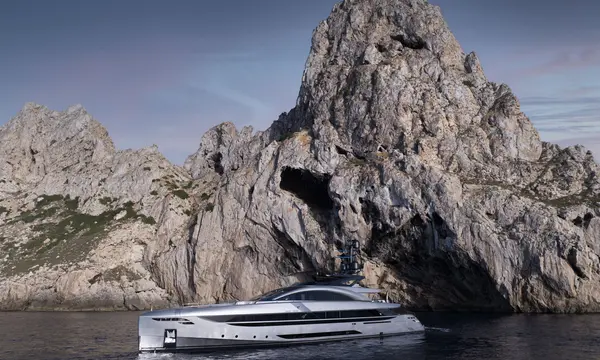
Rossinavi marks the beginning of its hybrid era with No Stress Two, underlining the shipyard's move toward hybrid propulsion and energy-management technology.
Royal Huisman published an official announcement about ROYAL HUISMAN TO BUILD WORLD’S LARGEST SLOOP, adding to the Dutch yard’s public record of custom yacht …
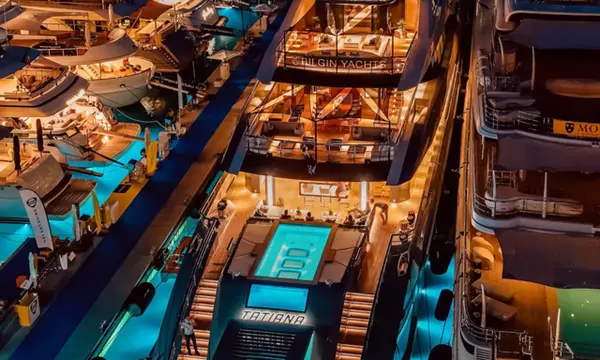
Bilgin Yachts continues to combine its century-old experience with the up-to-date technologies in the yachting sector with the fifth generation of the same Şengün …
Superyacht Guide
Continue into the wider Superyacht Guide.