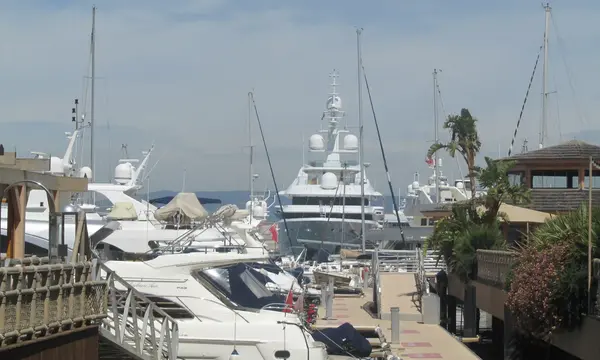
Superyacht Marinas with 100m+ Berths
A de-duplicated guide to marinas with verified 100m-plus yacht capacity, from Porto Montenegro and St Thomas to Barcelona, Monaco and Malta.
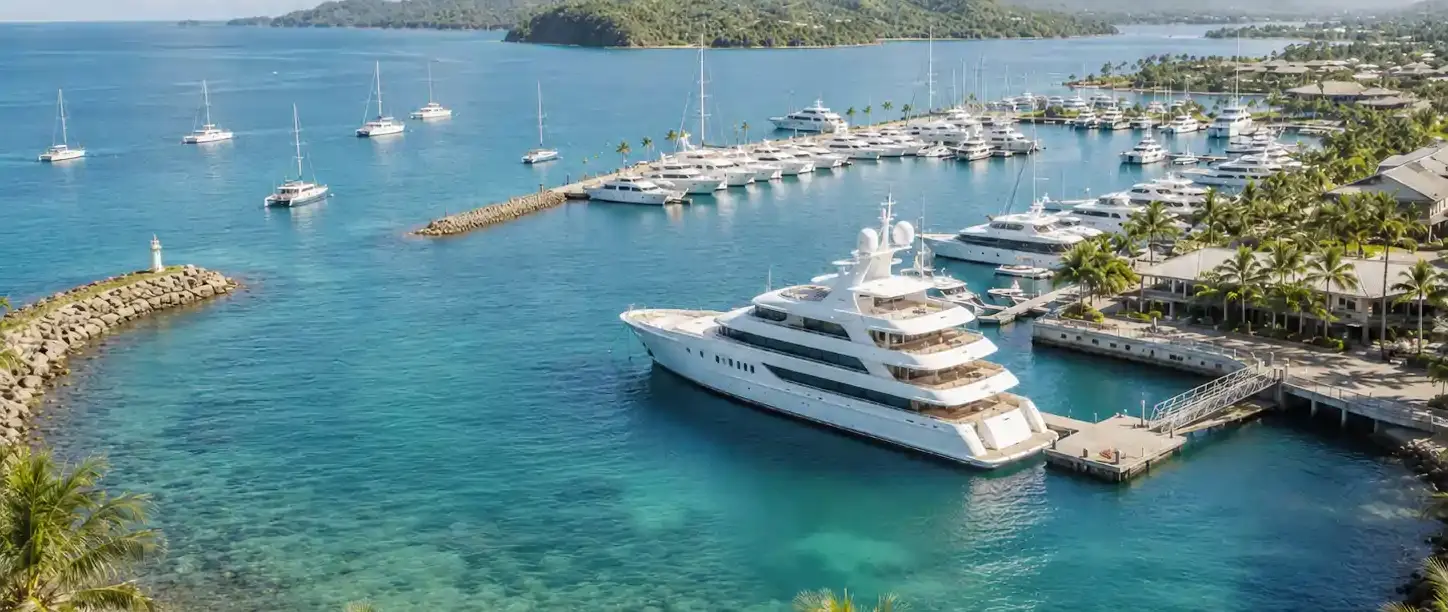
Fiji’s yachting sector delivered its strongest economic result in 16 years during 2025, with longer superyacht stays, higher local spending and expanding charter activity contributing to a record FJ$57.4 million economic impact.
Fiji’s yachting sector produced its strongest economic performance in 16 years during 2025, contributing a record FJ$57.4 million to the national economy as visiting superyachts stayed substantially longer and spent more across local businesses, marinas and island communities.
Figures from the latest Fiji International Yachting Visitors Survey show that direct yachting expenditure reached FJ$51.9 million, an increase of 14 per cent from 2024. The wider economic contribution was approximately 23 per cent above the pre-pandemic level recorded in 2019.
The superyacht segment was a major source of that growth. Fiji welcomed 62 superyachts during 2025, the highest number since 2019, while average stays increased from 56 days in 2024 to 160 days in 2025. Total spending by the segment reached FJ$18.75 million, around 49 per cent above its 2019 level.
The results indicate that Fiji’s value as a superyacht destination increasingly depends not simply on attracting more vessels, but on persuading owners, guests and crews to remain in the country for longer periods and spend more widely within the local economy.
The increase in average superyacht stays from 56 to 160 days represents a fundamental change in the economic value of each arrival.
A yacht remaining in Fiji for several months requires far more than a berth. It may purchase fuel, food, technical supplies, engineering work, transport, accommodation and domestic travel. Crew and guests also spend through restaurants, resorts, tourism operators, local markets and island communities.
Port Denarau Marina chief executive Cynthia Rasch said the sector’s economic impact extends well beyond marina operations, supporting fuel suppliers, transport businesses, provisioning companies, marine trades, hotels, restaurants, aviation and businesses in Fiji’s outer islands.
Average superyacht spending remained at approximately FJ$250,000 per vessel, according to the survey data. The larger overall contribution was therefore driven by a combination of vessel numbers, longer stays and broader local expenditure.
For Fiji, that creates a strong argument for focusing on high-value, lower-volume marine tourism rather than attempting to compete with larger destinations purely on arrival numbers.
The survey also records a major expansion in Fiji’s yacht-charter market.
Verified gross charter revenue rose from FJ$246,000 in 2023 to FJ$2.99 million in 2025, an increase of approximately 1,117 per cent. Eight charter vessels operated for a combined 241 charter days during the year.
The growth followed regulatory changes introduced in 2023, including a reduction in the minimum eligible vessel length to 18 metres. Port Denarau Marina also attributes the increase to greater professionalisation of the local charter market and stronger international promotion of Fiji as a high-value cruising destination.
The rise is substantial, although it comes from a relatively small original base. Fiji’s charter sector remains modest when compared with established Mediterranean and Caribbean markets, but its rate of development suggests that owners and charter operators are increasingly willing to position vessels in the South Pacific.
Fiji’s appeal is based on a combination of sheltered cruising grounds, remote islands, coral reefs, cultural experiences and the opportunity to operate itineraries that are difficult to reproduce in more crowded charter regions.
Infrastructure development will be central to whether Fiji can sustain the growth.
Port Denarau Marina is preparing a new 115-metre mega-berth, intended to accommodate significantly larger yachts and remove some of the limitations imposed by existing berthing capacity.
The berth is expected to contribute to further revenue growth during 2026, with superyacht charter revenue projected to rise to between FJ$4 million and FJ$4.5 million. The wider yachting sector is forecast to contribute more than FJ$65 million to the economy by the end of 2026.
Port Denarau has also opened a police border post and refurbished Jetty E. These developments are intended to strengthen border controls, improve visitor safety and increase capacity for visiting yachts and superyachts.
The investments reflect a wider challenge for emerging superyacht destinations. Natural attractions may persuade yachts to visit, but reliable berthing, customs procedures, fuel, technical support and security determine whether they stay.
The survey results show strong demand, but they also highlight the practical work still required.
Port Denarau has identified bureaucratic delays, outdated navigational information and the need for digital arrival and departure procedures as areas requiring attention. Maintaining a high rate of intended return visits will depend on simplifying these processes and ensuring visiting captains can operate with confidence.
For captains and yacht managers, destinations are assessed through a combination of cruising appeal and operational reliability. Complex clearance procedures, uncertain rules, limited chart information or inadequate technical support can discourage repeat visits, even where the destination itself is highly attractive.
Fiji must therefore continue developing its marine-services network alongside its tourism marketing. The opportunity is not only to attract more charter yachts, but to support maintenance, provisioning, crew movement, guest logistics and the specialist requirements of larger vessels.
One of the strongest arguments for superyacht tourism in Fiji is the distribution of spending.
Unlike some forms of tourism concentrated within a single resort or port, yacht itineraries can take guests and crews into remote regions. Spending may reach village tourism initiatives, local guides, food producers, transport operators and small businesses in islands that receive fewer conventional visitors.
The longer a yacht remains in the country, the more likely it is to require repeated provisioning, crew transfers, repairs and shore-based services. This turns the yacht from a short-term visitor into a temporary participant in the local economy.
The 2025 results suggest that Fiji is beginning to capture more of that value. Direct yachting expenditure of FJ$51.9 million was not generated solely by berthing fees or charter payments, but through a wider chain of economic activity.
For the government and industry, the task will be to ensure that growth remains compatible with environmental protection and local community interests. Fiji’s marine environment is one of the principal reasons yachts visit, making its preservation essential to the sector’s long-term value.
Fiji is unlikely to compete with the Mediterranean or Caribbean in terms of total yacht numbers, infrastructure density or seasonal charter volume.
Its advantage is different. The country can position itself as a remote, high-value destination where owners and charter guests spend longer periods exploring a large cruising region.
That model can be particularly attractive to expedition-oriented owners and yachts undertaking Pacific itineraries between Australia, New Zealand, French Polynesia and other island groups.
The increase in average superyacht stays to 160 days suggests that Fiji is becoming more than a brief stop in a wider Pacific passage. For some vessels, it is developing into an operating base for an entire cruising season.
This shift matters because longer stays allow local companies to develop deeper relationships with captains, managers and owners. They also support investment in services that would be difficult to justify on the basis of occasional transient traffic.
Rapid growth in charter revenue and larger-yacht arrivals creates commercial opportunities, but it also requires careful management.
High-value, low-volume tourism is attractive because it can generate significant expenditure without the visitor density associated with mass tourism. However, the economic benefit depends on local participation and on avoiding damage to the natural environment that supports the destination’s appeal.
Anchoring, waste management, reef protection, fuel handling and interactions with remote communities must all be managed responsibly. Larger yachts bring greater spending potential, but also require stronger environmental and regulatory systems.
Fiji’s challenge is therefore not simply to exceed the projected FJ$65 million contribution in 2026. It is to ensure that future growth strengthens local businesses and infrastructure while preserving the islands, reefs and cultural experiences that differentiate the country from established superyacht destinations.
The record FJ$57.4 million contribution demonstrates the financial importance of superyacht and yachting activity to Fiji.
The most significant figure may not be the number of yachts arriving, but the increase in the duration of their visits. An average stay of 160 days creates economic opportunities that cannot be matched by short port calls alone.
Fiji’s emerging strategy combines charter reform, infrastructure investment and destination marketing with an emphasis on longer stays and greater local expenditure.
The new 115-metre berth at Port Denarau could strengthen that position further, particularly if it allows the country to host larger yachts that previously faced berthing restrictions.
The 2025 results show that Fiji is already benefiting from a shift in how yachts use the South Pacific. The country is no longer merely a scenic waypoint. It is becoming a seasonal superyacht destination with measurable economic importance.
Continue reading
A de-duplicated guide to marinas with verified 100m-plus yacht capacity, from Porto Montenegro and St Thomas to Barcelona, Monaco and Malta.
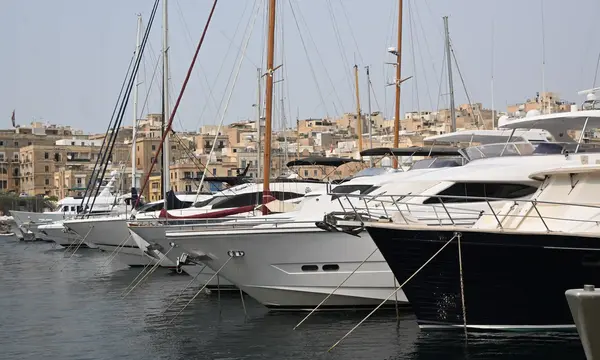
Malta combines large-yacht berthing with refit infrastructure and central Mediterranean access. We compare Grand Harbour, Marsamxett and Gozo options.
The strongest Caribbean marinas for large yachts combine berth capacity with depth, fuel, security, customs, provisioning and practical seasonal location.

Europe’s largest superyacht marinas are ranked by verified maximum yacht length, with historical duplicate records removed and operator data checked.
Superyacht Guide
Continue into the wider Superyacht Guide.