
Raymarine NavCloud Connects Bridge Voyage Data with Shore Teams
Raymarine Commercial's NavCloud links route planning, chart updates and shore-side monitoring so navigation data can move automatically between vessel and office.
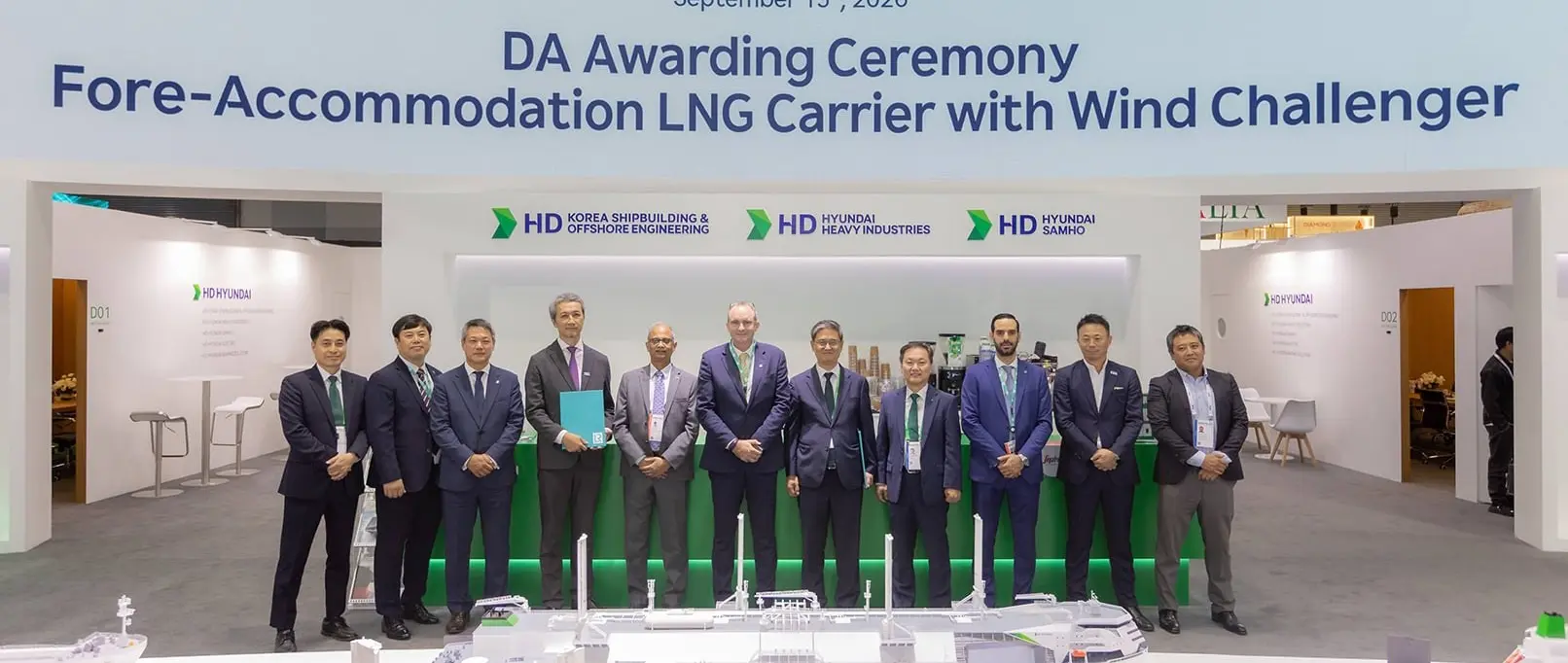
Image: Lloyd's Register / MOL
An LR design appraisal for a forward-accommodation LNG carrier with MOL's Wind Challenger shows how sail placement, visibility and structural loads are assessed.
Lloyd's Register has granted Design Appraisal for an LNG-carrier concept developed by HD Hyundai Heavy Industries with Mitsui O.S.K. Lines' Wind Challenger system. Announced on 16 September 2026, the scheme places the accommodation block and bridge forward to free a larger deck area for hard sails.
The vessel is a commercial gas-carrier concept, not a new superyacht model. Its relevance to yacht designers is the engineering approach to reconciling a wind-assistance system with bridge visibility, layout and operational safety.
The proposed arrangement provides space for four Wind Challenger sails in the mid-to-aft area of the ship, and the partners assessed structural loads, stability and navigation sightlines. Emergency shutdown integration and a hazard-identification study were also included within LR's risk-based certification process.
The concept had previously received Approval in Principle in 2025 and has now progressed to appraisal against LR's Wind-Assisted Propulsion Systems notation requirements. Neither step is the same as the delivery of an operating vessel.
A superyacht considering alternative rig technology faces different constraints from an LNG carrier, especially guest spaces, tender operations and berth accessibility. Nevertheless, designers still need to examine how appendages, sails and their control systems interact with the yacht's structure, handling and the bridge team.
The exact commercial solution should not be transplanted into a yacht without independent technical work. Wind assistance must fit the vessel's cruising pattern, owner's preferences and intended operating environment.
The appraisal illustrates that promising aerodynamic output alone does not establish an acceptable design. The complete system has to work around the people navigating, maintaining and operating the vessel, as well as the demands of class and flag requirements.
LR reports the outcome as a technical milestone in a joint development programme. Its official rendering identifies the actual hard-sail carrier concept, not an existing superyacht equipped with the system.
Continue reading
Raymarine Commercial's NavCloud links route planning, chart updates and shore-side monitoring so navigation data can move automatically between vessel and office.
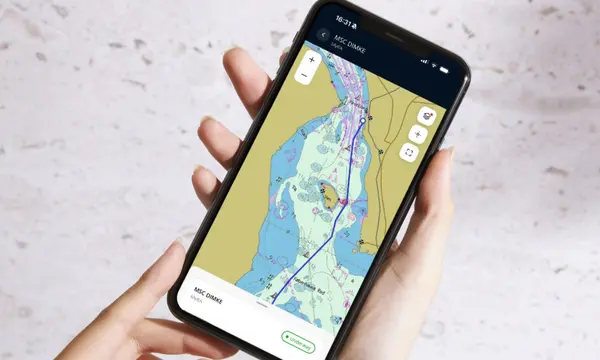
Raymarine Commercial's new MyFleet mobile app brings vessel positions, voyage progress, routes and ETAs to iPhone and Android for shore-side teams.
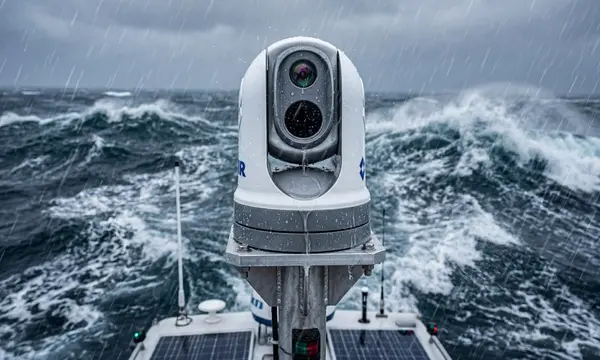
Teledyne FLIR's new M364C-USV combines thermal and visible imaging for autonomous and remotely operated vessels, supporting navigation and obstacle detection.
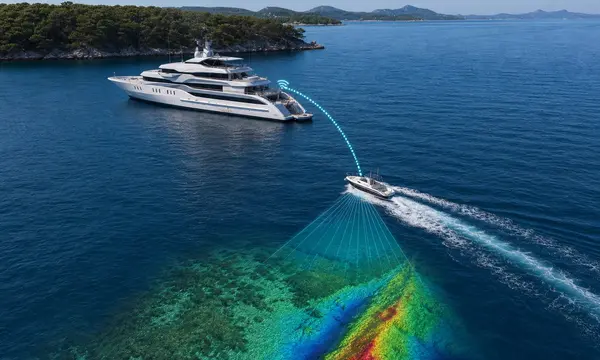
WASSP's W3P portable multibeam system lets a tender survey poorly charted approaches and relay live 2D and 3D seabed mapping back to an explorer …
Superyacht Guide
Continue into the wider Superyacht Guide.