Can a Superyacht Transit the Suez Canal? Fees, Security and Planning
Can a Superyacht Transit the Suez Canal? Fees, Security and Planning Yes. Tourist yachts can transit the Suez Canal, with current Suez Canal Authority …
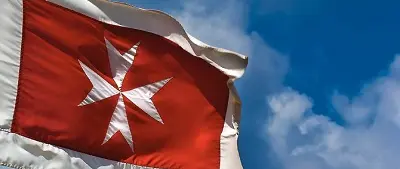
Image: AML Malta
Greek authorities have released a Malta-flagged yacht after deficiencies identified during Port State Control following a fatal collision east of the Corinth Canal were rectified. The casualty investigation and disciplinary proceedings continue.
Greek maritime authorities have lifted the detention of a Malta-flagged yacht following a fatal collision with a small boat east of the Corinth Canal, after Port State Control and the vessel's authorised organisation verified that recorded deficiencies had been rectified. The casualty occurred shortly after midnight on 5 September 2026, about five nautical miles east of the canal in the Isthmia area.
The Hellenic Coast Guard says the yacht was carrying six United States nationals as passengers and 11 Greek crew members when it collided with a small boat carrying two Greek nationals. One of the men from the smaller vessel, aged 71, died from his injuries, while the second was taken to Corinth General Hospital. The Coast Guard's official releases do not identify the yacht by name.
According to the first Coast Guard statement, the two men from the small boat were recovered from the water and transferred ashore after the collision. Emergency medical personnel received them and transported them to hospital, but one man was subsequently pronounced dead. The small vessel was reported to have sunk following the impact.
The investigating authority began a preliminary inquiry through the Isthmia Port Department of the Corinth Port Authority. The Coast Guard's public statements focus on the casualty response and subsequent regulatory action rather than assigning responsibility for the collision, so conclusions about fault would be premature while the investigation remains active.
On 7 September the Hellenic Coast Guard issued a further update confirming that an authorised Port State Control inspector had examined the yacht under the Paris Memorandum of Understanding framework. The inspection identified deficiencies, and the vessel was prohibited from sailing pending corrective action and further verification.
Port State Control is designed to establish whether a visiting vessel complies with applicable international safety, pollution-prevention and operational requirements. A detention does not by itself determine responsibility for a collision, but it prevents a vessel from departing when deficiencies are considered sufficiently serious to require correction before continued operation.
A 9 September Coast Guard update added that the collection of investigative evidence had identified an alleged breach relating to fictitious crew enrolment under Greek maritime law involving one crew member. The Isthmia Port Department initiated disciplinary proceedings concerning that seafarer and the yacht's captain.
That issue is separate from the question of how the collision occurred. The Coast Guard has not used its public updates to attribute navigational fault, and the casualty investigation may involve evidence such as witness statements, electronic navigation data, lighting, lookout arrangements, speed and the movements of both vessels before impact.
The latest official update states that the yacht was subsequently inspected by the authorised organisation responsible for the vessel and by an authorised Port State Control inspector from the Corinth General Inspection Unit. Once the recorded deficiencies had been verified as corrected, the prohibition on sailing was lifted.
The vessel then departed for the port of Perama. The lifting of detention confirms that the regulatory deficiencies preventing departure had been dealt with to the satisfaction of the inspectors; it should not be interpreted as closing the separate investigation into the fatal collision or the disciplinary matters described by the Coast Guard.
Several Greek and maritime reports have identified the yacht involved as the approximately 50-metre Malta-flagged BARENTS. Public vessel-tracking data for a yacht of that name and flag also place it in Perama after the casualty period. However, the Hellenic Coast Guard has consistently referred to the vessel only as a Malta-flagged yacht in its official statements.
Superyacht Guide is therefore not treating the yacht's identity as confirmed by the investigating authority at this stage. This distinction matters in casualty reporting because secondary identification can be persuasive without carrying the same evidential weight as an official statement, registry notice or direct confirmation from the vessel's representatives.
The incident illustrates how quickly a collision can move from an emergency response into casualty investigation, Port State Control and crew-disciplinary processes. For captains and managers, navigational safety depends not only on equipment but also on lookout, bridge resource management, voyage planning, watchkeeping and clear operating procedures in coastal waters where small craft may be difficult to detect.
It also shows why managers should maintain inspection readiness after a serious incident. Once a yacht becomes the subject of a casualty inquiry, authorities may examine wider compliance issues in addition to the immediate cause of the accident. Accurate crew documentation, functioning safety systems and complete records can therefore become operationally critical even when they are not directly connected to the collision itself.
Fatal marine casualties often generate a large volume of early reporting before investigators have completed their evidence gathering. In this case, the confirmed official record presently establishes the location, flag, passenger and crew numbers, the death and injury, the Port State Control action and the later disciplinary proceedings. It does not yet provide a final reconstruction of the collision sequence or a formal allocation of responsibility.
That distinction is important for owners, captains and insurers following the case. Final casualty findings can differ materially from assumptions made immediately after an accident, especially where visibility, small-craft lighting, electronic navigation records and watchkeeping evidence all have to be reconciled. Superyacht Guide will update the story if the Greek authorities publish a fuller investigation outcome or formally identify the yacht involved.
Continue reading
Can a Superyacht Transit the Suez Canal? Fees, Security and Planning Yes. Tourist yachts can transit the Suez Canal, with current Suez Canal Authority …
Can a Superyacht Transit the Panama Canal? Cost, Size and Booking Yes. Superyachts transit the Panama Canal, but tolls, booking options, pilotage and scheduling …
Can a Superyacht Cross the Pacific? Range, Fuel and Route Planning Yes. Properly designed ocean-going superyachts cross the Pacific, but the route is far …
A large, ocean-going superyacht may be capable of surviving extreme tropical-cyclone conditions, but professional hurricane strategy is built around avoidance rather than proving structural …
Superyacht Guide
Continue into the wider Superyacht Guide.