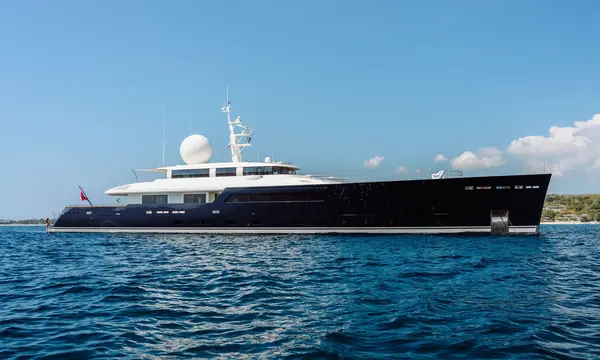
56m GALILEO Opens Tahiti Charter Season Through March 2027
The 55.7m Picchiotti explorer GALILEO is opening French Polynesia charters through March 2027, with potential longer passages to New Zealand and a reported 9,000nm …
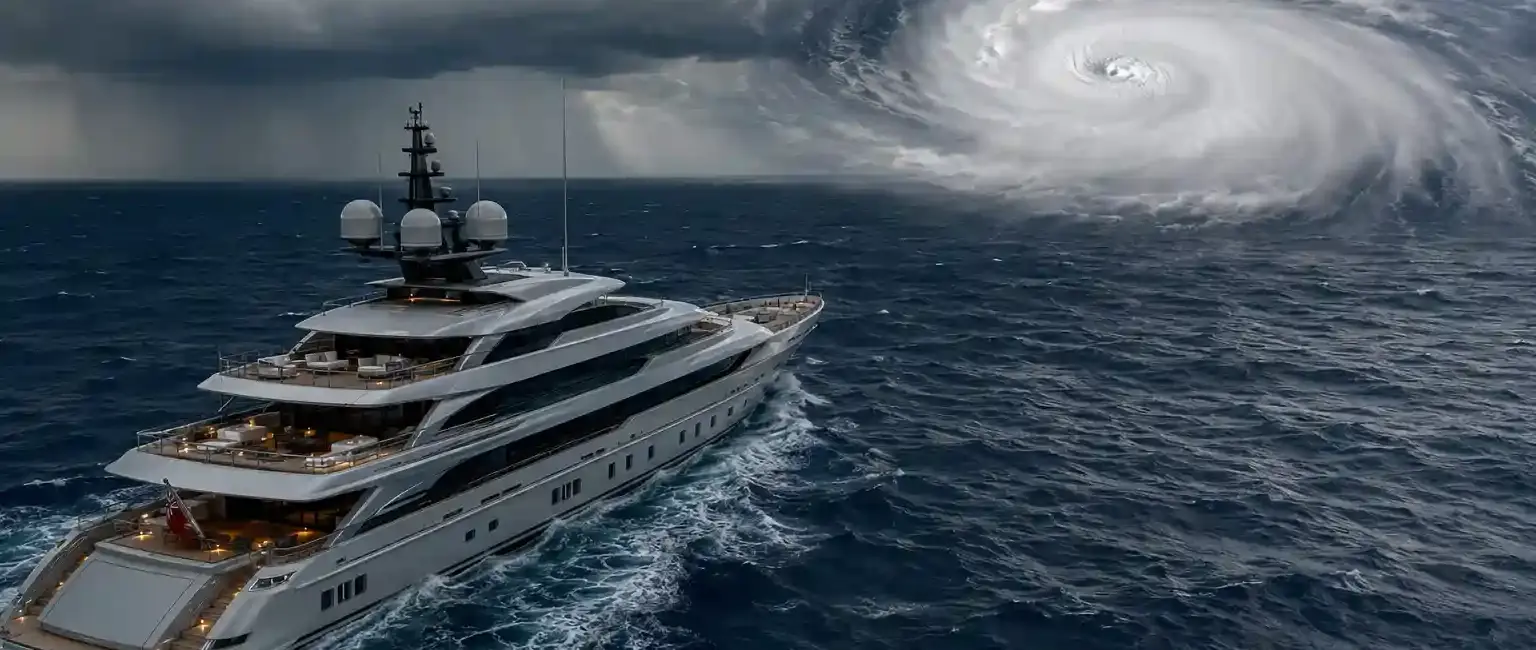
A large, ocean-going superyacht may be capable of surviving extreme tropical-cyclone conditions, but professional hurricane strategy is built around avoidance rather than proving structural limits. Design, stability, watertight integrity, routing and the choice between sea room and shelter all determine the margin.
A superyacht can survive a hurricane, but that is not the standard by which a professional crew should plan. The safer question is whether the yacht can avoid the storm, preserve enough sea room and operating margin to respond to forecast changes, and reach a genuinely suitable refuge before conditions remove those options.
Large yachts may be built to demanding structural, stability and watertight-integrity standards, and many are capable ocean-going vessels. None of that turns a hurricane into a sensible endurance test: tropical cyclones combine extreme wind with waves, heavy rain, reduced visibility, rapidly changing sea states and, near land, storm surge that can make a berth or harbour more dangerous than open water.
The familiar Category 1-to-5 scale is often misunderstood when people ask whether a yacht is “rated” for a hurricane. The U.S. National Hurricane Center says the Saffir-Simpson Hurricane Wind Scale is based only on maximum sustained wind speed and does not account for other potentially deadly hazards such as storm surge, rainfall flooding and tornadoes, so a category number cannot be converted into a simple pass-or-fail figure for a yacht.
At sea, the yacht experiences a moving combination of wind direction, wave height and period, swell, current and the storm’s own motion. A lower-category cyclone with a large wind field or an opposing current can create a very serious marine environment, while the worst conditions may extend far outside the forecast track of the storm centre.
The first line of physical defence is not luxury equipment but naval architecture and regulation: adequate stability, structural strength, freeboard, subdivision, reliable closing arrangements and watertight or weathertight integrity. The current Red Ensign Group Yacht Code is an important example of the standards applied to large commercial yachts, while MCA yacht-training requirements explicitly include heavy-weather preparation and maintaining watertight integrity.
Stability is especially important because the yacht must retain a meaningful righting ability as wind and waves create heel and roll. Loading condition, free-surface effects in partly filled tanks, water accumulating where it should not, and openings that permit downflooding can all reduce the margin, which is why approved stability information and the yacht’s actual operating condition matter more than its length or price.
There is therefore no useful universal statement that a 60-metre or 100-metre yacht can “take a Category 4”. Two yachts of similar size may have different hull forms, displacement, freeboard, windage, openings, machinery arrangements and stability characteristics, and the condition of doors, seals, pumps, generators and propulsion equipment can be as important as the original design once the weather deteriorates.
Before severe weather, the crew’s job is to turn a complex floating hotel back into the most secure seagoing configuration available to that particular vessel. Watertight and weathertight openings need to be treated as safety-critical boundaries, while tenders, toys, deck furniture and other movable equipment must be secured in accordance with the yacht’s procedures so that they do not become hazards or compromise access.
Machinery readiness matters for the same reason. A yacht that can maintain propulsion, steering, electrical power, bilge capability, navigation and communications retains choices; a yacht that suffers a casualty while trying to avoid a tropical cyclone can quickly lose the speed or heading on which the entire escape plan depended.
The National Hurricane Center’s marine guidance is unusually direct: mariners should repeatedly compare the latest official forecast track with their own planned movement, and they should not plan to cross in front of a hurricane’s track. The reason is practical rather than theoretical, because heavy weather can reduce vessel speed and handling just as the cyclone accelerates or changes direction.
The forecast cone must also be read correctly. It represents uncertainty in the track of the storm centre, not the physical size of the storm, and hazardous conditions can occur outside it; a superyacht route that merely keeps the predicted centreline a convenient distance away may therefore have far less margin than it appears to have.
Professional weather routing adds another layer by combining forecast wind and waves with currents, vessel speed and route alternatives. IMO guidance recognises weather routeing as a safety tool, while its voyage-planning guidance requires meteorological conditions, routeing information and contingency plans for alternatives such as deep water, a port of refuge or a safe anchorage to be considered as part of the passage plan.
There is no universal answer, and this is where the phrase “safe harbour” becomes misleading. A well-sheltered hurricane refuge with strong moorings, suitable depth, limited surge exposure and enough room for the yacht may be the best option, while a marina exposed to surge, crosswind, breaking waves or restricted manoeuvring can become a trap as the storm approaches.
Port authorities may also decide that large vessels should not remain. U.S. Coast Guard heavy-weather orders illustrate the point: under Port Heavy Weather Condition Yankee, commercial vessels of 200 gross tons or greater can be ordered to evacuate unless they have written approval to remain, while more severe conditions can close ports entirely, so a berth that exists on the itinerary is not automatically a refuge that will remain available.
Timing is therefore critical. NOAA boating guidance stresses acting before a hurricane warning makes dockside work unsafe, and for a superyacht the equivalent principle is to make the strategic decision while there is still time to move, bunker, secure the vessel, arrange permission to remain or reach another port without forcing the crew into a late departure through deteriorating conditions.
For a large yacht, shelter is only the beginning of the assessment. The captain and manager also need to know whether the harbour has enough depth and turning room, whether the berth and mooring arrangement are suitable for the yacht’s displacement and windage, how surge and the forecast wind direction affect the basin, whether tugs or pilots will remain available, and what the port authority intends to do as its heavy-weather condition changes.
The best refuge also preserves options after the yacht arrives. Crew access, emergency power, communications, shoreside evacuation routes, fuel, technical support and the ability to move again if the forecast shifts can matter more than the marina’s normal service level, because a luxury destination and a hurricane refuge are not necessarily the same thing.
A large yacht caught in the outer part of a tropical cyclone is not automatically lost, but the operating problem becomes progressively harder as wind and sea state rise. Speed may fall, fuel consumption can increase, rolling and pitching loads grow, decks can become unusable, water can find weaknesses in closing arrangements and the crew’s ability to inspect or repair equipment safely becomes more limited.
Size can provide displacement, freeboard and endurance, but it can also bring enormous windage and large dynamic loads. The master’s task is not to discover the yacht’s ultimate structural limit; it is to preserve sea room, keep the vessel in the safest practicable relationship to the storm and avoid allowing a manageable situation to become one in which land, shallow water or machinery failure removes the remaining choices.
So, can a superyacht survive a hurricane? A properly designed, maintained and operated ocean-going yacht may survive very severe conditions, but no responsible owner should treat that capability as permission to remain in a cyclone’s path or to ignore port-evacuation decisions.
The real hurricane capability of a superyacht is the combination of design, stability, watertight integrity, reliable machinery, professional forecasting, conservative routing and early command decisions. Survival is ultimately less about whether the yacht can withstand a headline wind speed than whether the captain retains enough time, sea room and authority to ensure the yacht never has to find out.
Continue reading
The 55.7m Picchiotti explorer GALILEO is opening French Polynesia charters through March 2027, with potential longer passages to New Zealand and a reported 9,000nm …
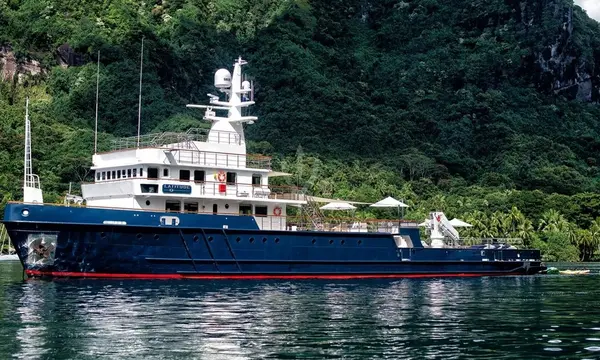
The 54.7m BUCCARA LATITUDE has been photographed in Germany’s Kiel Canal while sailing westward, highlighting a 1973 commercial vessel converted into an explorer yacht.
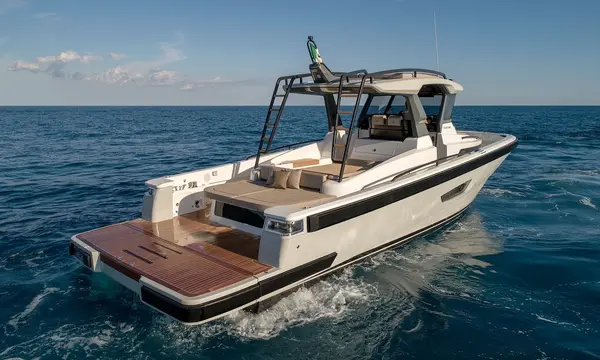
A newly sold 13m Bluegame BG42, now named PH3, will operate as a fast fishing-capable chase boat for 37m Benetti charter yacht EH2.
The S-100 navigation transition is not just a chart-data upgrade: Teledyne Raymarine Commercial says bridge teams and shore managers must plan workflows, training and …
Superyacht Guide
Continue into the wider Superyacht Guide.
Business opportunities · Superyacht Guide
Companies serving the superyacht market can discuss clearly identified advertising, sponsorship and business-profile opportunities. Commercial activity remains separate from independent editorial coverage.