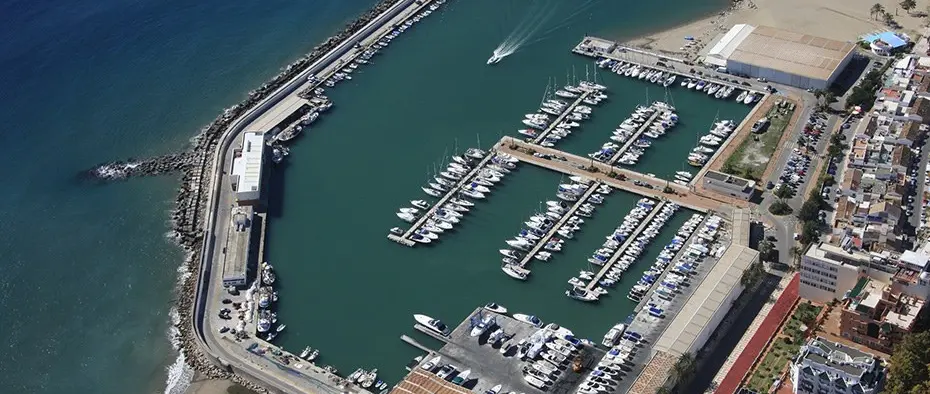
Existing La Bajadilla marina at Marbella, official Andalusian government November 2026 port photograph

News

Andalusia Finalises €200m La Bajadilla Expansion for Superyachts Up to 70m

Nov. 13, 2026 Market

Existing La Bajadilla marina at Marbella, official Andalusian government November 2026 port photograph

Andalusia has formalised a 40-year La Bajadilla concession beginning in January 2027, planning a €200m-plus marina expansion from 268 to around 750 berths.

A contract milestone for Marbella's long-running port plan The Andalusian regional government has confirmed the formal execution of the concession contract for the expansion and transformation of Puerto de La Bajadilla in Marbella. The government announced the milestone on 10 November 2026, setting a 40-year management period beginning on 1 January 2027 and an investment commitment exceeding €200 million. The planned development would increase marina capacity from 268 berths to approximately 750 and allow vessels up to 70 metres to enter a redesigned port. The agreement follows years of administrative and legal complications surrounding earlier development plans. For owners of large yachts cruising the Costa del Sol, the substantive news is that a long-discussed infrastructure project has moved into a defined concession arrangement. This does not mean construction is complete or that 750 berths are currently available.

A 40-year concession begins in January The new operator is due to take charge of the port on 1 January 2027 under a concession lasting four decades. A long term can give a developer a framework for investing in major breakwaters, quays and shoreside services, but it also places substantial obligations on the operator and relevant public authorities. The concession's existence is different from the later completion of specific construction packages. Owners interested in a permanent berth should therefore ask which facilities are operating today, which are to be built and how changes during construction will affect existing users. The November announcement confirms the contractual milestone and the intended infrastructure programme rather than promising an immediately transformed port.

Capacity would almost triple The headline increase is from 268 existing berths to around 750, a difference of approximately 482 spaces if the proposal is delivered as described. A berth count alone does not establish how many of the new places will be appropriate for superyachts. Marina design typically allocates different lengths and widths to vessels in multiple categories. The regional government says the redeveloped facility is intended to accommodate craft up to 70 metres, but it does not provide a final berth-by-berth public allocation in the November summary. For a 40- or 60-metre owner, the key practical questions are the length and depth of the designated berths, manoeuvring room, services and restrictions on arrival. Such information needs current engineering and operating documentation.

Larger yachts are part of Marbella's strategy Marbella has an established reputation as a destination for luxury travel, with restaurants, hotels and residential districts serving affluent international visitors. However, a superyacht does not necessarily find a suitable berth in a marina simply because the destination is popular. Large vessels require deep, protected water, adequate quay length, high-capacity utilities and experienced port personnel. The La Bajadilla proposal is intended to broaden this infrastructure and attract larger craft that currently have limited options in the immediate area. The emphasis on vessels up to 70 metres would place the future marina within the market for substantial private and charter superyachts, subject to the completed design and operating approvals.

A main breakwater of 1.13 kilometres is planned The government's technical description includes a new main breakwater measuring approximately 1.13 kilometres, intended to protect the harbour from the east and south. A secondary 450-metre breakwater would provide additional protection on the western side. These are significant marine civil-engineering works rather than minor alterations to existing pontoons. Breakwater design influences wave climate, vessel access and the safety of berthing during different weather conditions. The proposal also includes a structure to channel the Arroyo Primero watercourse, with the aim of separating its discharge from the nearby beach and helping manage sediment. The final environmental performance of those works will depend on detailed design, approvals and monitoring during construction.

The watercourse is part of the engineering problem Ports and nearby beaches can interact through the movement of waves, currents and sediment. Altering a breakwater may change how sand moves along the coast, potentially creating both benefits and new challenges. In La Bajadilla's case, the proposed management of the Arroyo Primero is relevant to the adjacent Playa del Cable and the surrounding coastal environment. The government's announcement identifies measures intended to manage those interactions but does not publish a complete model of the future shoreline in its press summary. Environmental questions should be addressed through the formal project process and supporting studies. A port expansion cannot be judged only by the number of moorings or the size of the boats it can receive.

Existing operations must continue during change La Bajadilla currently serves a mixture of boating and fishing activity, and the concession proposes a broader set of nautical and complementary uses. Managing the transition will require attention to access, working space and the needs of people already using the port. A major build programme can affect navigation, road traffic, storage and the availability of berths even before new facilities open. The regional announcement does not give a complete day-by-day construction traffic plan, so owners should not assume that every present berth or service will remain unchanged at all times. Port users should seek official updates from the operator and authorities as engineering works are prepared and executed.

Fishing interests remain a relevant consideration A modernised marina can create opportunities for commercial and recreational activity while also affecting a working harbour. Fishing vessels have operational requirements that differ from those of private yachts, including landing areas, equipment storage and access during early or irregular hours. A concession intended to transform La Bajadilla should therefore be understood as a mixed-port project, not solely a luxury redevelopment. The public summary refers to the reorganisation of fishing, nautical and related areas. The extent to which those activities will coexist successfully is a practical matter for the final operating arrangements. Owners and marina operators have an interest in ensuring that the port remains safe and functional for different users.

The project has a complex administrative history The government places the latest milestone within a process that began around sixteen years earlier. A concession tender was publicised in 2010, followed by a series of difficulties and legal proceedings that delayed earlier proposals. Marbella officials have described the current agreement as an opportunity to bring a long-contested project back onto a defined timetable. It is important not to confuse the latest concession with previous artists' impressions or engineering concepts published many years ago. Some historic renderings included elements that may not form part of the current authorised design. This article therefore uses a photograph of the existing port rather than presenting an old speculative development illustration as the approved November 2026 scheme.

Investment is described as more than €200 million The proposed capital programme exceeds €200 million, according to the regional government. That is a planned development commitment, not a statement that the entire amount has already been spent or that every contractor has been appointed. Large infrastructure projects typically require staged design, procurement and construction expenditure, with actual costs subject to contractual and technical developments. The concession's long duration is intended to support that investment, but the public announcement does not provide a full audited breakdown of all funding sources and phases. A responsible assessment should use the commitment as an indication of the project's scale while recognising the difference between planned expenditure and completed physical assets.

The benefits to owners depend on marine services A yacht berth is useful only when the surrounding infrastructure supports the vessel's operation. Shore power, water, waste reception, bunkering arrangements, security, crew access and logistics can all determine whether a marina is suitable for long-term or transient use. Larger yachts may also require specialist maintenance, crane or tender-handling arrangements. The public announcement does not provide final detailed specifications for every service, nor does it disclose future tariffs. Prospective customers should not treat the 70-metre design figure as a guarantee of unrestricted access at every stage of construction. A practical marina selection requires confirmation of depths, utilities, permissions and the berthing agreement for the actual yacht.

A 70-metre berth changes destination possibilities Many large superyachts exceed the dimensions for which older Mediterranean marinas were originally designed. Where an established resort can offer protected berthing for vessels of 50 or 70 metres, its appeal to owners may increase. This can support visits by guests who want convenient access to local hospitality while keeping the yacht close by. However, the effect on visitor numbers and marina economics cannot be calculated reliably from the announcement alone. Yacht itineraries depend on season, crew planning, weather and availability of other ports. The planned La Bajadilla upgrade would add an option in the western Mediterranean, but its actual contribution will become clear only after the new berths and services begin operating.

The timing still requires monitoring The concession is scheduled to take effect in January 2027, but construction and operational milestones will follow the detailed project process. Local accounts have referred to design-development and works periods extending over several years. Those projections should not be mistaken for a firm public opening date for every new berth. Engineering approvals, environmental measures and contractor schedules may all affect the programme. Owners who normally visit Marbella in the spring or summer should not assume the extended marina will be ready for the next season. The verified November development is the formalisation of the concession, which provides a framework for subsequent work and decisions.

Competing ports may benefit from clearer regional planning The western Mediterranean has several significant marina destinations, each with particular strengths in berth size, service provision and access to international airports. Marbella's La Bajadilla expansion would alter the set of options available to owners, but comparison with other ports should be grounded in their actual facilities rather than an assumption that a new marina will be superior in every respect. Some yachts prioritise central city access, others want a service yard or a quieter anchorage. A long-term concession may encourage suppliers to make plans around future activity, but the local economic outcome will depend on the project being delivered and the demand for its specific facilities.

What captains and owners should watch next The next meaningful documents will be the approved engineering plans, construction sequence, berth allocation and service specifications. Captains will want updated nautical information, harbour procedures and guidance about any temporary restrictions as work proceeds. Owners considering long-term berths should ask about contractual terms and the availability of appropriate utilities. Public authorities will also need to communicate with existing fishing and recreational users. The formal concession is a substantial administrative milestone because it moves the expansion towards practical implementation. But a responsible news report cannot claim that yachts up to 70 metres can already berth at all the planned facilities or that the full €200 million programme has been completed.

A major plan with an identifiable start date La Bajadilla's 40-year concession creates the potential for a much larger and more capable port serving Marbella and the Costa del Sol. The government's 10 November announcement establishes the principal facts: operations are due to transfer on 1 January 2027, the project includes more than €200 million of investment and the proposed marina would increase from 268 to approximately 750 berths, with capacity for yachts up to 70 metres. Those are plans with considerable significance for the superyacht industry, but the distinction between agreement and delivery remains essential. For owners, the next stage is to follow construction and verify the actual facilities as they come into service.

**Primary source:** Andalusian regional government concession announcement, 10 November 2026. Hero photo: Junta de Andalucía, official contemporary image of the existing La Bajadilla harbour; not a completed marina or future-construction visualisation.

Primary source: Junta de Andalucía Government press office official concession confirmation, 10 November 2026.

Photo: Junta de Andalucía / Portavoz del Gobierno Andaluz, 10 November 2026, the current La Bajadilla port; not a completed future marina. Official source image.

Photo licence and source

Photo: Junta de Andalucía / Portavoz del Gobierno Andaluz, 10 November 2026, the current La Bajadilla port; not a completed future marina.

Continue reading

All news

Superyacht Guide

Explore the superyacht world

Continue into the wider Superyacht Guide.

Business opportunities · Superyacht Guide

Reach the superyacht industry audience

Companies serving the superyacht market can discuss clearly identified advertising, sponsorship and business-profile opportunities. Commercial activity remains separate from independent editorial coverage.