
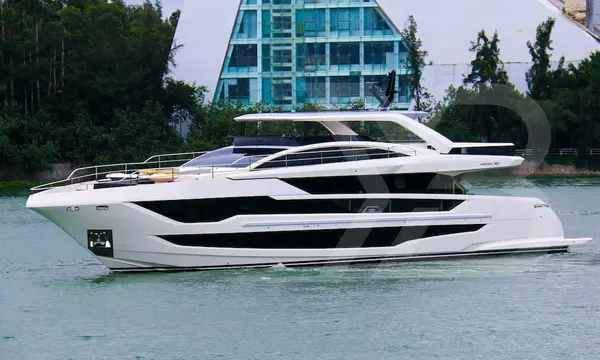
First Pearl 100 Hybrid Completes Sea Trials Ahead of FLIBS Debut
The first Pearl 100 Hybrid has completed initial sea trials ahead of its world debut at the 2026 Fort Lauderdale International Boat Show.

With the 16 November Marine Impact Lab approaching, organisers have detailed two practical workshops and eight topic tables covering materials, propulsion, finance and the organisational demands of sustainability.
The Marine Impact Lab returns to RAI Amsterdam on Monday 16 November 2026, ahead of METSTRADE's main exhibition on 17–19 November. The event itself was announced earlier in the year, and Superyacht Guide has already reported that return. The development now is a more specific programme: two workshops, eight discussion tables and named contributors examining design choices, propulsion, regulation and finance. Current METSTRADE information places the Lab from 14:00 to 17:00 on the Monday. It is a professional event about practical sustainability decisions, not a new yacht launch or an announcement that an industry-wide emissions target has been achieved.
The latest programme report identifies Patrick Hemp of ICOMIA, Yann Herriot of ePropulsion and Rick Wall of RAI Amsterdam and OCEANOVATION as additions to the line-up. Other named contributors include Dr Susie Tomson, Veda Pretorius, Dr Pascal Gallo, Alessandro Stagni and Paolo Manganelli. Their presence suggests a discussion crossing policy, electrification, composites and business strategy. It does not mean the speakers agree on every solution, nor does it establish that any particular technology is already suitable for a transoceanic superyacht. Those judgments depend on engineering data and the operating requirements of individual vessels.
One workshop, Sustainable Design Principles, is to be led by Marine Futures. The published programme describes a team exercise in which participants select materials, propulsion arrangements and energy systems for virtual boats before testing them in speed, slalom and endurance challenges. It is intended to make lifecycle assessment less abstract by connecting choices to observable trade-offs. The simulator draws on real boat designs and MarineShift360 lifecycle assessment information, according to the programme account. This is an educational tool; results from a virtual competition should not be reported as verified sea-trial figures for a production yacht or as an approval of a specific propulsion system.
For builders working on yachts over 24 metres, a useful question is how a material or machinery decision affects the entire vessel rather than one isolated headline metric. Weight, construction energy, repairability, lifetime maintenance, operational fuel consumption and end-of-life treatment may move in different directions. A lighter structure can have advantages, but the evidence must include how it is made and what service it is expected to deliver. Lifecycle assessment is a method for comparing defined scenarios, not a guarantee that every product advertised as sustainable has a lower total impact under every operating profile.
The confirmed participation of an ePropulsion representative brings electrical and alternative propulsion questions into the conversation. Those technologies are increasingly discussed across marine sectors, but a superyacht's hotel load, passage range, peak power requirements and available shore infrastructure can differ radically from those of a day boat. Designers need to consider mass, volume, fuel or energy storage, backup arrangements, service support and applicable safety rules together. An exhibition workshop can improve the questions engineers ask. It cannot substitute for drawings, class review, electrical protection studies or sea trials before a system is installed aboard a particular vessel.
Hybrid arrangements can also mean different things. Some yachts combine diesel propulsion with batteries supporting hotel functions; others use electric motors for certain manoeuvres or low-speed passages. A claim of quiet operation at anchor is not evidence of zero lifecycle emissions, and an electric drive cannot be judged apart from the source of its electricity. Participants in the Lab will be able to discuss such issues as design trade-offs. Readers should avoid assuming that a named speaker's involvement confirms a new product launch, public subsidy or contract award, unless a separate company announcement establishes those facts.
The programme includes discussion of when recycling composite materials makes sense. That is a worthwhile question because technical possibility, commercial availability and actual environmental benefit are not interchangeable. A composite component may be strong and light in service yet challenging to separate into useful material streams later. Recycling processes themselves require energy, transport and markets for recovered outputs. Builders need evidence about the specific fibres, resins, contamination and recovery techniques involved. A broad claim that a yacht is recyclable says little until the proportion of components, practical facilities and intended recovery routes are identified.
Dr Pascal Gallo of Composite Recycling, Alessandro Stagni of nlcomp and Paolo Manganelli of Gurit are among the contributors listed in the latest information. Their differing positions in the materials and composites field should help frame the choices designers face. For a custom yachtbuilder, those choices include not only new materials but existing inventory, repair protocols, fire and strength requirements, supplier warranties and whether a recycling route is available in a yard's operating region. The Lab's topic-table format is designed to allow questions, but it should not be mistaken for a definitive engineering standard issued by any one participant.
Foxall Munro is scheduled to run Selling Sustainability, a workshop using The Toolbox, a free online sustainability strategy platform. Organisers describe exercises intended to help marine businesses identify priorities, engage stakeholders and secure support for their proposed changes. The session is particularly relevant to smaller suppliers that may know what they wish to improve but struggle to explain costs, expected benefits and risks to customers. It is also connected with DAME and Yachting Ventures activity, giving product innovators a setting in which to consider whether sustainability claims are clear enough to withstand informed commercial questions.
For the superyacht supply chain, the business case is rarely as simple as a lower purchase price. Builders must assess procurement reliability and qualification schedules; operators examine running cost, maintenance and availability of service; owners may weigh comfort, range and environmental objectives. A proposal that saves energy could still fail if installation compromises a critical service or if the supplier cannot provide spares worldwide. Conversely, an improvement that costs more initially may have an operational rationale over the vessel's expected use. The workshop is an opportunity to structure such arguments, not a promise that a particular investment will pay for itself.
The final programme includes eight expert-led topic tables covering questions such as composite recycling, access to finance, attracting talent and broader sustainability challenges. The intention is for participants to bring problems from their own organisations and discuss them with specialists and peers. This differs from a sequence of presentations in which the audience has little opportunity to interrogate assumptions. The exact outcome will depend on who attends and whether organisations subsequently put useful ideas into practice. No published evidence yet establishes that all eight tables have reached recommendations or that participants have agreed any binding industry action.
There is value in exposing the interfaces between departments. A procurement manager may favour a lower-impact material, while a naval architect worries about certification and a refit manager questions repair availability. Finance staff may ask how benefits will be measured, and crew may have concerns about safety or practical maintenance. Those perspectives should be discussed before a design freezes, not left to be resolved once a yacht is in service. The Lab's format is intended to create room for such conversations, but the public programme does not itself certify a new component or authorise a vessel modification.
Large yachts have extended operational lives and often pass through multiple refit cycles, so decisions about machinery, materials and systems can have consequences for decades. An owner commissioning a newbuild may be able to address lifecycle impacts early, whereas an existing vessel needs realistic retrofit options that respect space, weight and certification constraints. The Lab's subjects are therefore relevant even though it serves the wider leisure marine industry and is not exclusively a superyacht meeting. Treating the same design solution as universally appropriate across all vessel sizes would undermine the thoughtful comparison its organisers say they are encouraging.
METSTRADE's broader programme includes a Superyacht Forum and specialist zones, but these are separate elements of the exhibition week. The Marine Impact Lab is scheduled on Monday 16 November, before the main exhibition opens on Tuesday. Visitors should verify registration and ticketing directly with the organiser and avoid assuming that a METSTRADE exhibition badge automatically provides access to every partner workshop. The event page links to details and tickets. Schedules, speakers and room arrangements can change as the date approaches, so the confirmed programme should be checked again before travel.
The immediate news is the programme and its confirmed structure, not a claim of outcomes before the workshop takes place. After 16 November, credible follow-up reporting could examine published workshop materials, evidence of new collaboration or specific design changes that participants choose to document. A supplier announcement about a lifecycle assessment, for example, should identify its boundaries, assumptions and verification method. A composite recycling demonstration should specify the actual material processed and what was recovered. General enthusiasm from a conference would be weaker evidence than a repeatable assessment or an independently tested vessel system.
For yacht owners, captains and technical managers, the useful takeaway is a disciplined decision process. Define the operating requirement; compare alternatives on a consistent lifecycle basis; verify safety and service obligations; and distinguish a proposal from a tested result. The new Marine Impact Lab line-up brings people from technology, materials, policy and business strategy into that discussion. The published agenda is a meaningful programme update on an event already known to readers. Its eventual contribution to the superyacht industry will depend on what participants can demonstrate in real design, building and operational decisions after the meeting.
Original documentation: METSTRADE / Marine Impact Lab. Supporting material: additional published source. This report is dated 7 November 2026. Future schedules and prices may change. Statements described as plans or claims have not been presented as completed outcomes or independently audited results.
Editorial photograph: File:RAI Elicium.jpg — RAI Amsterdam Elicium exhibition building — Choinowski / Wikimedia Commons, CC BY-SA 4.0; resized; illustrative venue photograph, not the November 2026 workshop. Licensed under Creative Commons BY-SA 4.0. This credited illustrative photograph has been resized or cropped; it does not depict the contemporary event, property or meeting described in the report.
Continue reading
The first Pearl 100 Hybrid has completed initial sea trials ahead of its world debut at the 2026 Fort Lauderdale International Boat Show.
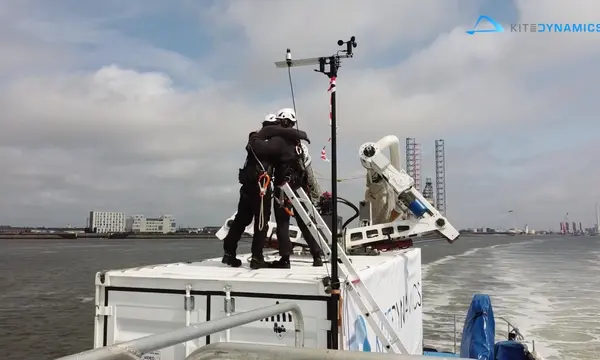
Kite Dynamics is developing four-line kite propulsion following at-sea trials in 2025 and 2026, with yacht applications remaining at the prototype and engineering stage.

Northrop & Johnson has profiled StarEDGE's approach to superyacht communications, including multi-orbit satellite links, mobile networks and a dashboard for yacht managers.
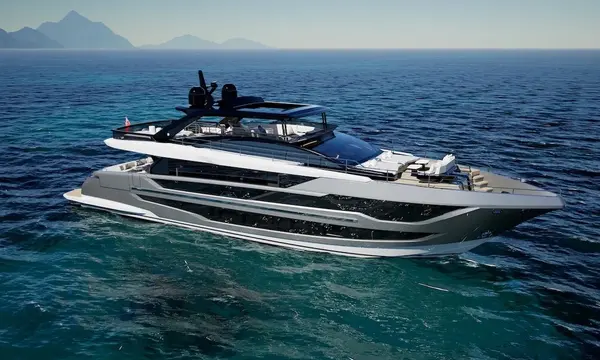
The first Pearl 100 Hybrid is scheduled for its world debut at Fort Lauderdale, introducing the company’s largest yacht and its first hybrid propulsion …
Superyacht Guide
Continue into the wider Superyacht Guide.
Business opportunities · Superyacht Guide
Companies serving the superyacht market can discuss clearly identified advertising, sponsorship and business-profile opportunities. Commercial activity remains separate from independent editorial coverage.