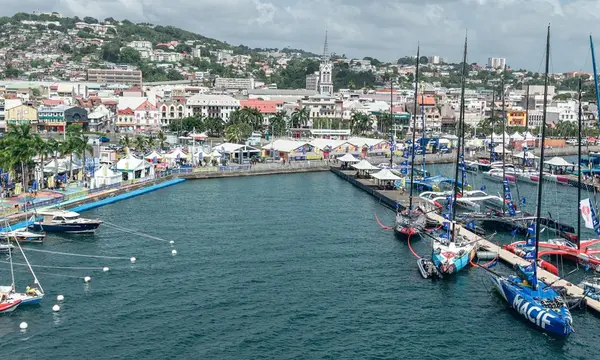
Transat Café L’Or Confirms Four 2027 Ocean Routes and Martinique Finish
The 2027 TRANSAT CAFÉ L’OR will start on 31 October from Le Havre, with four class-specific Atlantic courses, a Martinique finish and the beginning …
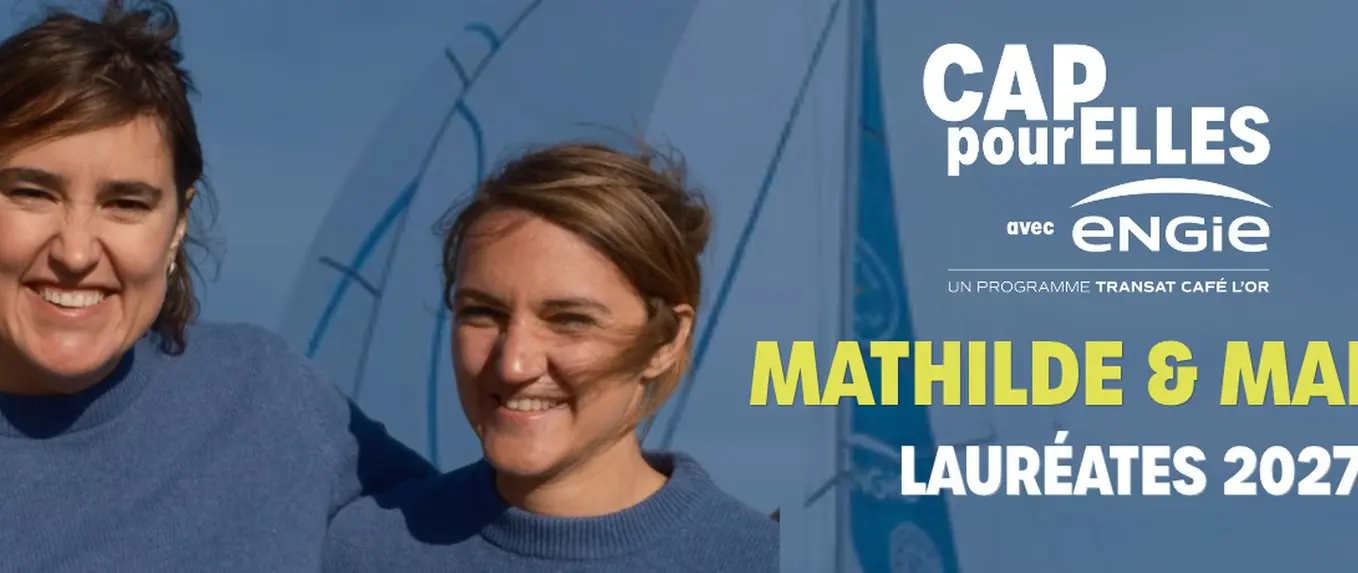
TRANSAT CAFÉ L’OR / ENGIE official 2027 Cap pour Elles announcement portrait of the selected sailing duo, © organiser and photographers.
Cap pour Elles with ENGIE has selected Mathilde de La Giclais and Marie Chaussade for support toward a Class40 campaign at the 2027 TRANSAT CAFÉ L’OR, with boat financing and training still ahead.
Mathilde de La Giclais and Marie Chaussade have been selected for the 2027 Cap pour Elles with ENGIE programme, which supports a two-woman team working toward the TRANSAT CAFÉ L’OR offshore race. The organiser's announcement on 25 November 2026 identifies the pair as winners of the fourth programme edition and places them on a pathway toward competing in the Class40 category in October 2027.
The appointment is a meaningful opportunity, but it is not a claim that their race boat has already been purchased or that the team has crossed the Atlantic. The organisers say arrangements for a Class40 vessel and sponsorship are still being developed. Reporting those remaining steps is part of describing the project accurately.
De La Giclais is 33 and works as a doctor in Lorient. Chaussade is 34, works as an engineer in Paris and serves as a French Navy reservist. Both have substantial personal commitments beyond sailing, a reality that can make planning a major offshore campaign particularly challenging. Their professional backgrounds provide context but do not automatically establish a sporting advantage.
The pair have been friends for three years and share an ambition to move deeper into offshore racing. The official account says they had not sailed together as a competitive double-handed crew before selection. Their collaboration will therefore need to develop through training and experience rather than assuming their existing friendship supplies every necessary racing skill.
The Cap pour Elles programme considered three finalist duos before selecting de La Giclais and Chaussade. The other finalists included Thaïs Le Cam with Alicia De Pfyffer and Juliette Bousquet with Paola Amar. The organiser describes a demanding decision because of the quality of the applications, but the public release does not publish a numerical ranking or detailed scoring sheet.
That distinction is important to avoid implying that the runners-up have been judged incapable of competing. Their own offshore ambitions may continue through different fundraising or team arrangements. The winner announcement identifies which crew receives this specific programme's support.
A two-person offshore campaign demands cooperation in navigation, sail handling, weather decisions, equipment troubleshooting and rest. One sailor cannot permanently remain on watch while the other handles every technical task. Shared understanding develops through training under different conditions and through explicit procedures for handing over control.
Friendship can support communication but is not a replacement for technical preparation. The pair's ability to listen and be candid with one another is cited in the organiser's account as a reason for optimism. Actual racing competence will emerge from the miles they sail together and from the results of the training programme.
The selected crew has identified Class40 as its competition category. These monohull offshore racing yachts are designed for demanding long-distance events within a regulated class framework. They provide an established route into elite ocean competition without requiring the budgets associated with the largest ULTIM multihulls.
The organisers say discussions are under way over acquiring or leasing a boat. That is not the same as a completed purchase, a signed lease or an officially named hull. Any future report about the yacht itself should identify its registration, condition and configuration once the team makes those details public.
The TRANSAT CAFÉ L’OR is scheduled to start from Le Havre on 31 October 2027. The selected pair aim to participate as part of a Class40 campaign. Their selection makes that goal more attainable, but entry still depends on a vessel, funding, technical preparation and compliance with the event's requirements.
The organisers' separate race announcement provides the general route and class framework. The Cap pour Elles release is different in purpose: it explains who has won a talent-development opportunity and what support they will receive. Conflating the two would risk repeating one story without recognising the new personnel news.
The programme says it will cover the team's race entry fees and provide assistance with finding sponsors. These are concrete forms of support, but they do not mean every operational expense is already paid for. Offshore racing campaigns can incur substantial costs in sails, maintenance, travel, shore support and training.
An accurate financial description should distinguish what the organisers have guaranteed from the funding the sailors still need to secure. The announcement does not give a final campaign budget or claim that the crew can launch immediately without additional financial arrangements.
The programme offers access to coaching and operational expertise, with Tanguy Leglatin identified as a coach associated with the Lorient-based project and Anne Combier contributing high-level team-management experience. These resources can help a new partnership establish preparation routines and understand the demands of a major offshore competition.
A coach cannot make decisions for sailors during every moment of a transatlantic race. The value of structured coaching is to help the crew build the judgement and procedures needed when they are alone at sea. Training progress should be assessed through actual sessions and competitive experience rather than promised performance.
The French Atlantic port of Lorient has a substantial professional sailing ecosystem, including training teams, equipment specialists and technical services. The organiser says the crew intends to draw on that base during preparation. Proximity to specialists can simplify inspections, coaching and the iterative work of preparing a racing yacht.
This setting is useful, but it does not imply that the team is already operating from a fully equipped permanent base. The specific support arrangements will become clearer as the campaign develops. A programme announcement should not be treated as confirmation of every contract with a supplier.
De La Giclais and Chaussade describe enjoyment of sailing as an important part of their competitive motivation. That outlook does not make the campaign less serious. A long offshore passage requires sustained concentration, and a good working relationship can help manage stress, particularly when weather or equipment problems make decisions difficult.
The organisers' profile emphasises the willingness of both sailors to speak honestly and listen to each other. Those are credible ambitions for a double-handed crew. Their effectiveness will be tested through training rather than measured by a public quote alone.
Cap pour Elles began in 2021, with ENGIE joining as a partner in 2023. Previous selected teams included Julia and Jeanne Courtois, Pamela Lee and Tiphaine Ragueneau, and Aïna Bauza and Axelle Pillain. The programme uses recurring selections to help create pathways into competitive offshore sailing.
The new winners are part of that continuing history, but each edition involves different participants and circumstances. The existence of prior campaigns does not guarantee identical sponsorship arrangements, equipment or racing results for the 2027 crew.
Dr Claudie Haigneré, recognised as the first French woman to travel to space, is again associated with the programme as a patron. The organiser presents her involvement as support for broader ambition and opportunity. A patron's advocacy can help visibility and confidence, but it should not be confused with technical responsibility for the race boat or the team's safety.
The practical sailing and management decisions remain with the crew and the specialists appointed to support it. This clear division of roles helps readers understand what a high-profile supporter contributes to a development programme.
One goal of Cap pour Elles is to improve access to elite offshore racing for women by reducing some of the financial, organisational and visibility barriers that can complicate a campaign. The organisers describe a combination of sporting guidance, logistical help and media exposure rather than a single cash award.
That structure matters because an offshore career depends on experience, reputation, access to vessels and a network of people prepared to support a programme. The 2027 crew will have an opportunity to build those elements, but long-term sporting outcomes cannot be measured at selection.
The project also has relevance outside competitive sailing. Yacht builders and marine service businesses depend on people with technical expertise, adaptability and the ability to work across disciplines. An engineer and a doctor committing to offshore competition illustrate how skills and interests from different careers can intersect with marine operations.
The point is not that every technical professional should become a racer. Rather, a visible pathway can encourage people who may not have considered the marine sector to explore what is possible. Its ultimate impact should be judged through participation and continued opportunities, not publicity alone.
The team plans an intensive preparation period beginning in spring 2027. Training will need to address weather interpretation, emergency response, sail handling and the physical demands of extended watches. A crew that can work effectively in calm coastal conditions is not automatically ready for difficult open-ocean passages.
Organisers and coaches can help create a progressive training programme, but the exact race-readiness milestones have not been published. No claims about passed safety inspections or qualifying passages should be made without the relevant official evidence.
The particular Class40 yacht has not yet been confirmed in the announcement, the complete sponsorship package remains under development and the team still needs to translate its selection into a finished campaign. Those unknowns do not diminish the significance of the award. They define the practical work that lies between a public selection and a start-line appearance.
A future news update should be triggered by a signed boat arrangement, a major training milestone or an official race entry, with each reported on its own date. It should not simply repeat that the pair won the programme in November.
Mathilde de La Giclais and Marie Chaussade now have the organisational support of Cap pour Elles with ENGIE and a clear objective: to prepare for the 2027 double-handed transatlantic race. They bring personal motivation, professional experience and a new partnership that must be developed on the water.
The confirmed achievement is their selection from a competitive field and the programme's commitment to help them reach the next level. The success of the sailing campaign remains a question for the months ahead, when preparation and racing results can be verified.
Continue reading
The 2027 TRANSAT CAFÉ L’OR will start on 31 October from Le Havre, with four class-specific Atlantic courses, a Martinique finish and the beginning …
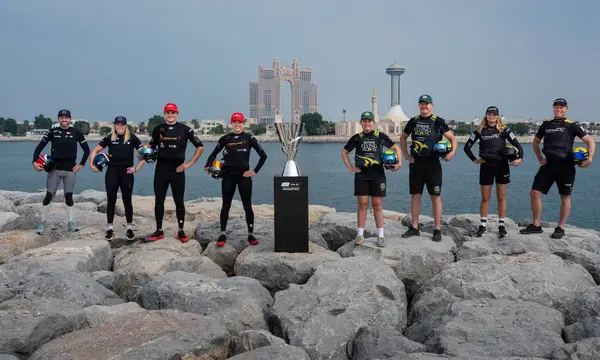
The 2026 SailGP season heads to Abu Dhabi on 28–29 November, with Australia and Spain already through and Sweden's Artemis defending a seven-point margin …
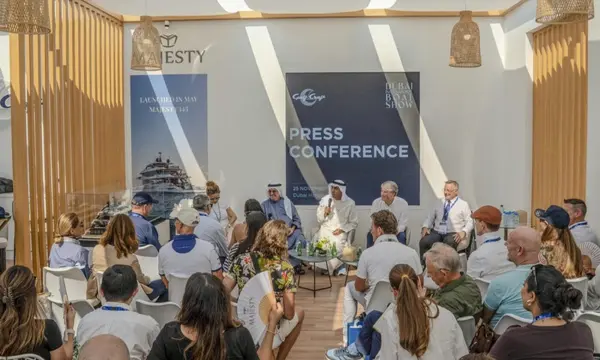
Gulf Craft's 25 November show briefing combines its Majesty 100 Terrace and 120 superyachts with three SilverCat premieres and a dedicated SYSC yacht-service presence.
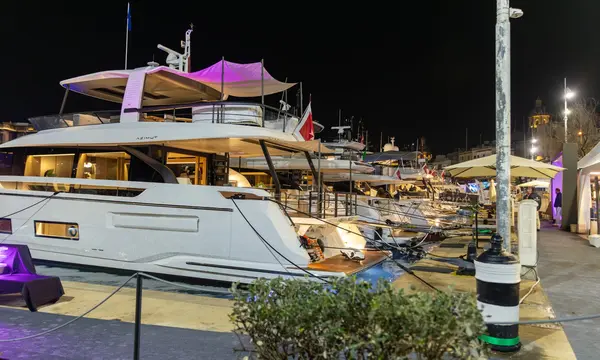
Yachting Malta reports thousands of visitors and more than 70 exhibitors at the third Malta Boat Show, held at Dock 1 in the Three …
Superyacht Guide
Continue into the wider Superyacht Guide.
Business opportunities · Superyacht Guide
Companies serving the superyacht market can discuss clearly identified advertising, sponsorship and business-profile opportunities. Commercial activity remains separate from independent editorial coverage.