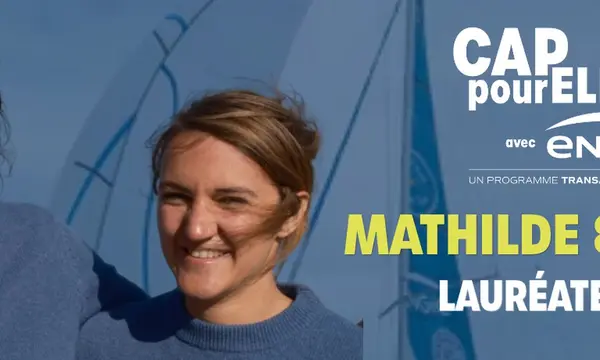
Mathilde de La Giclais and Marie Chaussade Win 2027 Offshore Sailing Pathway
Cap pour Elles with ENGIE has selected Mathilde de La Giclais and Marie Chaussade for support toward a Class40 campaign at the 2027 TRANSAT …
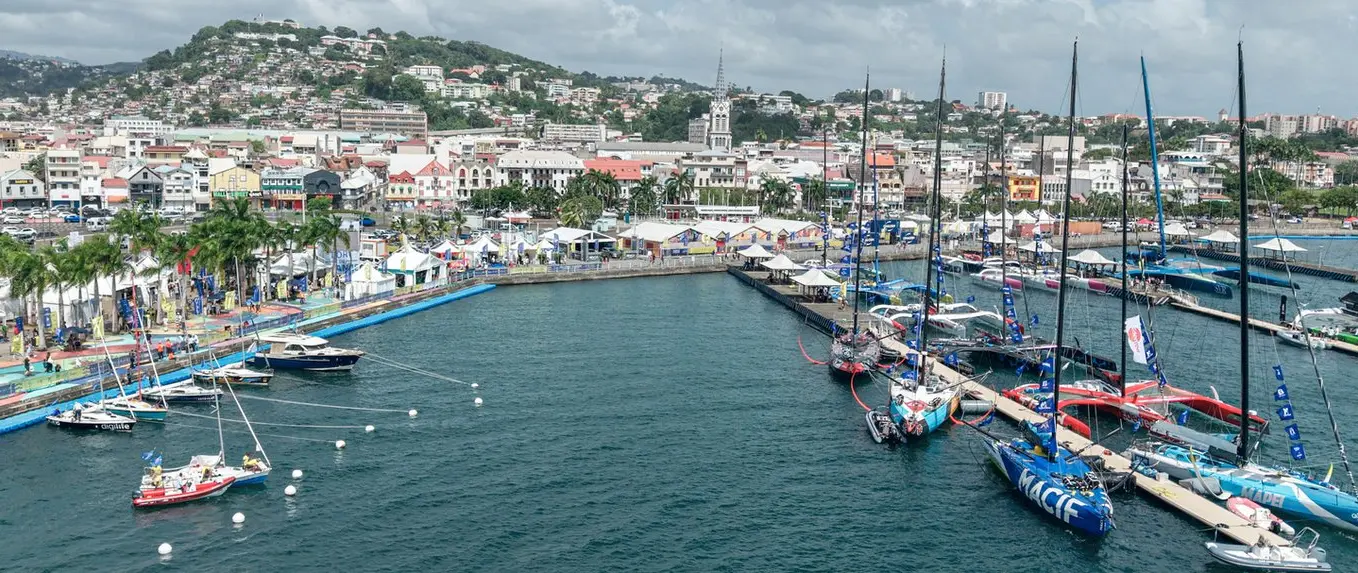
© Jean-Marie Liot / Alea, official Transat Café L’Or 2025 historic Martinique arrival-port photograph, illustrating the 2027 route announcement.
The 2027 TRANSAT CAFÉ L’OR will start on 31 October from Le Havre, with four class-specific Atlantic courses, a Martinique finish and the beginning of a recurring four-year destination arrangement.
The organisers of the TRANSAT CAFÉ L’OR Le Havre Normandie have confirmed Sunday 31 October 2027 as the start date for the race's eighteenth edition. The official announcement, published on 26 November 2026, sets out four separate ocean courses for ULTIM, IMOCA, Ocean Fifty and Class40 competitors and confirms Martinique as the destination for the 2027 fleet.
The race also introduces a longer-term arrangement in which Martinique becomes a recurring finish every four years, with other South American coffee-route destinations considered for intervening editions. This is a published future race programme rather than evidence that the 2027 fleet has already departed, that every entrant is registered or that an individual team has completed its preparation.
The race will begin from Le Havre in Normandy, continuing the city's long association with the two-handed transatlantic event. The organisers describe a multi-class departure, with separate starting procedures for four groups of ocean-racing vessels. The distinction matters because boats with very different speed potential cannot all be evaluated on one simple course distance.
The city is both a sporting base and a major public-facing part of the event. Teams must manage shore-side preparations, inspections, provisions, safety checks and the demands of supporters before leaving port. The official calendar fixes the planned departure date but does not guarantee every participant's departure time, final entry list or weather conditions.
ULTIM maxi-trimarans, IMOCA monohulls, Ocean Fifty trimarans and Class40 monohulls each have separate rules and performance characteristics. They may race toward a common destination, but the courses are not identical. The organisers have adopted differentiated routes so faster vessels and more modestly sized craft can have meaningful racing on their own terms.
This approach should not be simplified into a claim that one class is competing against another for the same first-to-finish title. Each category has its own sporting contest. Differences in hull configuration, foiling systems, crew workload and operating envelope influence how competitors manage the Atlantic.
Race director Francis Le Goff explains that the fleets will initially follow a common broad route from the English Channel through the Bay of Biscay toward the Azores. This passage can present difficult autumn conditions, although the official preview does not forecast the specific weather that competitors will meet in October 2027.
The early stage will test preparation and decision-making before the routes diverge. A double-handed crew must balance speed against equipment wear and the need for rest. It is not enough to select a fast sail combination; sailors must consider whether they can sustain the programme throughout a long passage.
According to the official route briefing, the ULTIM class is assigned a course of approximately 5,716 nautical miles. The maxi-trimarans are expected to enter the Southern Hemisphere and cross the Intertropical Convergence Zone twice before rounding Fernando de Noronha to starboard and returning toward Martinique.
That route is a particularly useful illustration of why nominal great-circle distance is not the whole story in ocean racing. Mandatory marks and weather systems may require a competitor to sail well beyond the shortest geographic line between ports. The reported distance is the organiser's course specification, not the distance every team will necessarily record on its own tracker.
For IMOCA and Ocean Fifty, the organiser describes courses of roughly 5,400 nautical miles that also involve crossing the equatorial doldrums and rounding the São Pedro and São Paulo archipelago as a common waypoint. The details differ in relation to the Cape Verde islands, with Ocean Fifty boats subject to an additional constraint that does not apply in the same way to IMOCA.
These distinctions can lead the fleets toward different weather choices despite their shared general destination. It would be misleading to publish one map as though the two classes must follow the same track throughout the race. Actual headings will depend on the precise route instructions and conditions encountered.
Class40's announced route is approximately 3,716 nautical miles. After the Azores, the event intends to leave more discretion to the double-handed crews, allowing them to evaluate a southern route toward trade winds or a more direct northern alternative. The optimum choice cannot be determined a year ahead because it will depend on the evolving weather pattern.
This freedom makes the class an interesting example of offshore decision-making. A faster-looking route at one point may later become unfavourable, and a boat that sails farther may make better overall progress in stronger winds. The final standings will reflect decisions made across the passage rather than merely the first day's positions.
The organisers have agreed to make Martinique the finish for one edition every four years, preserving a continuing relationship with Fort-de-France while allowing other destinations to host arrivals during intervening races. The 2021, 2023 and 2025 visits established a foundation for the new arrangement, according to the announcement.
A recurring agreement offers more planning certainty to local services, hospitality operators and the race organisation. It does not mean every future edition will conclude in Martinique or that the full calendar beyond 2027 has already been published. The commitment concerns a four-year recurring role rather than permanent exclusivity.
An ocean-racing finish must accommodate vessels arriving at different times, sometimes after difficult passages. Teams may need berths, technical assistance, shore power, medical support and space to receive families and sponsors. Martinique's selection reflects established collaboration with the event, but the facilities required by each class can vary substantially.
The arrival phase is also a public event. Race organisers must coordinate spectators and communications while maintaining safe access to vessels undergoing post-race checks. A well-run finish can contribute to the experience without affecting the sporting classification, which remains determined by the competition's rules.
The TRANSAT CAFÉ L’OR traces its origins to 1993 and the historic trade connections linking European ports to destinations across the Atlantic. Its modern identity combines professional offshore racing with a broader cultural narrative involving the places that have formed part of the coffee trade. The Martinique arrangement continues that relationship while leaving room for South American destinations.
History can add interest to a race, but should not be romanticised at the expense of understanding its commercial and social complexity. The contemporary event is principally a sporting and organisational undertaking. Its future ports will be selected through agreements that have practical implications for crews, logistics and sponsors.
The official 26 November announcement states that registration for the 2027 event has opened. This is an important administrative milestone because teams can begin formalising their participation and refining funding and operational plans. It is not a final list of competitors, and the number of boats ultimately taking the start remains subject to entry decisions and eligibility.
Teams must assess their class rules, equipment requirements, training, crew eligibility and insurance. Even experienced offshore sailors need a complete programme to bring a vessel to the start in a condition appropriate for a long transatlantic race.
In a two-person race, watchkeeping, sail changes, navigation and maintenance are shared between a very small number of people. Fatigue management and the ability to make considered decisions during difficult conditions are central challenges. A large shore team may support preparation, but only the pair aboard can manage the vessel after departure.
The practical lessons have relevance beyond racing. Long-range yacht operators also depend on robust procedures, reliable equipment, weather judgement and communication. However, a professional two-handed racing boat and a crewed cruising superyacht are built for different objectives; comparisons should remain at the level of operating principles.
The organiser expects the first boats to begin arriving from around 10 November 2027, depending on class and conditions. That forecast is a planning indication rather than an appointment that any particular boat can be guaranteed to meet. Offshore sailing includes uncertainty that cannot be eliminated by publishing a route months in advance.
Media and visitors should be prepared for changes as real weather patterns and fleet performance become clear. Forecast arrival windows are useful for logistics, but a responsible race report should use actual tracker information once the event is under way.
The three quoted distance groupings—5,716, about 5,400 and 3,716 nautical miles—are organiser-defined routes rather than speed records or proof of vessel efficiency. A yacht's real distance sailed can differ because of tacking, gybing and route optimisation. Even competitors within the same class may cover different tracks in pursuit of a better wind pattern.
For readers comparing classes, the relevant question is how each crew performs relative to its own competition and route rules. It would be wrong to use raw elapsed time across unequal courses to declare a single overall sporting winner without an official classification.
Four class starts and a recurring finish-port partnership can help businesses plan participation, sponsorship and support services. The event touches marinas, sailmakers, designers, marine electronics suppliers and specialists in ocean-racing preparation. Those links make it relevant to the broader yacht industry even though the competing craft are dedicated race boats.
The announcement does not provide audited economic benefits for Martinique or Le Havre, and no such figures should be invented. The concrete developments are the planned route framework, start date and long-term destination structure.
Subsequent official documents should confirm the final notice of race, detailed course marks, accepted entries and any changes to procedures. The published preview provides a sound editorial foundation, but an exact competitor roster or weather outlook in late 2027 cannot responsibly be written in November 2026.
For now, the eighteenth TRANSAT CAFÉ L’OR has a scheduled departure, a destination partnership and four distinct racing challenges. The strongest conclusion is about preparation and opportunity: the route is defined, registration has begun, and the competitive outcome remains entirely ahead.
Continue reading
Cap pour Elles with ENGIE has selected Mathilde de La Giclais and Marie Chaussade for support toward a Class40 campaign at the 2027 TRANSAT …
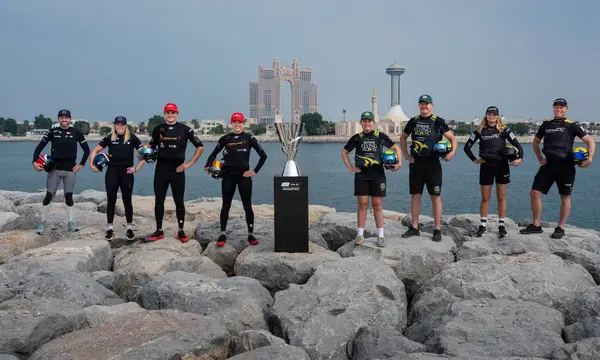
The 2026 SailGP season heads to Abu Dhabi on 28–29 November, with Australia and Spain already through and Sweden's Artemis defending a seven-point margin …
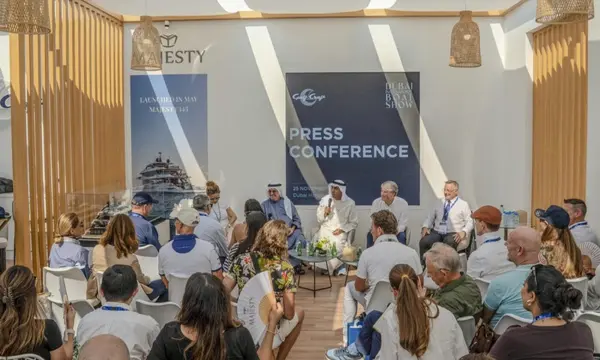
Gulf Craft's 25 November show briefing combines its Majesty 100 Terrace and 120 superyachts with three SilverCat premieres and a dedicated SYSC yacht-service presence.
Yachting Malta reports thousands of visitors and more than 70 exhibitors at the third Malta Boat Show, held at Dock 1 in the Three …
Superyacht Guide
Continue into the wider Superyacht Guide.
Business opportunities · Superyacht Guide
Companies serving the superyacht market can discuss clearly identified advertising, sponsorship and business-profile opportunities. Commercial activity remains separate from independent editorial coverage.