
Mathilde de La Giclais and Marie Chaussade Win 2027 Offshore Sailing Pathway
Cap pour Elles with ENGIE has selected Mathilde de La Giclais and Marie Chaussade for support toward a Class40 campaign at the 2027 TRANSAT …
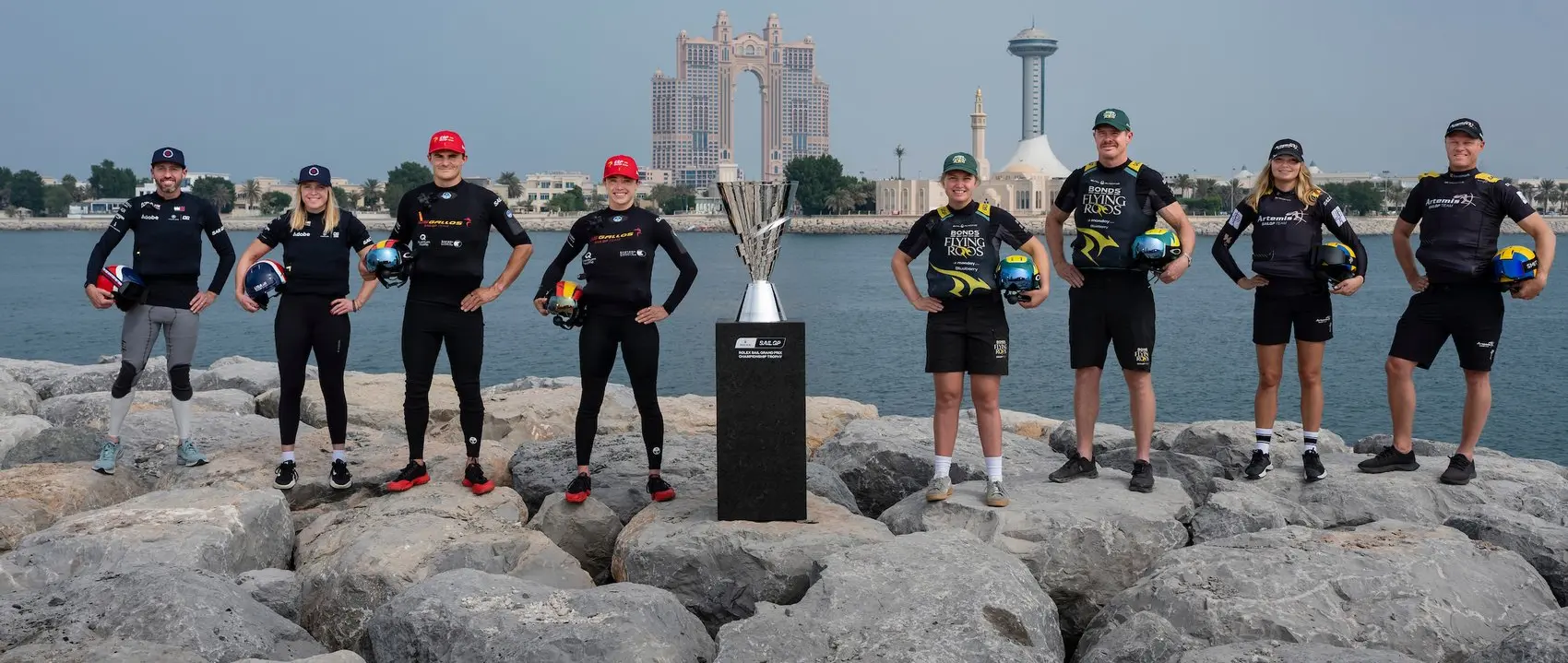
SailGP official 2026 Abu Dhabi Grand Final competitors and trophy photograph, © SailGP and original photographer.
The 2026 SailGP season heads to Abu Dhabi on 28–29 November, with Australia and Spain already through and Sweden's Artemis defending a seven-point margin over the US for the third final spot.
Thirteen teams are due to contest the Mubadala Abu Dhabi Sail Grand Prix on 28 and 29 November 2026, culminating in a winner-takes-all race for the Rolex SailGP Championship and a US$2 million prize. SailGP's official 26 November briefing confirms Australia's Bonds Flying Roos and Spain's Los Gallos have already secured two of the three Grand Final positions. The remaining place is being contested by Sweden's Artemis and the United States crew.
This is a preview of the scheduled competition, not an account of races already completed. The championship finale is separate from the event's own race results, and the final top-three contest takes place only after the qualifying stages. The distinction matters when assessing points, prizes and claims that a particular team has already won the season.
SailGP reports Artemis carrying a seven-point advantage over the U.S. SailGP Team following the Emirates Dubai Sail Grand Prix. A seven-point margin gives the Swedish team an important starting position, but the remaining races are still capable of changing which crew advances. The official release describes the two teams as direct competitors for the final qualification place.
Nathan Outteridge leads the Artemis effort, an expansion entry in its first season. Taylor Canfield's American team has recovered from finishing last during the previous campaign and has recorded two event victories in 2026. That contrasting recent history adds context to the standings, but it does not determine the result of racing that has not yet happened.
The Australian team, driven by Tom Slingsby, enters Abu Dhabi knowing its participation in the season-deciding three-boat race is secure. The same applies to Spain's Los Gallos. Qualification removes one form of uncertainty, yet both teams must still manage the event competently and prepare for the unusual pressure of a single race that will decide the championship.
The status of the two already-qualified teams should not be mistaken for a guarantee that either will take the title. A season's accumulation of performance creates the opportunity to race for the prize; it does not award the prize before the final. Race management, tactics and execution on the day remain decisive.
SailGP's F50 catamarans compete in short, intensive races that reward boat handling, tactical judgement and coordination between specialised crew roles. Regular fleet racing produces season standings, but the Grand Final uses a smaller field and a winner-takes-all format. The incentives in the final race can therefore differ markedly from those in an earlier qualifying heat.
A team positioned second in a regular fleet race might protect points rather than attempt a risky manoeuvre. In a title-deciding contest where only the winner takes the championship, the calculation changes. That strategic difference is one reason the league's final should be examined on its own terms instead of extrapolating a result from earlier rankings.
The published championship-deciding race carries a US$2 million reward. The league also describes separate event and season-related financial incentives, including prize money connected to the Abu Dhabi Grand Prix itself. Those different payments should not be added together carelessly or treated as the prize for a single ordinary fleet race.
The commercial scale of the finale reflects the league's increasingly professional structure. Teams are organisations with personnel, technical support and broader commercial obligations, not just individual sailors entering a one-off regatta. Nevertheless, none of the prize figures establishes a final result until the appropriate race has taken place.
The event is scheduled against the waterfront backdrop of Emirates Palace in Abu Dhabi. The venue places high-performance foiling competition within an urban and hospitality setting rather than at a remote offshore start line. That setting can bring spectators physically close to the spectacle, subject to event access, safety zones and local arrangements.
As with any international sailing event, the organisers must reconcile spectator opportunities with the practical requirements of race management. Conditions on the water, temporary exclusion areas and the movement of support boats affect what can be observed from different vantage points. A visitor should use the official programme rather than assume all waterfront areas offer unrestricted access.
The F50 platform is designed to rise on foils, reducing the immersed hull surface at speed. Once airborne, the relationship between wind, apparent wind, foil control and steering becomes an intense technical challenge. A small error can cause the boat to slow rapidly or lose its effective flight mode, changing positions within a short stretch of the course.
That description explains the type of racing without asserting a particular wind speed or manoeuvre occurred at Abu Dhabi. The official preview is not a race-by-race meteorological report, and no outcome can responsibly be attributed to a gust or equipment issue before the competition begins.
The visible driver is only one part of a SailGP crew. Dedicated specialists help manage flight control, wing trim, tactics and strategy. Their decisions must be coordinated under conditions that provide little time for extended discussion. The human coordination can be as important to the result as the performance of the physical platform.
This matters to the broader yacht industry because sophisticated marine systems are only effective when operators understand their limits and can act together. The technology used on foiling racing craft is highly specialised, so any comparison with a cruising superyacht must remain contextual rather than suggesting the vessels share identical equipment.
The United States team is entering the final weekend after rebuilding its competitive position through the 2026 season. The official SailGP release references two event victories during this recovery. Those successes have put the crew in contention for the remaining Grand Final place, but the seven-point gap to Artemis means qualifying is not yet settled.
A comeback narrative can become misleading if it is told as a completed triumph. The accurate statement is that Canfield's crew has the opportunity to overtake the Swedish entry during the event. Whether that happens depends on the remaining scoring races and their official classification.
For Artemis, qualifying would represent a noteworthy result for a new championship team. SailGP says it could become the first expansion side to reach the Grand Final in its debut campaign. That is a prospective historical distinction rather than an achievement already recorded in the results.
Expansion brings technical and organisational demands that established competitors have had longer to address. Success in the first season can indicate strong recruitment and preparation, but the public release does not justify conclusions about every aspect of the team's operations. Its final standing must be established from the race results.
Australia and Spain provide different examples of how experienced teams can position themselves for a season finale. The Australians are seeking another championship, while Spain aims to repeat its previous title success. Experience can inform preparation and decision-making, but it cannot eliminate the possibility of a mistake in a condensed final.
SailGP's format deliberately leaves uncertainty until the last race. This creates a clear sporting proposition for spectators, yet it also demands caution from publishers. A previously qualified boat may be a plausible contender without being a confirmed winner, and statistical averages are not substitutes for the formal finish order.
SailGP's international calendar, high-performance craft and substantial prize funding attract attention beyond competitive sailing. Marine engineering companies, technology suppliers and yacht professionals can observe how teams manage precision equipment and demanding operating schedules. The parallels to other marine sectors are often in systems thinking, training and service infrastructure rather than direct transfer of a particular component.
The value of such a showcase should not be overstated. A foiling racing catamaran operates under different constraints from a long-range motor yacht, and racing success alone does not establish a system's suitability for passenger or commercial use.
The Abu Dhabi event will have its own outcome, while the Rolex SailGP Championship is resolved through the three-team Grand Final. Reports must identify which award is being discussed. A team could perform strongly across ordinary event heats without ultimately winning the championship-deciding race.
The official calendar places the competition over 28 and 29 November, with the concluding race scheduled on Sunday. Changes caused by operational circumstances should be taken from subsequent race notices, not assumed in advance. This article records the published plan as it stood ahead of racing.
The league's official live results and race communications provide the relevant record once the competition begins. Commentary, social-media snippets and informal spectator accounts can add colour, but they should not replace the sanctioned classification. Any later correction, penalty or revised score is also a reason to check the official table before publishing an outcome.
Readers seeking the complete crew roster or precise start sequence should consult the latest race bulletin. A preview written before an event cannot verify last-minute team changes or race-day conditions.
Winning the championship would carry sporting and commercial significance to a team that has competed throughout the season. It can affect sponsorship narratives, recruitment and the visibility of individual sailors. Those consequences are potential implications, however, not transactions or team announcements contained in the race preview.
The immediate confirmed facts remain the qualified positions of Australia and Spain, the fight between Artemis and the United States, and the scheduled winner-takes-all contest carrying US$2 million. The official championship classification after Sunday's race will determine which crew ultimately receives that title and prize.
The next report should be based on the completed qualifying results, the three crews officially through to the Grand Final and the actual result of the championship race. Until then, the 2026 SailGP season remains unresolved. Abu Dhabi is set to provide a decisive ending, but the winner must be established on the water rather than in advance.
The value of the 26 November official announcement is that it defines the stakes and the competitive picture without requiring speculation. For yacht-industry readers interested in foiling, organisation and the business of marine sport, the finale is a significant event to watch while maintaining strict separation between preview and result.
Continue reading
Cap pour Elles with ENGIE has selected Mathilde de La Giclais and Marie Chaussade for support toward a Class40 campaign at the 2027 TRANSAT …
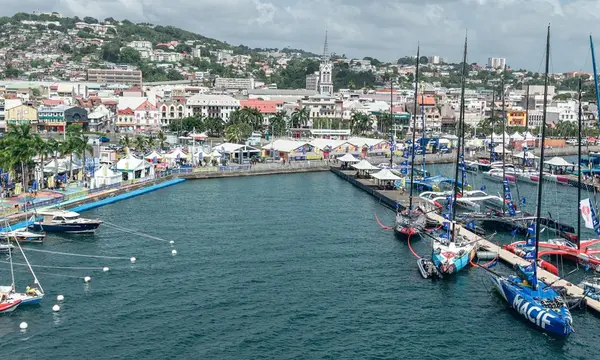
The 2027 TRANSAT CAFÉ L’OR will start on 31 October from Le Havre, with four class-specific Atlantic courses, a Martinique finish and the beginning …
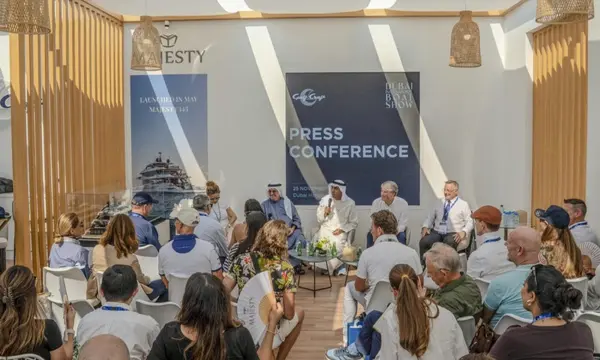
Gulf Craft's 25 November show briefing combines its Majesty 100 Terrace and 120 superyachts with three SilverCat premieres and a dedicated SYSC yacht-service presence.
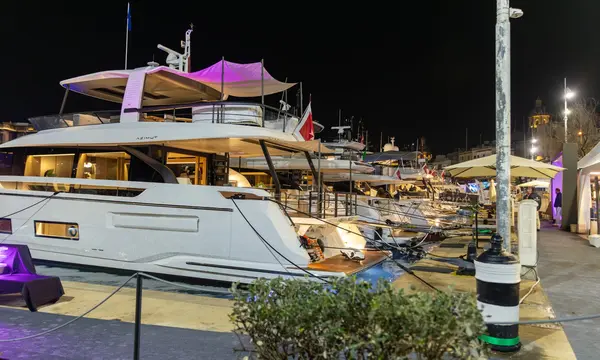
Yachting Malta reports thousands of visitors and more than 70 exhibitors at the third Malta Boat Show, held at Dock 1 in the Three …
Superyacht Guide
Continue into the wider Superyacht Guide.
Business opportunities · Superyacht Guide
Companies serving the superyacht market can discuss clearly identified advertising, sponsorship and business-profile opportunities. Commercial activity remains separate from independent editorial coverage.