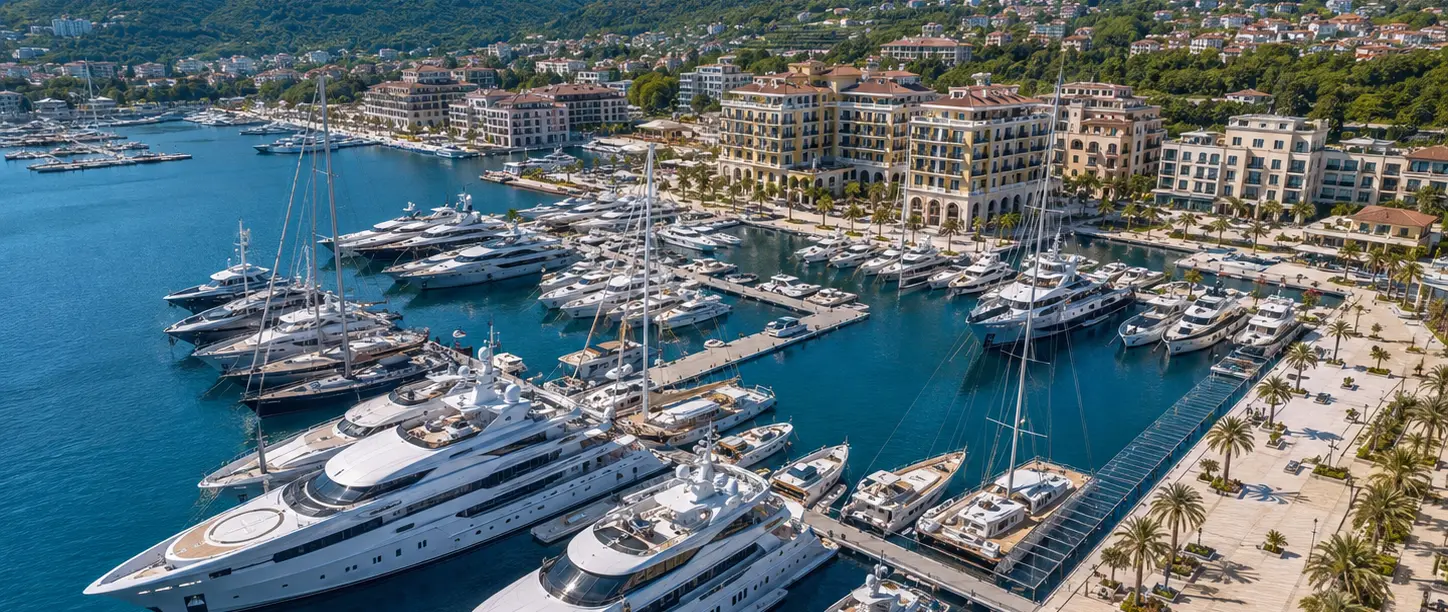
Montenegro has evolved from an attractive Adriatic diversion into a credible superyacht operating base. Large-yacht berthing, refit capability, duty-free fuel and a growing marina network now sit within one of the Mediterranean’s most compact cruising areas.
Montenegro presents an unusual proposition to a superyacht captain. In little more than 290 kilometres of Adriatic coastline, the country combines the mountainous shelter of the Bay of Kotor, historic waterfront towns, deep-water superyacht berthing, expanding resort marinas and a refit facility capable of handling substantial yachts. A vessel can move from a technically capable home port to an anchorage beneath steep mountains or an old stone town without undertaking the kind of long repositioning passage that separates many of the Mediterranean’s established centres.
That combination has developed substantially over the past two decades. Porto Montenegro transformed a former naval site at Tivat into a marina built around large yachts, while Portonovi, Luštica Bay and other coastal projects have broadened the country's yachting infrastructure. Montenegro's own National Tourism Organisation now promotes the country specifically as a yachting destination, highlighting Porto Montenegro, Luštica Bay and a network of marinas along the coast rather than presenting nautical tourism as an incidental part of the holiday economy.
For the superyacht sector, however, the important change is not simply that Montenegro has more attractive waterfront developments. The country is becoming increasingly capable of supporting the vessel itself. Porto Montenegro currently advertises 580 berths and capacity for yachts up to 250 metres, while nearby Adriatic 42 provides major repair and refit infrastructure. Montenegro's government has also described Porto Montenegro as a major superyacht marina, identified Portonovi as another luxury marina and recognised Adriatic 42 at Bijela as a repair centre serving large yachts.
That is a different proposition from a beautiful coastline with somewhere convenient to tie up. It means Montenegro can increasingly function as part of the yacht's operating plan as well as its cruising itinerary, giving owners an attractive destination while providing captains and managers with more of the infrastructure required to keep a large yacht working efficiently.
Porto Montenegro remains the anchor of the country's superyacht proposition. Its importance lies partly in scale: the marina says it has 580 secure berths and can accommodate yachts up to 250 metres, placing it in a very different category from a conventional leisure marina. Montenegro's official tourism material similarly identifies Porto Montenegro as capable of accepting yachts across a very broad size range and promotes it as one of the country's principal nautical facilities.
For owners, the waterfront restaurants, residences, retail and hospitality help make Tivat attractive as a place to spend time. For captains and managers, the more consequential features are operational. Porto Montenegro combines large-yacht berthing with bunkering, chandlery, waste facilities and customs and immigration support, while its published bunkering information describes multiple fuelling positions, substantial storage capacity and high-volume delivery intended for large yachts.
The adjacent repair capability strengthens that argument considerably. Porto Montenegro describes Adriatic 42, developed with Drydocks World, as a superyacht refit, repair and maintenance yard with a 180-by-34-metre floating dock, a 720-tonne travel hoist, approximately 8,000 square metres of workshop and warehouse space and around 30,000 square metres of hard standing. The yard's existence means that a yacht using Montenegro does not necessarily have to leave the country whenever the programme moves beyond routine marina maintenance.
This matters in the Adriatic because the decision about where to base a yacht is rarely determined by scenery alone. A captain planning an extended season wants to know what happens when a pump fails, an engineering job grows beyond the crew's capability, a tender needs repair or an unexpected defect threatens the owner's itinerary. A destination becomes much more useful when the answer is not automatically to reposition several hundred miles to another established technical centre.
Porto Montenegro therefore gave Montenegro something that relatively few emerging yacht destinations possess: an internationally recognisable superyacht hub around which a broader local industry could develop. The more recent significance is that the country's yacht offering no longer ends at the marina gates, because refit, fuel, logistics and alternative berthing are increasingly part of the same regional proposition.
Luštica Bay illustrates how the market has broadened. Its marina currently advertises 115 berths for yachts up to 45 metres, with plans to add further capacity. That does not make it a substitute for Porto Montenegro at the very large end of the fleet, but it creates another substantial marina environment within the same relatively compact cruising region.
The distinction is useful because a 90-metre yacht has very different infrastructure requirements from a 35-metre yacht, and successful cruising regions do not need every marina to serve every vessel. What they need is a hierarchy of facilities. The largest vessels can use the deep-water infrastructure designed around them, while smaller superyachts and large production yachts gain additional choices without concentrating every visit in a single harbour.
Portonovi contributes another major facility within Boka Bay. Montenegro's National Tourism Organisation notes that Portonovi Marina holds Five Gold Anchor accreditation, reflecting recognised standards in marina infrastructure, operation and service. The country's official arrival information also identifies the Port of Kumbor-Portonovi as one of the locations offering yacht berthing together with access to Police, Customs and Harbour Master's functions for international arrivals.
This developing network changes how Montenegro can be used. A yacht does not have to regard Tivat as a single destination to be visited and then left behind. It can move between different parts of Boka Bay and the Montenegrin coast while retaining access to sophisticated support nearby, spending one part of the programme inside a fully serviced marina and another at anchor or close to a smaller coastal destination without moving far from its logistical base.
That is particularly attractive for owners who prefer itineraries with less continuous cruising. The Bay of Kotor is geographically compressed enough that changing the view does not necessarily mean committing to another full day underway. Historic Kotor, Perast, Tivat, Herceg Novi and the entrances to the open Adriatic occupy a relatively small area, while Montenegro's tourism authorities actively promote the combination of the bay's mountainous landscape, historic towns and modern marinas as part of the country's nautical appeal.
For crew, meanwhile, a concentrated region can simplify the less glamorous parts of yacht operation. Airport transfers, provisioning, contractors and stores are easier to organise when the yacht has not moved hundreds of miles between successive guest stops. Tivat Airport is close to the principal yachting developments, and Luštica Bay describes itself as approximately 15 to 20 minutes from the airport, with Podgorica and Dubrovnik providing additional international access.
Montenegro's fiscal position has long formed part of the yacht industry's interest in the country, although it deserves more careful treatment than simply describing Montenegro as a low-tax yachting destination. One concrete development was the return of duty-free fuel for qualifying foreign private and commercial yachts. Porto Montenegro announced in January 2025 that Montenegro had reintroduced the regime following its suspension in 2022, and its subsequent marina information has continued to promote duty-free bunkering under the relevant customs framework.
For a large yacht, fuel treatment can materially influence routing. A substantial bunker uplift is a very different financial decision from filling a leisure boat's tank, so a commercially attractive bunkering location can become a natural staging point before a longer Adriatic or Mediterranean passage. The operational attraction increases when the fuel stop can be combined with crew changes, provisioning, maintenance and guest movements rather than requiring a separate diversion.
This does not mean every yacht automatically receives the same treatment, or that Montenegro should be described casually as tax-free. Eligibility, vessel use, customs status and the circumstances of the supply matter, and captains and managers should confirm the current rules with their agent before designing an itinerary around a fiscal assumption. Porto Montenegro's own announcement made clear that the measure concerned qualifying foreign private and commercial yachts and that detailed terms were linked to the governing customs arrangements.
Arrival formalities also require planning because not every marina has the same border-control function. Montenegro's official tourism information identifies Porto Montenegro, Portonovi, Budva and Kotor among locations with access to border-control functions, while marina choice for a yacht entering internationally should therefore be checked against the authorised first-entry arrangements before arrival.
That is the type of detail that separates an attractive itinerary from a professionally prepared one. On a chart, two marinas in the same bay can appear interchangeable, yet operationally their roles may be quite different depending on whether the yacht is entering Montenegro, already cleared into the country, bunkering, embarking guests or simply moving between anchorages. The advantage is that Montenegro's nautical infrastructure is sufficiently concentrated for those functions to complement one another.
Montenegro's appeal becomes clearer when it is considered alongside the traditional Mediterranean superyacht circuit. Monaco, the French Riviera, Sardinia, Ibiza and the Balearics remain enormously important, but their success creates its own problems during peak summer: marina congestion, crowded anchorages, intense competition for restaurants and services, and itineraries in which many yachts are effectively following the same route.
Montenegro is hardly undiscovered, and August should not be treated as a quiet-season secret. Luštica Bay's cruising guidance describes August as the most demanding period, when marinas can operate at capacity and coastal towns are considerably busier, making advance berth planning sensible for larger yachts and peak-season programmes.
The difference is geographical and operational rather than simply one of visitor numbers. The Bay of Kotor gives the yacht a dramatic enclosed cruising environment that bears little resemblance to the Côte d'Azur or Balearic Islands, while the open Adriatic remains immediately accessible beyond the bay. Montenegro can therefore work as a destination in its own right or as one part of a wider eastern Adriatic programme involving Croatia, Albania or a route south towards Greece.
Porto Montenegro positions itself as a gateway to the wider Adriatic, while Montenegro's tourism authorities emphasise a coast combining sheltered bays, historic settlements and modern marinas. For an owner who has already spent many seasons moving between the same western Mediterranean centres, that creates a credible alternative without requiring the yacht to abandon sophisticated infrastructure.
That combination is particularly relevant to the continuing growth of explorer and long-range yachts. Owners increasingly expect the vessel to take them somewhere distinctive, but very few want every distinctive destination to introduce unnecessary logistical difficulty. Montenegro is developing in the useful middle ground: sufficiently different to alter the experience, yet sufficiently established that the yacht does not have to operate as though it were in a remote expedition area.
The most important question for Montenegro is therefore no longer whether superyachts will visit. The infrastructure already demonstrates that they do. The more commercially significant question is whether yachts increasingly choose to base themselves there for meaningful parts of the season, undertake maintenance there and use the country as the starting point for wider Adriatic cruising.
That is where the combination of Porto Montenegro, Adriatic 42, Portonovi and Luštica Bay becomes strategically important. No single facility has to provide every service to every yacht if the regional ecosystem collectively offers deep-water berthing, refit capability, secondary marina choices, fuel, formalities, hospitality and rapid access to the cruising grounds.
There are still reasons for captains to plan carefully. Peak-season berthing should be arranged early, first-entry procedures need to match the chosen marina, and fuel or tax advantages should always be confirmed for the individual yacht rather than assumed from marketing language. Montenegro also remains a small coastal country, so its overall supplier and refit ecosystem cannot simply be equated with the decades of industrial depth found around Palma, Barcelona or northern Italy, nor does it need to replicate those centres in order to become a credible base.
A yacht choosing Montenegro is increasingly able to obtain the level of support required for a serious Mediterranean programme while gaining access to a cruising environment that feels markedly different from the better-known western circuit. That is the country's strongest competitive advantage: not trying to reproduce Monaco on another coastline, but combining serious superyacht infrastructure with a compact Adriatic geography where the operational base and the cruising experience are almost on top of each other.
For owners, that means Montenegro can be more than a photographically spectacular call between Croatia and Greece. For captains and managers, it can increasingly be considered before the season starts — as a place to berth, bunker, maintain the yacht, move guests and crew efficiently, and then begin the owner's itinerary without first undertaking another long repositioning passage.
That is the point at which a yacht destination becomes a yacht base, and Montenegro's developing marina and technical infrastructure is increasingly capable of making that distinction meaningful.
Explore
Go deeper into the yachts, companies, events and destinations directly connected to this article.
Continue reading

Northrop & Johnson data shows global yacht charter starts up 20.8% through August 2026, while the market splits between late bookers and early 2027 …
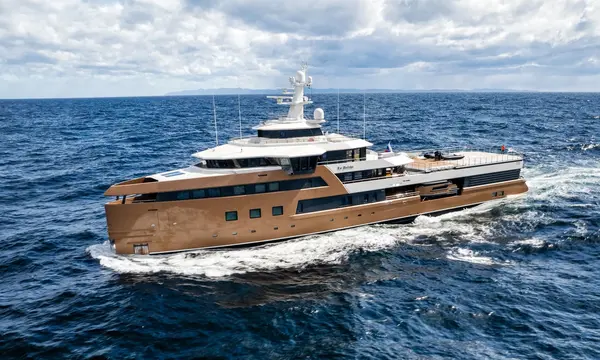
Damen Yachting confirms its 77m Xplorer La Datcha has received the Blue Ocean Club Charter Yacht of the Year 2026 title and the 70m-plus …
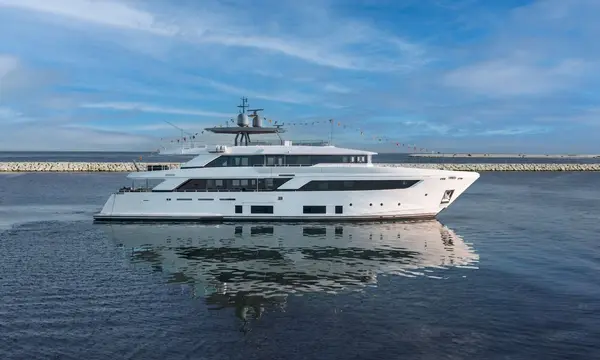
Fraser has introduced a 42m Custom Line Navetta 42 named Haiami I to its charter fleet ahead of planned 2027 delivery, with six guest …
Burgess describes clients seeking private, personalised yacht charters built around wildlife, culture, family activities and specialist experiences.
Superyacht Guide
Continue into the wider Superyacht Guide.