© Moonen Yachts; official direct press email 2182, 2026-03-03. Full original image URL and SHA-256 retained in verified source register.
Moonen’s ninth 37.4m Martinique, YN207, reached outfitting after its steel hull and aluminium superstructure were joined in early 2026.
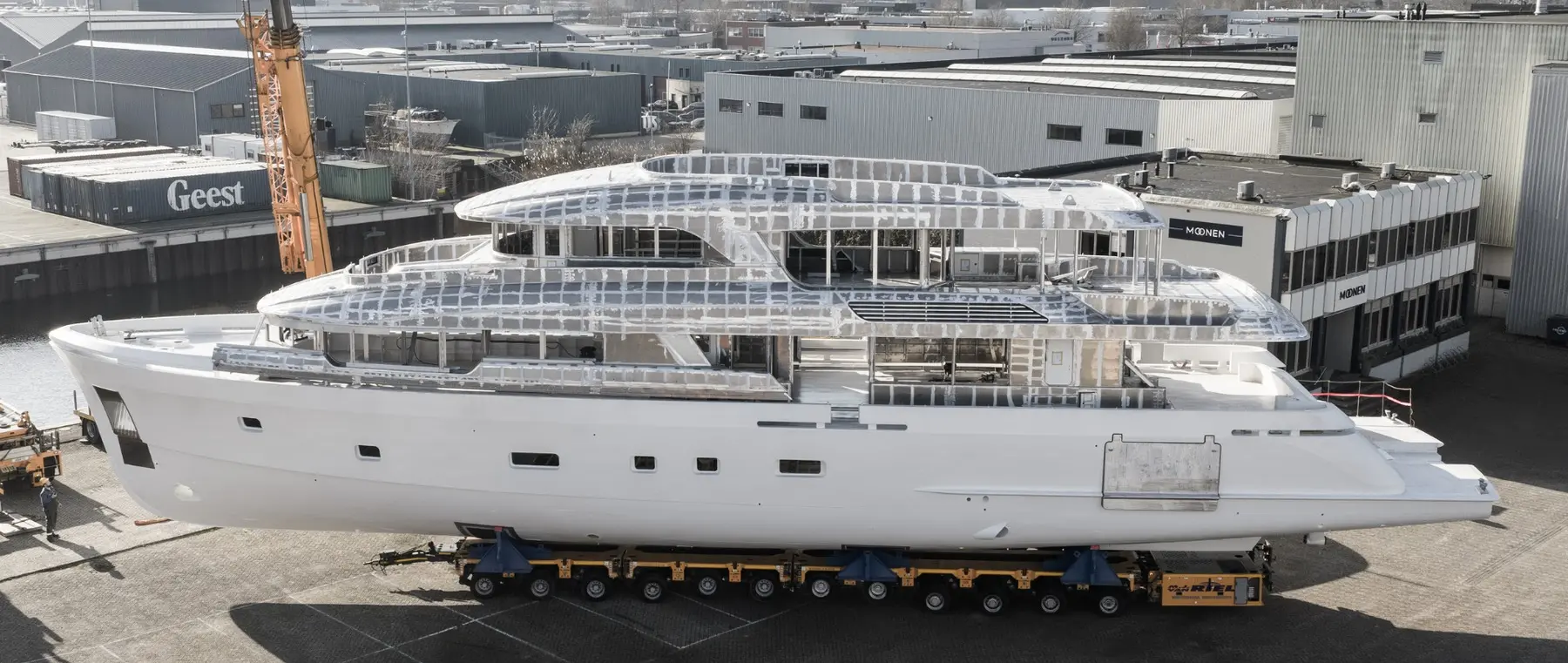
Moonen Yachts announced on 3 March 2026 that the high-tensile steel hull and aluminium superstructure of its ninth 122 Martinique, YN207, had been joined at the Dutch yard. The 37.4-metre yacht had already been sold to American owners, with the sale confirmed in December 2025. The structural milestone moved the project toward outfitting, when the yard would install technical systems and interiors before commissioning and eventual sea trials. This is a construction story about an identified hull, not a new launch or a completed delivery.
YN207 is the ninth Moonen 122 Martinique. It comes after the yacht designated YN206, subsequently named LOLLIPOP, and before the tenth hull YN208. These numbered identities are useful because projects may remain unnamed during construction, and different members of the same series can look similar in photographs.
A yacht database needs to preserve a consistent relationship between the builder number, model, sales announcement and production progress. The joining of the superstructure must be attached to YN207 rather than creating another yacht called simply the ninth Martinique.
Moonen's original 15 December 2025 direct email announced the sale of YN207. The builder described the buyers as an experienced American yachting family. It also named Alex G. Clarke of Denison Yachting as representing the purchasers, while Moonen representatives Matthew Stone and Richard Gray acted for the shipyard.
A transaction during construction differs from acquiring a completed vessel. Owners may still be able to influence some interior and equipment choices, subject to the programme and the work already underway. The sale announcement does not mean that the yacht was ready to sail at the time.
The phrase refers to the joining of the main hull and upper structural sections of the yacht. In this case, a high-tensile steel hull was brought together with an aluminium superstructure. The work represents a substantial milestone because it changes the vessel from separate major fabrications into a more recognisable whole.
It does not mean that all equipment or decorative work has been completed. The builder's original report specifically identified outfitting, technical installations, commissioning and trials as later stages. This is why the record remains an in-build project, not a delivered yacht.
Moonen distributed the company press message on 3 March 2026, reporting that the structural joining had taken place during the previous week. It described the operation at the shipyard's facilities in North Brabant, where most of the company's construction and outfitting activities were carried out.
An official builder announcement is a strong source for its own construction milestone, but it is not an independent technical survey. It documents what the yard said it had achieved. Details such as the classification survey record, exact structural weights or full commissioning schedule would require separate evidence.
Large yacht construction involves fabricating structural sections, moving them into alignment, and joining them with the accuracy needed for later outfitting. Welding, measurement and quality control matter because subsequent machinery, pipework and interior furniture must fit the space established by the structure.
Small inaccuracies can become expensive when repeated across several decks. The builder therefore depends on engineering drawings, controlled fabrication and experienced workers who understand both the materials and the sequence of operations. The visible result may be a graceful yacht, but the process is fundamentally technical.
High-tensile steel provides a structural base suited to a substantial motor yacht. Its use allows designers to work within a specified combination of strength, weight and fabrication requirements. The material needs appropriate protective coatings, inspection and welding procedures to support its long-term service life.
Steel is not intrinsically more comfortable or efficient than another material. Those outcomes also depend on the hull form, weight distribution, propulsion, noise control and how the vessel is operated. The project's technical performance can only be evaluated after the relevant systems are commissioned and used.
The aluminium superstructure helps manage weight in the higher parts of the vessel and provides the framework for wheelhouse, lounges and other upper-deck accommodation. Its connection to a steel hull must be carefully engineered, including attention to dissimilar metals and load paths.
The joining operation is therefore a meaningful engineering step rather than simply placing one attractive component on top of another. The finished yacht must remain structurally sound while carrying windows, doors, decorative finishes and equipment that add complexity as the build advances.
Moonen's original report identifies YN207 as the second 122 Martinique to feature a bespoke interior by Vripack Yacht Design. This gives the ninth hull a distinct identity within the broader semi-custom programme, whose earlier boats have worked with different interior designers.
The client's desired atmosphere and use of interior spaces affect joinery, lighting, material selection and circulation. A customisation programme at this stage still needs to respect installed systems and structural constraints. The best results come from careful collaboration between design and production teams.
René van der Velden is credited with the exterior, while Diana Yacht Design provides naval architecture. The styling of the Martinique family emphasises elegant proportions and spaces that connect with the surrounding sea. Naval architecture addresses the underwater form, stability and operating behaviour necessary to support that appearance.
The two disciplines cannot operate independently. A broad window may change structural requirements, while an outdoor terrace affects equipment routes and loading. The yacht must be designed as a working ship with attractive living areas, not a collection of separate decorative elements.
The release described one notable owner-requested change: a custom Jacuzzi incorporated into the sundeck. The feature illustrates the difference between a semi-custom platform and a vessel whose every element has already been fixed before the sale. The owner has selected a particular amenity for an identifiable yacht.
A Jacuzzi involves more than placing a tub in an open deck. Water adds weight, and the equipment needs plumbing, drainage, electrical systems and suitable foundations. Those requirements have to be incorporated into the engineering while the yacht remains in construction.
After the structural work, the yard could proceed with more technical systems and the installation of interior elements. That stage brings several trades into shared spaces: electricians, pipefitters, carpenters, painters and equipment specialists all need access to the boat. Their work must be organised so that one operation does not damage the work of another.
The quality of outfitting is crucial to daily life aboard. Guests may see a finished lounge, but behind its panels are wiring, ventilation and service connections that need to remain accessible. A good build protects future maintenance options.
Moonen described mechanical departments, carpentry, painting facilities, metalworking and climate-controlled outfitting areas at its Dutch yard. Such infrastructure helps coordinate work that might otherwise be spread across many subcontractor sites. It also provides opportunities for quality control while different systems are installed.
Keeping key disciplines close to one another can improve communication, though specialised suppliers remain important in modern yacht construction. The value lies in managing interfaces, not in claiming that every component of the vessel is manufactured entirely by one business.
The March 2026 original press release referred to a projected delivery in January 2027. The builder's subsequently updated YN207 project page gives a later forecast of March 2027. A historical report should preserve what the original source said while identifying that the forecast has changed.
Neither date proves an actual delivery. The project must remain in construction or outfitting status until the builder confirms the handover or equivalent evidence becomes available. Recording an invented 1 January date merely because the year is known would be particularly misleading.
Moonen was also developing the tenth Martinique, YN208, with a separate projected June 2027 delivery. The early 2026 original email referred to that upcoming build, and subsequent builder communications documented the tenth hull's own structural progress later in the year.
The ninth and tenth hulls are related by their model platform but remain two individual projects. Sales, ownership specifications, photographs and delivery forecasts should not migrate between them. The company CRM has therefore been linked to both distinct fleet pages according to each source's actual builder number.
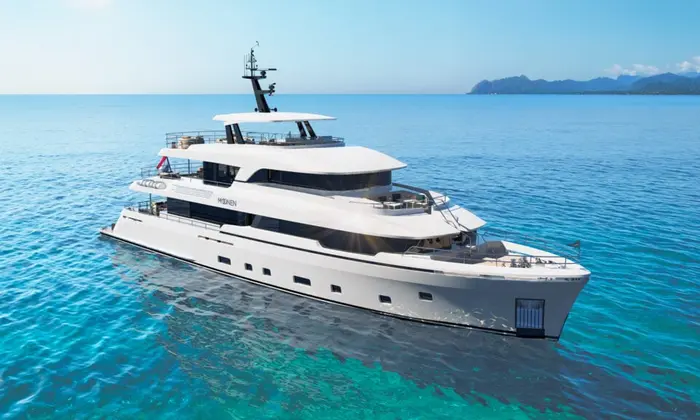
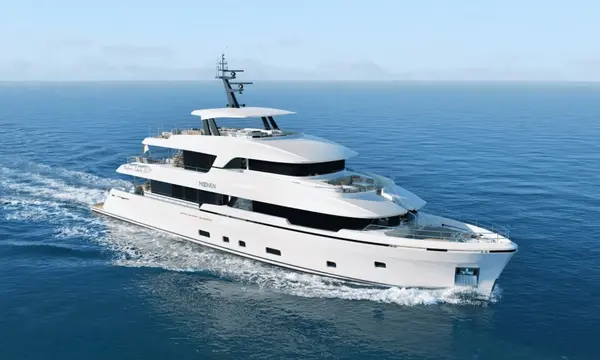
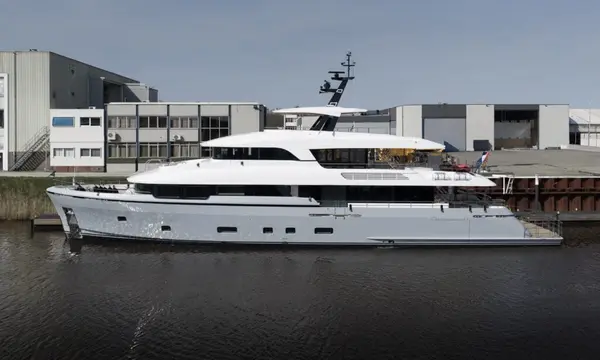
The hero image came from the original Moonen email reporting the YN207 hull and superstructure marriage. It shows a construction-stage subject and must not be presented as a photograph of a delivered yacht on a charter cruise. The file's original URL and SHA-256 checksum have been registered with the yacht and article.
This source discipline is especially important when later marketing material uses beautiful renderings of the same model. Renderings can communicate a design intention, while construction photographs establish the state of an actual physical project on a particular date. They are not interchangeable forms of evidence.
YN207's progress is a useful illustration of how a semi-custom yacht moves from an owner commitment toward completion. The builder had secured a buyer before the structural joining, incorporated bespoke interior arrangements and brought the major hull components together in early 2026. Outfitting followed, with additional work required before delivery.
By distinguishing the December 2025 sale from the March 2026 physical milestone, the record remains accurate without creating repeated generic news about the same project. The ninth Martinique exists as one 37.4-metre hull, YN207, and its story can be updated as subsequent events are confirmed.
Sources and provenance: Moonen original direct shipyard emails 1956 (15 December 2025 sale) and 2182 (3 March 2026 hull/superstructure joining). Official March 2026 construction release and builder's current YN207 project page. Official construction photograph © Moonen Yachts, original press email and media SHA-256 retained.
Explore
Go deeper into the yachts, companies, events and destinations directly connected to this article.
Continue reading
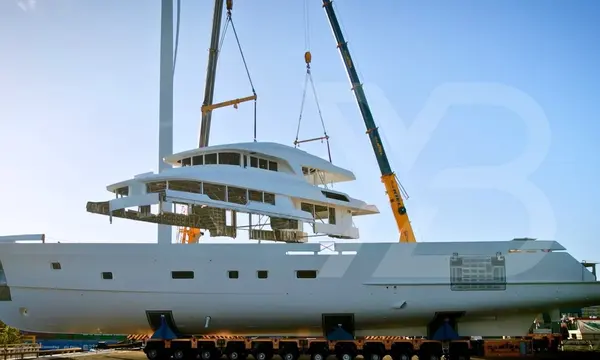
Moonen joins the steel hull and aluminium superstructure of its tenth Martinique YN208, incorporating owner-led suite changes ahead of planned June 2027 delivery.
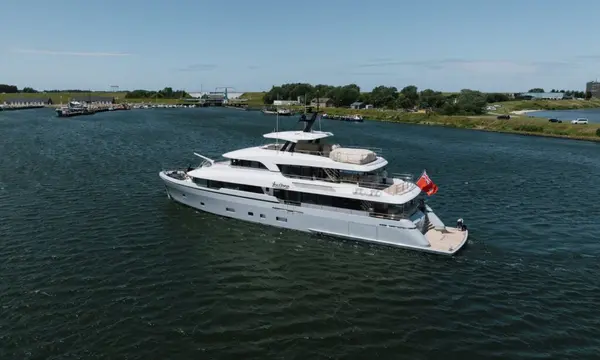
Moonen’s 37.4m LOLLIPOP is making her Monaco debut with a bespoke Vripack interior that gives the proven Martinique platform a notably personal character.
Moonen Yachts is offering the 37.4-metre Martinique YN208 for €27 million, including a two-year warranty, with delivery scheduled for June 2027.
Moonen’s 37.4m LOLLIPOP will make her world debut at the Monaco Yacht Show 2026 after entering service earlier this year. The eighth Moonen 122 …
Superyacht Guide
Continue into the wider Superyacht Guide.
Business opportunities · Superyacht Guide
Companies serving the superyacht market can discuss clearly identified advertising, sponsorship and business-profile opportunities. Commercial activity remains separate from independent editorial coverage.