NextBoat Secures Up to $7.2m Debt Funding for Pre-Owned Boat Inventory
By Stephen Yardley · Edited by Stephen Yardley
NextBoat has announced up to $7.2 million in debt facilities, while regulatory filings show $3 million initially advanced, differing interest terms and a stock pledge supporting its pre-owned boat strategy.
NextBoat has announced financing facilities totalling up to $7.2 million to support its pre-owned boat and yacht trading operation, but the regulatory documents show that the full amount was not drawn at the announcement date. The Wilmington, North Carolina-based marine group said on 29 October 2026 that the package combines a $5 million revolving credit agreement with up to $2.2 million in short-term bridge finance. Its SEC filings set out the interest costs, collateral, initial advances and conditions that determine how much additional money may become available. Those details are important to distinguish new borrowing capacity from immediate cash received.
The trading strategy is to acquire used boats, arrange wholesale transactions and expand access to inventory through the company's broker and dealer relationships. NextBoat operates the Off The Hook Yachts and Autograph Yacht Group brands, alongside financing and marine-services activities. Chief executive Ross Tannenbaum said management had prioritised debt funding as an alternative to a common-share offering, but debt still brings repayment and interest obligations. The filings also provide for a potential share warrant, so describing the whole package as carrying no equity-related consequences would be misleading.
NextBoat's 29 October Form 8-K describes a credit agreement involving its wholly owned subsidiary Off The Hook Yacht Sales NC and lender RLLT Capital. The facility allows outstanding borrowing of up to $5 million for working capital, used-vessel inventory and related business requirements. An initial $2 million advance was funded on 22 October. The subsidiary can seek further advances in $1 million increments, with at least three business days' notice and subject to the agreement's funding conditions. The balance can be repaid and borrowed again during the availability period.
The revolving facility carries fixed interest of 12.99% a year on money actually advanced, payable monthly, and no interest or unused-commitment charge on the undrawn portion. Origination fees equal 2% of each increase in the highest amount previously outstanding, capped at $100,000 across the facility; the initial advance generated a $40,000 fee. Outstanding principal and interest are due on 22 October 2027 unless the parties agree an extension. These are financing costs, not a forecast of how quickly the acquired boats will sell or what profit they will earn.
A separate Form 8-K filed on 19 October records a subordinated note with BPC Management covering up to $2.2 million. The note provides an initial $1 million advance and a possible second advance of up to $1.2 million by 31 December 2026, at the lender's option and subject to its terms. Unlike the revolving agreement, bridge amounts repaid cannot be borrowed again. Combining the two reported initial advances gives $3 million drawn, while $7.2 million is the ceiling across the two arrangements rather than confirmed available cash already received.
The bridge note is materially shorter and more expensive than the revolving credit. Each advance bears simple annual interest of 15% and matures 90 days after funding, with a 2% origination fee. For the first advance, the company agreed to direct net equity proceeds from seven specified inventory boat sales towards repayment after amounts due to its senior floorplan lender are satisfied. That arrangement links a part of the new funding directly to the sale of identified stock, although the filing does not establish how soon those vessels will change hands.
Both agreements include corporate guarantees from NextBoat and security arrangements involving shares held by company president and chairman Jason Ruegg or an associated entity. Under the revolving facility, 7.874 million company shares were pledged, described in the filing as about 31.3% of shares outstanding at the relevant comparison date. The filing also states that shares pledged under the two financing arrangements total approximately 10.374 million, or 41.3% on that stated basis. Those are security pledges, not completed transfers of ownership, but foreclosure following a default could have control consequences.
The company disclosed the revolving agreement as a related-party transaction because of Ruegg's controlling shareholding and his role in the pledging arrangements. Its SEC report says the audit committee approved the related-party aspect and disinterested directors approved the credit agreement, with Ruegg abstaining. It also describes a warrant for RLLT Capital to purchase 100,000 NextBoat shares at $2.50 each, subject to an NYSE American supplemental listing approval before issuance. This potential warrant should be noted alongside the stated aim of limiting dilution through debt funding rather than a new common-share sale.
NextBoat says it is developing a national network of boat owners, dealers, brokers and buyers, supported by a dealer portal currently being tested with MarineMax. The company intends the portal to make it easier for dealers to submit used stock and trade-ins for evaluation and possible purchase. Its accompanying 29 October release also discusses AI-assisted valuation tools for acquisition decisions and ageing-inventory signals. Those are company plans and reported tests, not evidence that a nationwide portal is already in full commercial operation.
The group has also set a long-term objective of turning inventory five to seven times on an annualised basis. Management explicitly characterises that as a target rather than a current operating result, and actual turnover will depend on prices, condition, buyer demand and the mix of boats acquired. The financing gives the company greater capacity to purchase inventory, but it does not itself establish profitable turnover. Higher borrowing costs and short bridge maturities place added importance on disciplined buying, successful transactions and cash conversion.
The headline $7.2 million represents a mix of facilities with different lenders, terms and repayment schedules. It would be inaccurate to describe it as a $7.2 million equity investment or as money all transferred on 29 October. The new revolving line was initially drawn by $2 million, and the bridge arrangement by $1 million, according to the two forms reviewed. Later advances remain possible, conditional and subject to the specified limits, while the company remains exposed to interest, origination fees and security-enforcement provisions.
For yacht brokers and dealers, the development matters because pre-owned inventory finance can affect how quickly trade-ins are purchased and moved to another buyer. For readers assessing the company, the next verifiable milestones will be further drawdowns, inventory turns actually achieved, dealer-portal rollout and subsequent cash-flow disclosures. NextBoat's management sees a wider national trading network as the opportunity. The SEC documents supply the more precise short-term story: borrowing capacity with defined costs and safeguards that must now be converted into operating performance.
Primary source: NextBoat October 29, 2026 Form 8-K filing and company release announcement. Builder or supporting detail: official or attributed reference.
Explore
Go deeper into the yachts, companies, events and destinations directly connected to this article.
Continue reading
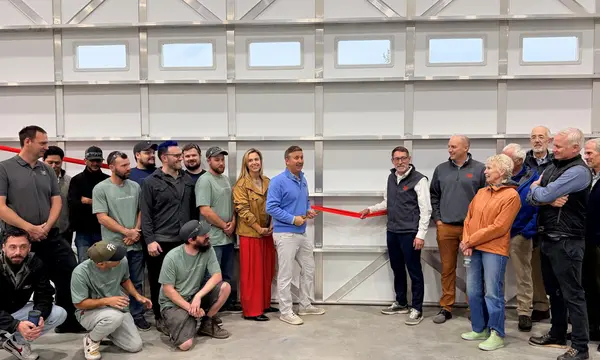
Lyman-Morse has opened a new 15,000-square-foot Advanced Composites Center at its Thomaston manufacturing campus, adding heavy-lift and vacuum infrastructure and introducing the Lyman-Morse Defense …
The U.S. Superyacht Association has marked two decades since its 2006 formation with a Fort Lauderdale International Boat Show programme covering classification, cruising destinations, …
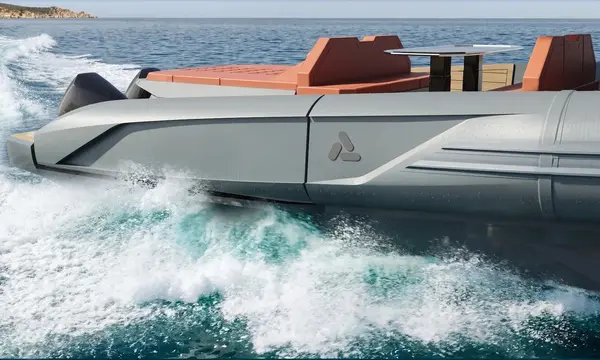
Callegari's sales manager has outlined plans for a six-model range, including technical tenders and a 20-metre RIB, as the reborn Italian brand positions its …

The Italian Sea Group's 30 October 2026 regulatory disclosure sets out €292.3 million in overdue consolidated liabilities at 30 September, €184.2 million in net …
Superyacht Guide
Continue into the wider Superyacht Guide.
Business opportunities · Superyacht Guide
Companies serving the superyacht market can discuss clearly identified advertising, sponsorship and business-profile opportunities. Commercial activity remains separate from independent editorial coverage.