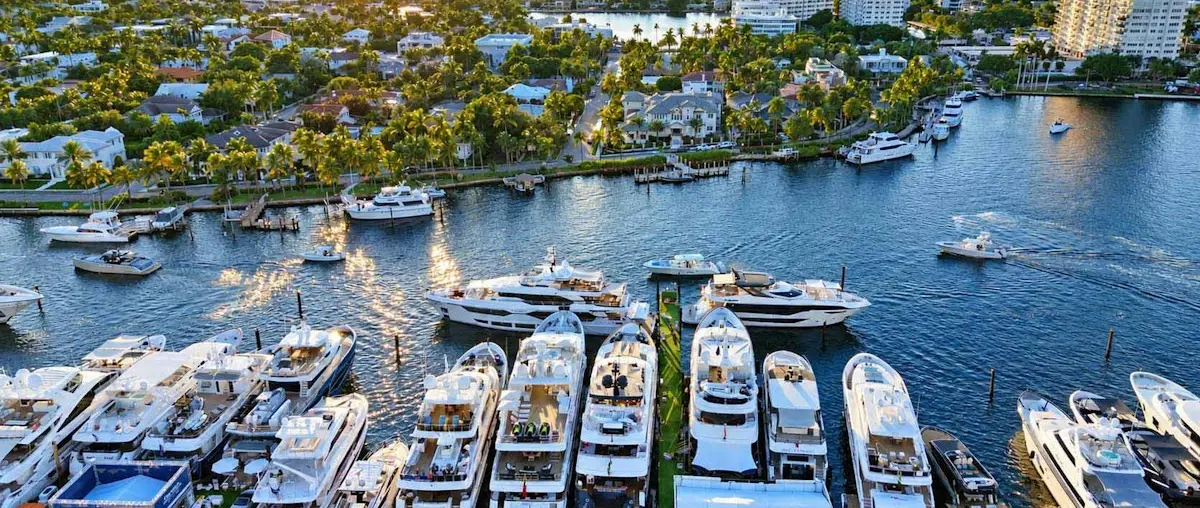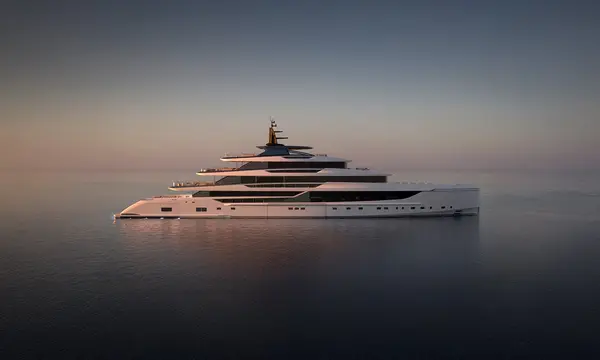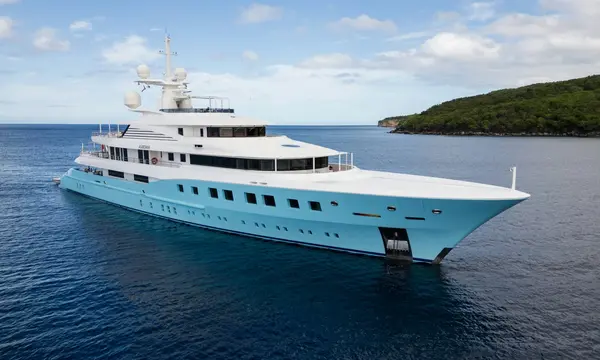
Northrop & Johnson official yacht-brokerage fleet photograph illustrating 2026 market research

News

Northrop & Johnson Counts 520 Used-Yacht Sales as 2026 Values Fall Nine Percent

Nov. 13, 2026 Business

Northrop & Johnson official yacht-brokerage fleet photograph illustrating 2026 market research

Northrop & Johnson's ten-month brokerage study tracks 520 used-yacht sales above 24 metres, a 9% fall in sales value and 2,040 asking-price reductions.

Sales volume and value diverge Northrop & Johnson's latest global brokerage snapshot records 520 sales of pre-owned yachts measuring at least 24 metres in the first ten months of 2026, compared with 532 in the corresponding period of 2025. That represents a relatively modest decline of approximately 2.3 percent in the number of transactions. Aggregate reported sale value, however, fell from $6.14 billion to $5.58 billion, a more pronounced reduction of nine percent. The company released the figures on 10 November, providing a snapshot of the international market ahead of the final two months of the year. For owners and sellers, the report is a reminder that market activity cannot be judged from the number of completed transactions alone. The value and composition of yachts changing hands also matter.

A smaller overall market does not imply every yacht is cheaper The nine-percent decline in total sales value may reflect changes in the mix of vessels sold, prices achieved or the presence and absence of very large individual transactions. The figures do not establish that the market value of every yacht fell by nine percent. Two years with similar numbers of completed transactions can have very different total values if one includes more transactions above 70 or 90 metres. Owners evaluating a yacht need to examine genuinely comparable sales by age, builder, specification and condition. Aggregate statistics are useful as a sign of market direction, but they are not an individual valuation method. Treating them as such would ignore the substantial differences among the yachts in the 24-metre-plus fleet.

The motor-yacht category accounts for most of the change The brokerage says motor-yacht sales value fell 9.4 percent, from approximately $5.92 billion in the first ten months of 2025 to $5.36 billion in 2026. That explains the majority of the decline in the overall figures, since motor yachts account for most brokerage value in the segment covered. The average length of motor yachts sold changed very little, moving from approximately 35.5 metres to 35.6 metres. A stable average length does not necessarily mean that every size band behaved similarly; changes in age, build quality and the number of high-value sales can still affect the total. Market observers should use this information to ask more precise questions about what sold, rather than conclude that buyer preferences have become uniform.

Sailing-yacht sales show a different pattern The report puts the value of sailing-yacht transactions at $221.5 million, slightly above the $217.2 million recorded over the same period of 2025. That is an increase of about two percent and represents a different direction from the motor-yacht market. The average length of sailing yachts sold declined slightly, from approximately 33.5 metres to 33.1 metres. The difference suggests the value of completed sailing transactions was influenced by particular boats rather than a simple movement towards larger average size. It also illustrates the danger of speaking about the entire superyacht market as though sailing and motor yachts are interchangeable. Their buyers, operating requirements and available inventories can be quite different.

A handful of larger sailing transactions can move the total Only three sailing yachts were reported sold during October 2026, compared with seven in October 2025, yet the ten-month value still moved ahead of the prior-year comparison. Northrop & Johnson identified prominent transactions including ANDROMEDA LA DEA, which had a last advertised asking price around €24.95 million, and ANTARES at approximately €6.9 million, along with CABOCHON, in whose sale the brokerage was involved. Last asking prices are not equivalent to verified closing values. They can indicate the scale of individual transactions without disclosing the agreed consideration. Where one or two yachts account for a substantial share of a small market, annual percentages can be volatile and should be interpreted with care.

The 24–40m sector remains important by count Yachts between 24 and 40 metres continue to account for most reported global brokerage transactions in the company data. Their prevalence is not surprising: this range contains a large number of production and semi-custom designs, as well as older bespoke vessels, and can appeal to several categories of private buyer. However, the number of transactions in a size band does not establish that it contributes the highest total sale value. A few extremely large yachts may equal or exceed the value of many smaller transactions. Owners should compare the market by both count and value and consider their particular yacht's specification. The broader figure is not a substitute for a current analysis of similar vessels available and recently sold.

New listings edged ahead of 2025 The company recorded 1,537 new central-agency events between January and October 2026, compared with 1,514 in the previous year, an increase of approximately 1.5 percent. This points to a relatively stable flow of yachts entering brokerage marketing. A central-agency listing represents a particular type of marketing appointment, not proof that an entirely new yacht has been built or that a previously advertised boat has never changed representative. A single yacht may also experience changes in agency or marketing status over time. Comparing events rather than unique hulls requires understanding the underlying definition used by the data provider. Nevertheless, the similar year-on-year numbers are useful context for the sales and pricing figures.

The seasonal pattern changed Northrop & Johnson observed that the busiest month for new central-agency events in 2025 was October, with 225, whereas September and October 2026 each recorded 176. The fall yacht shows can still provide a catalyst for listings, but marketing activity is not identical every year. Some sellers may list before a major exhibition to attract appointments, while others wait until a yacht has completed seasonal work or photography. A change in timing does not by itself establish a decline in seller confidence. It may also reflect scheduling decisions made by individual firms. Market analysis is more reliable when it uses a complete period rather than judging one show week in isolation.

Asking-price reductions become more common The report counted 2,040 price reductions during the first ten months of 2026, compared with 1,932 over the same period in 2025. That is an increase of 5.6 percent in the number of recorded events. The combined advertised value of those reductions rose more quickly, from about $1.18 billion to $1.28 billion, an 8.6-percent increase. Those numbers point to greater activity in adjusting public asking prices, but they do not mean that all the yachts involved were sold. A price reduction can precede a transaction, a withdrawal or additional adjustments. It is a marketing action rather than a confirmed sale price and should not be counted as a realised loss for the seller.

Most price cuts occur in the smaller end of the tracked fleet The 24- to 30-metre segment accounted for 899 recorded price reductions. That is the highest number by size band in the published analysis and is consistent with the large population of vessels in that part of the brokerage market. Count and value again tell different stories. A relatively modest adjustment on a 26-metre yacht can contribute one event, while a multimillion-dollar change to a 60-metre yacht still counts as only one. An owner considering a reduction should therefore compare both the frequency and the monetary size of changes among genuinely similar listings. The broader figure does not indicate what percentage adjustment would be appropriate for any individual vessel.

The 30–40m segment saw a larger value shift In yachts from approximately 30 to 40 metres, the combined value of asking-price reductions rose from $322.5 million to $434.8 million. That is an increase of about $112.3 million, or 34.8 percent, in this category alone. The magnitude of that change makes it a key finding for owners selling yachts that sit in the middle of the superyacht market. It still does not prove that market values fell by 34.8 percent. This is the combined value of advertised reductions, not a comparison of the closing prices of identical yachts. Buyers and sellers should interpret it as evidence of more substantial pricing adjustments in this band, potentially alongside differences in the available inventory.

March was the busiest reduction month in 2026 The data shows 239 reductions in March 2026, the busiest month of the year through October, while the peak in the previous year was October 2025 with 254. The different seasonal patterns may reflect when owners and brokers reassessed their asking figures before major charter or sales periods. However, the report does not assign a single cause to the distribution, and a specific calendar explanation would require more evidence. Owners who follow pricing changes can use monthly activity as context but should not automatically time their own decisions to the month with the greatest number of reductions. A yacht's condition, location and the strength of direct enquiries are likely to be more immediately relevant.

How to read the figures when shopping for a yacht A buyer may see more asking-price revisions and conclude that there is room for negotiation. That can sometimes be true, but the public data alone does not establish the seller's willingness to accept a particular offer. The most persuasive approach is to compare realistic alternatives and obtain a professional evaluation of condition, operating costs and technical risk. A well-maintained yacht with a distinctive configuration may attract demand that does not follow the wider market. Conversely, a boat with a significant refit requirement may need a larger adjustment than average. Broker statistics are most useful when they guide questions, not when they replace detailed due diligence.

Sellers should distinguish marketing from valuation For an owner placing a yacht on the market, a credible asking figure needs to reflect the vessel's actual competitive position. Overpricing can prolong a listing, while abrupt reductions may create expectations about the seller's urgency. Neither outcome should be inferred automatically from the overall 2026 data. Brokers can help establish the range of comparable yachts and the likely audience for a particular specification. Maintenance documentation, professional photography, access for inspection and clarity about tax status may all affect a buyer's assessment. The figures show that reductions have become more frequent, but the purpose of price strategy remains to find a qualified buyer willing to complete a transaction on acceptable terms.

A ten-month report is not a full-year result The January–October comparison leaves November and December outstanding. A few very high-value transactions can materially affect year-end totals, particularly in a market with relatively few enormous yachts. Northrop & Johnson notes that earlier in 2026 sales values held up better despite softer volume, before the comparison deteriorated by October. This change shows why a market's direction should be reassessed throughout the year. The available figures are not a forecast of what will happen during the final months, and the company does not provide a guaranteed 2026 closing total. A responsible report records what has happened so far and leaves the eventual annual outcome open.

The market picture is more nuanced than a headline percentage The latest brokerage snapshot combines relatively stable transaction numbers, a more material decline in total value, modest growth in sailing-yacht value and a rise in advertised price reductions. The result is not a simple story of collapse or uninterrupted growth. Different vessel types, lengths and transaction values are moving in different directions. For Superyacht Guide, the relevance is that a buyer or owner needs to understand both the overall market and the details of a particular yacht. The confirmed numbers—520 yachts sold, $5.58 billion in sales value and 2,040 price reductions—offer a timely framework for that assessment without pretending to determine the market value of every vessel.

Primary source: Northrop & Johnson official January–October 2026 market-data report, 10 November 2026.

Photo: Northrop & Johnson official generic fleet press photograph, illustrating January–October 2026 market analysis; not a particular yacht's sale. Official source image.

Photo licence and source

Photo: Northrop & Johnson official generic fleet press photograph, illustrating January–October 2026 market analysis; not a particular yacht's sale.

Continue reading

All news

Superyacht Guide

Explore the superyacht world

Continue into the wider Superyacht Guide.

Business opportunities · Superyacht Guide

Reach the superyacht industry audience

Companies serving the superyacht market can discuss clearly identified advertising, sponsorship and business-profile opportunities. Commercial activity remains separate from independent editorial coverage.