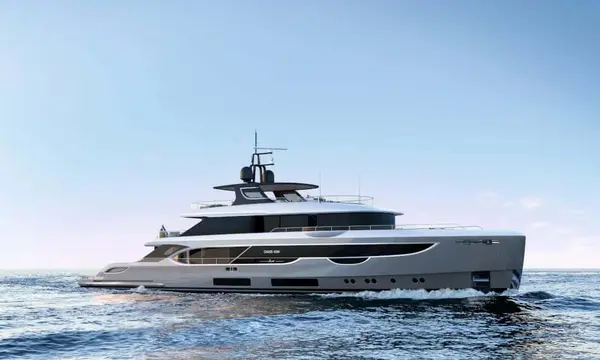
40m Superyacht Running Costs: Crew, Fuel, Berthing and Refit
Running a 40m superyacht requires a substantial annual budget for crew, maintenance, fuel, berthing and other operating costs. Superyacht Guide's 2026 model of 322 …
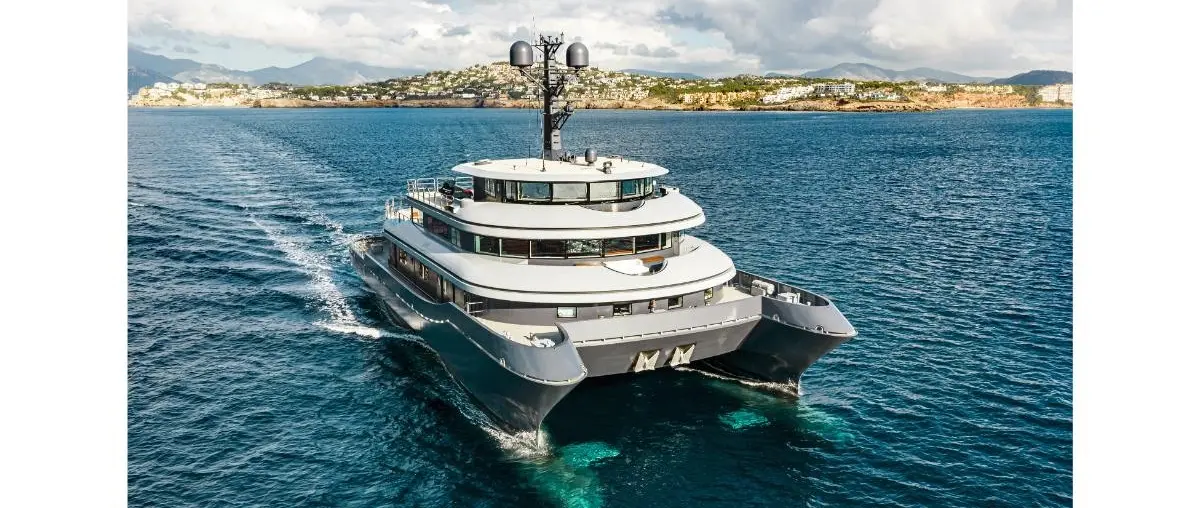
An engineering and ownership analysis of the rebuilt 40.5-metre SWATH superyacht NURJA, covering its unusual twin hulls, stabilisation, systems and revised guest accommodation.
Few private motor yachts of NURJA's size use the Small Waterplane Area Twin Hull configuration known as SWATH. The 40.5-metre Abeking & Rasmussen vessel, originally delivered as Silver Cloud in 2008, is therefore interesting for reasons that go beyond her distinctive silhouette. SWATH separates much of the buoyant hull volume from the narrow structures crossing the surface of the sea. In principle, reducing the waterplane area limits the changes in buoyant force as waves pass, which can improve motion behaviour compared with a more conventional vessel of similar size. That technical starting point shaped the yacht before the latest rebuild gave her new systems and interiors.
Because two submerged hulls carry much of the volume, the resulting platform looks dramatically wider than many monohull superyachts. The design makes room for broad decks and an interior whose useful space should not be judged from length alone. The benefits are accompanied by complexity: twin-hull underwater structures create maintenance and docking considerations that standard yard infrastructure does not always accommodate. An owner interested in a SWATH yacht should review stabilisation, access for inspection and the availability of specialised technical support, not just admire its advertised ability to reduce rolling.
German industry association Deutsche Yachten described NURJA's extensive transformation in July 2026, after a three-year rebuilding programme at her original yard. Its publication positioned the yacht as a rare example of a specialised concept given a substantial new operating life. The chronology matters: this is not a newly launched 2026 hull, and the work should not be presented as a project only beginning today. What makes NURJA worth examining is how far an existing vessel can be modernised when the underlying naval architecture remains valuable to its owners.
Abeking & Rasmussen's programme included structural improvements, a complete repaint, work on mechanical equipment and an extensive redesign of the guest interiors. According to the industry association, the twin Caterpillar C32 engines and their associated gearboxes, stabilisation components and hydraulic infrastructure were among systems comprehensively overhauled or renewed. Such a refit is materially different from repainting a yacht and replacing upholstery. The yard must coordinate equipment access, classification requirements and commissioning so that old and new parts operate together in a coherent technical platform.
The electronic renewal is especially revealing. A Böning alarm management and control system now connects bridge functions with monitoring of machinery, safety and other vessel systems, using redundant CAN-bus communication pathways. The claimed benefit is better visibility of system status and less dependence on isolated panels and alarms. Redundancy matters in a remote cruising environment, but it only delivers value when operators understand which failures can be tolerated and which require immediate intervention. Modern software and displays are tools for competent crew, not a replacement for disciplined engineering.
Deutsche Yachten cites four stabilising fins supported by an advanced Marine Dynamics control system, adding another layer to the hull's natural behaviour in waves. That combination illustrates how motion comfort emerges from several complementary systems rather than a single dramatic design choice. Operators should nevertheless resist simplistic claims that a SWATH yacht remains unaffected by rough conditions. Heading, speed, wave period and sea state always matter, and safety limits continue to apply. The practical achievement is the capacity to manage motion, not to make the ocean irrelevant.
Focus Yacht Design GmbH is credited with the rebuilt interior, and the arrangement gives the owner a notably private domain on the upper deck. The principal suite incorporates large windows, a private balcony, separate bathrooms, an office and direct access to a gym. These are not unusual luxuries on much larger yachts, but their combination within a 40.5-metre platform changes how the available volume is perceived. The design suggests an owner who intends to spend meaningful periods on board, with working, exercise and rest facilities grouped into a protected personal area.
Four further guest cabins occupy the main deck, bringing the stated capacity to 12 guests in five staterooms, supported by nine crew. An elevator connects the decks, an important usability feature for multigenerational groups and people with mobility needs. Such equipment also introduces maintenance responsibilities and emergency procedures that must be understood before departure. A beautifully finished lift cannot be the sole safe route between decks, and crews need clear plans for alternative movement. The quality of an arrangement is ultimately demonstrated by how comfortably and safely it works every day.
The external spaces underwent their own transformation. The rebuild introduced a folding sea terrace aft, a crane rated to handle tenders or equipment up to 2,500 kilograms, renewed deck surfaces and updated mooring arrangements. A helideck forward broadens the operating possibilities, subject to the vessel's approved procedures and equipment. These changes are about more than adding leisure features: cranes and platform mechanisms affect structure, crew workload, load paths and the safe use of deck spaces. Their effectiveness depends on integrated engineering and appropriate training.
Performance figures published by Deutsche Yachten include a stated maximum speed of approximately 15 knots and a range of around 4,000 nautical miles under suitable operating conditions. They should be read as supplied specifications, not proof of passage endurance for any load and weather combination. Fuel burn, weather routing and the operation of stabilisers and hotel systems will change real-world requirements. An extended cruise aboard an unconventional hull form needs the same conservative planning and technical oversight expected of any other superyacht, with added attention to suitable ports and service facilities.
The association also reports new communications and entertainment systems, including VSAT, Wi-Fi 6 and Crestron-based audiovisual controls. It refers to renewed classification under DNV with documentation valid through 2029, alongside upgrades to fire protection and lifesaving equipment. Prospective purchasers should verify the current status of each certificate, examine the survey history and commission independent examinations of rebuilt systems. A yacht's documented restoration can be highly compelling, but a list of replaced components by itself does not establish the present condition of the machinery or underwater structure.
Deutsche Yachten reported a €38 million asking price when it discussed NURJA in July 2026; any buyer should confirm contemporary pricing and availability directly with authorised representatives. The more durable conclusion concerns design and engineering. NURJA demonstrates that a rare technical concept can remain relevant long after its original delivery when structural, mechanical and hospitality systems are approached as one coordinated project. For owners interested in comfortable extended voyaging, the rebuilt yacht offers a distinctive example of how novel naval architecture and thoughtful modernisation can coexist.
Continue reading
Running a 40m superyacht requires a substantial annual budget for crew, maintenance, fuel, berthing and other operating costs. Superyacht Guide's 2026 model of 322 …
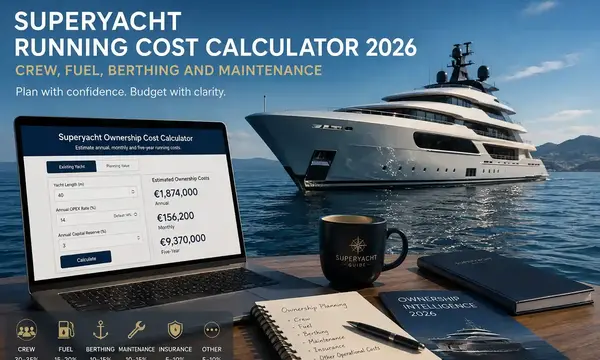
Superyacht Guide's 2026 running cost calculator provides annual, monthly and five-year ownership estimates using either an existing yacht or a planning value. It gives …
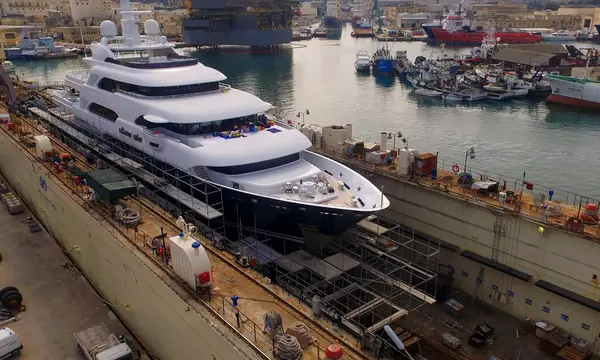
Malta-based Melita Marine Group has started construction on a waterfront facility for captains and crew during yacht refits, with a gym, sauna, shared social …
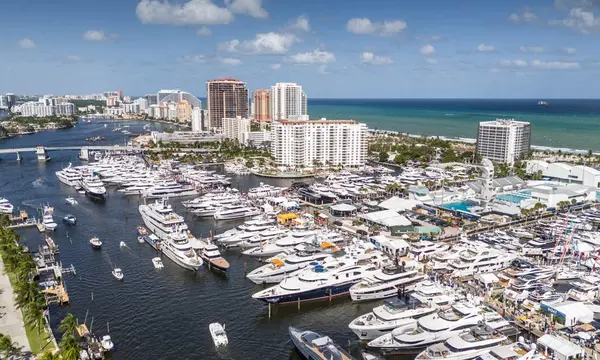
Fraser has published its October 23 Fort Lauderdale Forum programme for yacht captains, with sessions on crew welfare, regulation, insurance and safety.
Superyacht Guide
Continue into the wider Superyacht Guide.
Business opportunities · Superyacht Guide
Companies serving the superyacht market can discuss clearly identified advertising, sponsorship and business-profile opportunities. Commercial activity remains separate from independent editorial coverage.