
One Ocean Foundation Adds Former IMF Economist Ralph Chami to Science Panel
By Stephen Yardley · Edited by Stephen Yardley
One Ocean Foundation has appointed economist Ralph Chami to its international Scientific Committee. His work on blue natural capital and marine ecosystem finance follows earlier research with the foundation on credible investment in ocean conservation.
One Ocean Foundation has appointed financial economist Ralph Chami to its Scientific Committee, bringing expertise in the relationship between ecosystems, economics and investment to the organisation's marine-conservation work. The appointment was announced on 2 November 2026 and follows an established collaboration rather than the beginning of a wholly new relationship. Chami has previously contributed to the foundation's research and discussions about blue natural capital.
The foundation describes the move as a way to strengthen the scientific basis of conversations about how financial institutions and public policy value healthy oceans. That ambition is relevant to a marine industry whose operations depend on the condition of coastal and offshore ecosystems. The appointment does not itself create a conservation fund, establish a carbon credit or guarantee investment for a particular project. It adds expertise to an advisory and research structure.
Chami has more than three decades of experience as a financial economist, including twenty-five years at the International Monetary Fund. He is also a co-founder and chief executive of Blue Green Future and a co-founder of Rebalance Earth. His recent work focuses on making the economic contributions of living ecosystems visible to the institutions that make decisions about finance, development and public spending.
Traditional accounts of economic activity can struggle to describe the contribution of habitats whose benefits are shared by many people but not bought and sold in an ordinary market. Coastal protection, biodiversity and healthy fish populations can support economic resilience without appearing as straightforward revenue lines. Chami's approach seeks to bring these dependencies into policy and investment discussions. The difficult question is how to recognise value without simplifying nature into a single financial number.
The appointment follows Chami's involvement in One Ocean Foundation's Blue Economy Summits and a collaborative study titled Building equitable and nature-positive blue natural capital markets. The paper appeared in Cell Reports Sustainability, with contributions from foundation representatives including Jan Pachner and Ambra Cozzi. The foundation traces the work partly to an international roundtable held at SDA Bocconi School of Management in 2024.
This history matters because the committee role is not presented as a celebrity endorsement detached from prior work. The participants have already been investigating what credible nature-finance mechanisms might require. The research discusses the potential for private capital to address conservation funding gaps, while emphasising scientific integrity and the role of communities. Academic publication is not equivalent to proof that every proposed market mechanism has been successfully deployed in practice.
The phrase blue natural capital refers to the living marine and coastal ecosystems that provide services and value to people and economies. Examples can include wetlands that reduce some storm impacts, habitats that sustain fisheries and biodiversity that supports tourism or other activities. The services are complex and interconnected, often extending across national borders and long time periods. Their social significance is not captured fully by a commercial asset price.
Recognising such value can help governments and businesses understand the costs of ecosystem degradation, but calculating it responsibly is difficult. Monetary measures may be useful within a specific policy decision without being a complete description of ecological or cultural importance. The foundation stresses that valuation cannot simply turn nature into a commodity. Scientifically grounded measurement, transparent governance and protections for people affected by projects are part of its stated approach.
Conventional environmental budgets cannot always meet the scale or duration of investment needed to protect and restore marine environments. This has prompted discussions about ways to mobilise private finance alongside public funding and established conservation programmes. Advocates argue that recognising ecosystem services could support new mechanisms for directing capital towards nature-positive outcomes, although these arrangements need credible evidence of benefits.
The risks are equally important. An investor may be tempted by an attractive financial narrative even when the ecological effect is uncertain, or when benefits are credited without robust verification. A funding mechanism must be evaluated for additionality, permanence where relevant, community impacts and the possibility of double counting. Chami's appointment does not resolve those challenges automatically. It signals the foundation's intention to keep scientific and economic expertise connected while exploring them.
One Ocean Foundation's Scientific Committee brings together experts who help guide the organisation's research priorities and programmes. The new member adds knowledge of economic and financial systems to fields that traditionally include ocean science and related disciplines. The purpose is to ensure that projects and public arguments are informed by evidence rather than driven solely by financial opportunity or a compelling communications campaign.
An advisory appointment should be understood within those limits. Committee membership is not a government regulatory position and does not give the individual authority to approve investments or certify conservation results worldwide. The work may help shape research and policy dialogue, but individual programmes require their own governance, evidence and funding decisions. The most useful way to judge the committee's influence will be through the quality and transparency of its future outputs.
Superyacht cruising depends on marine environments that owners and guests value for their beauty, biodiversity and opportunities for recreation. Healthy coral reefs, coastal water quality and functioning fisheries can contribute to destinations' long-term appeal. Marinas, shipyards and yacht operators also have responsibilities concerning waste, emissions, anchoring and other interactions with the environment, depending on their activities and applicable rules.
The connection does not mean that a yacht owner can simply buy a nature-finance product to remove the consequences of operating a vessel. Environmental measures need to start with avoiding and reducing harm where possible, using credible operational practices and complying with local requirements. Investment in restoration may have a role, but should not be treated as a substitute for responsible seamanship or evidence-based environmental management. The foundation's work can contribute to a better-informed discussion about these choices.
The associated research identifies community participation as a central condition of equitable natural-capital markets. Coastal residents, fishers and Indigenous peoples can hold knowledge and rights that are essential to the management of marine habitats. A financial programme that overlooks those interests risks producing an attractive return for outsiders without delivering fair outcomes where the environmental work actually takes place.
Meaningful engagement involves more than inviting representatives to a launch event. Communities may need access to information, an opportunity to influence decisions and protections where projects affect traditional uses of land or sea. Monitoring should also consider social outcomes alongside ecological indicators. These requirements make nature finance more demanding than a simple market transaction. They are also necessary if projects are to earn credibility beyond investors' own reports.
Chami has advanced discussions of Regenerative GDP, or ReGDP, as a way to reconsider how economic systems recognise activities that protect or restore living nature. The proposal seeks to connect conservation with public revenue, livelihoods and more resilient economies. It reflects an effort to expand the conversation beyond treating environmental protection only as a cost to be borne by businesses or governments.
These ideas are still subject to research, debate and practical implementation challenges. A proposed metric should not be presented as a recognised official replacement for national GDP, and a theoretical financing mechanism cannot be counted as a completed investment programme. The value of the approach lies in prompting better questions about what economic systems measure and overlook. Its success will depend on rigorous evidence, credible governance and how policymakers choose to use the findings.
The committee role may help One Ocean Foundation develop its research on blue natural capital, economic risk and the conditions required for credible investment in marine protection. Chami's experience adds a perspective that can connect field science with the language used by financial institutions. The foundation has described this as a more structured continuation of previous collaboration, not a sudden change of mission.
For the maritime sector, a useful outcome would be clearer methods for distinguishing verifiable conservation programmes from broad sustainability claims. There is no new fund size, financial return or number of projects confirmed in the appointment announcement, and none should be invented. The immediate news is a specialist appointment grounded in earlier joint research. The longer-term question is whether that collaboration can produce practical tools that protect ocean ecosystems while respecting the communities who depend on them.
Explore
Go deeper into the yachts, companies, events and destinations directly connected to this article.
Continue reading

YachtCloud is highlighting how its ECHO system manages yacht network access, device registration and private casting across guest, crew and operational areas, aiming to …
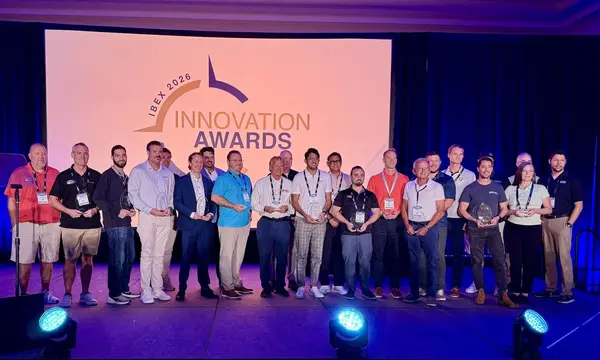
Propspeed's Foulfree Multi-Surface anti-fouling protection has won a 2026 IBEX Innovation Award in Boat Care and Maintenance, jointly with Spectrum Color.

Feadship’s AURORA artificial-intelligence research initiative has received Dutch maritime innovation funding for CFD-driven hull resistance prediction and optimisation.

Quick is running 15-to-20-minute Quick Gyro sea trials at the Genoa Boat Show while presenting recent control and efficiency developments.
Superyacht Guide
Continue into the wider Superyacht Guide.
Business opportunities · Superyacht Guide
Companies serving the superyacht market can discuss clearly identified advertising, sponsorship and business-profile opportunities. Commercial activity remains separate from independent editorial coverage.