
E-TRON Introduces Sea Ledgers for Superyacht Voyages and Emissions Records
E-TRON Technologies has launched Sea Ledgers, a digital yacht logbook and emissions reporting service. We distinguish the software proposition from current EU regulations.

Palagi Marine Lights will show its lighting work and Espen Øino International collaboration at METSTRADE 2026, marking 70 years since its 1956 beginnings.
Palagi Marine Lights has confirmed its participation in METSTRADE 2026, bringing its marine-lighting collections and collaboration with Espen Øino International to the Superyacht Pavilion in Amsterdam. The manufacturer, whose history dates to 1956, will be at stand 08.724 during the 17–19 November trade exhibition. Beyond the show announcement, its published catalogue provides a useful window into the questions yacht designers face when specifying miniature interior lights, low-glare fixtures and exterior courtesy lighting. Here is what the company has actually confirmed, what the organiser independently lists, and why its products matter in the construction and refit supply chain.
Palagi Marine Lights is returning to the international marine-equipment stage with an appearance at METSTRADE 2026 in Amsterdam. The Viareggio-area specialist has confirmed its position in the Superyacht Pavilion, Hall 8 stand 724, for the event running from 17 to 19 November. Its announcement places equal emphasis on the company's manufacturing history and on the current collaboration with Espen Øino International, giving designers and shipyards a reason to examine both established fittings and newer design-led work. The exhibition is a trade event, not a yacht launch, and Palagi has not identified a newly commissioned yacht or a particular installation as part of this announcement. That distinction matters when describing a supplier whose products may be seen on vessels long after the design selection was made.
The company describes its exhibition as an opportunity to mark a milestone that began in 1956. METSTRADE's own exhibitor directory independently confirms Palagi Marine Lights S.r.l. and lists stand 08.724, while identifying customized luminaires, switches and socket plates as its speciality. The organiser places the show at RAI Amsterdam from 17 to 19 November 2026, so the dates and stand location can be checked without relying solely on promotional material. Palagi says visitors will be able to discuss its lighting collections, examine solutions developed with Espen Øino International and speak with its team about their applications. There is no verified announcement of a contract value, sales target, order-book total or specific new production partnership, and none should be inferred from a trade-show appearance.
Lighting can be easy to overlook beside the larger figures for naval architecture, propulsion or interior fit-out, yet it is one of the systems through which owners actually experience a vessel. The same yacht might require discreet low-glare light in a guest cabin, precise illumination over a painting, safe guidance on steps and corridors, and weather-resistant fittings on exterior decks. Each application imposes different constraints on appearance, access for maintenance and the amount of light delivered. For yacht builders, choosing fixtures is therefore part of the technical coordination between interior designers, electricians, outfitters and the crew who will eventually maintain them. Palagi's participation is a reminder that a successful superyacht interior depends on component specialists as much as on the headline design studio.
The reference to Espen Øino International gives the Amsterdam appearance a distinct superyacht-design dimension. Palagi has previously publicised its work with the Monaco-based designer, whose name is associated with large custom-yacht projects, and says the collaboration will feature in discussions at its stand. The announcement should not be mistaken for the unveiling of an entirely new collection unless that is subsequently confirmed; the company speaks of developments in existing lighting collections and creations made in collaboration. Even so, cooperation between a product manufacturer and a yacht designer is consequential because fixtures are typically selected to suit a broader architectural language rather than treated as an isolated commodity. Proportion, finishes, mounting details and the visual character of a light fitting can all influence the coherence of a yacht's interior.
Palagi traces its history to 1956, making 2026 a seventieth-anniversary year for the business. Its exhibitor profile presents a manufacturer accustomed to working with Italian and international shipyards, designers, lighting consultants and contractors, and describes its ability to customize standard collections through in-house machinery. Such claims describe the supplier's stated capabilities; they should not be read as independently audited production statistics. The historical context is useful because yacht construction spans long project cycles, and suppliers must work within drawings, approvals and installation schedules that can change during a build. A company's ability to discuss modifications with both the design and technical teams can matter as much as the appearance of an individual fitting. METSTRADE provides a meeting point where those requirements can be addressed before a purchasing decision is made.
One technical theme visible in Palagi's published product information is maintenance access. Its L9739 recessed luminaire is described as removable from the front for inspection, an approach intended to avoid dismantling ceiling panels, while other products specify spring-mounted or bushing-fixed installation methods. These descriptions are manufacturer specifications, not the results of an independent laboratory test. They nevertheless illustrate a practical concern aboard yachts, where ceiling cavities and decorative panels can conceal electrical systems and where even a small repair may become disruptive if major joinery has to be removed. Accessible mounting can simplify routine service, but suitability still depends on the final installation, environmental classification and decisions made by the yacht's project team. Builders should evaluate the complete fitted assembly rather than assume one manufacturer's design solves every maintenance scenario.
Among the examples in the official METSTRADE product catalogue is Palagi's PUNTO miniature interior luminaire, which the company describes as having a diameter of only 13 millimetres. Small fittings can make sense when designers want light to appear without an obvious visible housing, especially in narrow details or carefully composed joinery. Yet miniature dimensions can also concentrate the choices around output, heat, wiring, accessibility and glare. Palagi lists several finishes and emphasizes that its products can be adapted, which is relevant in interiors where metals, lacquers, timber and stone must work together visually. The catalogue establishes that the PUNTO product exists; it does not establish that a particular yacht has ordered it or that a newly improved version will debut in Amsterdam. That remains for the company to specify at the show.
Superyachts also require lighting beyond the accommodation spaces, and the requirements can be less forgiving outside. Wet decks, salt spray, moving guests and differences between ambient darkness and brightly lit interiors all influence how pathways and step areas should be illuminated. Palagi's catalogue includes courtesy lights such as its L9810, described for interior and exterior use and designed to spread light across a floor or wall surface. The published product description also mentions potential applications along corridors, steps and pathways. That provides an example of why design and safety intersect: an attractive fitting may still need careful placement to avoid glare or uneven visibility. The yacht's designers and technical team remain responsible for verifying the appropriate specification, mounting location, protection rating and compliance for the intended installation.
Palagi says it can customize standard ranges for a client's project, an approach that fits the superyacht industry's preference for coordinated details. Two vessels of similar length may have very different ceiling depths, metal finishes, guest-area arrangements and operating profiles, so identical catalogue items need not be the correct choice for both. Customization may involve a visible finish or a less obvious assembly detail, and each change has implications for drawings, lead times and eventual replacement parts. The company's exhibition presents an opportunity for project teams to ask how such variations are documented and supported. No published evidence accompanying this particular announcement quantifies the proportion of Palagi's output made to individual specifications, and it would be misleading to attach an invented percentage. The useful point is the capability claimed by the manufacturer and the questions buyers should take to the stand.
Yacht construction is often discussed through hulls, propulsion and styling, but suppliers must deliver thousands of individual components in the correct configuration. Lighting decisions frequently follow an extended chain involving the owner, exterior and interior designers, naval architect where relevant, electrical contractor and procurement manager. If a fitting changes late in a project, the consequences can reach ceiling drawings, power provision, control programming, finishes and maintenance documentation. A trade-show conversation cannot replace design sign-off, yet it can identify compatible products or expose a conflict early enough to manage. This makes METSTRADE especially useful for specialist suppliers: it brings together professionals whose responsibilities overlap but who do not always meet during a busy yard programme. Palagi's attendance should be read in that practical industry context, not simply as a decorative exhibition.
METSTRADE 2026 is scheduled for 17–19 November at RAI Amsterdam and is promoted by its organiser as a major business meeting place for the leisure-marine supply chain. The exhibition includes specialist areas, one of which is the Superyacht Pavilion where Palagi is listed. The organiser describes the show as a broad international gathering, although promotional expectations are not the same as audited attendance figures. Visitors using the official exhibitor directory can check the company's location ahead of the show. A stand listing is a confirmed operational detail; announcements about orders, product performance or broader commercial success would require separate evidence. The distinction is important for reporting on events before their doors open.
Designers reviewing Palagi's range may wish to ask how individual fixtures handle glare, replacement access, dimming-control compatibility and the interface between the decorative finish and the underlying electrical assembly. They may also need drawings for ceiling or wall integration, evidence of the relevant product classifications and information about spare-part continuity. None of these questions implies a defect in the supplier's products; they are routine parts of specification on a complex vessel. Representatives from shipyards may focus on procurement deadlines, installation tolerances, documentation and the consistency of customized pieces across an entire build. A design collaboration can be visually compelling, but engineering and service questions determine whether it is appropriate for a particular programme. The show offers a venue for discussing those practical details face to face.
A lighting-company collaboration with a well-known yacht designer reflects a wider pattern of specialist brands working alongside external design practices. The manufacturer contributes knowledge of materials, fittings and production; the designer contributes an understanding of how objects appear within the vessel's architectural composition. When the relationship works, it may result in components that are more closely integrated into the whole yacht. That is a design objective rather than proof of the performance of a particular product, and it should be evaluated project by project. Palagi has chosen to highlight this partnership in its METSTRADE communication alongside the seventieth-anniversary theme. For the industry, that combination makes the stand notable as a meeting of heritage manufacturing and contemporary design, even without an announced yacht delivery.
As of 5 November, the confirmed facts are straightforward: Palagi Marine Lights plans to exhibit at METSTRADE in Amsterdam, the organiser lists it in the Superyacht Pavilion at stand 08.724, and the company says its collections and work with Espen Øino International will be part of the presentation. The event takes place from 17 to 19 November 2026. The precise scope of any fresh product unveilings, customer orders or announcements made during the fair cannot be verified in advance. Superyacht Guide will treat those as separate developments if company documentation subsequently becomes available. For now, the story illustrates how a specialist component manufacturer uses an international trade meeting to connect the detailed engineering of onboard lighting with the visible language of modern yacht design.
Sources: Palagi Marine Lights' METSTRADE 2026 company announcement, the organiser's official exhibitor directory and the Palagi product catalogue published there. Claims about product capabilities are attributed to the manufacturer and have not been independently tested.
Continue reading
E-TRON Technologies has launched Sea Ledgers, a digital yacht logbook and emissions reporting service. We distinguish the software proposition from current EU regulations.
An MCA representative met senior yacht crew at a Bluewater-sponsored Palma round table to discuss digital certificates, training, AI, autonomous vessels and career pathways.
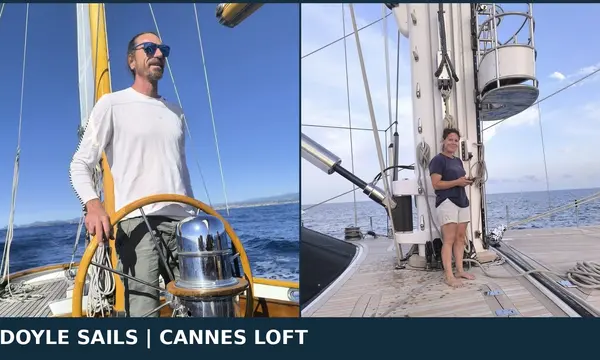
Doyle Sails adds a Cannes loft operated by Johan and Dorothée Ravier, with Fabrice Hudelot leading commercial work for racing, cruising and superyacht sails.
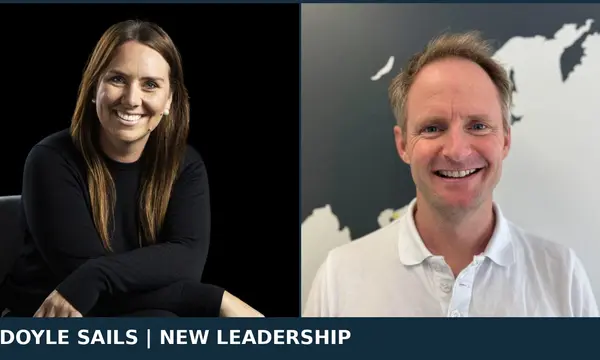
Doyle Sails appoints Emma Hendy chief executive and James Sandall finance chief, while Mike Sanderson and David Duff retain client-facing leadership roles.
Superyacht Guide
Continue into the wider Superyacht Guide.
Business opportunities · Superyacht Guide
Companies serving the superyacht market can discuss clearly identified advertising, sponsorship and business-profile opportunities. Commercial activity remains separate from independent editorial coverage.